





— Blogs —
—Products—
 Consumer hotline +8618073152920
WhatsApp:+8615367865107
Address:Room 102, District D, Houhu Industrial Park, Yuelu District, Changsha City, Hunan Province, China
Product knowledge
Time:2026-08-03 09:36:44 Popularity:263
Quick Answer: An online BOD sensor can remain electrically healthy while its relationship with laboratory BOD changes. Review that relationship after a new production feed, industrial contributor, treatment stage or sample-conditioning change. First check the instrument and sample identity, then compare appropriate paired results. Do not restore apparent agreement by fitting a new coefficient to one unexplained result.

Continuous organic-pollution trends can help operators investigate changes without waiting for laboratory results. Their usefulness depends on a demonstrated relationship in the water being monitored. Fluorescence is an optical observation, not the incubation procedure used to determine laboratory BOD5.
A treatment change can alter the biodegradable fraction without preserving the original optical relationship. Conversely, an optical change can arise from window condition, bubbles or sample handling. These are different problems and need different corrective actions.
Retain the laboratory method where the reporting or project requirement calls for it. For initial comparison design, see the online BOD and laboratory BOD5 comparison guide. Continued use also needs a way to recognize when the previously established relationship should be reviewed.
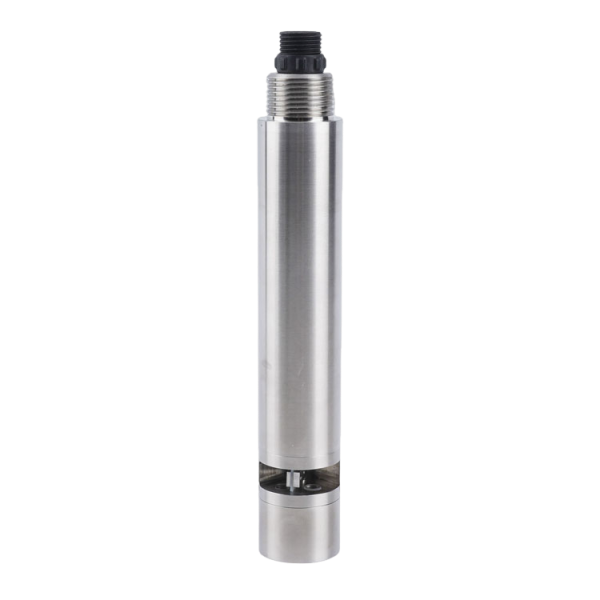
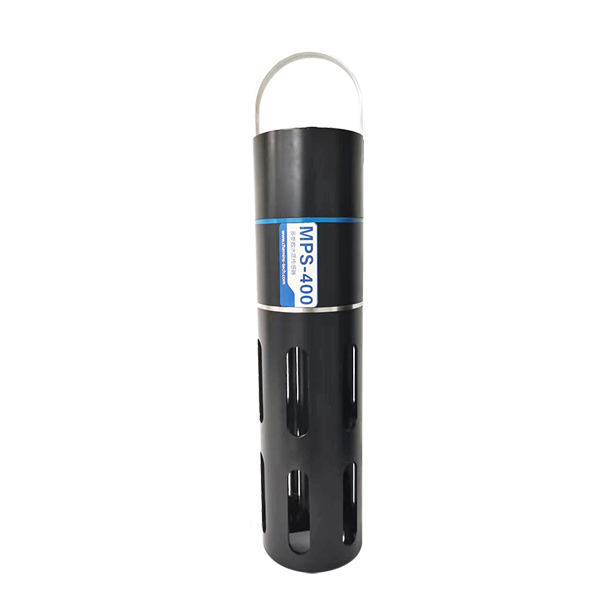
The opening image shows the NiuBoL BOD-4S; the next image shows the separate BOD-4A. Do not combine the larger range of one with the accuracy statement or fitted cleaning equipment of the other.

| Item | BOD-4S | BOD-4A |
|---|---|---|
| Optical estimate range | 0-300 mg/L | 0-150 mg/L |
| Resolution | 0.1 mg/L | 0.1 mg/L |
| Accuracy for order acceptance | Obtain an unambiguous full-scale or reading-based specification for the offered unit | +/-5% F.S.; equals +/-7.5 mg/L on this span |
| Working water conditions | 0-45 degrees C; pressure below 0.1 MPa | 0-45 degrees C; pressure below 0.1 MPa |
| Supply; stated consumption | 12-24 VDC; 0.2 W at 12 V | 12-24 VDC; 0.2 W at 12 V |
| Output | RS485 Modbus RTU; optional 4-20 mA | RS485 Modbus RTU |
| Housing; protection | 316L; IP68 | POM/316L; IP68 |
| Cleaning equipment | Electric brush optional; confirm fitted configuration | Immersion assembly with cleaning brush |
| Cable | Standard 5 m; custom length available | Standard 5 m; alternative lengths by agreement |
Identify ordered cable jacket, terminations and cleaning-cycle power separately. The optical estimate's site-relationship uncertainty is additional to the instrument specification; a 0.1 mg/L display increment is not proof of that accuracy in wastewater.
| Change observed | Why the old relationship may not transfer | Useful follow-up |
|---|---|---|
| New product, raw material or industrial contributor | Organic composition and biodegradability can change | Collect paired observations during the new operating state |
| New treatment or dosing stage | The monitored fraction may change before reaching the probe | Reconfirm the measurement point and reference sample |
| New filter, takeoff or sample line | Sample fraction or timing can change | Review conditioning and transport before adjusting coefficients |
| Persistent disagreement after suitable cleaning | Instrument, reference or matrix relationship remains unresolved | Check each source of disagreement rather than automatically recalibrating |
These are investigation triggers, not proof of a failed probe. Do not discard the original observations while identifying the cause.
Record the value and instrument condition before cleaning. Check the optical region, bubbles and the fitted brush. After appropriate service and stabilization, check again under comparable process conditions. If the water changed during the work, a before-and-after difference cannot be assigned entirely to cleaning.
Use the model's permitted standard-check procedure to investigate instrument response. A standard check and a wastewater comparison answer different questions. Passing a standard does not establish that a new wastewater mixture has the old fluorescence-to-BOD relationship.
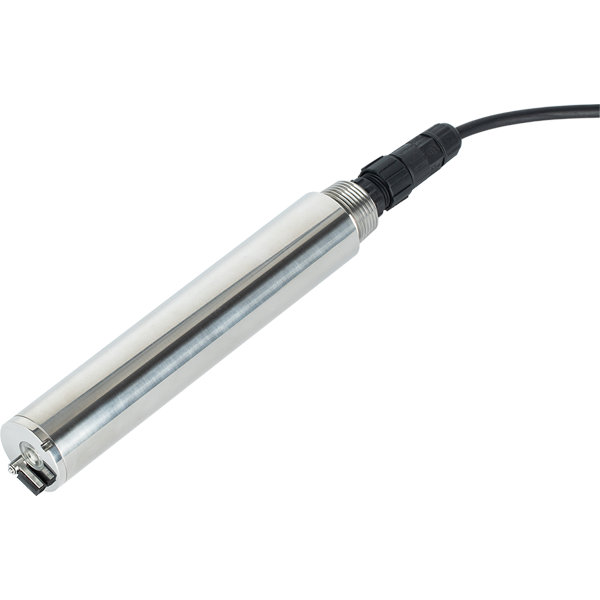
The separate COD probe below can provide a related organic-load observation, but agreement between two optical trends is not independent confirmation of laboratory BOD5 or absence of biological inhibition.
A few observations from one stable batch cannot establish performance across all later production states. Where the changed condition has not been evaluated, identify the limitation in the operating record and use the approved reference or supervised alternative for the decision.
At the PLC, RTU or data logger, label the channel as an optical BOD estimate and preserve its units, timestamp and instrument identity. Record cleaning, replacement and conversion changes with their effective times. RS485 Modbus RTU provides data access, not automatic version history; confirm how the receiving system will retain these records.
Keep original and adjusted records distinguishable. Do not silently apply a new coefficient to earlier periods collected under a different water composition. A multiparameter assembly needs the relevant installed module identified; a package name alone does not add an independent BOD measurement.
For a new installation or a changed process, provide NiuBoL the water source, relevant production states, expected band, existing paired results, selected reference method and intended operating decision. Add the actual probe configuration, brush option, access, power and output requirements.
Separate instrument supply, factory checks, site comparison work and any model adjustment in the offer. Ask who collects samples and reviews the result, and which process changes require renewed evaluation. This makes the ongoing work visible without assigning an arbitrary calibration interval or claiming maintenance-free operation.
No. A stable optical response can coexist with changed biodegradability. Review it against the process history and appropriate reference observations.
Not by itself. Check sample identity, timing, method validity and instrument condition, then evaluate representative observations before changing the conversion.
No. Its electric cleaning brush is an option that should be identified in the offered and delivered configuration, together with the required power and service access.
It cannot establish inhibition on its own. Use appropriate laboratory or process investigation where inhibition is suspected, rather than treating fluorescence as a biological response test.
Preserve original observations and identify the new setting and effective time. Any retrospective calculation should remain distinguishable and be justified for the water conditions involved.
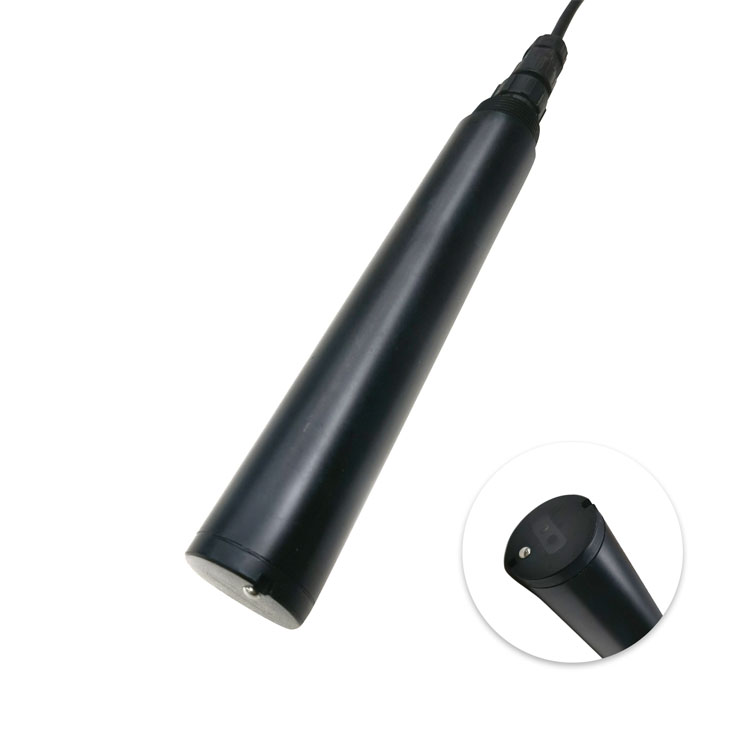
No. Turbidity can help investigate particles and sampling changes, but it does not independently determine biodegradability. The turbidity instruments shown here remain separate diagnostic measurements.
An online BOD sensor is useful when its optical trend remains relevant to the monitored wastewater and operating task. Process-change reviews, maintained optics and traceable comparison records protect that usefulness. A larger range or a clean window does not remove the need to review the underlying relationship.
Prev:Reagent-Free Online COD Sensor: Direct Immersion or Sample Bypass?
Next:Online ORP Sensor Replacement: Can You Reuse the Existing Setpoint?
Related recommendations
Sensors & Weather Stations Catalog
 Agriculture Sensors and Weather Stations Catalog-NiuBoL.pdf
Weather Stations Catalog-NiuBoL.pdf
Agriculture Sensors Catalog-NiuBoL.pdf
Water Quality Sensor Catalog-NiuBoL.pdf
Related products
 Combined air temperature and relative humidity sensor
 TDR Soil Moisture & Temperature Sensor for irrigation| RS485 |4-20mA| NBL-S-THR
 Soil pH sensor RS485 soil Testing instrument soil ph meter for agriculture |NBL-S-PH
 Wind Speed sensor Output Modbus/RS485/Analog/0-5V/4-20mA
 Tipping bucket rain gauge for weather monitoring auto rainfall sensor RS485/Outdoor/stainless steel
 Pyranometer Solar Radiation Sensor 4-20mA/RS485


Screenshot, WhatsApp to identify the QR code
WhatsApp number:+8615367865107
(Click on WhatsApp to copy and add friends)

