





— Blogs —
—Products—
 Consumer hotline +8618073152920
WhatsApp:+8615367865107
Address:Room 102, District D, Houhu Industrial Park, Yuelu District, Changsha City, Hunan Province, China
Product knowledge
Time:2025-08-31 14:13:21 Popularity:1077
Full weather station packages are complete only within an explicitly listed supply scope. Confirm the sensors, acquisition, power, mounting, enclosure and data functions included, then identify installation work and services supplied separately. A package name or assembled photograph does not prove that every component needed at the site is included or preconfigured.
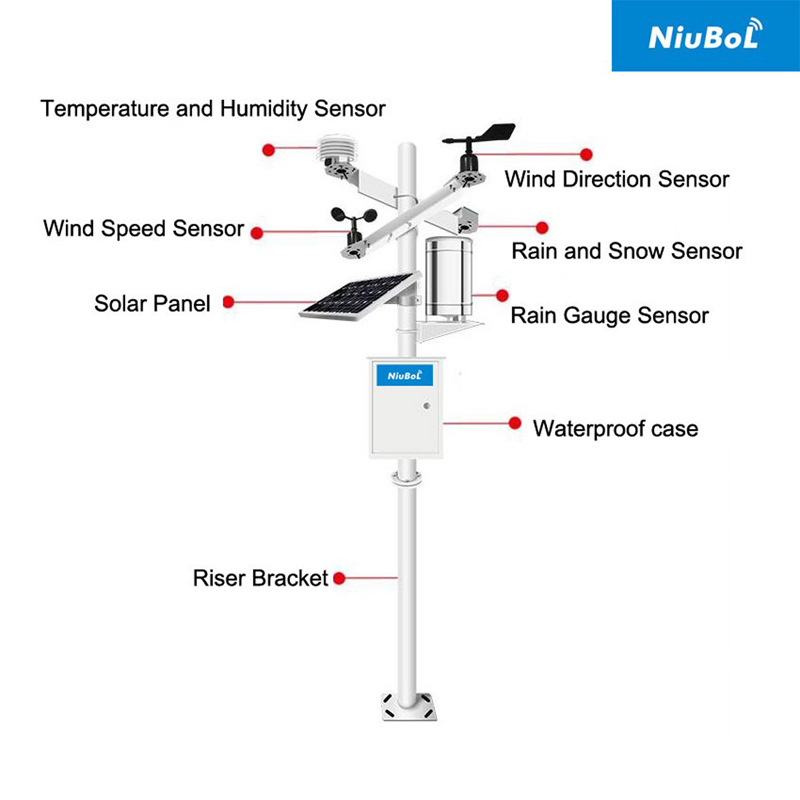
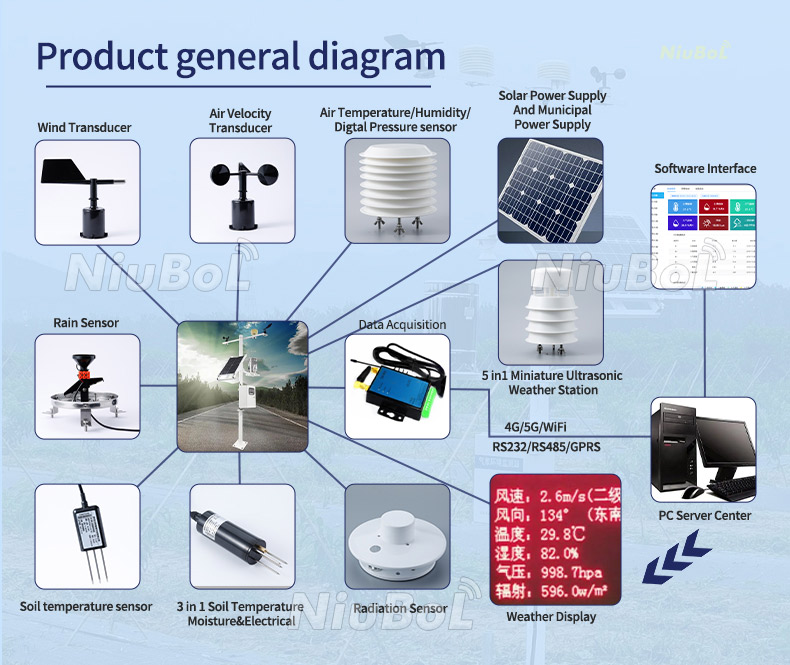
Begin with the observations the project needs. Wind speed and direction, air temperature, humidity and rainfall are common requirements, but no universal package must contain all of them. Atmospheric pressure, radiation, soil and crop-related channels should be added when they answer a defined project question.
For each measured quantity, identify the physical sensor and its connection to the logger. The NBL-W-SS measures wind speed; a separate direction channel or combined instrument is needed for direction. The NBL-W-LBTH combines air temperature, humidity and pressure. Counting product names is therefore not the same as counting useful measurement channels.
| Part of the package | What the equipment list should identify | Common unresolved item |
|---|---|---|
| Measurement | Sensor models, channels, ranges and output versions | An optional channel assumed to be standard |
| Acquisition | Logger, input allocation, settings and recording functions | Hardware present but sensor decoding not configured |
| Power | Supply, battery and solar components where required | Load or reserve not assessed for the actual site |
| Mechanical assembly | Mast, mounts, enclosure, cables and fasteners | Foundation or site installation work not included |
| Data access | Local export, communications and receiving application | Subscription, SIM or software work assumed to be included |
| Commissioning and service | Tests, documents and agreed assistance | On-site work or future maintenance left unassigned |
Ask who supplies each unresolved item. A clear exclusion is better than an ambiguous promise that everything is included. The NiuBoL weather station range supports configuration discussions, but the accepted equipment list, not a general category name, defines the proposed package.
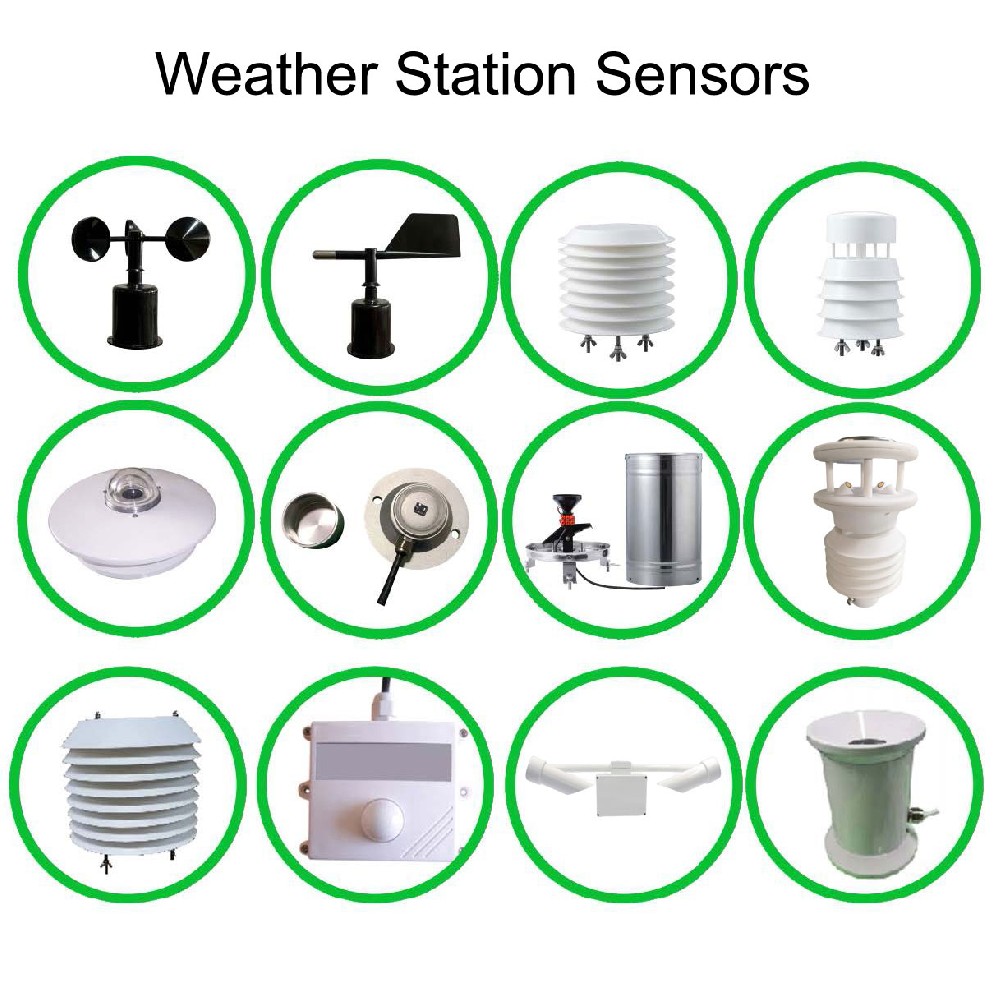
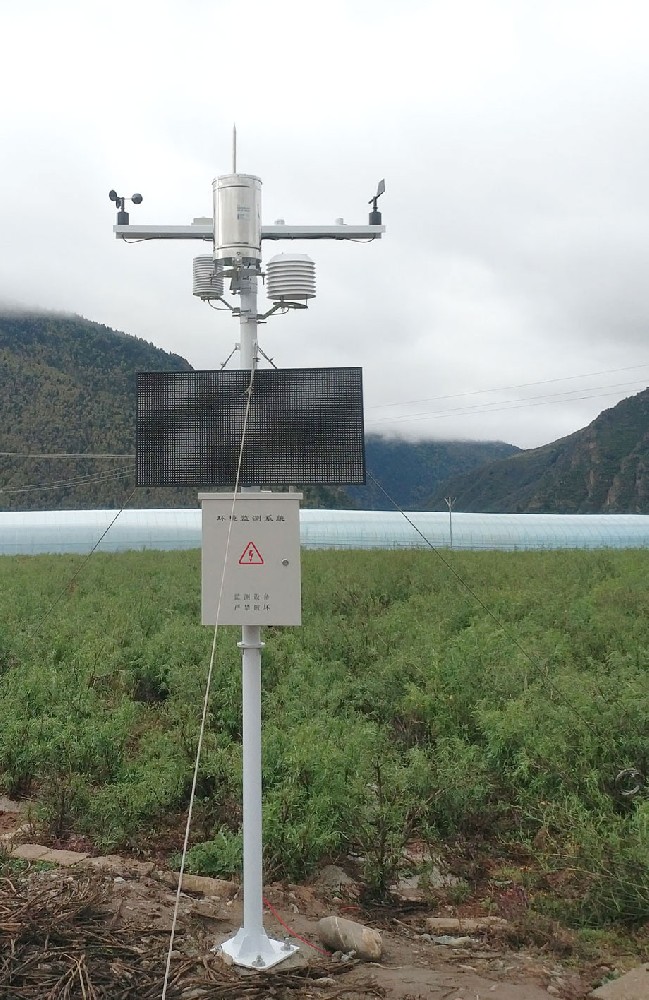
An outdoor cabinet may contain the logger, power distribution, battery or communications equipment. Confirm what is actually mounted inside it, how cables enter and how service access is maintained. A photograph of a closed box does not establish its protection rating, internal layout or readiness for the proposed environment.
The TG462 data logger has an IP30 enclosure. It therefore needs suitable protection for outdoor installation. Do not transfer a claimed cabinet rating to the logger itself, or assume that the completed assembly retains a rating after unspecified openings, connectors and cable glands are added.
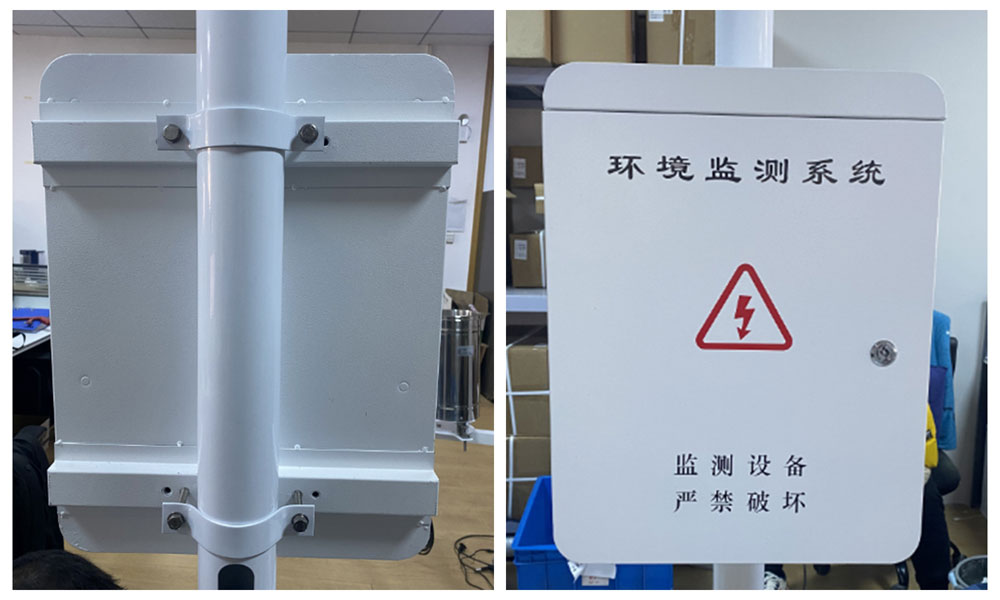
For solar operation, list the sensors, logger, modem and any display or accessory loads. Communications activity and optional equipment affect the energy requirement. The presence of a panel and battery is not evidence that the system can maintain the required observation and reporting duty through the site's low-sun period.
Ask for the assumptions used to select the power arrangement: configured equipment, operating schedule, expected solar conditions and required reserve. Identify maintenance access and the replacement arrangement for the battery. Where mains power is used, define the required backup behavior rather than assuming solar and mains options provide identical continuity.
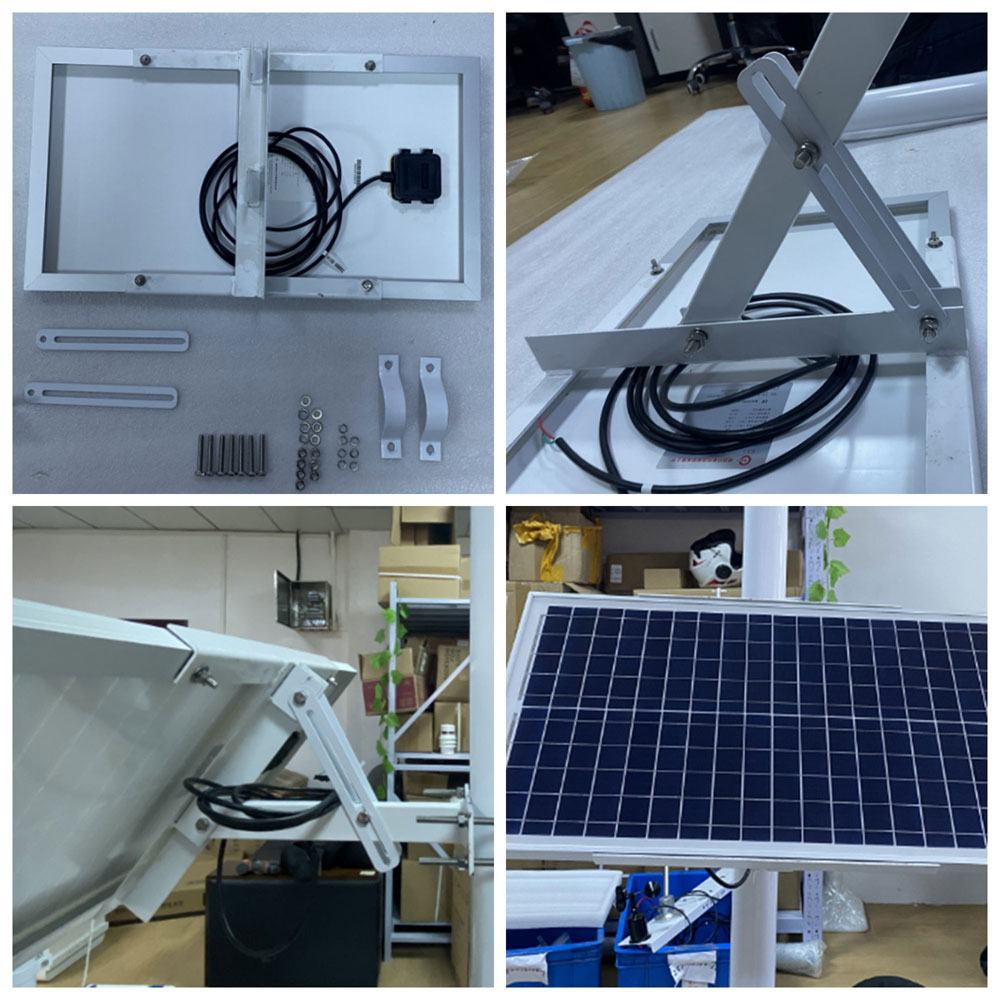
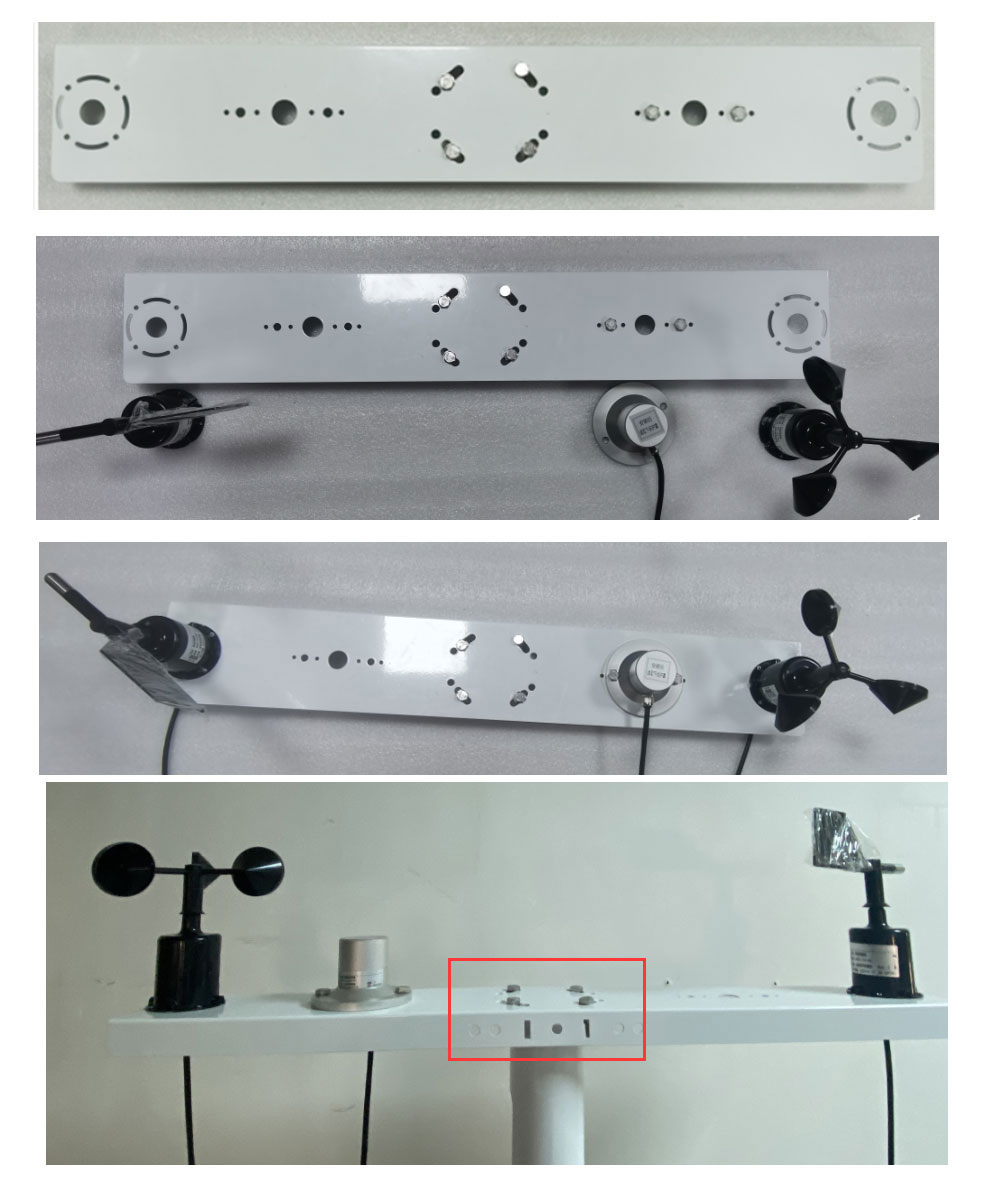
Identify the mast, crossarm, brackets, fasteners, cable routing and any grounding or surge-protection parts in the delivery list. Review dimensions against the intended sensors. An available bracket hole does not establish that a sensor has the required airflow, clearance, orientation or collector exposure.
Site work may include foundation preparation, lifting, access equipment and connection to an existing network. Assign those tasks before delivery. A factory-prepared crossarm can reduce some assembly work, but it cannot establish the suitability of a foundation or remove the need to check local obstructions.
The NBL-W-RS tipping-bucket rain gauge provides 0.2 mm resolution in its standard configuration, with a 0-50 degree C working-temperature specification. A project involving frozen precipitation needs a suitable arrangement reviewed separately; an ordinary liquid-rain gauge is not automatically a heated snow instrument.
Optional soil or crop channels also need their own interpretation. NBL-S-TMC-7 nutrient values are empirical field reference estimates, not laboratory nutrient results. Leaf wetness is an observation that may support a locally suitable risk model; it does not diagnose disease by itself. More channels should not create claims beyond the measurement methods supplied.
For RS485 Modbus RTU sensors, a package should identify the selected address, serial settings, register map, scale and channel assignment. For analog and pulse outputs, confirm the corresponding logger inputs and conversions. Sharing a communication connector does not establish that all devices are already decoded correctly.
Ask for an example record from the quoted configuration. It should identify station and channel names, units, observation times and unavailable-data behavior. A display, logger, modem and hosted application are separate functions even when one device combines several of them. Establish the required export or receiving interface explicitly.
For later expansion, check available inputs, bus capacity, power and software configuration. A modular-looking arrangement does not guarantee unused capacity or compatibility with any future sensor. Identify likely additions before selecting the host rather than treating expandable as an unlimited capability.
No. Confirm those items in the equipment list, including dimensions and configuration. Some projects use existing mounting and mains power, while others require a complete independent installation. The package name alone does not define that boundary.
No. Factory configuration can verify some functions before dispatch. Installation still requires checks of mounting, exposure, wiring, power and the complete receiving data path at the site.
No. Define local recording, remote communications and application access separately. Identify subscriptions, SIM arrangements, credentials and export requirements where those functions are needed.
Only within the actual input, power, communication and software capacity. Check the proposed additions against the logger and bus configuration. A compatible-looking connector or modular bracket is not sufficient evidence.
Compare models, output versions, cables, mounts and accessories against the approved list. Check configuration records and run the agreed acquisition tests before distributing equipment to remote sites. Resolve substitutions or missing items before treating the package as installation-ready.
Send NiuBoL the monitoring objective, channel list, site conditions and existing infrastructure for a package review. Identify which installation and data-service tasks the project team will perform and which are requested from the supplier. This makes a complete quotation possible without assuming every project needs the same hardware.
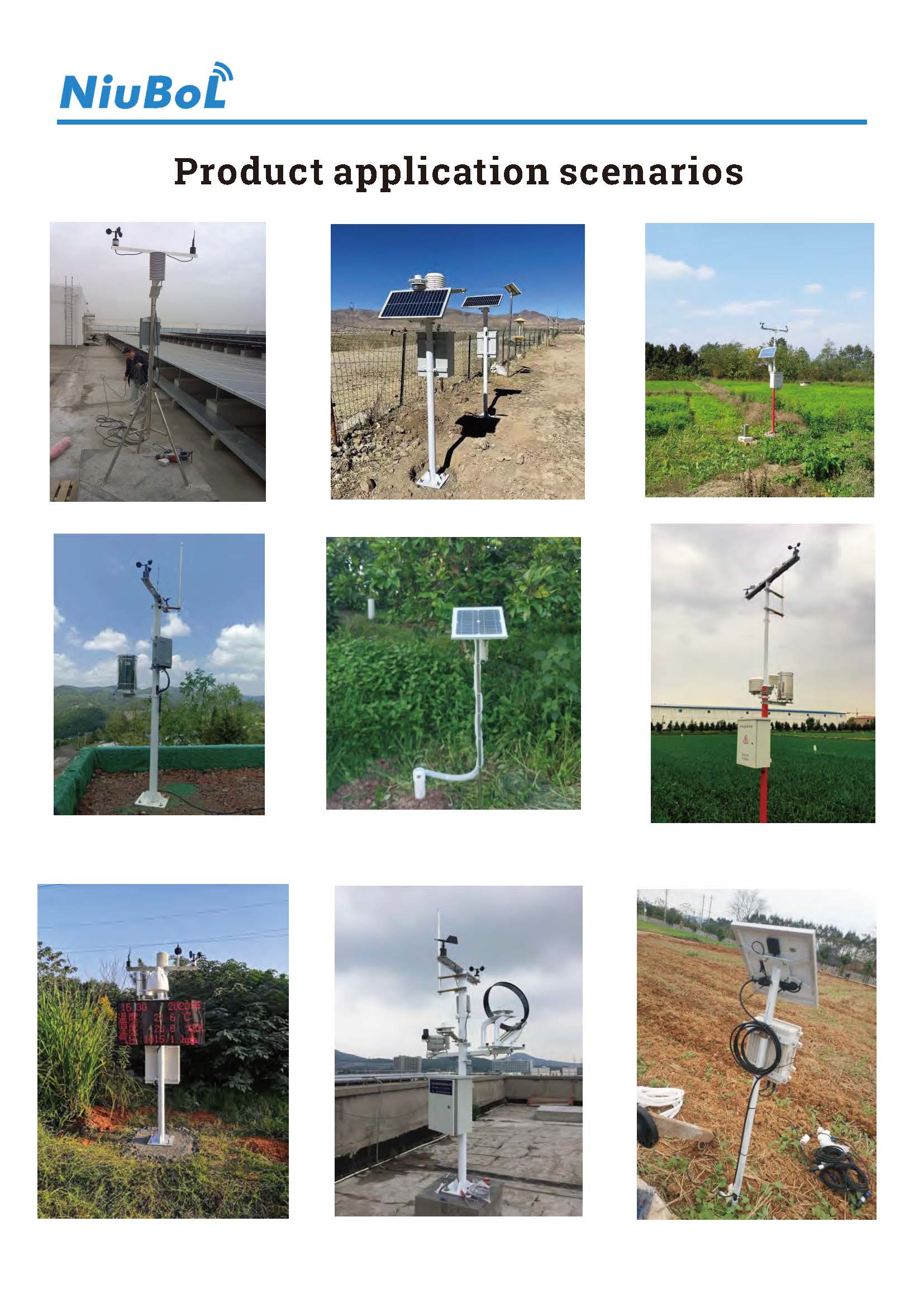
Evaluate full weather station packages through the equipment list and assigned responsibilities. Confirm measurement methods, power, mounting and data configuration, then test the installed system. Completeness means the required project functions are covered, not that a standard photograph contains many components.
Related recommendations
Sensors & Weather Stations Catalog
 Agriculture Sensors and Weather Stations Catalog-NiuBoL.pdf
Weather Stations Catalog-NiuBoL.pdf
Agriculture Sensors Catalog-NiuBoL.pdf
Water Quality Sensor Catalog-NiuBoL.pdf
Related products
 Combined air temperature and relative humidity sensor
 TDR Soil Moisture & Temperature Sensor for irrigation| RS485 |4-20mA| NBL-S-THR
 Soil pH sensor RS485 soil Testing instrument soil ph meter for agriculture |NBL-S-PH
 Wind Speed sensor Output Modbus/RS485/Analog/0-5V/4-20mA
 Tipping bucket rain gauge for weather monitoring auto rainfall sensor RS485/Outdoor/stainless steel
 Pyranometer Solar Radiation Sensor 4-20mA/RS485


Screenshot, WhatsApp to identify the QR code
WhatsApp number:+8615367865107
(Click on WhatsApp to copy and add friends)

