





— Blogs —
—Products—
 Consumer hotline +8618073152920
 WhatsApp:+8615367865107
Address:Room 102, District D, Houhu Industrial Park, Yuelu District, Changsha City, Hunan Province, China
Product knowledge
Time:2025-12-31 15:58:09 Popularity:861
In the evolution of modern organic agriculture, soil is not only the growth substrate for crops but also a complex biological factory that carries energy conversion, nutrient cycling, and microbial metabolism. The success logic of organic agriculture lies in building a healthy ecological closed loop through systematic improvement of soil physical, chemical, and biological properties. However, the realization of this closed loop highly depends on the precise quantification of nutrient flow.
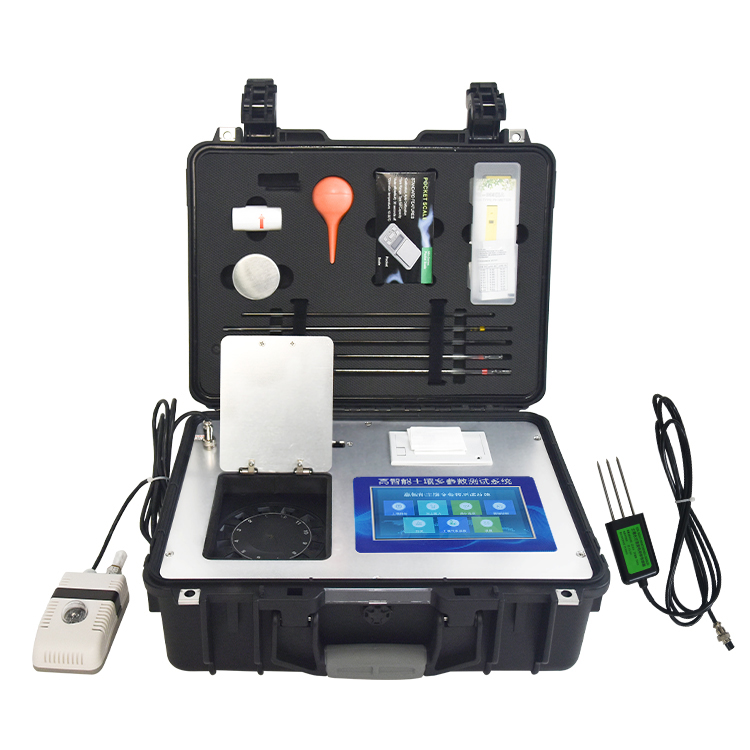
The NiuBoL soil fertilizer nutrient detector, as an integrated “small mobile laboratory,” is designed to break the barriers of laboratory testing, endowing every inch of farmland with high-precision research-grade analysis capabilities.

The application of soil organic matter is fundamental to maintaining good soil performance. If improvements are not made based on the physical, chemical, and biological properties of the soil, agricultural productivity will be difficult to sustain.
Fundamentally Promoting Plant Growth
The core of organic agriculture is to provide plants with a good growth environment using soil organic matter. By absorbing nutrients supplied by organic substances, it fundamentally promotes plant growth. The NiuBoL detector can detect available nitrogen, phosphorus, potassium, total nitrogen, phosphorus, potassium, organic matter, and pH in chemical fertilizers and organic fertilizers (including foliar fertilizers, water-soluble fertilizers, etc.), providing precise data for soil fertility cultivation.
Waste Resource Utilization
Most inputs in organic production come from wastes discharged by agriculture and food processing industries. NiuBoL can detect humic acid, trace elements, and heavy metals in them, preventing environmental degradation caused by improper integrated treatment of wastes, while significantly reducing costs in achieving resource reuse.
Co-evolution of Microorganisms and Soil
Crop production in agriculture is a process of co-adaptation and co-evolution with soil formation and microorganisms. The production capacity of crops largely depends on soil performance. NiuBoL's full-item detection capabilities (including medium and trace elements and heavy metal monitoring) ensure the health and efficiency of this co-evolution.
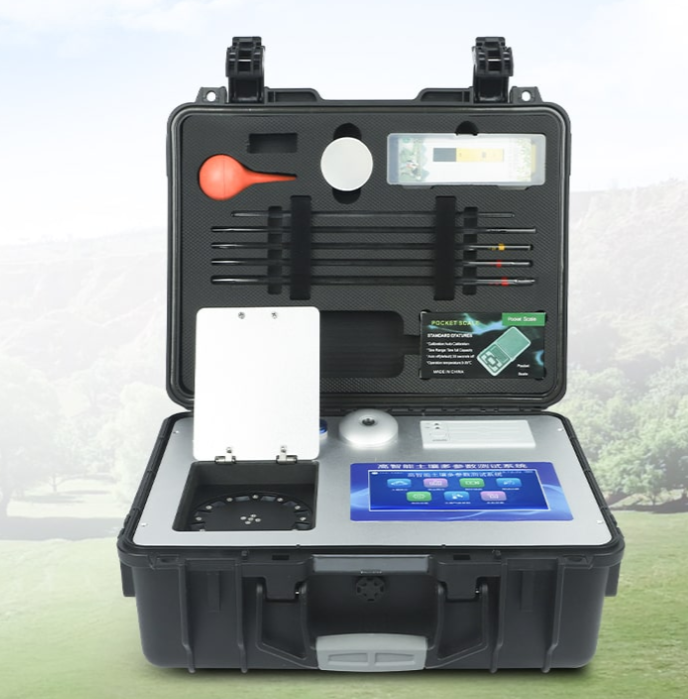
To meet the high standards of a “mobile laboratory,” NiuBoL has achieved 16 major breakthroughs in software and hardware interaction:
Android Intelligent System: Equipped with a 4-core 1.88 GHz main control chip, smooth operation, and extremely strong data processing capabilities.
Precision Rotating Colorimetric Cell: Ensures light source consistency and eliminates mechanical displacement errors.
Eight-Channel Rotating Detection: Measures 6 samples at once, greatly improving efficiency and reducing detection costs
High-Precision Filtering: High spectral purity.
Convenient Data Transmission: Equipped with USB and network ports, supports large-capacity memory and U disk data export.
100+ Crop Expert Systems: Built-in authoritative fertilization plans, can directly print recommended formulas after detection.
Nutrition Diagnosis Atlas: Provides images of plant nutrient deficiencies for comparison, achieving intuitive pathological diagnosis.
100,000-Hour Long-Life Light Source: 4-wavelength cold light source (red, blue, green, orange), extremely stable performance.
Standard Colorimetric Cuvette Application: Uses 1 cm standard colorimetric cuvettes, precise optical path, unaffected by external light interference.
Built-in Video Tutorials: Visualizes sample pre-processing procedures, ensuring beginners can learn and use immediately.
High-Speed Thermal Printer: Built-in design, can output complete detection reports with QR codes.
True Color Touch Screen: 7-inch high-sensitivity screen, certified with software copyright, excellent interactive experience.
Built-in Real-Time Clock: Automatically records detection time, convenient for long-term historical tracing.
Power Failure Protection Function: Has low voltage prompt, automatically saves data, prevents data loss.
AC/DC Dual Power Supply: Built-in large-capacity lithium battery (battery life >10 h), supports vehicle power supply.
Multi-Language Support: Supports Chinese-English switching, perfectly adapted to international trade and export needs.
Industrial-Grade Protection: High-strength PVC engineering plastic carrying case, shock-resistant and drop-resistant, adapts to harsh field environments.
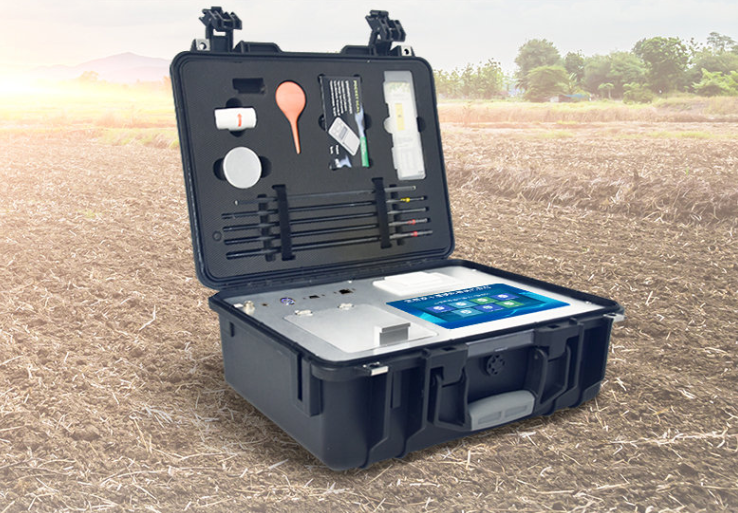
Based on market research by the NiuBoL team, we have systematically organized the detection capabilities into 7 major categories:
| Detection Category | Core Detection Items | Extension/Key Subdivision Indicators |
|---|---|---|
| 1. Soil Nutrients | Macro elements: Ammonium nitrogen, available phosphorus, available potassium, nitrate nitrogen, total nitrogen, total phosphorus, total potassium, hydrolyzable nitrogen | Organic matter, organic carbon, carbon-nitrogen ratio (C/N), pH value, salt content, moisture Micro elements: Calcium, magnesium, sulfur, silicon, boron, iron, copper, manganese, zinc, chlorine, molybdenum Heavy metals: Arsenic, chromium, nickel, aluminum, fluorine, titanium, selenium, etc. |
| 2. Fertilizer Nutrients | Single/compound fertilizers: Total NPK, ammonium/nitrate/urea nitrogen, biuret, water-soluble phosphorus | Organic fertilizers: Total NPK, available NPK, acid-soluble nitrogen, humic acid (various sources) |
| 3. Fresh Plant Nutrition | Nutrient tracking: Nitrate nitrogen, ammonium nitrogen, phosphorus, potassium | 11 trace elements, nitrates, nitrites |
| 4. Dry Plant | Plant total element analysis | Total nitrogen, total phosphorus, total potassium |
| 5. Tobacco Specialization | Tobacco quality core nutrients | Nitrogen, phosphorus, potassium, calcium, magnesium, boron, manganese, iron, copper, etc. 20 items |
| 6. Food/Fruits and Vegetables | Safety indicator monitoring | Nitrates, nitrites, heavy metals (lead, chromium, arsenic, etc.) |
| 7. Agricultural Water Quality | Irrigation and water-fertilizer integration monitoring | Ammonium nitrogen, phosphorus, potassium, pH, trace elements, etc. 15+ items |
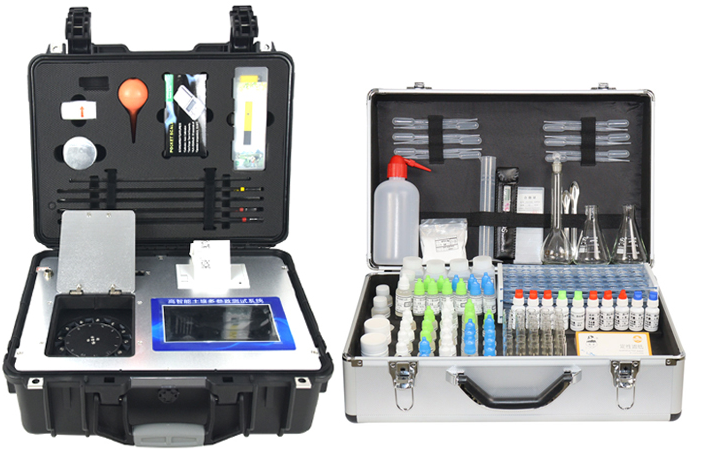
In the field of precise chemical analysis, NiuBoL's parameter indicators demonstrate extremely high professional rigor:
Power Supply System: AC 220 V±22 V; DC 12 V±5 V (power ≤5 W).
Repeatability Error: ≤0.02% (potassium dichromate solution), superior to national standards by 6 times.
Stability: No drift in 1 h; transmittance drift ≤0.3% in 2 h.
Linearity Error: ≤0.1% (copper sulfate detection), range 0.001–9999.
Sensitivity Parameters:
Red light ≥4.5×10⁻⁵; Blue light ≥3.17×10⁻³
Green light ≥2.35×10⁻³; Orange light ≥2.13×10⁻³
Wavelength Configuration: Red 680±2nm; Blue 420±2nm; Green 510±2nm; Orange 590±4nm.
Physical and Chemical Accuracy:
pH: Range 1–14, accuracy 0.01.
Salt Content: 0.01%–1.00%, error ±5%.
Moisture: 0–100%, error<0.5%.
Physical Characteristics: Dimensions 48×34.5×22 cm, net weight 5.2 kg, shock resistance level IP65.
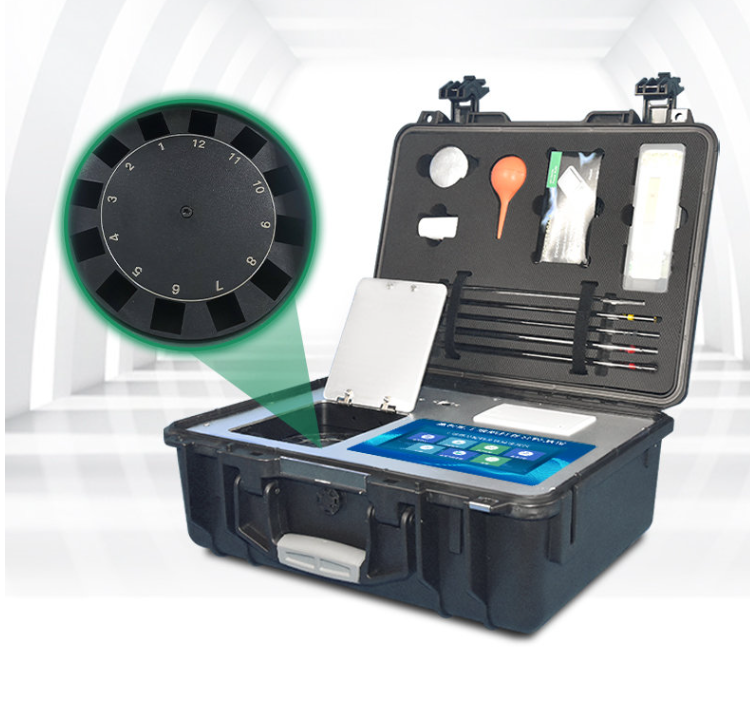
In the entire industry chain of organic agriculture, data opacity often means operational risks. NiuBoL achieves scenario coverage from “sensory experience” to “digital decision-making” by integrating 160+ detection items into a portable case.
At the forefront of the organic fertilizer production chain, the purity of raw materials determines the premium capability of the finished product.
Raw Material “Distinguishing True from False”: For purchased weathered coal, lignite, or peat, use NiuBoL specialized detection of total humic acid and free humic acid content. Intuitively identify the activity level of raw materials through data, preventing adulteration with coal gangue or ineffective soil.
Toxic Substance Interception: Before composting, use the instrument's heavy metal detection function to quickly screen whether the raw materials contain excessive lead, chromium, cadmium, mercury, arsenic. This “pre-quality inspection” can effectively prevent the destruction of entire batches of finished fertilizers or compliance risks due to raw material pollution.
Ratio Optimization: Based on measured raw material total nitrogen, total phosphorus, total potassium, and organic carbon data, precisely adjust the carbon-nitrogen ratio (C/N) of materials, ensuring microbial activity during fermentation and improving maturity efficiency.
In organic planting, the “time window” for nutrient supply is extremely narrow, and precise top-dressing is the core for improving yield.
Real-Time Monitoring of Plant Nutrition: During key crop development stages (such as rice heading period, fruit tree fruiting period), technicians use collected fresh plant samples. By measuring nitrate nitrogen, ammonium nitrogen, phosphorus, and potassium content in tissues, analyze the plant's “real-time hunger level.”
Dynamic Adjustment of Water-Fertilizer Formulas: Combined with available nutrient data in the soil, use the device's built-in 100+ expert fertilization systems to calculate and output the top-dressing amount of organic water-soluble fertilizers or foliar fertilizers on-site.
Nutrient Deficiency Early Warning and Remediation: Use the built-in plant nutrition diagnosis atlas to compare images for traits like yellowing leaves and stunting, combined with detection of medium and trace elements (calcium, magnesium, zinc, boron, etc.), achieving precise “nutrient supplementation” to prevent yield reduction due to nutrient imbalance.
For farmland affected by industry or land requiring ecological remediation, environmental supervision and governance highly depend on high-density spatial data.
High-Density Grid Layout: Using 8-channel rapid detection capabilities, engineering teams can perform “5m x 5m” small-step sampling in the field.
Heavy Metal Spatial Distribution Monitoring: On-site specific scanning of heavy metals like lead, cadmium, arsenic in samples. Through the instrument's built-in storage and USB export functions, quickly obtain large batches of positioning data, thereby drawing precise soil pollution spatial distribution maps.
Staged Assessment of Remediation Effects: During chemical leaching or bioremediation project implementation, use high precision (repeatability error ≤0.02%) for staged retesting. Without waiting for long laboratory return cycles, determine remediation progress on-site, optimize subsequent governance investments, and significantly reduce project detection costs.
| Question | Answer |
|---|---|
| Q: What is the significance of the precision rotating colorimetric cell for ordinary users? | A: It solves the problem of uneven light sources in multi-channel detection, ensuring that when measuring 6 samples at once, each sample's precision reaches the level of a grating spectrophotometer. |
| Q: How fast is the detection efficiency specifically? | A: Soil NPK 3 items detection ≤20 min; fertilizer 3 items detection ≤50 min. Greatly saves time costs for agricultural material dealers and large households. |
| Q: Why must organic agriculture pay attention to “biuret” detection? | A: Excessive biuret can cause severe seedling burning. NiuBoL can precisely identify biuret content in urea and compound fertilizers, preventing troubles before they occur. |
| Q: How does the expert fertilization system print plans? | A: Built-in thermal printer, generates formula sheets directly after detection, with QR codes for traceability, convenient for farmers to fertilize according to the formula. |
| Q: How does water quality detection help smart agriculture? | A: Supports water-fertilizer integration systems, real-time monitoring of NPK and heavy metals in irrigation water, preventing water source pollution. |
| Q: Does heavy metal detection support expansion? | A: Supported. In addition to standard configuration, reagents can be additionally purchased to detect lead, chromium, cadmium, and other heavy metals. |
| Q: How does the equipment ensure data in low temperature or power outage? | A: Has power failure protection function and low voltage prompt, data automatically saved to memory, supports long-term tracing. |
| Q: Application scenarios for Chinese-English switching function? | A: Mainly for foreign trade exports and multinational agricultural cooperation projects, system interaction fully adapted to international standards. |
Organic agriculture is not only a return to technology but also respect for soil ecology. The NiuBoL soil fertilizer nutrient detector achieves a closed loop of “measurement, allocation, application” through rigorous monitoring and intelligent management of over 160 indicators. Do you need to obtain the latest 16 functional operation guides for NiuBoL? Contact us to get your organic agriculture intelligent transformation plan.
Prev:Functions and advantages of soil moisture monitoring systems and sensors
Next:Classification, Applications, Selection, and Installation Guide for Rain Gauges
Related recommendations
Sensors & Weather Stations Catalog
 Agriculture Sensors and Weather Stations Catalog-NiuBoL.pdf
Weather Stations Catalog-NiuBoL.pdf
Agriculture Sensors Catalog-NiuBoL.pdf
Water Quality Sensor Catalog-NiuBoL.pdf
Related products
 Combined air temperature and relative humidity sensor
 TDR Soil Moisture & Temperature Sensor for irrigation| RS485 |4-20mA| NBL-S-THR
 Soil pH sensor RS485 soil Testing instrument soil ph meter for agriculture |NBL-S-PH
 Wind Speed sensor Output Modbus/RS485/Analog/0-5V/4-20mA
 Tipping bucket rain gauge for weather monitoring auto rainfall sensor RS485/Outdoor/stainless steel
 Pyranometer Solar Radiation Sensor 4-20mA/RS485

Screenshot, WhatsApp to identify the QR code
WhatsApp number:+8615367865107
(Click on WhatsApp to copy and add friends)

