





— Blogs —
—Products—
 Consumer hotline +8618073152920
 WhatsApp:+8615367865107
Address:Room 102, District D, Houhu Industrial Park, Yuelu District, Changsha City, Hunan Province, China
Product knowledge
Time:2026-02-14 16:20:07 Popularity:499
In the global landscape of modern smart agriculture, the transition from “relying on the weather” to “working with knowledge of the weather” fundamentally relies on the precision and stability of underlying environmental perception data. As a professional environmental monitoring hardware manufacturer, NiuBoL focuses on providing highly reliable small agricultural weather observation systems for system integrators, IoT solution providers, and project contractors.
We understand that for agricultural IoT project delivery, products must not only survive extreme operating conditions but also offer excellent system compatibility and scalability to support the technological leap from single-point monitoring to regional networked management.
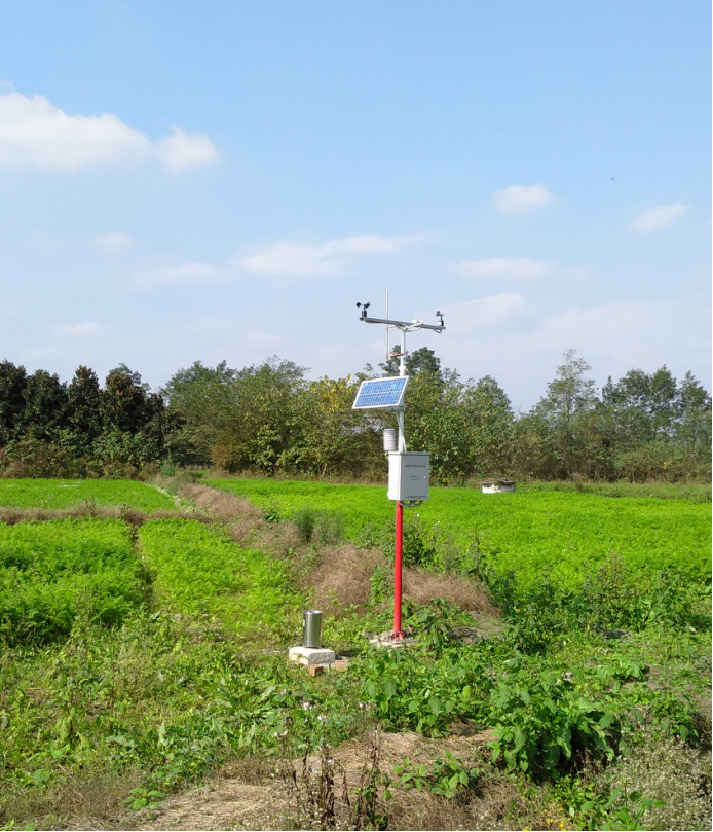
In agricultural IoT project delivery, NiuBoL small agricultural weather observation systems are not just hardware stacks but serve as the “data collector” supporting the entire smart agriculture decision-making brain.
System Value: Integrators can build “on-demand irrigation” automated systems for large and medium-sized farms using real-time data from NiuBoL soil moisture sensors.
Closed-loop Logic: The system monitors soil water potential and evapotranspiration; when moisture falls below the threshold, it automatically triggers PLC to activate integrated water-fertilizer equipment, saving water and electricity costs while preventing root rot and soil compaction from over-irrigation.
Engineering Logic: Using NiuBoL temperature, humidity, and leaf wetness sensors, the integrated system can run pest and disease prediction models.
Value-added Application: Before high-risk periods, the system automatically pushes warnings to farmers' phones or prepares plant protection drones, achieving pesticide reduction and efficiency improvement while supporting production of higher-standard, greener agricultural products.
A single monitoring point cannot reflect spatial differences across large farms. NiuBoL supports integrators in building full-domain monitoring networks.
Spatial Insights: Through multi-point networking, the system can draw “microclimate maps” of fields, identifying environmental factor differences between high- and low-yield areas to provide scientific basis for variable-rate fertilization and regional agricultural planning.
Financial and Insurance Access: Continuous and objective environmental data serves as authoritative evidence for agricultural insurance loss assessment and index-based compensation.
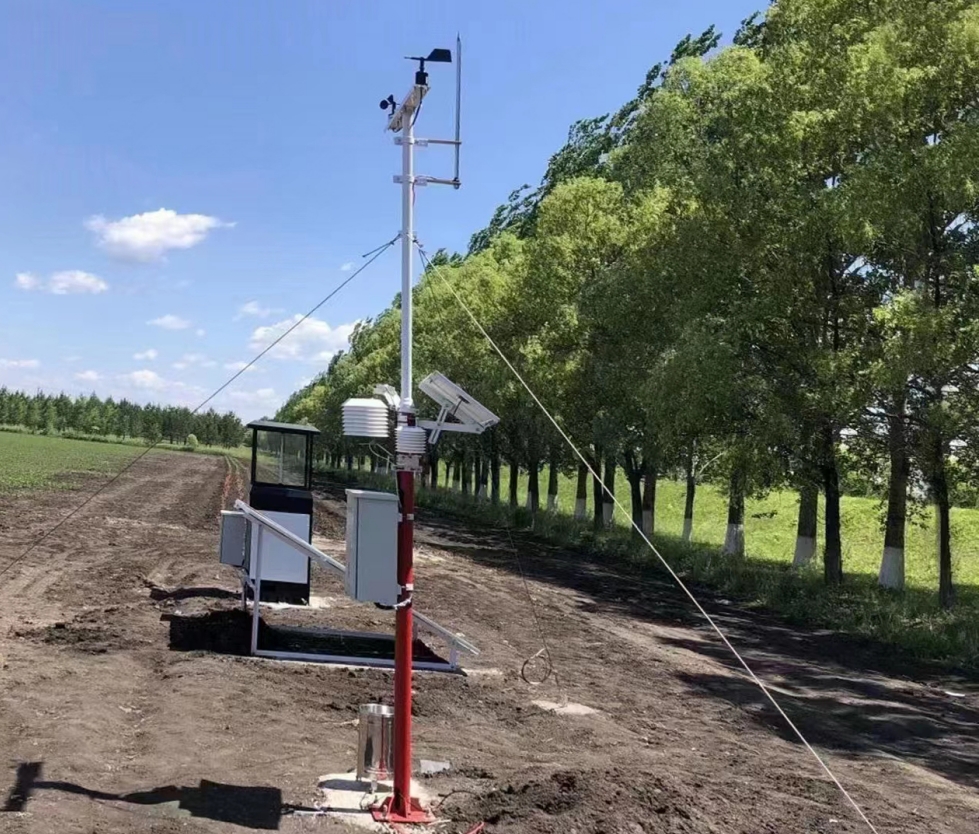
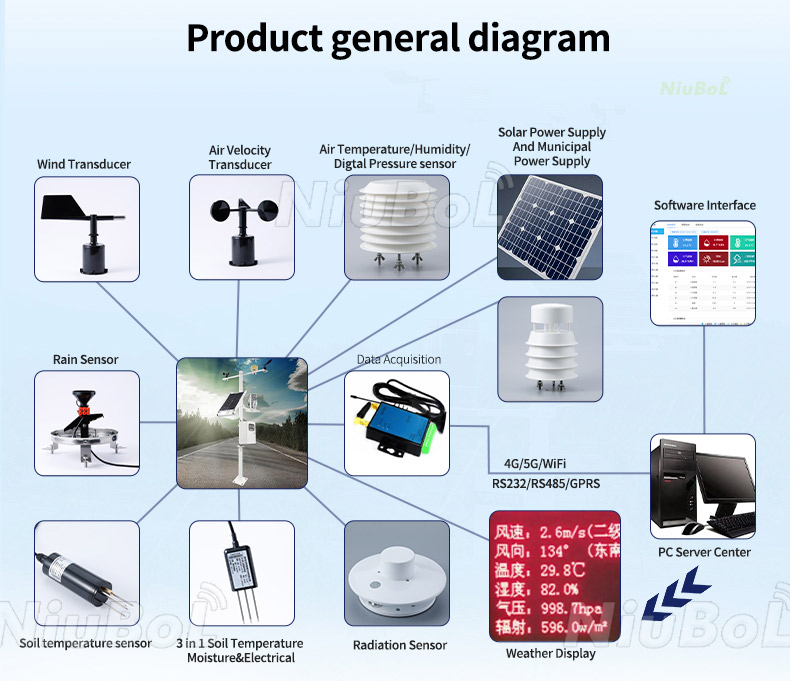
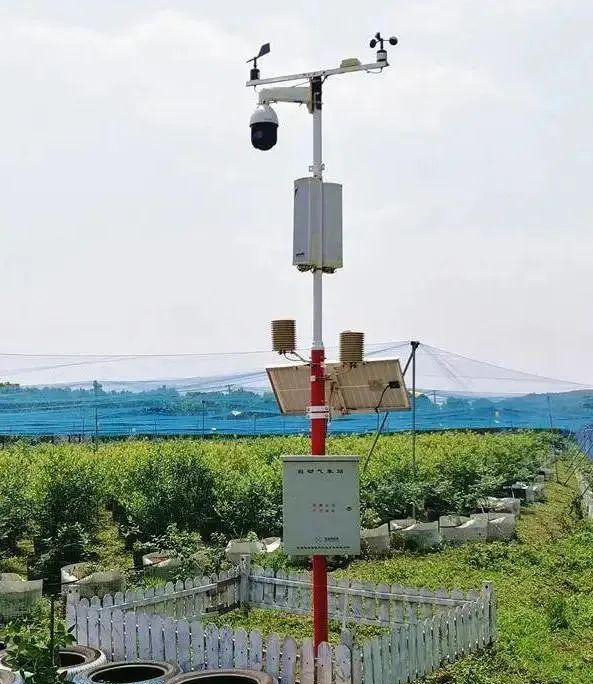
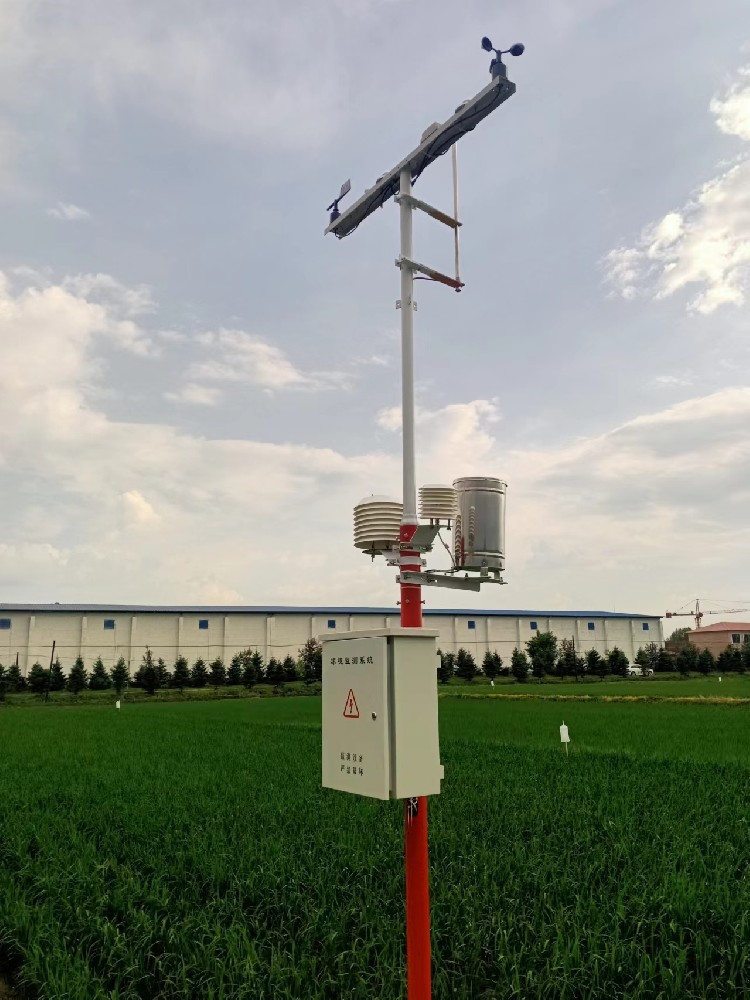
A standard NiuBoL observation system consists of multiple precision sensor modules. Through RS485 bus (Modbus protocol), integrators can easily achieve data aggregation and protocol conversion.
The following are key sensor components that build the foundation for precision agriculture and their engineering value:
2.1 Air Temperature and Humidity Sensor
Uses high-sensitivity digital capacitive elements, isolated from radiation interference via protective radiation shields.
Engineering Application: Guides greenhouse ventilation decisions, predicts high-risk pest periods using dew point algorithms, and assists in selecting optimal timing for plant protection drone operations.
2.2 Illumination Radiation and Photosynthetically Active Radiation (PAR) Sensor
Goes beyond ordinary illuminance meters to precisely measure 400-700 nm waveband radiation intensity meaningful for plant growth.
Engineering Application: Assesses photosynthetic efficiency and provides core threshold data for top-dressing timing and automated shading net linkage.
2.3 Wind Speed and Direction Sensor (Ultrasonic or Three-cup Type)
Provides real-time wind load data.
Engineering Application: Used for spray drift control in large fields and lodging risk assessment in tall crops; a key safety precondition for automated water-fertilizer-pesticide integration systems.
2.4 Rainfall Sensor (Tipping Bucket or Piezoelectric Type)
NiuBoL offers both mechanical tipping bucket type meeting national hydrological standards and maintenance-free piezoelectric type.
Engineering Application: Monitors rainfall intensity and records start/stop times, enabling “rain stop pump off” closed-loop logic for irrigation systems.
2.5 Multi-parameter Soil Moisture Sensor
Integrates soil temperature, humidity, EC value (electrical conductivity), and pH monitoring.
Engineering Application: The “core commander” of smart irrigation systems. Monitors soil moisture and root-zone salinity dynamics to implement precise variable-rate irrigation, preventing soil salinization and root rot.
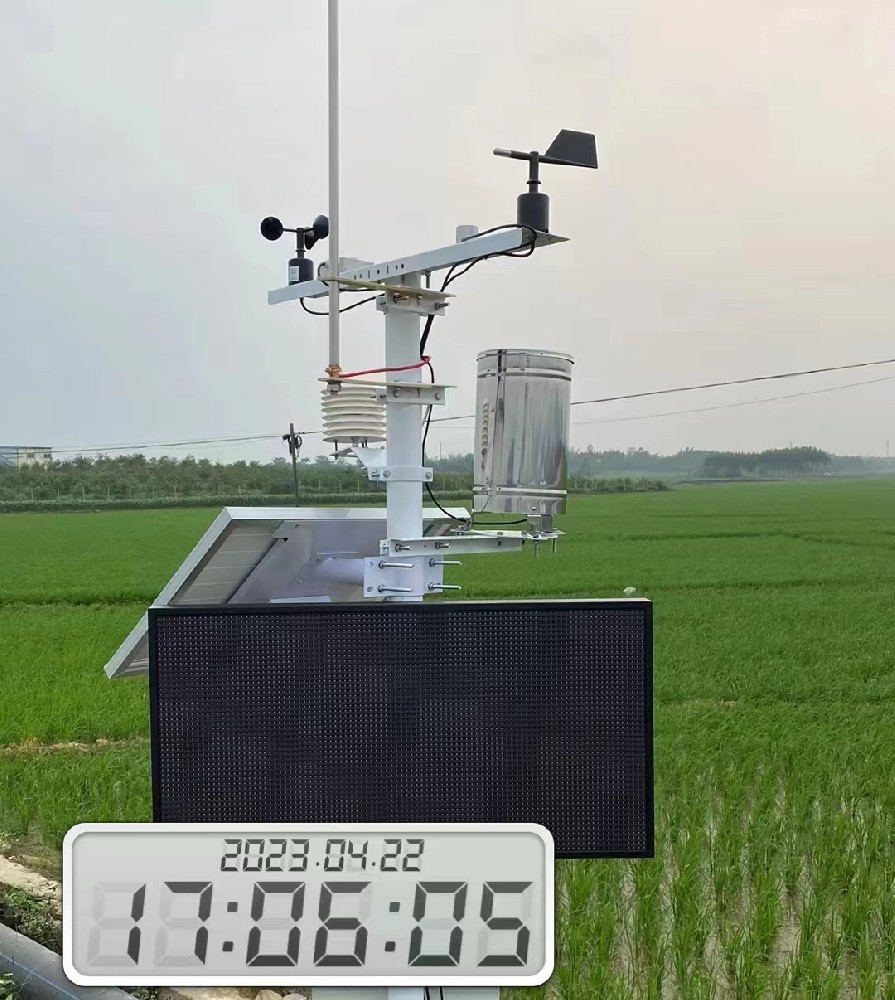
| Monitoring Parameter | Sensor Type | Measurement Range | Signal Output Format |
|---|---|---|---|
| Air Temperature | Digital thermistor element | -40 ~ 85℃ | RS485 (Modbus) |
| Air Humidity | Capacitive sensing | 0 ~ 100% RH | RS485 (Modbus) |
| Soil Moisture | FDR frequency domain reflection | 0 ~ 100% | RS485 (Modbus) |
| Photosynthetically Active Radiation | Silicon photocell (PAR) | 0 ~ 2000 μmol/m²·s | RS485 (Modbus) |
| Wind Speed | Three-cup / Ultrasonic | 0 ~ 60 m/s | RS485 / 4-20mA |
| Rainfall | Tipping bucket / Piezoelectric | 0 ~ 8 mm/min | Pulse / RS485 |
| Soil EC Value | Salinity transmitter | 0 ~ 20 mS/cm | RS485 (Modbus) |
As an agricultural IoT supplier, we provide the following professional recommendations during system design for integrators:
Communication Stability: Ensure all sensors support standard RS485 Modbus-RTU protocol. NiuBoL provides detailed register mapping tables, significantly shortening development cycles on the data collector (RTU) side for integrators.
Power Supply Redundancy Design: For remote farmlands, NiuBoL solutions optimize sensor power consumption; paired with solar modules, they guarantee monitoring continuity for more than 15 days during continuous cloudy/rainy weather.
Installation Environment Considerations: Sensors should avoid local terrain features (large buildings or dense windbreaks) to ensure representativeness of wind speed and rainfall data. For soil sensors, ensure probes are in close contact with soil to avoid gaps causing data distortion.
Maintainability: Recommend mixing tipping bucket and piezoelectric rainfall sensors in projects. For sites with high maintenance-free requirements, the arc-shaped self-cleaning structure of piezoelectric sensors significantly reduces later inspection costs.
Protection Rating: Outdoor sensors must reach IP65 or higher protection level; core circuits should undergo triple-proof treatment to resist fertilizer corrosion, pesticide spraying, and condensation risks from extreme temperature differences.
Q1: How does the NiuBoL meteorological monitoring system connect to the integrator's own cloud platform?
A: Our system is fully open. Integrators can obtain raw data via Modbus protocol or use NiuBoL smart gateway API interfaces to directly push data to third-party servers or self-built cloud platforms.
Q2: Is there a transmission distance limit when deploying on a large-scale park?
A: Standard RS485 transmission can reach 1200 meters. For broader areas, NiuBoL provides wireless transparent transmission modules to support long-distance data backhaul.
Q3: Can soil sensors monitor moisture at multiple depths simultaneously?
A: Yes. We offer tubular multi-layer soil sensors or single-point combination solutions, supporting deployment at key root-zone layers such as 20cm, 40cm, 60cm for layered moisture dynamic monitoring.
Q4: How does the equipment cope with pesticide spraying and fertilizer corrosion?
A: NiuBoL sensor shells use special engineering plastics resistant to UV and chemical corrosion with protective coatings; protection rating reaches IP65 or higher, and core circuits are reinforced with triple-proof paint.
Q5: Does the system support access to third-party sensors?
A: As long as third-party sensors support Modbus protocol, NiuBoL multi-channel collectors can easily mount and uniformly manage them.
Q6: How is monitoring accuracy of EC sensors ensured in arid areas?
A: Our soil EC sensors feature temperature compensation; even in environments with large soil temperature differences, algorithms correct to ensure true and reliable conductivity data.
Q7: If a sensor is damaged, is replacement convenient?
A: NiuBoL adopts modular design. Sensors connect to collectors via standard aviation plugs or terminals, enabling minute-level on-site quick replacement.
Q8: Does NiuBoL provide technical support for project bidding?
A: Yes. We can provide partners with detailed technical parameter specification sheets, installation sketches, communication protocol manuals, and industry-standard inspection reports.
Q9: Does the tipping bucket rain gauge require regular maintenance?
A: Yes. The mechanical tipping bucket structure is recommended to be cleaned of inlet debris quarterly to prevent clogging. For extremely high maintenance-free requirements, our piezoelectric rain gauge solution can be selected.
Q10: Are there special terrain requirements for sensor installation?
A: To ensure accuracy of wind speed, direction, and rainfall monitoring, installation is recommended in open areas where surrounding obstacles are at least twice the height away; brackets must remain vertical and be anchored.
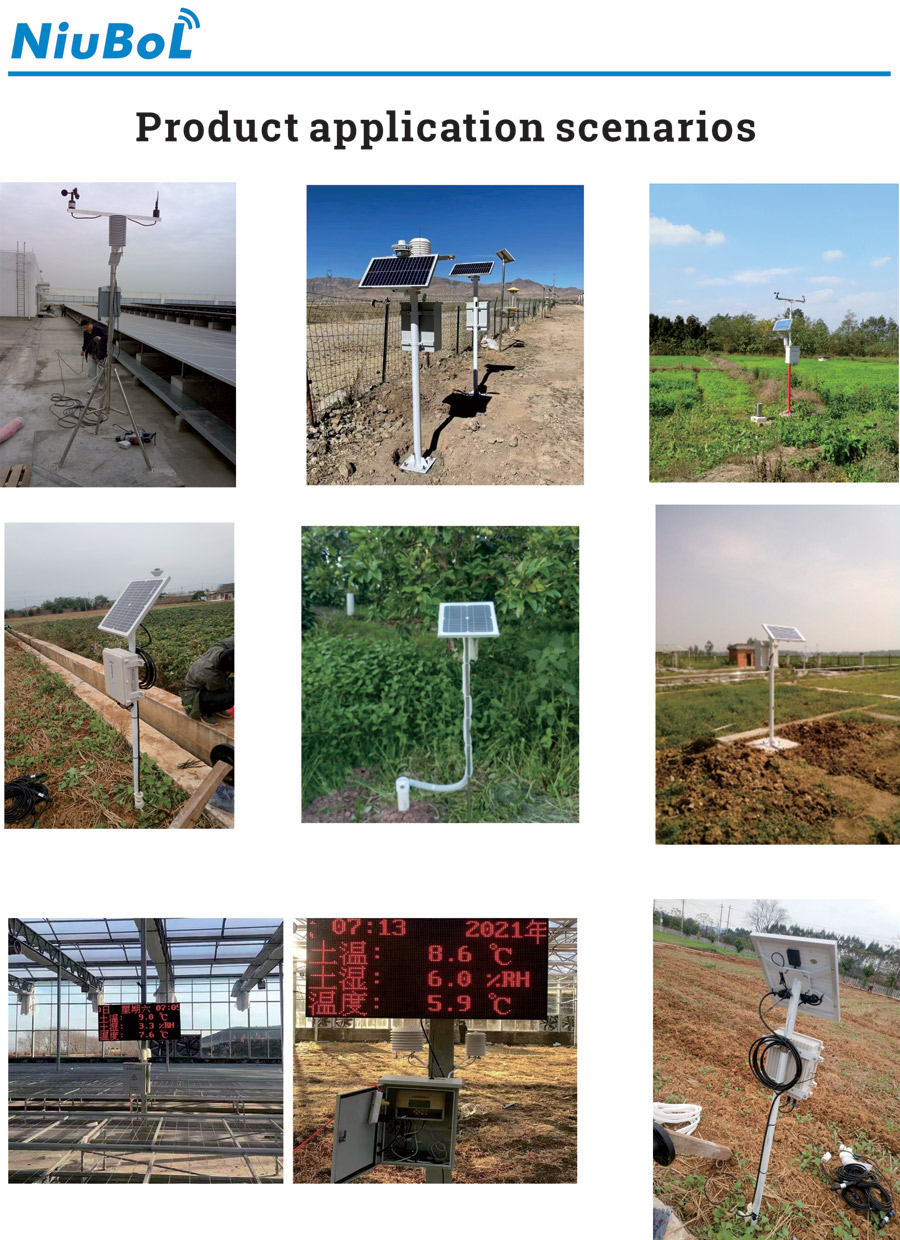
Deploying a reliable NiuBoL small agricultural weather observation system not only procures a set of hardware but equips the farm with an all-weather “meteorology and soil expert.” For system integrators, the stable data flow we provide forms the cornerstone for building smart agriculture closed loops and enhancing project added value.
When individual farmland micro-meteorological monitoring stations connect into a network, the power of data converges into a river, driving agricultural production from “experience-driven” to “intelligence-driven.”
If you are conducting equipment selection for smart agriculture, high-standard farmland construction, or scientific breeding projects, please contact the NiuBoL expert team. We will tailor cost-effective perception systems for you to assist in efficient project approval and delivery.
Prev:Industrial-grade Rainfall Automatic Weather Station: Multi-Scenario Integration Solution
Next:Industrial-grade Visibility Meter Integration Solution and Application Scenarios
Related recommendations
Sensors & Weather Stations Catalog
 Agriculture Sensors and Weather Stations Catalog-NiuBoL.pdf
Weather Stations Catalog-NiuBoL.pdf
Agriculture Sensors Catalog-NiuBoL.pdf
Water Quality Sensor Catalog-NiuBoL.pdf
Related products
 Combined air temperature and relative humidity sensor
 TDR Soil Moisture & Temperature Sensor for irrigation| RS485 |4-20mA| NBL-S-THR
 Soil pH sensor RS485 soil Testing instrument soil ph meter for agriculture |NBL-S-PH
 Wind Speed sensor Output Modbus/RS485/Analog/0-5V/4-20mA
 Tipping bucket rain gauge for weather monitoring auto rainfall sensor RS485/Outdoor/stainless steel
 Pyranometer Solar Radiation Sensor 4-20mA/RS485

Screenshot, WhatsApp to identify the QR code
WhatsApp number:+8615367865107
(Click on WhatsApp to copy and add friends)

