





— Blogs —
—Products—
 Consumer hotline +8618073152920
 WhatsApp:+8615367865107
Address:Room 102, District D, Houhu Industrial Park, Yuelu District, Changsha City, Hunan Province, China
Product knowledge
Time:2026-02-14 16:26:31 Popularity:491
In the evolution of smart cities and Industrial Internet of Things (IIoT), quantitative monitoring of atmospheric visual environments has become a key element to ensure public safety and improve management precision. NiuBoL, as a professional environmental sensing technology manufacturer, launches the NBL-W-VS series visibility meter based on advanced forward scattering detection principle, specifically designed to provide system integrators, IoT solution providers, and large engineering contractors with a high-precision, high-reliability perception layer foundation.
Unlike traditional manual empirical observation, the industrial-grade visibility meter achieves digital acquisition of atmospheric transparency by simulating the technical logic of Meteorological Optical Range (MOR). This not only provides continuous data support for meteorological stations but also serves as the core judgment basis for safe operations of highways, airports, ports, and major projects.
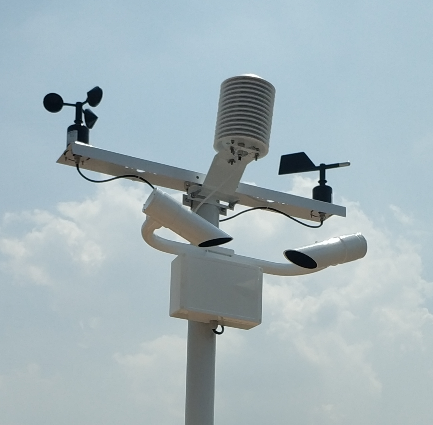
Understanding the technical depth of visibility monitoring is the foundation for system selection. The NiuBoL visibility meter adopts next-generation meteorological monitoring technology, with accuracy and environmental adaptability far surpassing traditional transmissive devices.
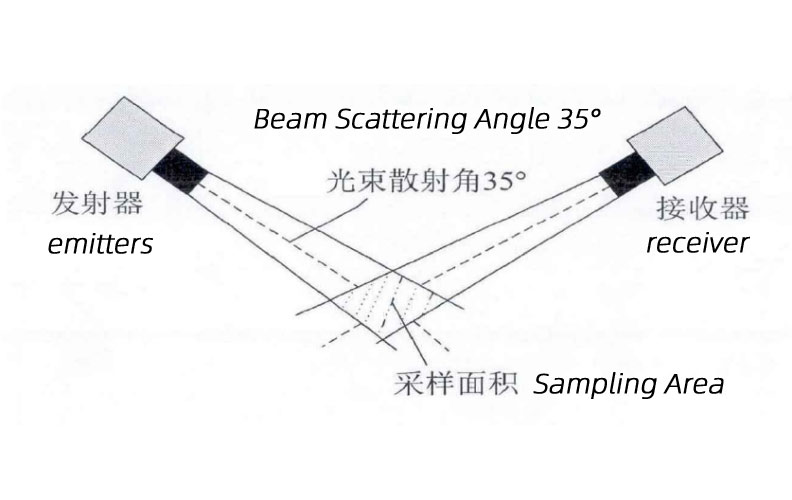
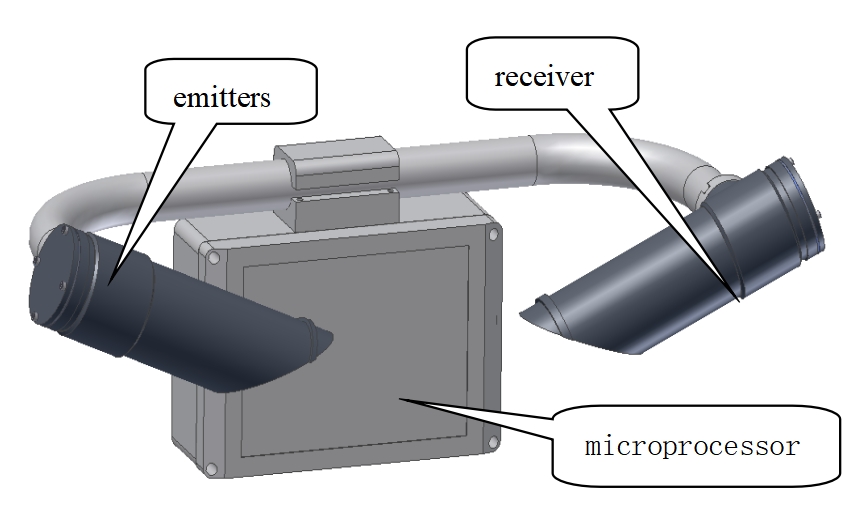
The NBL-W-VS sensor emits 875 nm infrared pulsed light through the transmitter. When the beam passes through the sampling area, suspended particles in the atmosphere (such as fog droplets, smoke, dust, water vapor, etc.) produce scattering. The receiver captures the pulsed light intensity within a forward scattering angle range of 39°–51° relative to the emission optical path.
Physical Logic: This design is based on the definite proportional relationship between aerosol scattering intensity and atmospheric extinction coefficient. Within visibility measurements up to 100 km, the total scattering coefficient can be approximately equivalent to the total extinction coefficient.
Mathematical Model: The built-in microprocessor controller converts the collected scattering intensity into Meteorological Optical Range (MOR) values in real time using a dedicated algorithm model, outputting highly reliable linear data.
High Resolution and Low Error: Compared to ±20% error in manual observation, the NiuBoL sensor achieves 2% accuracy within 2 km range, effectively capturing minute visibility fluctuations imperceptible to the human eye.
No Measurement Blind Zone: Integrated structural design optimizes the optical path crossover in the sampling area, enabling continuous monitoring from 5 meters to 10 kilometers.
Environmental Immunity: Unique dual-scattering receiver structure minimizes interference from solar stray light and environmental reflections.
| Parameter | Specification |
|---|---|
| Measurement Principle | Forward light scattering |
| Measurement Range | 5 m – 10,000 m (10 km) |
| Measurement Accuracy | ≤2 km: 2%; 2–10 km: ±10% |
| Communication Interface | RS485 (15 kV ESD protection) |
| Communication Protocol | Standard MODBUS-RTU |
| Baud Rate | 9600 bps |
| Power Supply | DC 12 V (reverse polarity & self-recovery fuse protection) |
| Average Power Consumption | < 0.8 W (ultra-low power, solar compatible) |
| Protection Rating | IP65 |
| Material & Finish | Anodized hard aluminum + 316 stainless steel + multi-layer protective paint |
| Operating Environment | Temperature: -40 ~ 80 °C; Humidity: 0 ~ 95% RH |
| MTBF | > 18,000 hours |
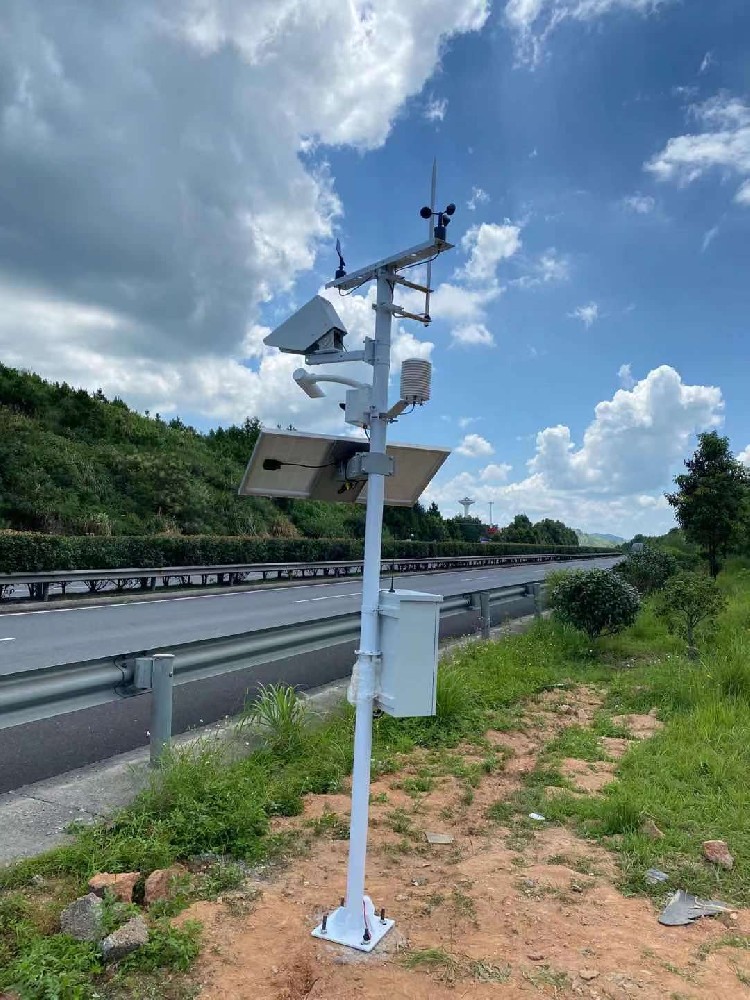
On highways, cross-sea bridges, tunnels, etc., sudden visibility drops (e.g. dense fog) pose major safety risks.
Integration: Real-time MOR monitoring; when visibility < 200 m, automatically activate roadside intelligent fog lights (red warning) and issue speed limit messages on LED boards.
Value: Second-level detection + minute-level transmission, providing critical early warning time to prevent pile-up accidents.
Crane operations and vessel movements heavily depend on visual conditions.
Integration: Deploy at key tower cranes or navigation marks; feed data into port management platform.
Value: Ensures safe operations in sea fog or heavy dust conditions, reducing collision risks.
Integration: Feed visibility data into City Lighting Management System (CIMS). In extreme daytime haze or fog, automatically increase streetlight brightness or activate landscape lighting earlier.
Value: Balances traffic safety and intelligent energy management.
High dust concentration in mines or construction sites directly degrades local visibility.
Integration: Real-time monitoring + automatic linkage with spray dust suppression systems.
Value: Digitally supports occupational health and safe production compliance.
Protocol & Software Integration: Standard Modbus-RTU, simple register reads for MOR value & status. Supports online parameter configuration via control commands.
Installation & Protection: Recommend quarterly lens cleaning in high-pollution areas. Built-in lightning & 15 kV ESD protection on comm/power interfaces.
Power & Cabling:<1 W consumption ideal for solar setups. For long RS485 runs, ensure proper termination and cable loss compensation.
Quick Deployment: No precise optical alignment needed — just fix bracket and ensure clear optical path. Built-in reverse polarity & self-recovery fuse protects against wiring errors.
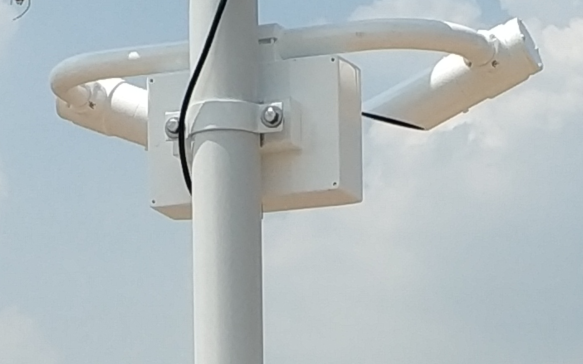
Q1: Why forward scattering instead of transmissive?
A: Transmissive requires long baseline (tens of meters) and precise alignment; forward scattering uses compact integrated design, sufficient accuracy for most applications at lower cost.
Q2: Data update frequency?
A: Outputs every 60 seconds; supports polled mode to filter transient noise (e.g. birds).
Q3: Salt fog corrosion in coastal areas?
A: No — anodized aluminum + 316 stainless steel + multi-layer paint, IP65 rated, designed for high-salt environments.
Q4: Accurate during heavy rain?
A: Yes — algorithm compensates for precipitation scattering effects; treats rain, fog, and haze within the same extinction framework.
Q5: Supports 24 V power?
A: Standard is 12 V; use DC-DC converter if only 24 V available.
Q6: Lens frosting/fogging?
A: Special anti-condensation coating; periodic inspection recommended in extreme cold.
Q7: How to set address & baud rate?
A: Via RS485 control commands; detailed manual and configuration software provided.
Q8: What does >18,000 h MTBF mean?
A: Average failure-free operation >2 years under normal conditions, significantly reduces O&M effort.
Q9: Maintenance cost vs. transmissive?
A: Transmissive needs frequent alignment & large structure; NBL-W-VS is compact (<10 kg), single-person install, annual maintenance ~20% of transmissive.
Q10: Distinguish heavy rain from dense fog?
A: Particle size differences affect scattering spectrum; internal algorithm compensates for precipitation to output accurate MOR.
Q11: Supports 4G/LoRa direct upload?
A: Native RS485 output; pair with NiuBoL gateway for wireless/cloud transmission.
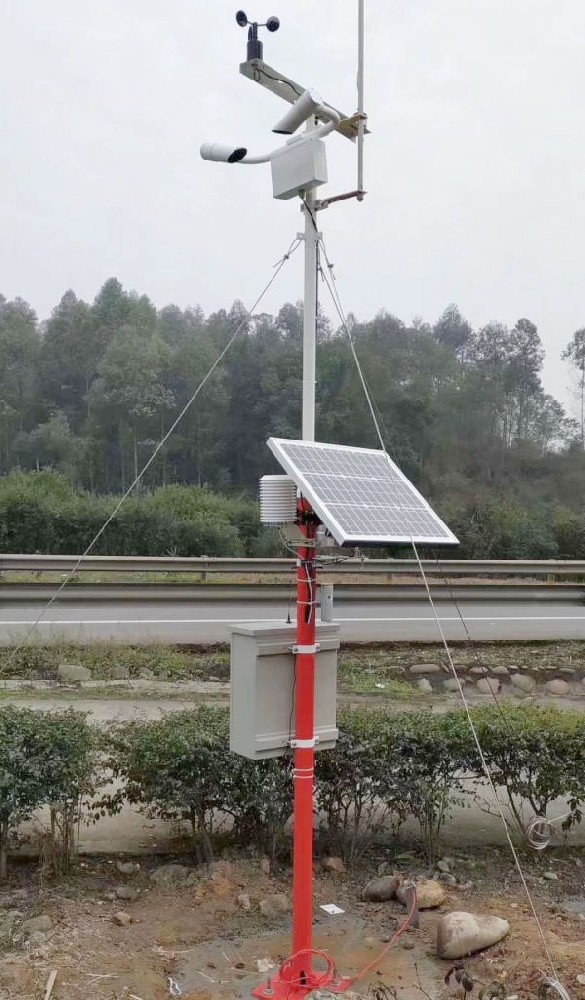
From highway fog warnings to safe port operations, NiuBoL visibility meters deliver precise quantification of complex weather conditions via forward scattering technology. For system integrators, hardware with standard RS485 Modbus, ultra-low power, and full-weather protection is the foundation for reliable delivery and long-term customer satisfaction.
Contact NiuBoL for register maps, installation drawings, and competitive bulk pricing to ensure your system maintains clear visibility insights in challenging visual environments.
Related recommendations
Sensors & Weather Stations Catalog
 Agriculture Sensors and Weather Stations Catalog-NiuBoL.pdf
Weather Stations Catalog-NiuBoL.pdf
Agriculture Sensors Catalog-NiuBoL.pdf
Water Quality Sensor Catalog-NiuBoL.pdf
Related products
 Combined air temperature and relative humidity sensor
 TDR Soil Moisture & Temperature Sensor for irrigation| RS485 |4-20mA| NBL-S-THR
 Soil pH sensor RS485 soil Testing instrument soil ph meter for agriculture |NBL-S-PH
 Wind Speed sensor Output Modbus/RS485/Analog/0-5V/4-20mA
 Tipping bucket rain gauge for weather monitoring auto rainfall sensor RS485/Outdoor/stainless steel
 Pyranometer Solar Radiation Sensor 4-20mA/RS485

Screenshot, WhatsApp to identify the QR code
WhatsApp number:+8615367865107
(Click on WhatsApp to copy and add friends)

