





— Blogs —
—Products—
 Consumer hotline +8618073152920
 WhatsApp:+8615367865107
Address:Room 102, District D, Houhu Industrial Park, Yuelu District, Changsha City, Hunan Province, China
Product knowledge
Time:2026-02-14 16:09:02 Popularity:469
In the context of forest fire prevention systems increasingly emphasizing “prevention first, active extinguishment”, the multi-element forest fire prevention weather station has become a core device for system integrators, IoT solution providers, project contractors, and engineering companies to deploy forest monitoring networks.
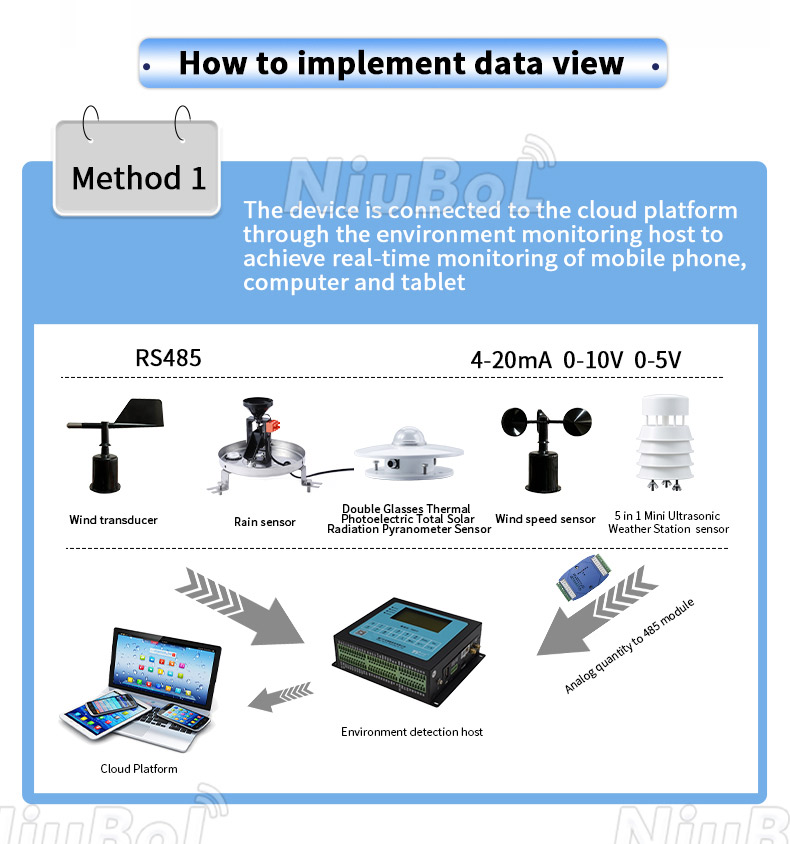
These stations collect key meteorological parameters in real time, including air temperature, relative humidity, wind speed, wind direction, precipitation, and solar radiation. They support RS485/MODBUS RTU protocol or 4G/LoRaWAN transmission, ensuring seamless access to forest fire command platforms, SCADA systems, or cloud-based fire risk warning models. As a professional manufacturer, NiuBoL provides highly reliable multi-element forest fire prevention weather stations tailored to the high-altitude, extreme temperature differences, and complex terrain conditions of forest areas, helping engineering projects transition from passive firefighting to proactive early warning and improving the accuracy and timeliness of forest fire risk level assessment.
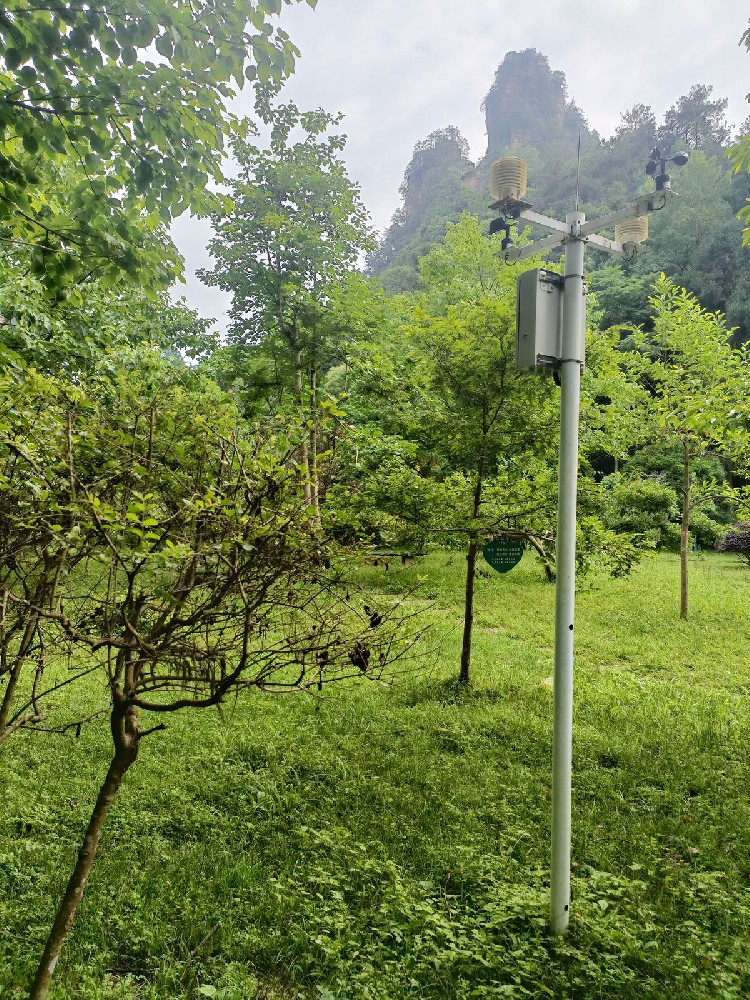
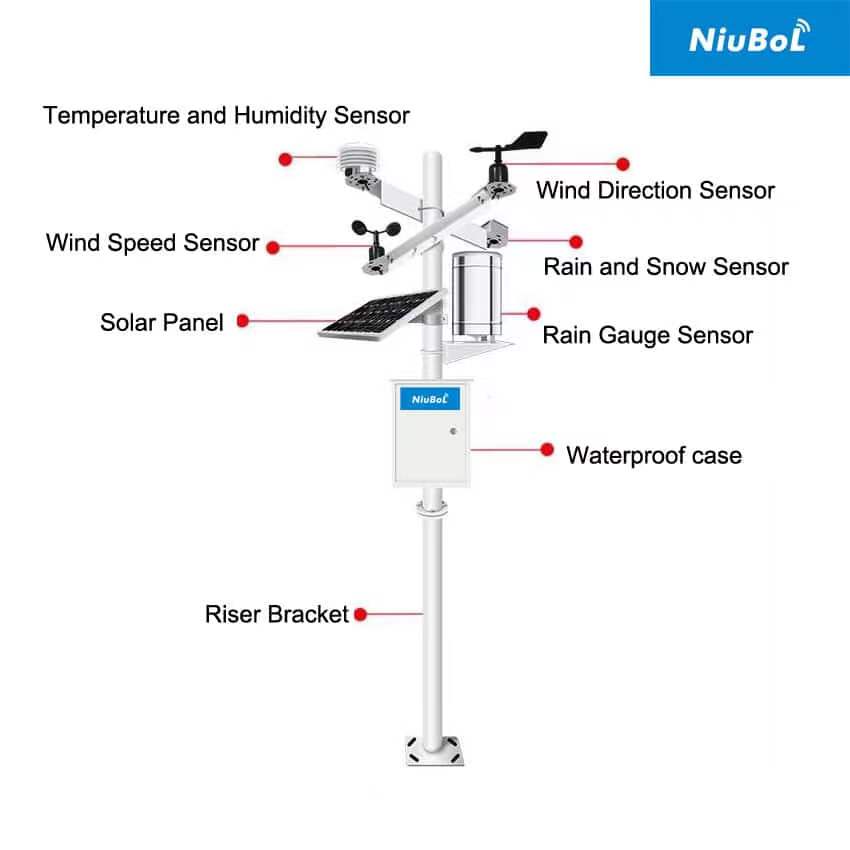
NiuBoL’s multi-element forest fire prevention weather station adopts an integrated design, incorporating multiple high-precision sensors to form a comprehensive forest microclimate monitoring node. Core sensors include:
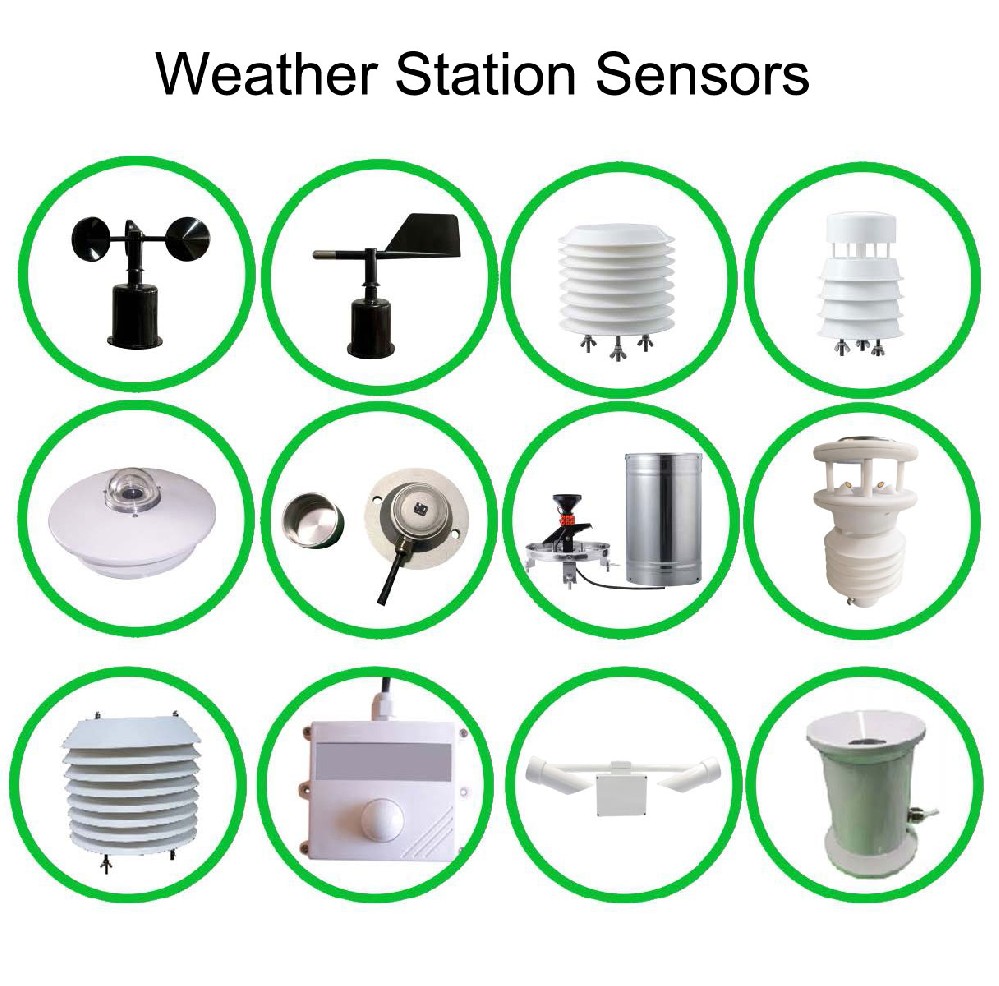
Air Temperature and Relative Humidity Sensor: Uses digital integrated probe with built-in anti-condensation heating function, ensuring stable output in high-humidity or low-temperature environments. Temperature range: -40℃ to +80℃, humidity: 0-100% RH. Used to assess combustible material dryness (humidity<40% is a high-risk threshold).
Ultrasonic Wind Speed and Direction Sensor: No mechanical moving parts, based on time-difference principle to avoid freezing or dust jamming. Wind speed: 0-60 m/s, wind direction: 0-359°, accuracy: ±0.3 m/s or ±3%. Used to determine fire spread potential (wind speed >5 m/s significantly increases diffusion risk).
Piezoelectric or Tipping Bucket Rainfall Sensor: Real-time quantification of precipitation intensity, supports continuous no-rain period statistics (continuous 15 days without effective precipitation considered extreme drought), resolution: 0.1 mm.
Total Radiation / Photosynthetically Active Radiation Sensor: Silicon photocell or thermopile principle, measures solar radiation intensity (0-2000 W/m²), used to calculate combustible drying rate and cumulative sunshine effect.
Optional Expansion Sensors: Atmospheric pressure (for pressure gradient analysis), soil temperature and humidity (to assess surface combustible moisture content), combustible moisture content sensor, or CO/CO2 fire gas detectors to further enrich fire risk factor datasets.
These sensors are aggregated through a built-in data collector, supporting local storage (at least 1 year of data capacity) and remote transmission. The system can automatically calculate the fire risk index according to national forest fire risk meteorological grading standards (LY/T 2646-2015, etc.) and trigger threshold alarms. NiuBoL equipment emphasizes low-power design (average<1W) and is compatible with solar + battery power supply, suitable for forest areas without mains electricity.
The following table lists the key parameters of common configurations for NiuBoL multi-element forest fire prevention weather station (customizable according to project requirements):
| Parameter | Range | Accuracy | Remarks |
|---|---|---|---|
| Air Temperature | -40~+80℃ | ±0.5℃ | Built-in heating anti-condensation |
| Relative Humidity | 0~100% RH | ±3% RH | High-humidity environment compensation |
| Wind Speed | 0~60 m/s | ±(0.3 + 3% FS) | Ultrasonic, no mechanical parts |
| Wind Direction | 0~359° | ±3° | Ultrasonic, time-difference method |
| Precipitation | 0~∞ mm | ±4% (>10 mm/h) | Piezoelectric or tipping bucket |
| Solar Radiation | 0~2000 W/m² | ±5% | Thermopile or silicon photocell |
| Atmospheric Pressure | 300~1100 hPa | ±1 hPa | Optional |
| Soil Temperature | -40~+80℃ | ±0.5℃ | Optional, TDR principle |
| Soil Moisture | 0~100% | ±3% | Optional, volumetric water content |
| Power Supply | DC 9-24V / Solar | - | Average power consumption<1W |
| Protection Rating | IP65/IP67 | - | Corrosion-resistant, UV-resistant |
| Operating Temperature | -40~+80℃ | - | All-weather operation |
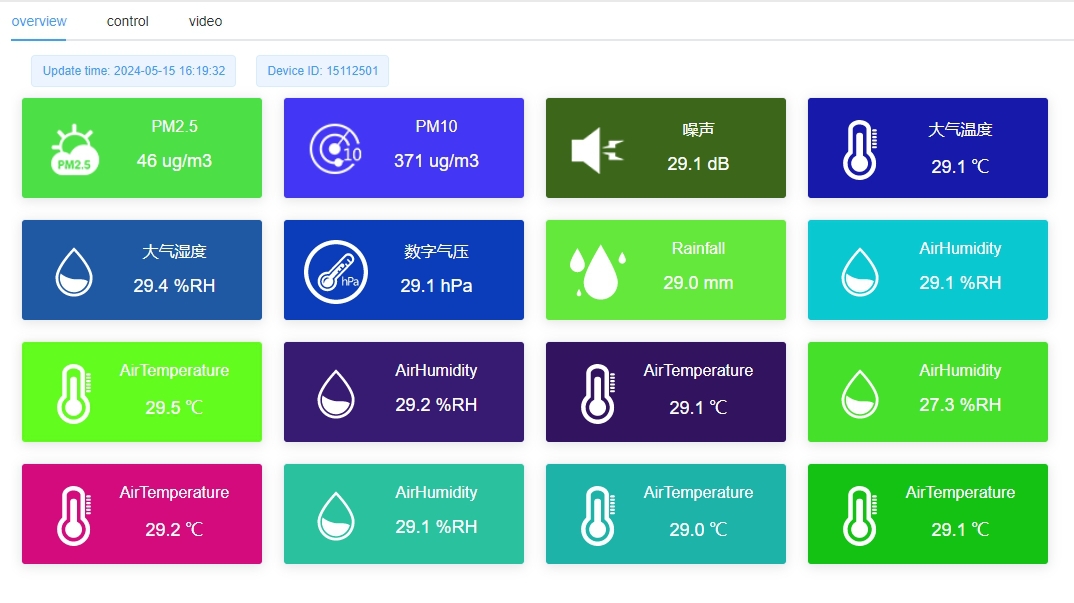
When building forest fire monitoring networks, system integrators typically use NiuBoL multi-element forest fire prevention weather stations as the front-end perception layer, deeply integrated with upper-level fire risk warning platforms (based on GIS, AI models, or national forestry bureau standard interfaces). Typical integration solutions include:
Real-time Fire Risk Level Calculation and Warning: Station data is transmitted via MODBUS RTU protocol to edge gateways or LoRaWAN concentrators, then pushed to cloud platforms. Integrators can develop or access fire risk models, dynamically outputting fire risk levels (green to red) by combining temperature, humidity, wind speed, radiation, and consecutive drought days. Upon reaching high-risk thresholds, automatic SMS/voice/APP push notifications are triggered, and linkage with forest patrol drones or video surveillance systems is activated.
Distributed Node Network Deployment: Deploy multiple nodes (spacing 1-5 km, adjusted according to terrain) at high-risk points such as ridges, forest edges, and firebreaks to form a grid monitoring network. RS485 bus or wireless Mesh networking supports expansion to hundreds of nodes. Data is aggregated and accessed to forestry bureau command center SCADA or private cloud, ensuring low-latency transmission (<30 seconds).
Compatibility with Existing Systems: Supports standard MODBUS RTU/TCP and MQTT protocols for easy connection to PLCs; API interfaces enable docking with national forest fire information platforms or provincial forestry GIS systems. IoT solution providers can standardize data into JSON format for big data analysis and machine learning training to achieve fire point prediction.
Solar Off-Grid Power Supply and Harsh Environment Resistance: Equipment uses corrosion-resistant enclosures, low-temperature start batteries, and wind-resistant, drop-resistant brackets, adapting to -40℃ snow cover or high-humidity tropical rainforests. In remote forest projects, integrators often combine solar panels + lithium battery packs to ensure continuous operation >7 days without sunlight.
This solution emphasizes modularity and scalability, helping engineering companies reduce on-site wiring complexity, improve system redundancy, and support future addition of infrared thermal imaging or combustible sensors.
When selecting equipment, system integrators should evaluate based on forest type, fire risk level, and budget:
Cold-temperate coniferous forests (e.g., Greater Khingan Range): Prioritize low-temperature resistant type (-40℃ startup), mandatory air temperature/humidity, wind speed/direction, precipitation; recommend adding soil temperature and humidity to monitor winter surface dryness.
Tropical/subtropical broadleaf forests (e.g., Yunnan): Emphasize high-humidity corrosion resistance and radiation sensors; configure photosynthetically active radiation to assess vegetation drying rate; optional CO/CO2 gas detectors for enhanced early smoke detection.
Communication and Power Supply Needs: Select LoRaWAN + solar for remote areas without coverage; prefer RS485 + 4G gateway where 4G signal is available. For >50 nodes, consider models supporting Mesh networking.
Accuracy and Scalability: Fire risk models rely on high-precision data; choose sensors with resolution better than 0.1℃/0.1% RH; reserve interfaces for future integration of combustible moisture content or fire gas modules.
Testing and Verification: Recommend POC on-site testing to verify data stability under extreme weather and evaluate platform compatibility. MTBF typically >50,000 hours.
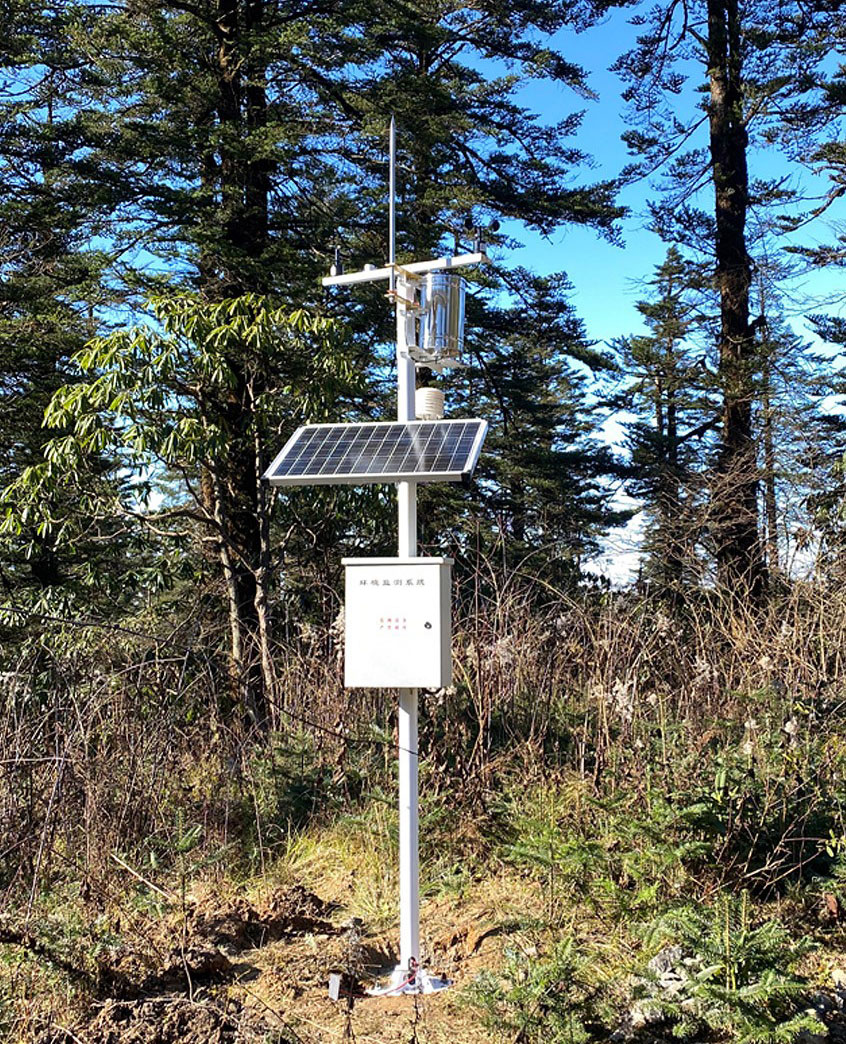
Installation Location: Choose open, unobstructed sites (avoid radiation bias under tree canopies), height 1.5-2 m (standard meteorological observation height); wind sensor should be >10 m from nearest trees.
Power Supply and Lightning Protection: Use isolated DC power supply + SPD lightning protection module; solar system must match local sunshine hours, with battery capacity supporting 7 days of continuous cloudy/rainy weather.
Maintenance Plan: Check corrosion-resistant coating and clean radiation sensor surface quarterly; verify heating function in low-temperature areas. Recommend cooperating with forestry departments to establish inspection logs.
1. Which types of forest areas are applicable?
Covers cold-temperate coniferous forests, temperate mixed forests, tropical rainforests, etc., with customized configurations for different fire risk characteristics.
2. How reliable is the equipment in extreme low temperatures or high-humidity environments?
Designed for operating temperature -40~+80℃, with built-in heating and anti-corrosion measures; proven stable operation through long-term forest testing.
3. Which communication protocols and platform integrations are supported?
Supports RS485/MODBUS RTU, MQTT, LoRaWAN; compatible with mainstream SCADA, cloud platforms, and forestry GIS systems.
4. Can solar power ensure continuous operation?
Yes, low average power consumption with large-capacity batteries supports continuous operation for more than 7 days without sunlight.
5. What preparations are needed for installation and deployment?
Requires fixed brackets and lightning grounding; professional team on-site survey is recommended to avoid terrain interference.
6. What about warranty and after-sales support?
Standard 12-month warranty, with remote diagnostics, 48-hour response, and technical support.
With its high-precision sensor array and robust environmental adaptability as the core, the NiuBoL multi-element forest fire prevention weather station provides system integrators with a reliable forest fire risk perception solution. Through seamless integration, real-time early warning, and data-driven decision-making, these devices help engineering projects shift from traditional patrolling to intelligent prevention, significantly enhancing forest ecological security levels. Whether for large-scale grid deployment or key area enhanced monitoring, NiuBoL is committed to delivering precise and stable environmental data to support the digital transformation of forestry. Welcome to submit project requirements via email (sales@niubol.com) or online form; we will provide selection advice and technical solutions within 24 hours.
Prev:Direct Solar Radiation Sensor: Core Value and Application Scenarios
Next:Industrial-grade Rainfall Automatic Weather Station: Multi-Scenario Integration Solution
Related recommendations
Sensors & Weather Stations Catalog
 Agriculture Sensors and Weather Stations Catalog-NiuBoL.pdf
Weather Stations Catalog-NiuBoL.pdf
Agriculture Sensors Catalog-NiuBoL.pdf
Water Quality Sensor Catalog-NiuBoL.pdf
Related products
 Combined air temperature and relative humidity sensor
 TDR Soil Moisture & Temperature Sensor for irrigation| RS485 |4-20mA| NBL-S-THR
 Soil pH sensor RS485 soil Testing instrument soil ph meter for agriculture |NBL-S-PH
 Wind Speed sensor Output Modbus/RS485/Analog/0-5V/4-20mA
 Tipping bucket rain gauge for weather monitoring auto rainfall sensor RS485/Outdoor/stainless steel
 Pyranometer Solar Radiation Sensor 4-20mA/RS485

Screenshot, WhatsApp to identify the QR code
WhatsApp number:+8615367865107
(Click on WhatsApp to copy and add friends)

