





— Blogs —
—Products—
 Consumer hotline +8618073152920
 WhatsApp:+8615367865107
Address:Room 102, District D, Houhu Industrial Park, Yuelu District, Changsha City, Hunan Province, China
Product knowledge
Time:2026-03-14 10:58:44 Popularity:592
In China's transportation system, highway transport is the core carrier for cargo transportation and public travel, providing irreplaceable support for national economic development. However, haze weather, as a frequent disastrous weather phenomenon in many regions of China, reduces air transparency and interferes with drivers' visual judgment. It not only easily causes rear-end collisions, scrapes, and other traffic accidents but also leads to highway closures and traffic congestion, increasing transportation costs and posing huge challenges to traffic control. This also places higher equipment selection requirements on purchasers undertaking highway traffic safety projects.
For system integrators, IoT solution providers, project contractors, and engineering companies, the core demand in undertaking related projects is to find a highway meteorological monitoring device that precisely monitors haze-related meteorological elements, is stable and reliable, easy to integrate, and supports remote control. NiuBoL, as a high-tech enterprise focused on meteorological environmental monitoring, has been deeply involved in the traffic meteorological field for many years and accurately identifies procurement pain points. The launched highway meteorological monitoring station, with engineering-grade quality and full-element monitoring capabilities, has become the preferred product for haze prevention and control projects, helping purchasers efficiently implement projects.
NiuBoL strictly controls the entire process of design, production, and testing for highway meteorological monitoring stations, with all equipment undergoing rigorous multi-round tests including high/low temperature, waterproof, and dustproof. It adapts to complex outdoor environments while providing full-process technical support and after-sales assurance, comprehensively solving various issues in project implementation for purchasers.
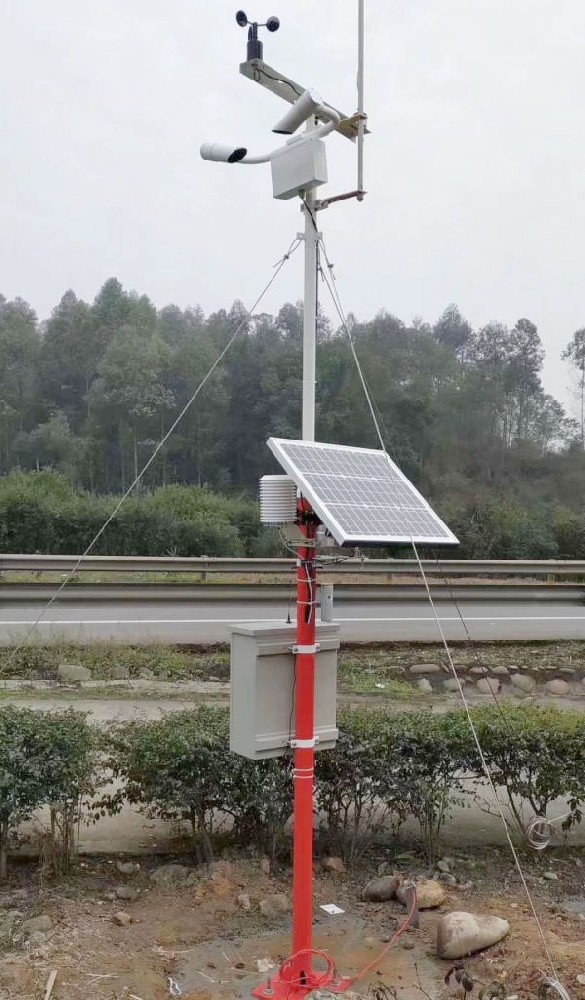
In China, fog and haze are collectively referred to as “haze weather,” but they differ significantly in formation principles and composition, with varying emphases on their impact on highway traffic safety. Clarifying these differences and understanding the specific impacts of haze on traffic is the core premise for purchasers to scientifically select equipment and efficiently implement projects.
Haze consists of aerosols formed by dust, sulfuric acid, PM2.5, PM10, and other pollutants, closely related to industrial emissions, vehicle exhaust, and other pollution sources. It can persist for days, causing visual obstruction and potentially irritating drivers' respiratory systems, indirectly increasing accident risks.
Haze weather is a mixture of the two, with fog's slippery roads combined with haze's low visibility dramatically increasing traffic accident rates. This requires highway meteorological monitoring equipment to accurately monitor visibility and distinguish fog and haze types, providing reliable data for control.
Haze weather affects highway traffic throughout all aspects and is a major hidden danger to traffic safety, as well as a key pain point that purchasers must focus on when selecting equipment:
Reduced Visibility Leading to Frequent Traffic Accidents
Causing Slippery Roads and Increasing Driving Control Difficulty
Resulting in Traffic Congestion and Increasing Transportation Costs
Increasing Traffic Control Difficulty and Control Costs
Purchasers' core demands for highway meteorological monitoring equipment focus on four points: first, high monitoring accuracy capable of precisely monitoring core haze-related elements with data meeting industry standards; second, stable operation adapted to complex outdoor environments with 24-hour unattended capability; third, easy integration for seamless docking with existing systems to reduce integration costs; fourth, comprehensive after-sales providing full-process technical support to reduce O&M costs. The NiuBoL highway meteorological monitoring station precisely matches these demands and has become the preferred choice for engineering projects.
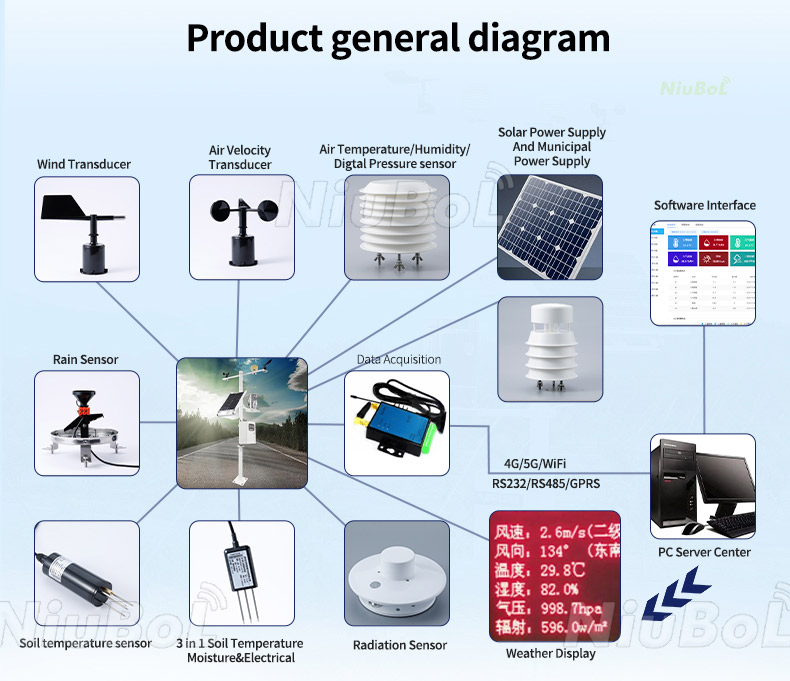
NiuBoL highway meteorological monitoring station relies on comprehensive acquisition control, communication, data encryption, and other core technologies, integrating multiple high-precision sensors to obtain real-time meteorological information along highways and precisely monitor haze-related elements. Data is aggregated through remote transmission to provide first-hand information for traffic control. The equipment adopts a modular design with advantages of high precision, high stability, easy integration, and customizability, adapting to various highway meteorological monitoring projects.
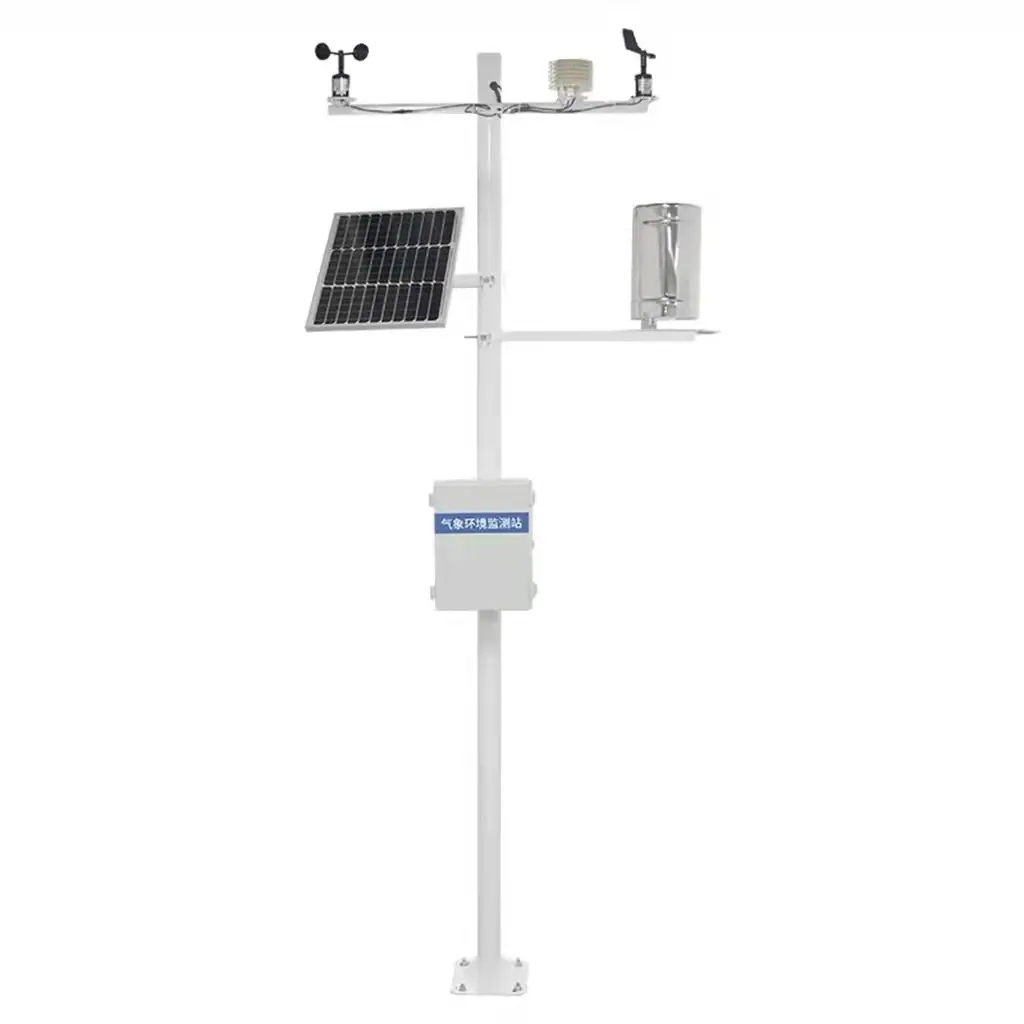
The equipment adopts a modular disassembly design, with components that can be individually replaced and flexibly combined, facilitating installation, debugging, and later upgrades. Core composition includes:
Core Meteorological Sensors (Monitoring Core)
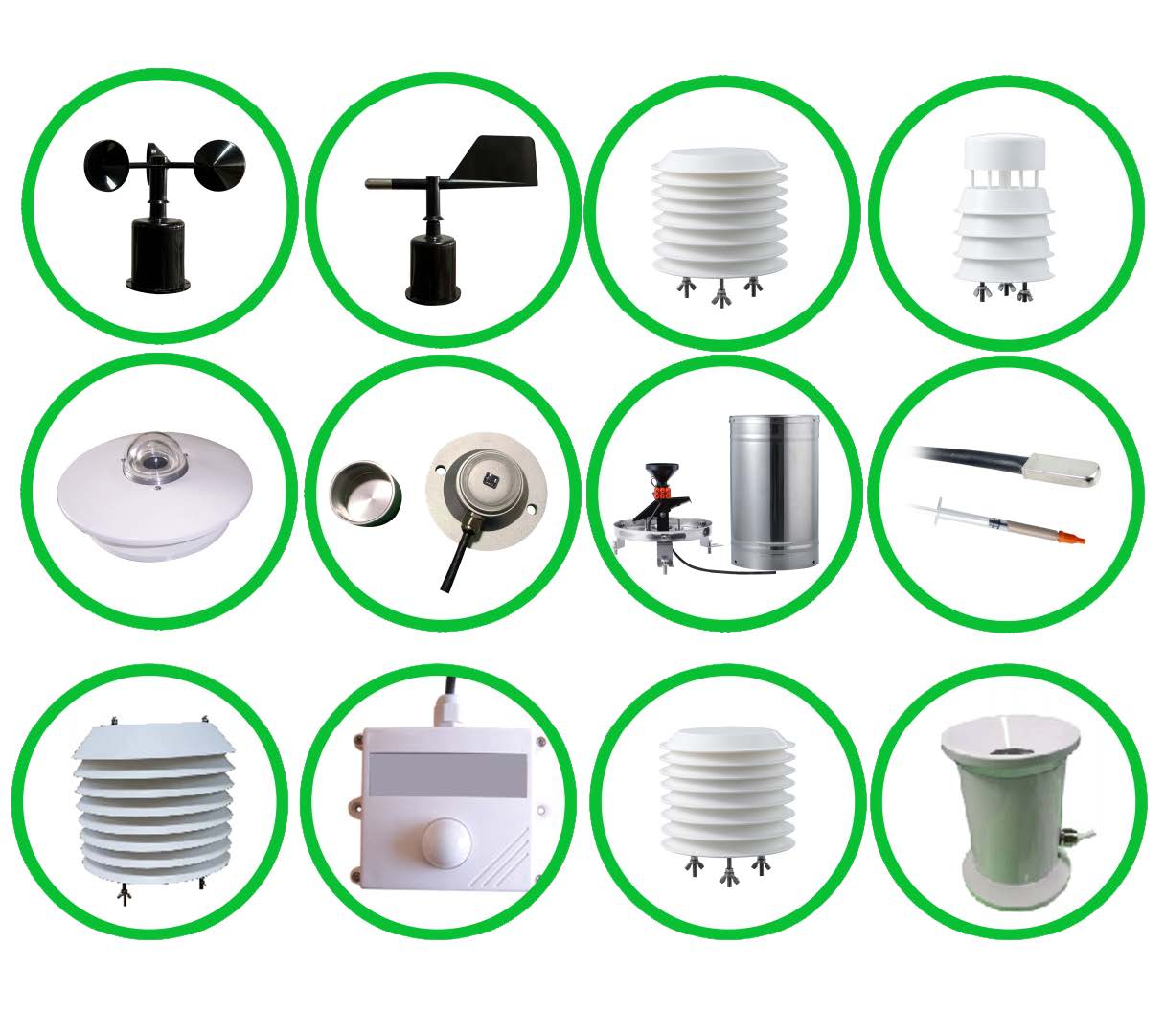
Equipped with high-precision sensors for visibility, fog/haze identification, wind speed/direction, temperature/humidity, road surface temperature/humidity, and condition, with optional addition of PM2.5 and PM10 sensors according to needs. All sensors undergo third-party calibration; visibility sensors use optical scattering method for precise monitoring of 0-5000m visibility; fog/haze identification sensors can quickly distinguish fog and haze types and concentrations, providing precise basis for control.
Data Logger (Data Processing Hub)
Industrial-grade design with anti-interference, low power consumption, and high stability. It can connect multiple sensors simultaneously for data filtering, calibration, storage, and processing. Acquisition frequency is flexibly adjustable, with built-in large-capacity storage capable of storing over 1 year of raw data and supporting encrypted data transmission for data security.
Communication Module (Remote Transmission Core)
Standard GPRS/4G communication, supports wired and fiber expansion, with stable transmission and delay ≤30s. It enables real-time data upload to cloud platforms and monitoring centers, supports remote parameter setting and fault diagnosis, reducing O&M costs.
Power System (Stable Power Supply Guarantee)
Supports dual power supply modes of 220V mains and solar, adapting to remote road sections without mains power. It features multiple protections including overcharge, overdischarge, and lightning protection, ensuring stable power supply in extreme temperatures from -40℃ to 60℃ and uninterrupted equipment operation in harsh weather.
Protective Enclosure and Installation Bracket (Outdoor Adaptation Guarantee)
Protective enclosure with IP65 or above protection rating, waterproof, dustproof, and corrosion-resistant; installation bracket made of carbon steel with anti-corrosion treatment, height 3-5 meters, can be quickly fixed on guardrails, poles, etc., wind-resistant and anti-tip, adapting to various highway scenarios.
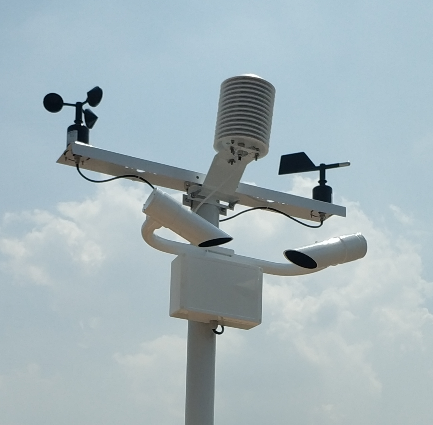
The core advantages of NiuBoL highway meteorological monitoring station precisely match purchaser demands and help improve engineering quality and competitiveness:
Full-Element Precise Monitoring Adapted to Haze Prevention and Control Needs
Precisely monitors core elements such as visibility and fog/haze type and concentration. Visibility monitoring accuracy is ±10% (≤1000m) and ±20% (>1000m); fog/haze identification accuracy ≥90%. It can quickly capture haze change trends and provide precise data for control departments to enable rapid early warning and control.
High Stability Operation Adapted to Complex Highway Outdoor Environments
Uses industrial-grade components, undergoes multi-round rigorous quality inspections, and can operate in extreme temperatures from -40℃ to 60℃. Protection rating IP65 or above, anti-electromagnetic interference, low-power design, and solar power enable long-term unattended operation, adapting to complex and harsh outdoor environments.
Easy Integration Reducing Engineering Integration Difficulty and Costs
Supports 485 interface and standardized Modbus protocol for seamless integration with existing traffic monitoring and smart traffic platforms without large-scale interface modification. Modular design facilitates installation and debugging, completable by a single person, shortening construction periods and reducing costs.
Intelligent Early Warning Enhancing Traffic Control Effectiveness
Supports custom warning thresholds. When monitoring data reaches standards, warnings are pushed through cloud platforms, SMS, APP, and other methods to assist relevant departments in quickly implementing guidance, speed limits, closures, and other measures, reducing accident risks.
Quality Assurance and Comprehensive After-Sales Reducing Procurement Risks
NiuBoL has a complete quality control system with multi-round quality inspections for equipment; provides 1-year warranty and lifetime maintenance post-warranty with parts supplied at cost price. Professional technical team offers full-process support with 24-hour response to fault inquiries, avoiding engineering risks.
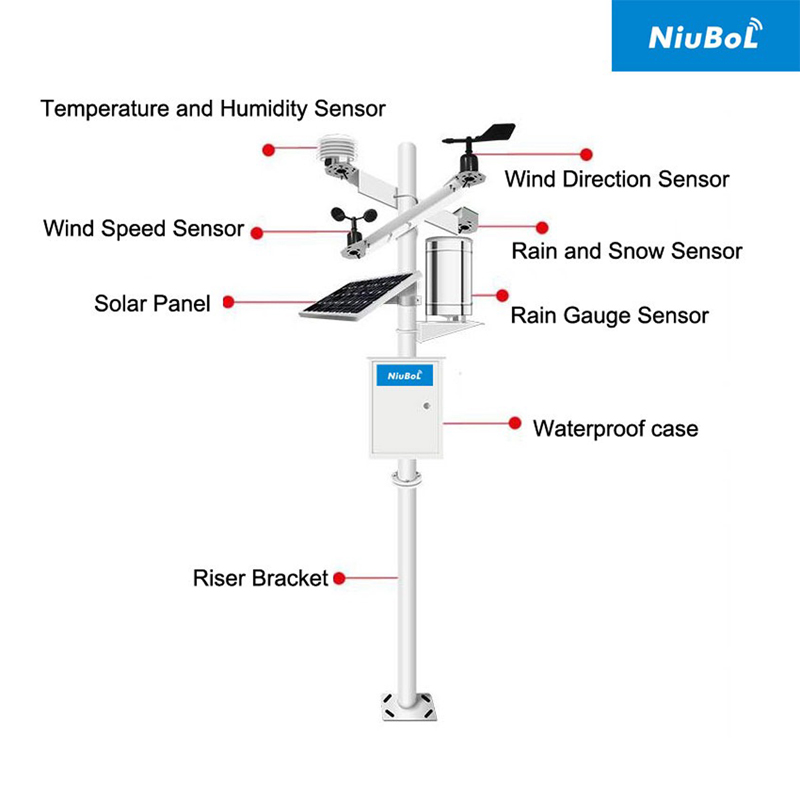
The following are core technical parameters compliant with national industry standards, customizable and adjustable according to engineering needs:
| Monitoring Parameter | Measurement Range | Accuracy | Sensor Type |
|---|---|---|---|
| Visibility | 0-5000 m | ±10% (≤1000m); ±20% (>1000m) | Optical scattering method |
| Fog/Haze Identification | Fog, haze, clear, cloudy | Identification accuracy ≥90% | Optical identification method |
| Wind Speed | 0-70 m/s | ±(0.3+0.03V) m/s | Ultrasonic sensor |
| Wind Direction | 0-360° (16 directions) | <3°>1.0 m/s) | Ultrasonic sensor |
| Air Temperature | -40~+60℃ | ±0.3℃ | Diode junction voltage method sensor |
| Air Humidity | 0-100% RH | ±2% RH | Capacitive sensor |
| Road Surface Temperature | -40~+80℃ | ±0.2℃ | Platinum resistance sensor |
| Road Surface Condition | Dry, wet, icy, snowy | Identification accuracy ≥90% | Capacitive road surface sensor |
| Communication Method | GPRS/4G, supports wired and fiber expansion | Stable transmission, packet loss rate ≤1% | Industrial-grade communication module |
| Power Supply Method | 220V mains, optional solar power | 24-hour stable power supply | Dual power supply system |
| Protection Rating | IP65 or above | Waterproof, dustproof, corrosion-resistant, impact-resistant | ASA material protective enclosure |
| Operating Environment | -40℃~60℃, 0-100% RH | Resistant to level 15 typhoon | Industrial-grade components |
| Data Storage | Built-in storage + cloud storage | Can store more than 1 year of raw data | Large-capacity storage module |
The following introduces the working principles and functions of core sensors related to haze prevention and control to assist purchasers in precise selection and introducing equipment value to end clients:
Visibility Sensor
Working principle: Uses optical scattering method, emitting infrared light and calculating by receiving scattered signals to precisely distinguish visibility reduction caused by fog and haze; Role: Provides direct data support for traffic control; Function: Real-time collection of 5m-10km visibility data, supports custom warnings, adapted to various highway scenarios.
Fog/Haze Identification Sensor
Working principle: Uses optical identification method to analyze particle size, concentration, and refractive index in air to distinguish fog and haze, monitoring fog/haze concentration and generating grade data; Role: Provides targeted control basis for control departments; Function: Real-time identification of weather types, pushing concentration data to assist precise prevention and control.
Road Surface Temperature and Condition Sensor
Working principle: Road surface temperature sensor uses platinum resistance principle; road surface condition sensor uses capacitive principle to monitor road surface temperature and dry/wet, icy/snowy states; Role: Prevents accidents caused by slippery or icy roads; Function: Real-time data collection, supports warnings, providing support for road maintenance and control.
Wind Speed and Direction Sensor
Working principle: Uses ultrasonic principle to calculate wind speed and direction by measuring ultrasonic propagation speed; Role: Predicts haze diffusion trends and ensures vehicle driving safety; Function: Real-time data collection, supports warnings, assisting adjustment of control measures.
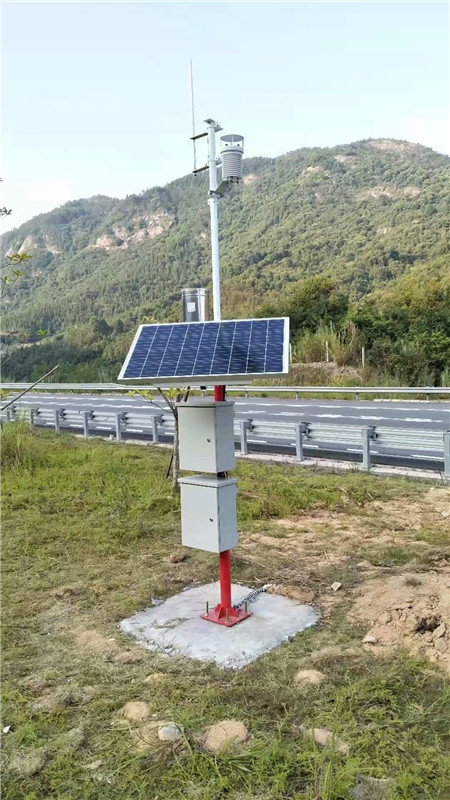
With its core advantages, the equipment has been widely applied in various highway meteorological monitoring projects, adapting to different project needs of purchasers. Core scenarios are as follows:
Expressway Meteorological Monitoring Projects
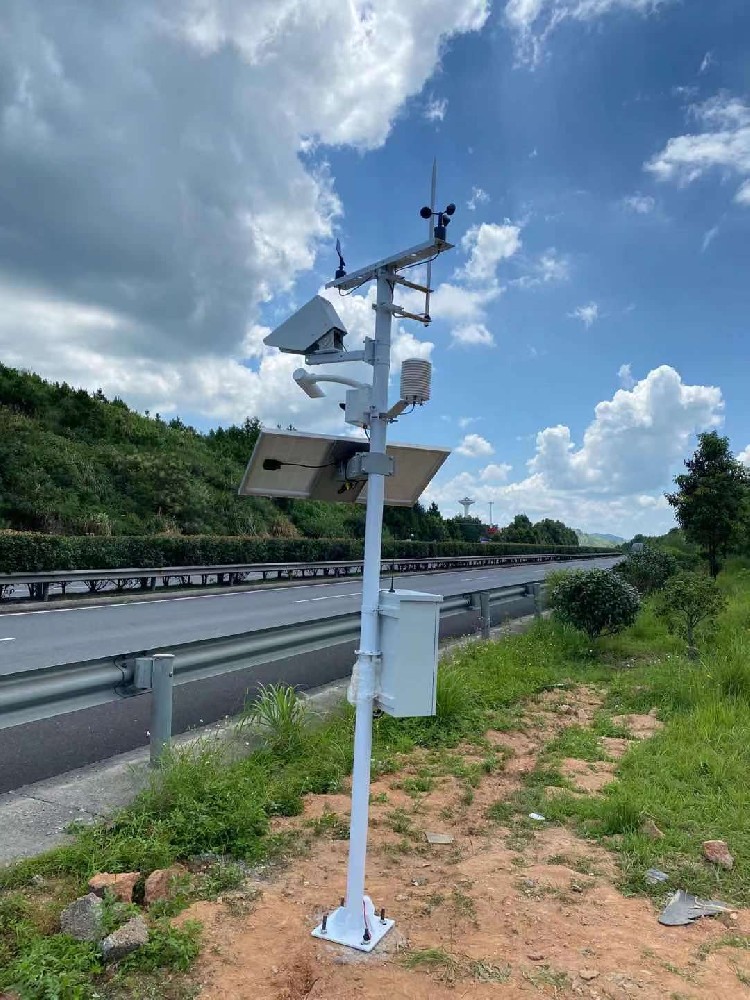
Expressways have high speeds and large traffic volumes with high haze risks. Purchasers can deploy equipment in grid layout along routes and integrate with monitoring and early warning systems to monitor visibility, haze, and other elements in real time. When warnings are triggered, information is released via display screens to assist control departments in quickly implementing measures and reducing accident risks.
National and Provincial Highway Meteorological Monitoring Projects
National and provincial highways cover wide areas, with some sections remote. Project contractors can deploy equipment at key sections using solar power for 24-hour unattended operation, providing data for traffic guidance and road maintenance to optimize transportation routes, reduce transportation costs, and ensure transportation safety.
Urban Expressways and Ring Roads Meteorological Monitoring Projects
IoT solution providers can integrate equipment with urban smart traffic platforms to push travel warnings to citizens and provide basis for control departments to optimize guidance plans and improve citizen travel experience.
Bridge and Tunnel Perimeter Meteorological Monitoring Projects
Bridges and tunnels are prone to local haze formation with slippery and icy roads. System integrators can deploy equipment at entrances and exits, focusing on monitoring visibility and road surface conditions to issue timely warnings and notify maintenance units, reducing accident risks.
Freight Dedicated Line Meteorological Monitoring Projects
Engineering companies can deploy equipment along freight dedicated lines to provide warnings for freight enterprises, helping optimize transportation plans, avoid haze road sections and periods, improve transportation efficiency, reduce costs, and ensure transportation safety.
Q1: Can the NiuBoL highway meteorological monitoring station integrate with our existing system?
A1: Yes. The equipment adopts standardized Modbus protocol and 485 interface for seamless integration with traffic monitoring and smart traffic platforms without large-scale interface modification. We provide complete technical documents and support to assist in quick docking.
Q2: Can the equipment precisely distinguish fog and haze? Does monitoring accuracy meet engineering needs?
A2: Yes, it can precisely distinguish. Fog/haze identification sensor accuracy ≥90%, visibility monitoring accuracy meets industry standards, and it can accurately capture haze changes, fully meeting engineering-grade highway meteorological prevention and control needs.
Q3: Can the equipment operate stably in complex outdoor environments?
A3: Yes. The equipment uses industrial-grade components with IP65 or above protection rating and can operate in extreme temperatures from -40℃ to 60℃. It supports solar power for 24-hour unattended operation, adapting to complex outdoor environments.
Q4: Can the equipment be customized according to engineering needs?
A4: Yes. NiuBoL has customization capabilities and can customize monitoring elements, equipment specifications, power supply, and communication methods according to monitoring needs and scenario characteristics to adapt to actual project requirements.
Q5: How difficult is equipment installation? Is installation guidance provided?
A5: Installation is convenient. Modular design allows single-person assembly and debugging. It is equipped with installation manuals and video tutorials; professional teams provide remote guidance, with on-site support available when necessary to ensure smooth project progress.
Q6: What is the warranty period? How is post-warranty O&M ensured?
A6: 1-year warranty with free repair and parts replacement during warranty; lifetime maintenance post-warranty with parts supplied at cost price. The equipment supports remote fault diagnosis with 24-hour technical team response to reduce O&M costs.
Q7: Is data transmission stable? Can data be viewed in real time and stored?
A7: Transmission is stable with delay ≤30 s and packet loss rate ≤1%. Data can be uploaded in real time to cloud platforms and monitoring centers; built-in storage + cloud storage can store over 1 year of raw data and supports export to avoid data loss.
Q8: Compared to other brands, what is the core competitiveness of NiuBoL?
A8: Core competitiveness lies in four points: first, precise adaptation to haze prevention and control with ability to distinguish fog/haze and full-element precise monitoring; second, high stability adapted to complex outdoor environments; third, easy integration and customizability reducing engineering costs; fourth, full-process technical support and comprehensive after-sales avoiding engineering risks.
Haze weather is a major hidden danger to highway traffic safety, not only threatening personal and property safety but also reducing traffic operation efficiency and increasing costs, posing high requirements for traffic control and engineering procurement. For system integrators, engineering companies, and other purchasers, selecting a highway meteorological monitoring device that adapts to needs, is stable and reliable is key to improving engineering quality and competitiveness.
NiuBoL highway meteorological monitoring station, with core advantages of full-element precise monitoring, high stability operation, easy integration, and customizability, perfectly adapts to various highway meteorological monitoring projects and precisely solves haze prevention and control pain points. We strictly control product quality and provide full-process technical support and after-sales assurance to help purchasers efficiently implement projects, reduce risks, and improve efficiency.
Choosing NiuBoL means choosing high-quality engineering-grade equipment and a professional partner. We will continue to be oriented toward procurement needs to help purchasers build a strong line of defense for highway traffic safety and promote high-quality development of highway traffic safety.
Prev:Core Value and Engineering Application Significance of Campus Weather Stations
Next:Rainfall Monitoring Station: Key Tool for Enhancing Flood Prevention and Water Resource Management
Related recommendations
Sensors & Weather Stations Catalog
 Agriculture Sensors and Weather Stations Catalog-NiuBoL.pdf
Weather Stations Catalog-NiuBoL.pdf
Agriculture Sensors Catalog-NiuBoL.pdf
Water Quality Sensor Catalog-NiuBoL.pdf
Related products
 Combined air temperature and relative humidity sensor
 Soil Moisture Temperature sensor for irrigation|NBL-S-THR
 Soil pH sensor RS485 soil Testing instrument soil ph meter for agriculture |NBL-S-PH
 Wind Speed sensor Output Modbus/RS485/Analog/0-5V/4-20mA
 Tipping bucket rain gauge for weather monitoring auto rainfall sensor RS485/Outdoor/stainless steel
 Pyranometer Solar Radiation Sensor 4-20mA/RS485

Screenshot, WhatsApp to identify the QR code
WhatsApp number:+8615367865107
(Click on WhatsApp to copy and add friends)

