





— Blogs —
—Products—
 Consumer hotline +8618073152920
 WhatsApp:+8615367865107
Address:Room 102, District D, Houhu Industrial Park, Yuelu District, Changsha City, Hunan Province, China
Product knowledge
Time:2026-03-14 11:05:26 Popularity:555
In modern hydrological monitoring and flood prevention management, rainfall monitoring stations play an indispensable role. As an IoT-based precipitation monitoring system, it can collect and transmit rainfall data in real time, helping system integrators and engineering companies build reliable monitoring networks. Whether used for precipitation intensity analysis in hydrological stations or real-time early warning in flood prevention projects, rainfall monitoring stations provide precise precipitation amounts, precipitation status, and historical records, supporting remote parameter configuration and data export. Such equipment is widely applied in meteorology, hydrology and water conservancy, agriculture, and environmental protection fields, ensuring project contractors achieve efficient water resource management in complex environments.
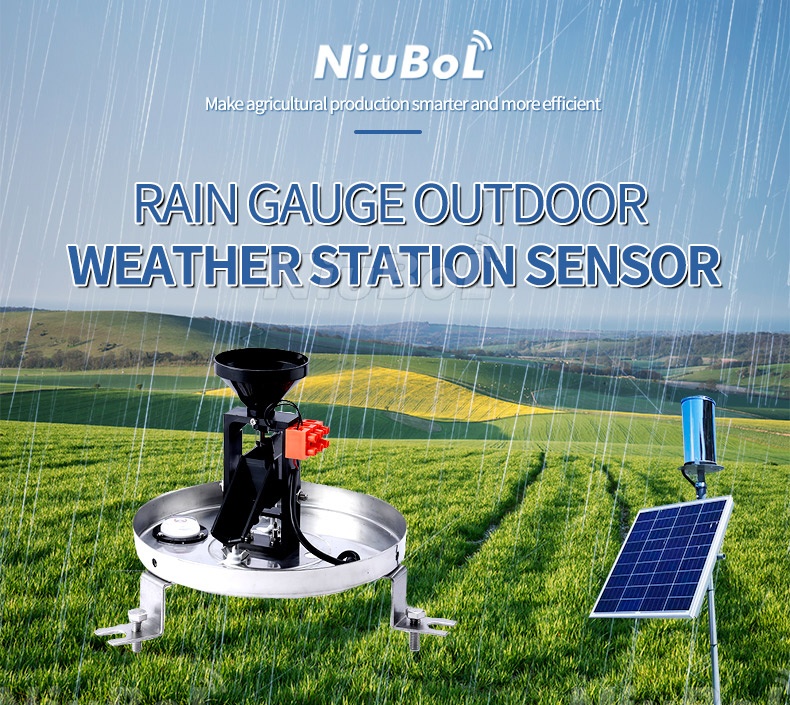
Precipitation is the core link in the natural water cycle, directly affecting agricultural production, urban infrastructure, and ecological balance. Appropriate precipitation replenishes river and lake water sources, alleviates drought, and provides essential moisture for crop growth. However, extreme precipitation events such as heavy rain or prolonged drought often trigger disasters like floods, waterlogging, or drought. According to global climate change trends, the frequency of extreme weather is increasing, which requires the integration of advanced monitoring technologies in engineering projects.
In mountainous regions, large-scale precipitation may cause landslides or debris flows, threatening residential areas and industrial facilities. In urban environments, excessive precipitation tests the carrying capacity of drainage systems; if it exceeds limits, it causes water accumulation and traffic interruption. Recent flood events in Henan and Shanxi, China, highlight the necessity of timely rainfall monitoring. By deploying rainfall monitoring stations, project contractors can integrate real-time data with hydrological models to improve early warning accuracy and reduce economic losses.
Additionally, precipitation monitoring is crucial for agriculture. Excessive rainfall leads to soil saturation, affecting root respiration and crop pollination, thereby reducing yield. Conversely, insufficient precipitation exacerbates water resource shortages, impacting industrial and domestic water allocation. IoT rainfall monitoring systems allow integrators to apply historical data analysis to drought prediction, helping engineering companies formulate scientific strategies in water supply scheduling and reservoir management.
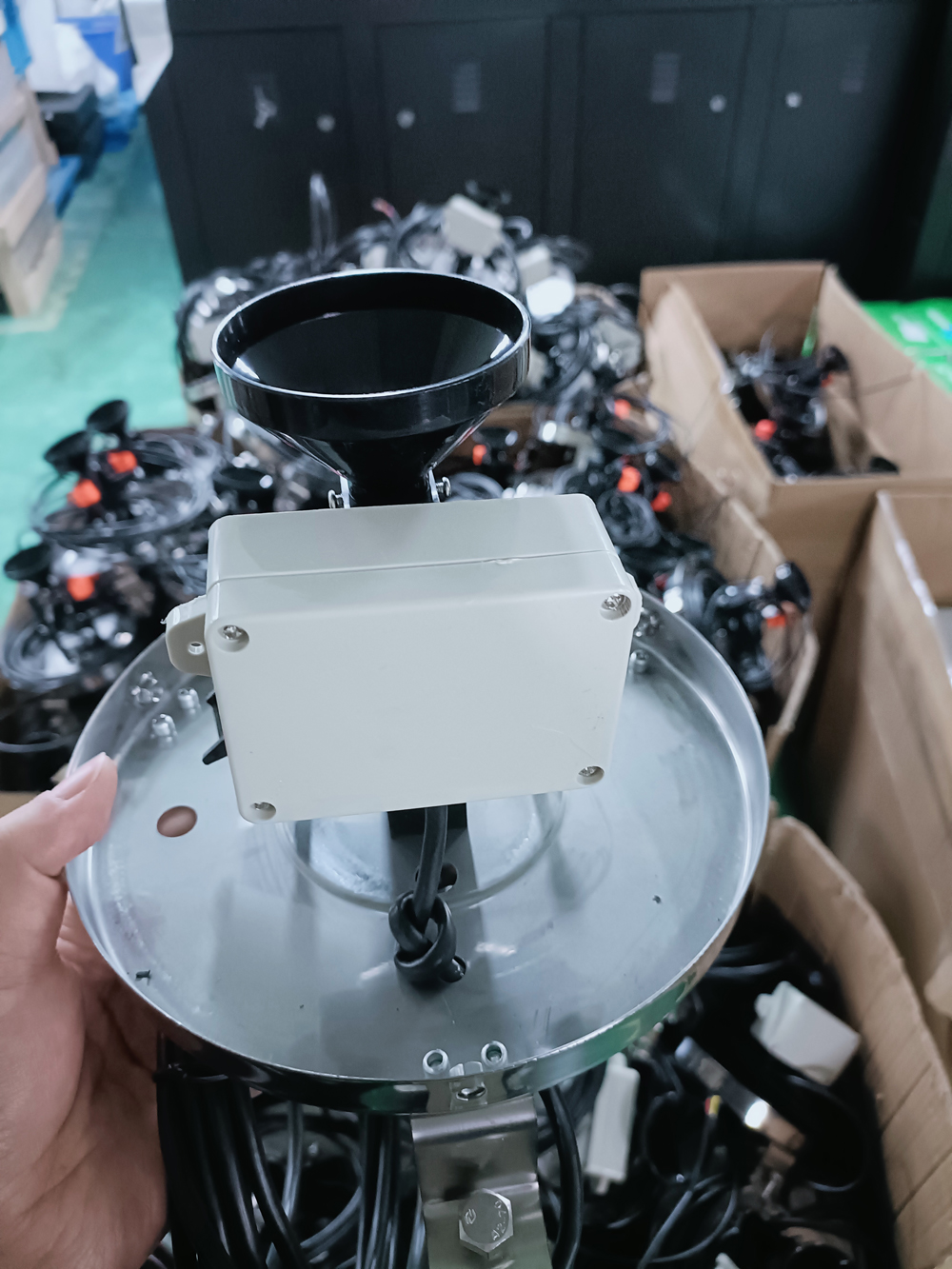
A rainfall monitoring station is a modern precipitation monitoring device integrating IoT technology, mainly composed of a rainfall sensor (usually tipping bucket rain gauge), data transmission module, battery, solar panel, and bracket. The system transmits data wirelessly to the central monitoring platform, supporting remote viewing of real-time and historical records.
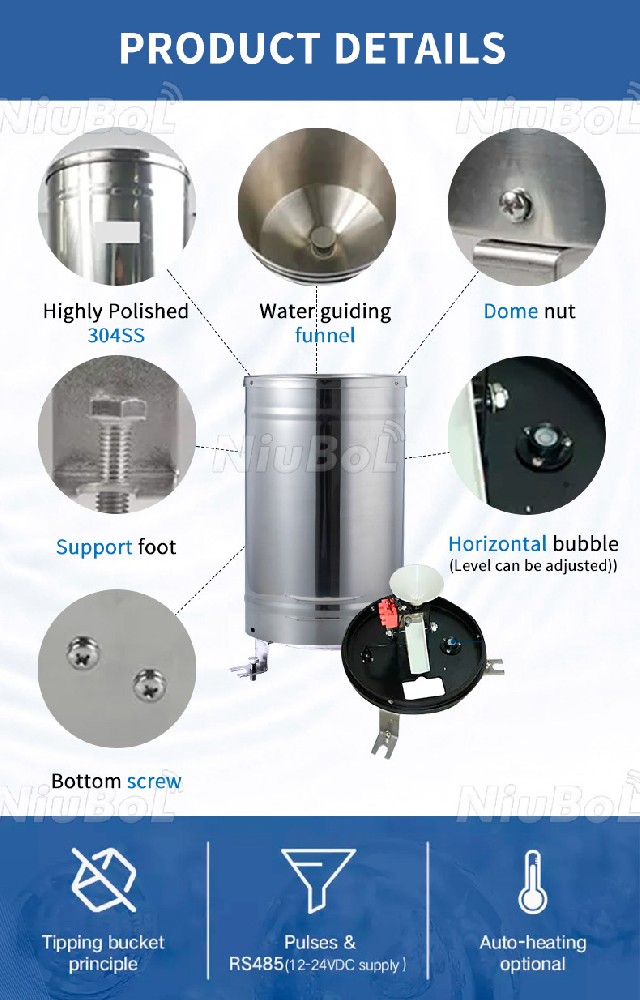
The core component is the rainfall sensor, which uses a tipping bucket design to accurately measure precipitation amount and intensity. Rainwater enters the receiving funnel and triggers the tipping bucket to tip over, with each tip corresponding to a fixed volume of rainfall (such as 0.2mm/0.5mm/0.1mm resolution) and generating a signal output. The data transmission device supports various protocols such as RS485 or switch signals, ensuring seamless integration with existing IoT platforms.
The power supply system combines batteries and solar panels for autonomous energy supply, suitable for remote or field environments. The bracket is designed to be sturdy and durable, installable on ground, iron poles, or rooftops to adapt to various engineering site needs. The overall architecture emphasizes reliability, with operating temperature range 0~50℃ and storage temperature -40~80℃, complying with SL61-2003 Hydrological Automatic Reporting System Specification and GB11831-89 Standard.
During operation, the rainfall monitoring station collects data including precipitation status, interval rainfall, current rainfall, daily, weekly, monthly, and annual rainfall. These indicators are transmitted wirelessly to the platform, where users can export to EXCEL tables for further analysis. This enables system integrators to easily extend functions in projects, such as combining with GIS systems to achieve spatial rainfall distribution mapping.
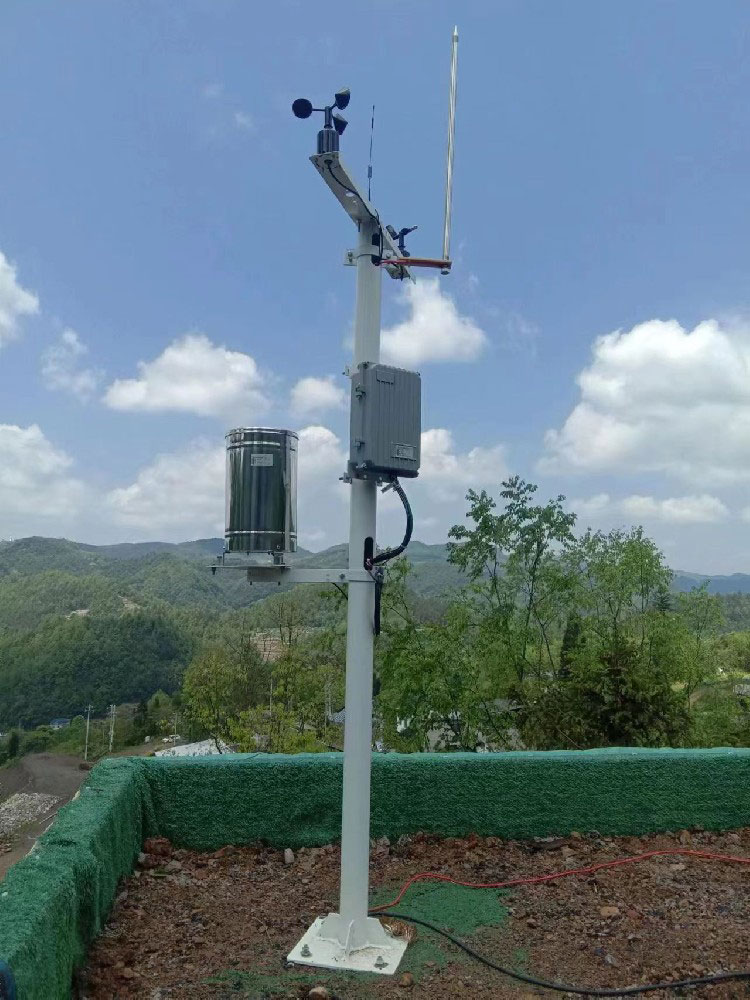
Compared to traditional manual rain gauges, IoT rainfall monitoring stations offer higher automation and data accuracy. Real-time transmission reduces human intervention and error rates, especially during peak flood prevention periods. Remote parameter configuration, such as data reporting intervals or reset commands, improves O&M efficiency and suits distributed deployment in large engineering projects.
In terms of accuracy, taking NiuBoL's NBL-W-RS rain gauge model as an example, measurement range 0-4mm/min, resolution 0.2mm, accuracy ±4%, ensuring data reliability. Multiple output forms (such as voltage 0~5V or RS485) facilitate integration with SCADA systems or PLCs, meeting customization needs of IoT solution providers.
In energy management, solar power reduces maintenance costs, suitable for infrastructure monitoring such as highways, airports, and ports. Environmentally friendly design complies with national standards and reduces ecological impact from on-site intervention. Additionally, the data platform supports multi-user access, facilitating information sharing between project contractors and owners to promote collaborative decision-making.
From a cost-benefit perspective, although initial investment is higher than basic sensors, long-term returns are significant. Through early warning, engineering companies can avoid huge losses from floods. For example, in reservoir management, precise rainfall data optimizes scheduling to prevent overflow or depletion, improving water resource utilization.
Rainfall monitoring stations are widely applied in multiple industries, providing flexible solutions for system integrators. In meteorology, they provide raw precipitation data for meteorological stations to calibrate weather forecast models. In hydrology and water conservancy projects, equipment is used for river water level prediction and flood simulation, helping engineering companies design flood control projects.
In agricultural applications, rainfall monitoring stations integrate soil moisture data to guide irrigation systems and avoid waterlogging caused by excessive precipitation. In environmental monitoring, they track precipitation's impact on pollutant diffusion and support river and lake water quality management. Highways and ports use real-time data to ensure traffic safety and prevent landslides caused by water accumulation.
A typical case is the urban flood prevention system in a rainy southern region. Project contractors deployed multiple rainfall monitoring stations combined with drainage models to achieve waterlogging early warning. When rainfall intensity exceeds thresholds, the system automatically triggers alarms to guide evacuation and resource allocation. Similarly, in arid areas, hydrological stations use historical data to predict drought cycles and optimize reservoir storage strategies.
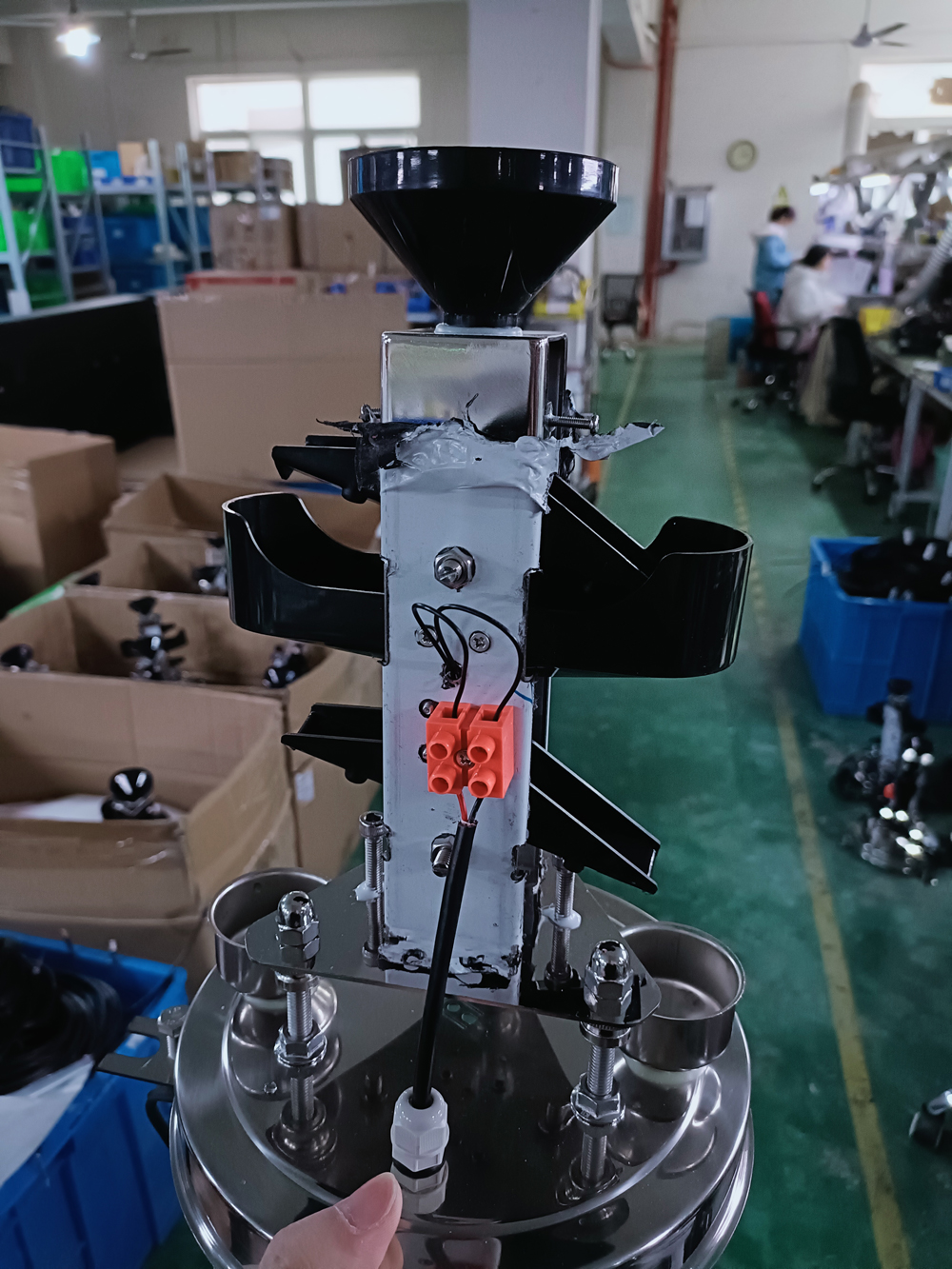
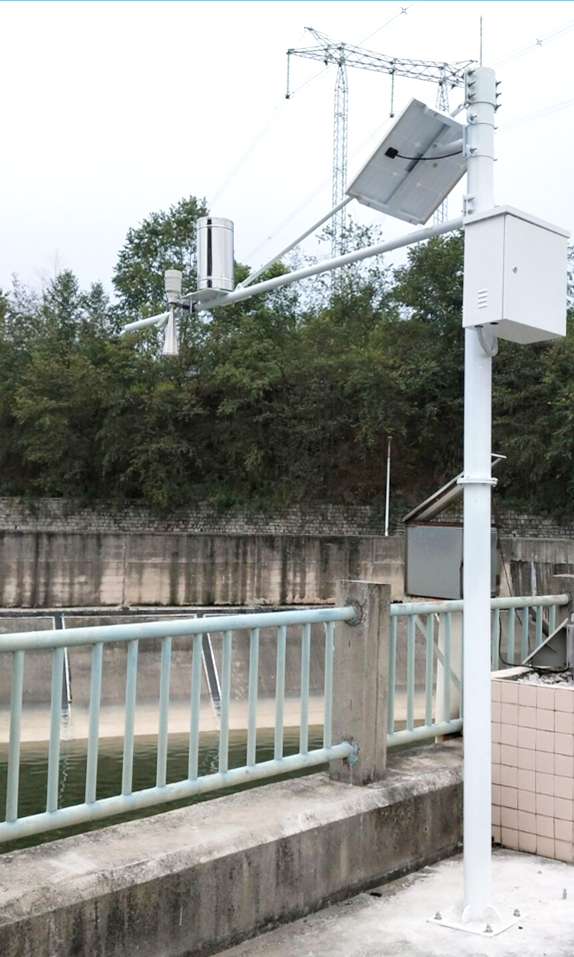
Correct installation of rainfall monitoring stations is key to ensuring data accuracy. When selecting location, prioritize open areas to avoid obstruction by trees or buildings. Ground installation requires flange fixing; self-made large cylinders or iron pole brackets can adapt to different terrains.
Installation steps include: adjust the three leveling screws on the base to center the bubble; fix with M8×80 expansion screws; assemble sensor components. After completion, inject clean water to test tipping bucket action and verify data collection. Avoid disassembling sensors to prevent damage.
For maintenance, regularly inspect the receiving funnel for cleanliness to prevent blockage. Keep solar panels dust-free and check battery charge quarterly. Remote platforms allow parameter adjustments such as reporting intervals, reducing on-site visits. After extreme weather, check bracket stability to ensure compliance with operating temperature requirements.
For system integrators, maintenance protocols can be included in service contracts, providing preventive checks and software updates to extend equipment life.
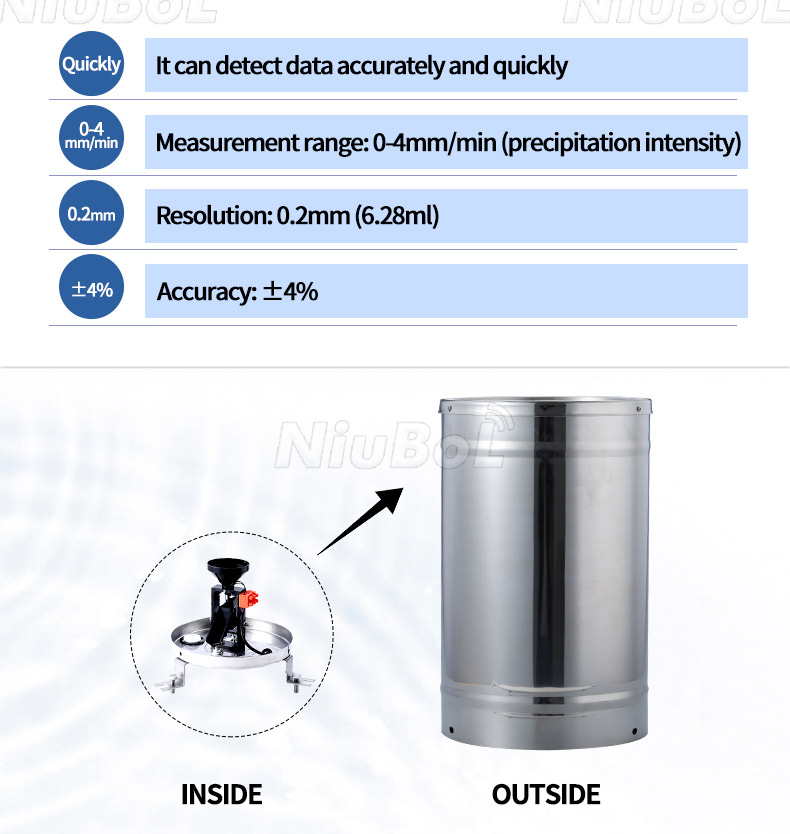
| Parameter | Specification |
|---|---|
| Receiving Orifice Diameter | Φ200 ± 0.6mm |
| Measurement Range | 0-4mm/min (precipitation intensity) |
| Resolution | 0.2mm (6.28ml) |
| Accuracy | ±4% (indoor static test, rain intensity 2mm/min) |
| Power Supply Method | DC 5V / DC 12V-24V / other |
| Output Form | Switch signal (reed switch on/off) / voltage 0~2.5V / voltage 0~5V / RS485 / other |
| Instrument Cable Length | Standard: 5 meters / other |
| Operating Temperature | 0~50℃ |
| Storage Temperature | -40℃~80℃ |
Q1: What is the main function of a rainfall monitoring station?
Rainfall monitoring stations are mainly used to measure precipitation amount, intensity, and duration in real time, supporting wireless data transmission to monitoring platforms, facilitating application by system integrators in flood prevention and hydrological projects.
Q2: How does the rainfall monitoring station integrate with IoT systems?
Through RS485 or voltage output forms, the device can seamlessly connect to IoT platforms, enabling remote configuration and data export, suitable for customized networks by solution providers.
Q3: What preparations are needed for installing a rainfall monitoring station?
Select an open location, ensure level installation, and test tipping bucket action. Project contractors should prepare fixing screws and power connections.
Q4: How is the accuracy of the rainfall monitoring station guaranteed?
It uses a tipping bucket sensor with 0.2mm resolution and ±4% accuracy, complying with national hydrological standards to ensure data reliability.
Q5: In which industries is deployment of rainfall monitoring stations suitable?
Suitable for meteorology, hydrology and water conservancy, agriculture, environmental protection, highways, and ports, providing real-time data support for flood control and water supply scheduling.
Q6: How to process data from rainfall monitoring stations?
Data can be exported to EXCEL tables, supporting historical analysis to help engineering companies conduct trend prediction and decision optimization in projects.
Q7: What are the advantages of the power supply methods for rainfall monitoring stations?
Combining solar and batteries achieves autonomous power supply, reducing maintenance costs and suitable for remote engineering sites.
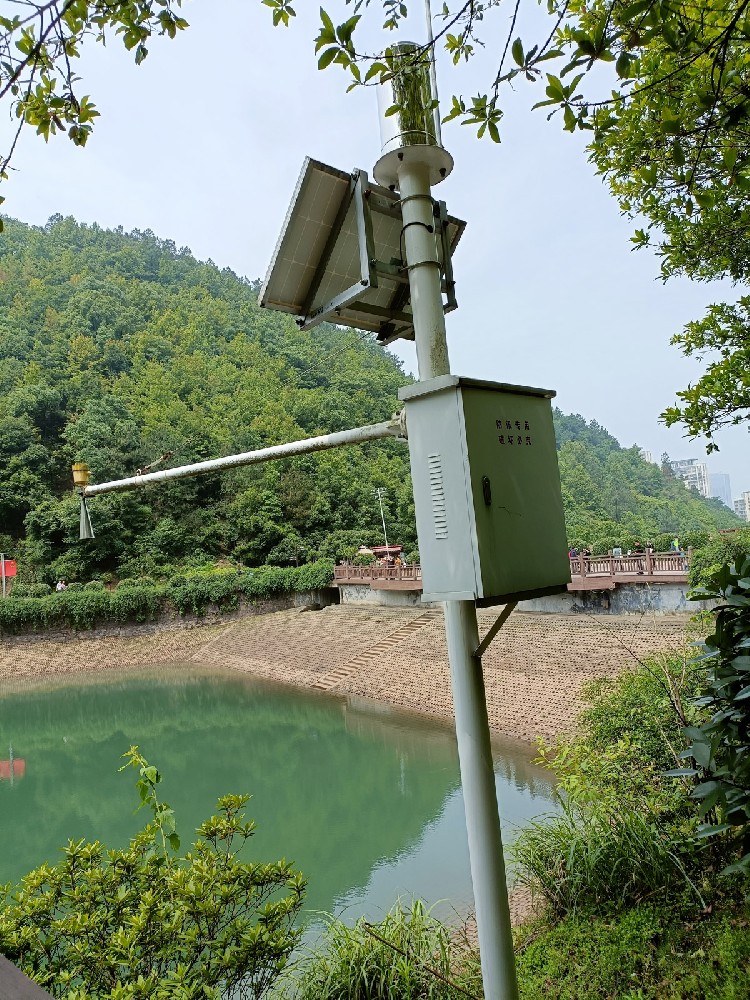
As an advanced precipitation monitoring system, rainfall monitoring stations provide reliable tools for system integrators, IoT solution providers, and engineering companies to address extreme weather challenges in flood prevention, water resource management, and agricultural projects. Through precise data collection and remote transmission, these devices not only enhance early warning capabilities but also optimize resource allocation and reduce disaster losses. Selecting standard-compliant equipment, such as NiuBoL's NBL-W-RS tipping bucket rain gauge model, ensures long-term stable operation of projects.
 NBL-W-RS-Rain-sensors-instruction-manual-V4.0.pdf
NBL-W-DRS-Double-Tipping-Bucket-Rain-Sensor-Instruction-Manual.pdf
Prev:Highway Meteorological Monitoring Station: for Traffic Safety Engineering
Next:NiuBoL Online Soil Moisture Monitoring System: Precision Agriculture IoT Solution
Related recommendations
Sensors & Weather Stations Catalog
Agriculture Sensors and Weather Stations Catalog-NiuBoL.pdf
Weather Stations Catalog-NiuBoL.pdf
Agriculture Sensors Catalog-NiuBoL.pdf
Water Quality Sensor Catalog-NiuBoL.pdf
Related products
 Combined air temperature and relative humidity sensor
 Soil Moisture Temperature sensor for irrigation|NBL-S-THR
 Soil pH sensor RS485 soil Testing instrument soil ph meter for agriculture |NBL-S-PH
 Wind Speed sensor Output Modbus/RS485/Analog/0-5V/4-20mA
 Tipping bucket rain gauge for weather monitoring auto rainfall sensor RS485/Outdoor/stainless steel
 Pyranometer Solar Radiation Sensor 4-20mA/RS485

Screenshot, WhatsApp to identify the QR code
WhatsApp number:+8615367865107
(Click on WhatsApp to copy and add friends)

