





— Blogs —
—Products—
 Consumer hotline +8618073152920
WhatsApp:+8615367865107
Address:Room 102, District D, Houhu Industrial Park, Yuelu District, Changsha City, Hunan Province, China
Product knowledge
Time:2026-03-14 11:11:08 Popularity:686
Online soil moisture monitoring needs a replacement procedure as well as an installation procedure. When a buried probe is damaged, a new sensor can restore data transmission without restoring comparability with the old record. Before joining the series or reusing irrigation thresholds, check the measurement definition, sensing depths, local installation and configuration of the replacement.
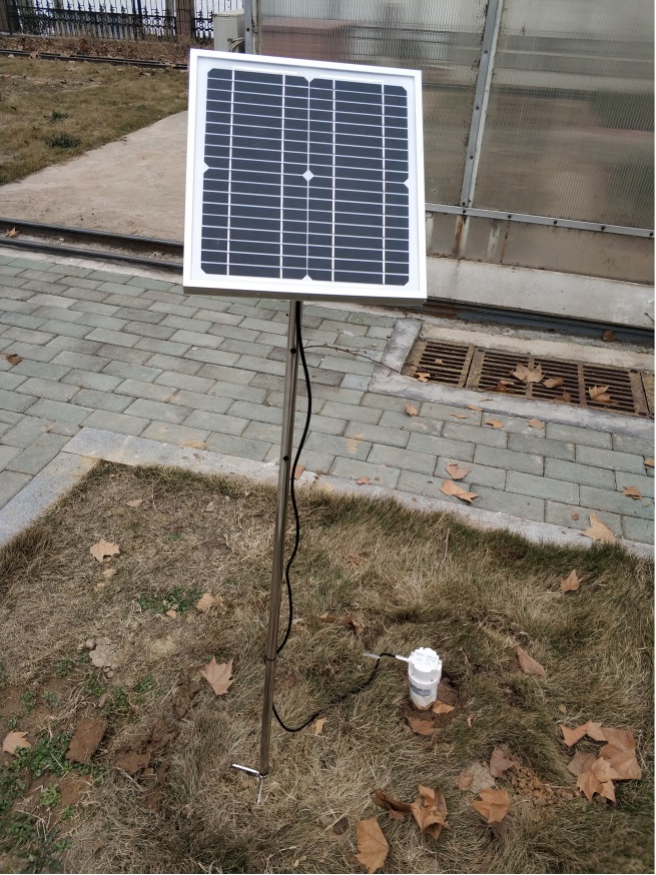
A missing profile can result from a power, communications or acquisition fault rather than a failed buried instrument. Check accessible equipment and the status of other channels first. A working modem does not prove that a soil probe is powered, while a failed upload does not prove that local acquisition has stopped.
If replacement is necessary, retain the last valid observations and the service findings. Record whether the original tube was struck during cultivation, moved, flooded beyond its installed arrangement or found with a damaged connection. Do not label the entire preceding season invalid simply because a fault has now been discovered; identify the period that the evidence actually supports.
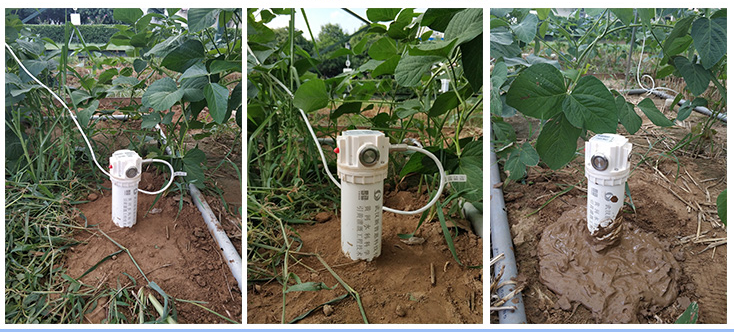
The NiuBoL NBL-S-TMSMS is a tubular FDR soil moisture and temperature sensor. It provides a vertical set of measurements around one installation. Separate probes installed at different locations are a different sampling arrangement, even if their nominal depths match the tube's channels.
| Replacement detail | What to compare | Why it affects continuity |
|---|---|---|
| Moisture quantity | Volumetric water content, units and any applied conversion | VWC is not gravimetric content or percentage of field capacity |
| Sensing locations | Actual channel depths and position relative to roots or emitters | A different wetting zone can change the series without an electronic fault |
| Instrument configuration | Model, output version, calibration and channel order | Similar housings do not establish identical outputs |
| Soil contact | Installation method, voids and disturbed material | Replacing a probe changes the surrounding measurement environment |
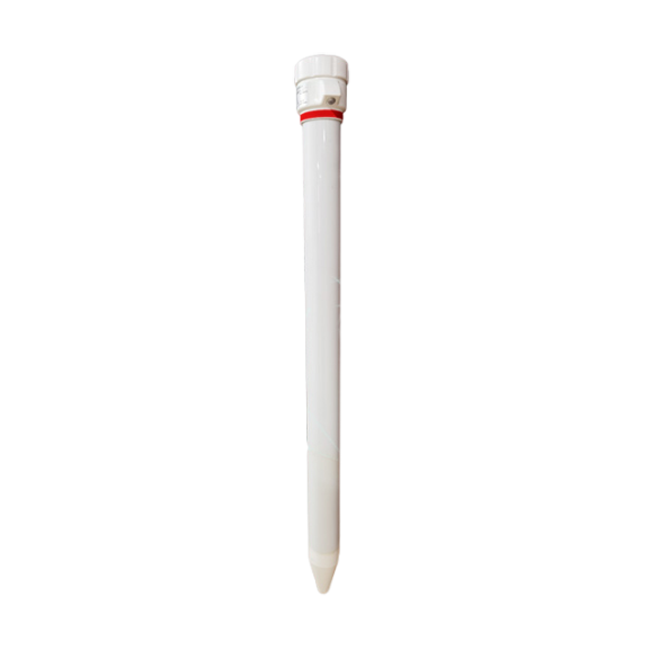
A standard profile can include 10, 20, 30 and 40 cm nodes, with other depths ordered as options. Do not assume the replacement contains six layers, ten layers or a particular deepest node. Check the actual order and mark the ground reference used to define each depth.
| NBL-S-TMSMS characteristic | Specification | Replacement check |
|---|---|---|
| Moisture principle and range | FDR volumetric water content, dry to saturated soil | Keep the same quantity in the historical channel |
| Moisture performance | Laboratory accuracy ±3%; field accuracy ±5%; resolution 0.1% | These are not guaranteed agreement limits between two installed probes |
| Soil temperature | -40 to 80°C; ±0.5°C; resolution 0.1°C | Confirm depth correspondence as well as displayed values |
| Digital version | RS485 Modbus RTU; selected adapter supply DC 12-24 V | Confirm actual electrical version and protocol before connection |
| Construction and protection | PVC tube with epoxy sealing; above-ground IP67, below-ground IP68 | Protect the transition, lead and installed connectors separately |
This moisture-and-temperature profile is not a salinity, nutrient or slope-displacement instrument. A replacement offering those additional functions needs an identified model and separate specification. Likewise, a radio, solar supply, GPS or tilt option must be confirmed for the ordered assembly rather than inferred from the word "online."
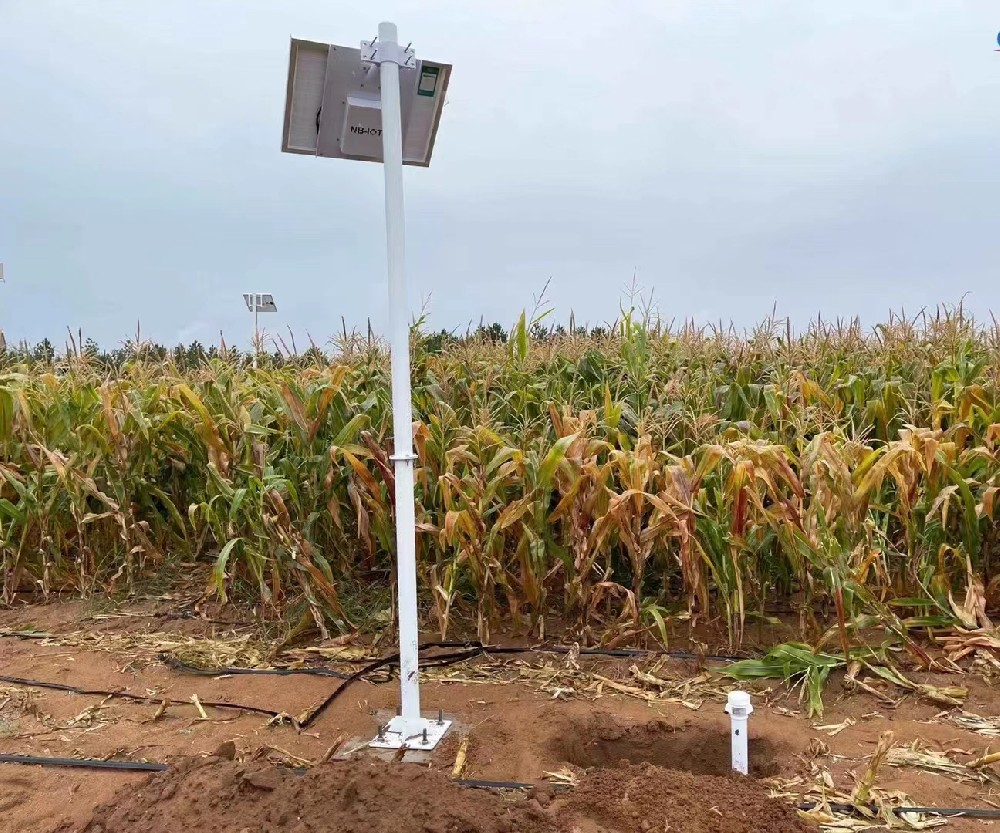
Mark the tube location, ground surface, row position and distance from the emitter or irrigation line. Photograph the installation and note whether tillage, bed shaping or erosion has changed the surface reference. A nominal 20 cm channel can observe a different layer after the bed has been raised, even if the probe itself has not moved.
Replacing a tube in its old hole is not automatically preferable. An enlarged or disturbed hole can leave poor contact or create an unintended water path. A nearby new hole changes the sampled location. Choose the installation method appropriate to the instrument and soil, and record the compromise rather than claiming either method preserves an identical sample volume.
If the old probe still provides usable observations, a planned overlap can help compare the old and new arrangements through wetting and drying. The probes must be positioned so they do not interfere physically, but their readings still represent different soil volumes. Agreement is useful evidence; disagreement calls for investigation, not immediate adjustment of one series.
For an illustrative comparison, an old channel reading 24% VWC and a new channel reading 28% VWC differ by four percentage points. That does not justify subtracting four points from every future observation. The difference can change with moisture, depth, soil contact or location. A single paired reading cannot establish a correction valid across the operating range.
If the old probe is completely failed, no overlap is available. Preserve that limitation in the record and start a documented new installation period. An independent field comparison may help assess plausibility, but it should use a compatible moisture definition and an appropriate sampling method; an unlike percentage is not a calibration reference.
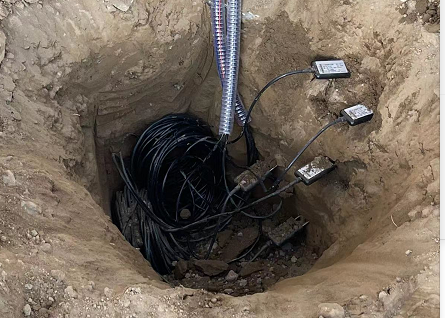
At the data logger, check that every depth label matches the actual replacement channel. Confirm moisture and temperature units, the selected address and any scaling. Watch the receiving platform as well as the local readout. A plausible number can still be assigned to the wrong depth when a replacement has a different node arrangement.
Review the response to a known irrigation or rainfall event and subsequent drying, allowing for the installation disturbance. Do not specify an arbitrary universal settling time. Inspect whether the response is credible for the local soil and water delivery. An immediate deep-layer jump may indicate preferential flow along an installation path rather than a uniformly wetted root zone.
Before reusing old irrigation thresholds, check whether they remain appropriate to the new observation location and calibration. If soil data drive automatic control, keep control under the project's agreed safe arrangement while the replacement is being checked. A restored RS485 link alone does not authorize returning a pump or valve to automatic operation.
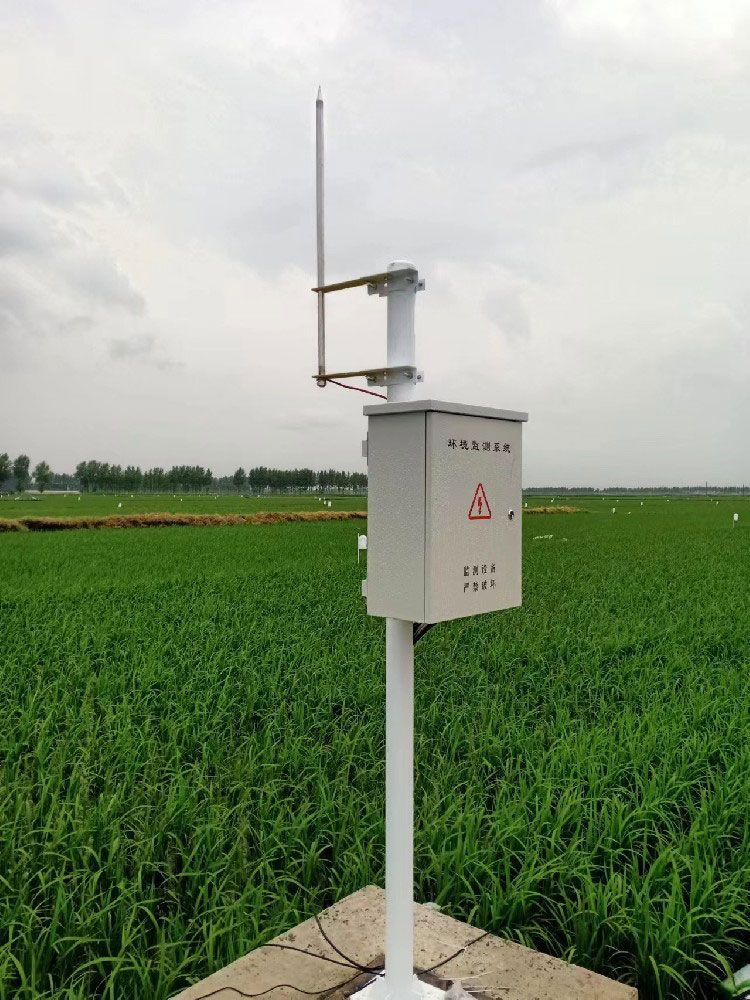
Retain the selected model, depth configuration, protocol version and original installation details in the asset record. Identify accessible connection points without creating an unapproved buried splice. Keep machinery routes and service access in mind when deciding where the above-ground equipment is protected.
For a NiuBoL replacement enquiry, provide the current model label, required depths, electrical output, observed fault and installation photographs. Ask whether a replacement matches the existing arrangement or requires a new configuration. Compare the work needed to restore a useful record, not only the price of a tube with the same connector.
The history can remain on one platform, but mark the replacement and preserve its configuration and location. Treat comparability as something to check, particularly if the sensing depths, soil contact or calibration changed.
No. The address identifies a device on a bus. Verify the actual registers, depth order, units and scaling. A replacement can respond correctly while returning a different channel arrangement.
Not from one comparison. Investigate whether the difference varies with water content or installation conditions. Any correction needs a suitable basis and should remain distinguishable from the original observations.
No. The below-ground probe rating does not establish the rating of a field joint, connector or logger. Follow the selected assembly's installation requirements and protect the transition and connections accordingly.
Only after checking that the new observations remain appropriate to those thresholds and the same management zone. A changed location, soil contact or conversion can require review even when the replacement is the same model.
Keep the last valid old record, fault findings, replacement date, model, sensing depths, location and configuration checks. Record any comparison or control-return decision without overwriting the old series to make the transition appear smooth.
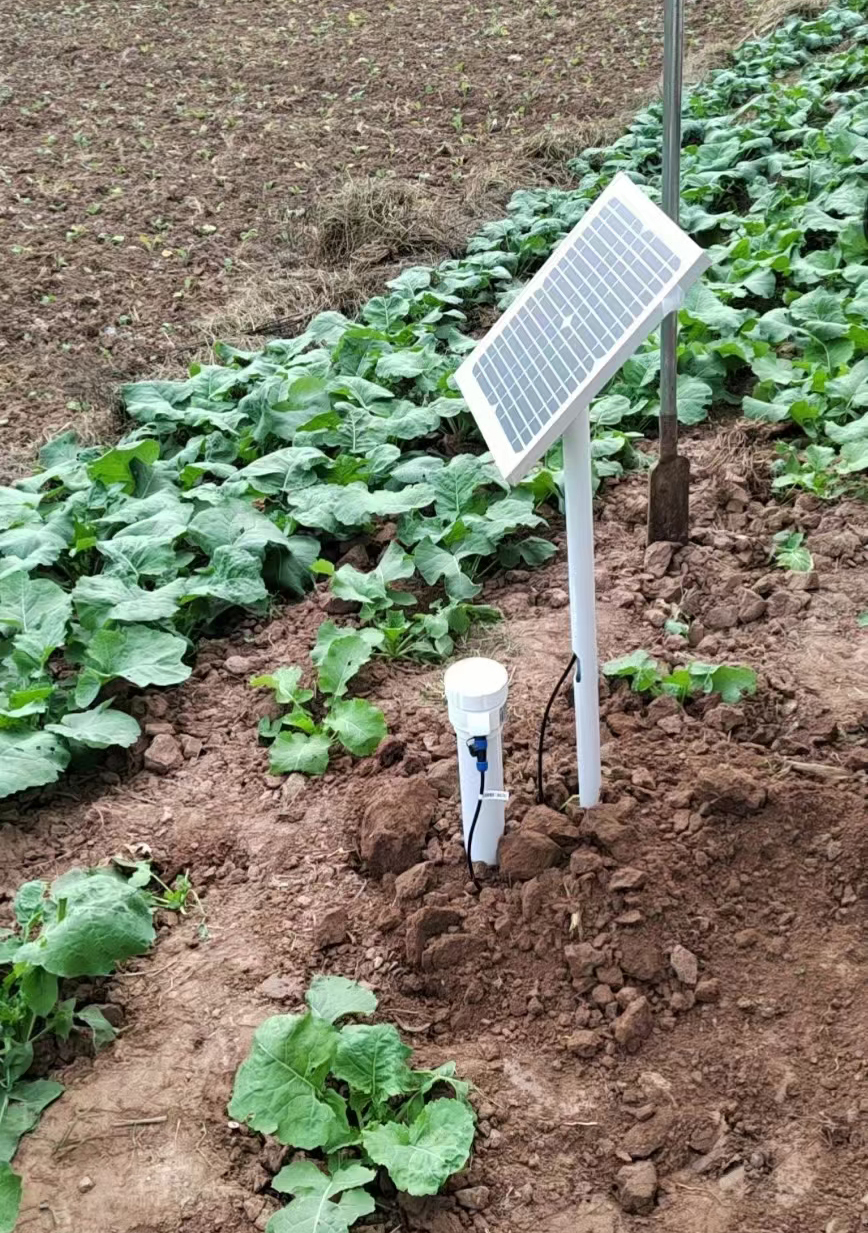
Online soil moisture monitoring remains useful after probe replacement when the new installation is identifiable and its data are checked before operational use. Match the sensing depths and quantity, document disturbance and avoid unsupported offsets. NiuBoL profile sensors can restore observation capability; preserving a defensible history requires a controlled transition.
 NBL-S-TMSMS-Tubular-Multi-depth-Soil-Moisture-Sensor-Instruction-Manual.pdf
NBL-S-TM-Soil-temperature-and-moisture-sensor-Instruction-Manual-4.0.pdf
NBL-S-THR-Soil-temperature-and-moisture-sensors-Instruction-Manual-V4.0.pdf
Prev:Rainfall Monitoring Station Network: Point Records and Catchment Coverage
Next:Conduit-Type Soil Moisture Sensor: How FDR Readings Become VWC
Related recommendations
Sensors & Weather Stations Catalog
Agriculture Sensors and Weather Stations Catalog-NiuBoL.pdf
Weather Stations Catalog-NiuBoL.pdf
Agriculture Sensors Catalog-NiuBoL.pdf
Water Quality Sensor Catalog-NiuBoL.pdf
Related products
 Combined air temperature and relative humidity sensor
 TDR Soil Moisture & Temperature Sensor for irrigation| RS485 |4-20mA| NBL-S-THR
 Soil pH sensor RS485 soil Testing instrument soil ph meter for agriculture |NBL-S-PH
 Wind Speed sensor Output Modbus/RS485/Analog/0-5V/4-20mA
 Tipping bucket rain gauge for weather monitoring auto rainfall sensor RS485/Outdoor/stainless steel
 Pyranometer Solar Radiation Sensor 4-20mA/RS485


Screenshot, WhatsApp to identify the QR code
WhatsApp number:+8615367865107
(Click on WhatsApp to copy and add friends)

