





— Blogs —
—Products—
 Consumer hotline +8618073152920
 WhatsApp:+8615367865107
Address:Room 102, District D, Houhu Industrial Park, Yuelu District, Changsha City, Hunan Province, China
Product knowledge
Time:2026-05-23 14:00:51 Popularity:338
In scenarios such as industrial wastewater treatment, chemical neutralization reactions, desulfurization wastewater treatment, and circulating cooling water systems, pH value is a core process parameter for closed-loop control of acid/alkali dosing pumps. pH fluctuations directly affect effluent compliance, equipment corrosion risk, and subsequent process stability.
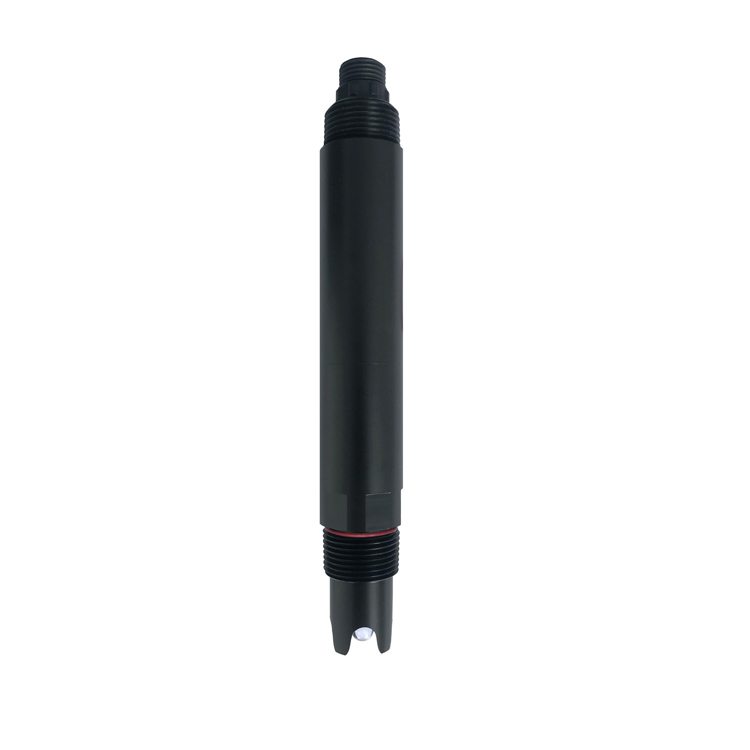
The most common on-site installation accidents stem from directly immersing the pH sensor into raw water channels or reaction tanks without protective measures: First, hard particles, fibers, and suspended solids carried by the water flow directly impact the glass electrode bulb, causing crushing damage; second, sludge, algae, and fibrous debris wrap around the glass membrane, causing severe measurement signal lag or complete failure, ultimately leading to control system misoperation, chemical waste, or even environmental standard exceedances.
The NiuBoL NBL-WQ-PH industrial pH sensor, designed for the above conditions, uses a patented microporous salt bridge design and dual high-impedance differential amplification technology, providing reliable RS-485 (Modbus-RTU) digital output, making it the preferred sensing layer terminal for high-reliability closed-loop control systems.
As a field sensing layer device, the NBL-WQ-PH connects directly via RS-485 bus using Modbus-RTU protocol to PLC, DCS, edge gateway, or industrial HMI. The digital signal output by the sensor is transmitted via the bus to the controller. The controller outputs 4-20mA or switching signals based on set pH upper and lower limits (typically 6.5-8.5 or process-specific range) to drive acid/alkali dosing pumps for PID automatic regulation, forming a complete "measurement-transmission-control-execution" closed loop.
Compared to traditional 4-20mA analog electrodes, NiuBoL's digital output avoids long-distance analog signal attenuation and electromagnetic interference issues, supports multi-node bus networking (up to 32 nodes per bus), greatly simplifying field wiring and commissioning.
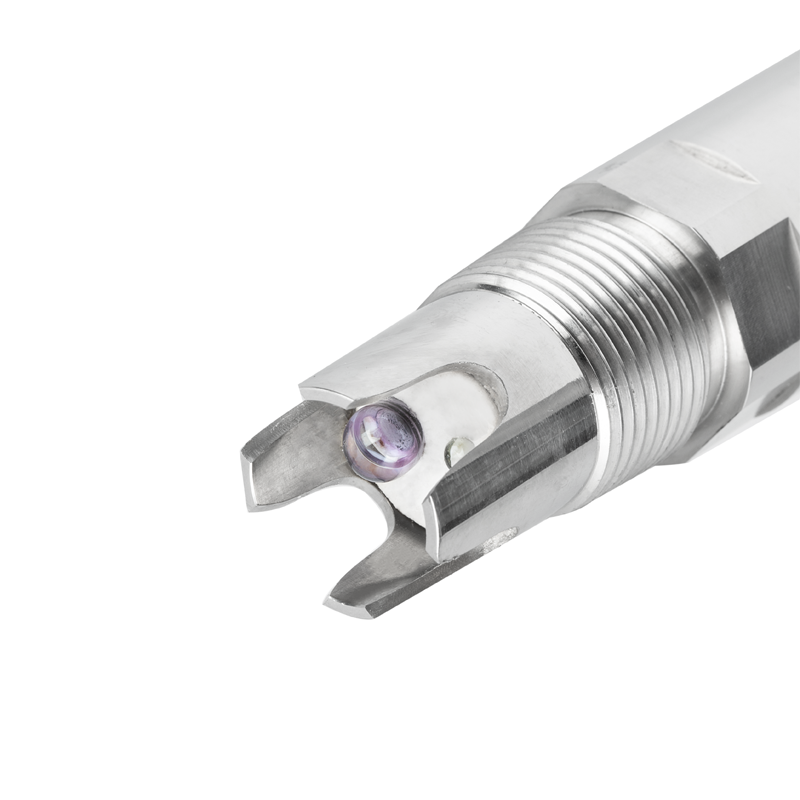
To prevent damage to the sensor glass bulb in complex industrial water environments, strict physical isolation protection must be implemented before installation. The recommended process is as follows:
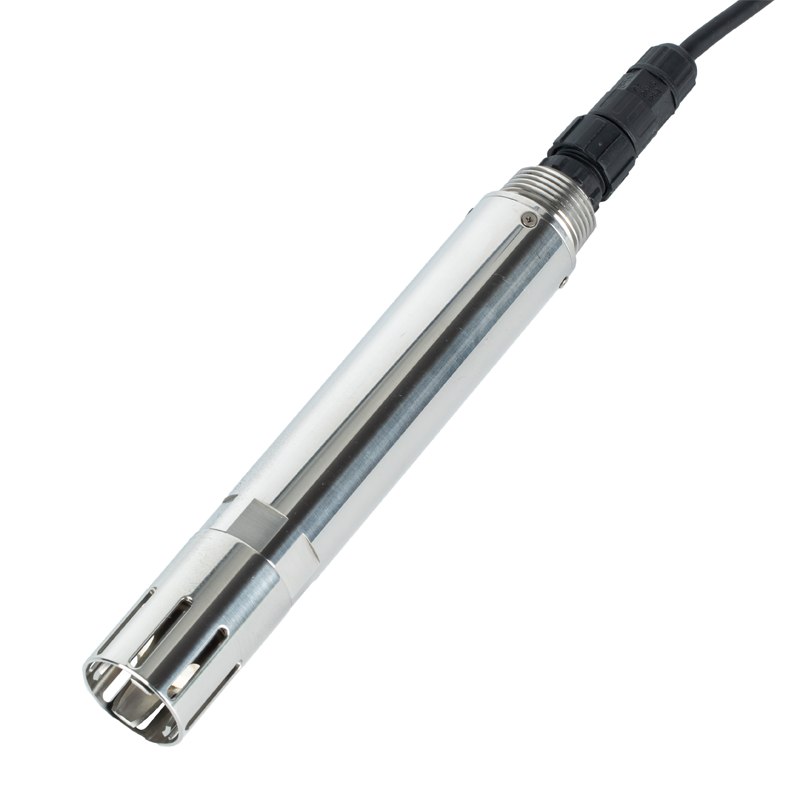
Select a location in the influent channel or equalization tank with sufficient pH adjustment buffer distance (generally 300-500m from the gate or inlet), and build an installation platform. Open a DN100 round hole in the center of the platform. Select a DN100 stainless steel protection tube (material 304 or 316L, depending on medium corrosivity).
Drill multiple rows of 2cm diameter perforations evenly within the bottom 1m of the protection tube as the first impact and entanglement prevention isolation layer. During installation, vertically insert the protection tube into the water body from the platform opening, ensuring the perforated section is fully submerged. Adjust insertion depth based on actual water depth, ensuring the tube bottom is 200-300mm above the channel/basin bottom to avoid bottom sediment clogging the perforations.
After assembling the sensor and connecting rod, insert the assembly into the protection tube. Control insertion depth so that the sensor glass bulb is more than 100mm above the lower edge of the protection tube, ensuring the bulb is not exposed to direct water flow impact while maintaining full contact with the medium to be measured.
Critical Warning: Only after confirming that the sensor glass bulb can continuously and stably contact the water body should the electrode protective cap be removed. Premature removal will cause reference solution dehydration and drying, leading to irreversible electrode failure.
After insertion, route the sensor cable out through the connecting rod, connect to the converter or directly to the RS-485 bus junction box according to the wiring diagram, and secure the upper end of the protection tube, completing on-site installation.
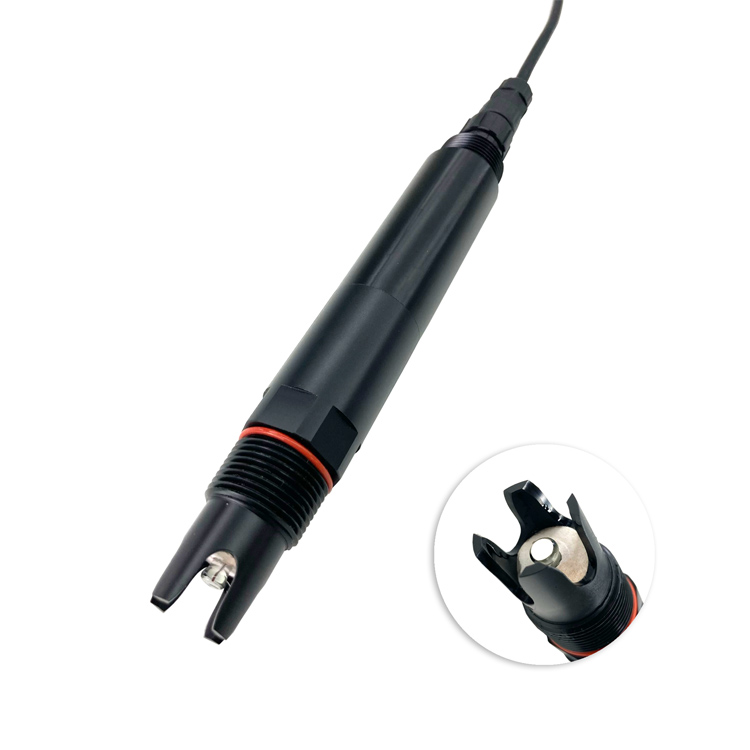
| Parameter | Specification |
|---|---|
| Model | NBL-WQ-PH |
| Housing Material | ABS/PC Alloy |
| Measuring Principle | Glass Electrode Method |
| Range | 0~14.00 |
| Resolution | 0.01 |
| Accuracy | ±0.1 pH, ±0.3℃ |
| Response Time (T90) | <30s |
| Calibration Mode | Two-point Calibration |
| Temperature Compensation | Automatic (Pt1000) |
| Output | RS-485 (Modbus-RTU) |
| Power Supply | 12~24V DC |
| Power Consumption | 0.2W @12V |
| Protection Rating | IP68 |
| Installation | Submersible, 3/4 NPT |
| Operating Conditions | 0~50℃, ≤0.2MPa |
| Cable Length | 5m (customizable) |
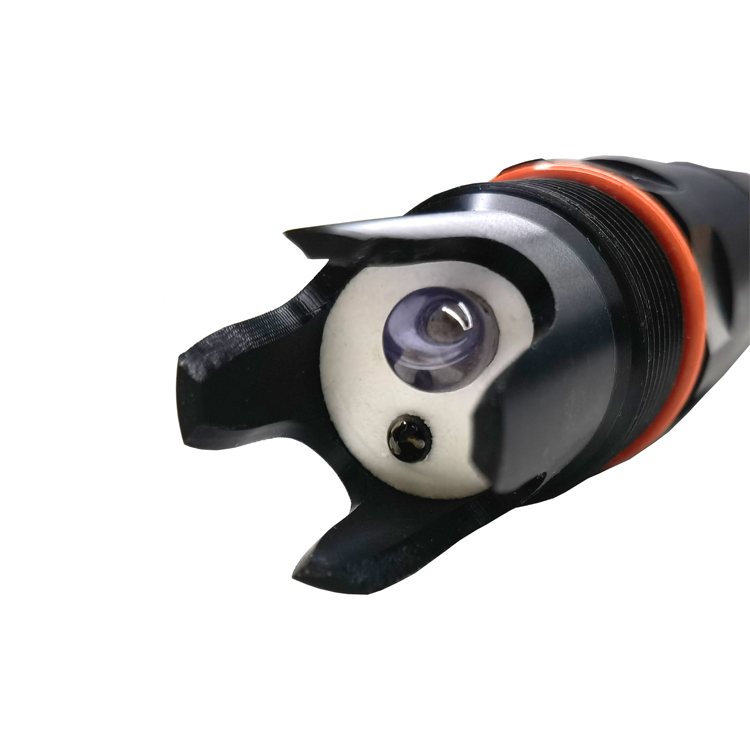
Patented Microporous Salt Bridge Technology Analysis: NBL-WQ-PH features a patented microporous salt bridge design. The internal reference solution seeps outward positively through the micropores under at least 100KPa (1Bar) pressure very slowly, lasting over 20 months. This design completely blocks reverse osmotic contamination from highly polluted, high-salinity industrial water, significantly improving reference system stability, extending electrode life 1-2 times longer than ordinary industrial pH electrodes, especially suitable for complex conditions involving high concentrations of suspended solids, oils, or alternating strong acids and alkalis.
Scenario A: Industrial Wastewater Treatment & High-Concentration Acid/Alkali Neutralization Tanks
Characterized by severe pH fluctuations (range 2-12), high suspended solids concentration, and corrosive ions. The NiuBoL protection tube + IP68 sensor combination effectively resists impact and entanglement. Real-time data via Modbus-RTU links to dosing pumps, achieving stable effluent pH control within 6-9 range, reducing manual intervention and chemical consumption.
Scenario B: Low Conductivity Drinking Water Environments in Water Treatment Plants & Pure Water Stations
In low ionic strength environments, traditional electrodes are prone to reference solution backflow causing drift. NiuBoL's microporous salt bridge positive seepage characteristic effectively prevents backflow, combined with automatic temperature compensation, ensuring long-term measurement accuracy stability, meeting QS/HACCP certification requirements for drinking water plants.
Scenario C: High-Frequency Continuous Monitoring of Nutrient Solutions in Modern Smart Agriculture Fertigation Systems
Nutrient solution pH must be strictly controlled within 5.5-6.5 to ensure nutrient absorption. NBL-WQ-PH supports multi-point RS-485 networking, can connect to a central controller for zone-based automatic adjustment, significantly improving water and fertilizer utilization efficiency.
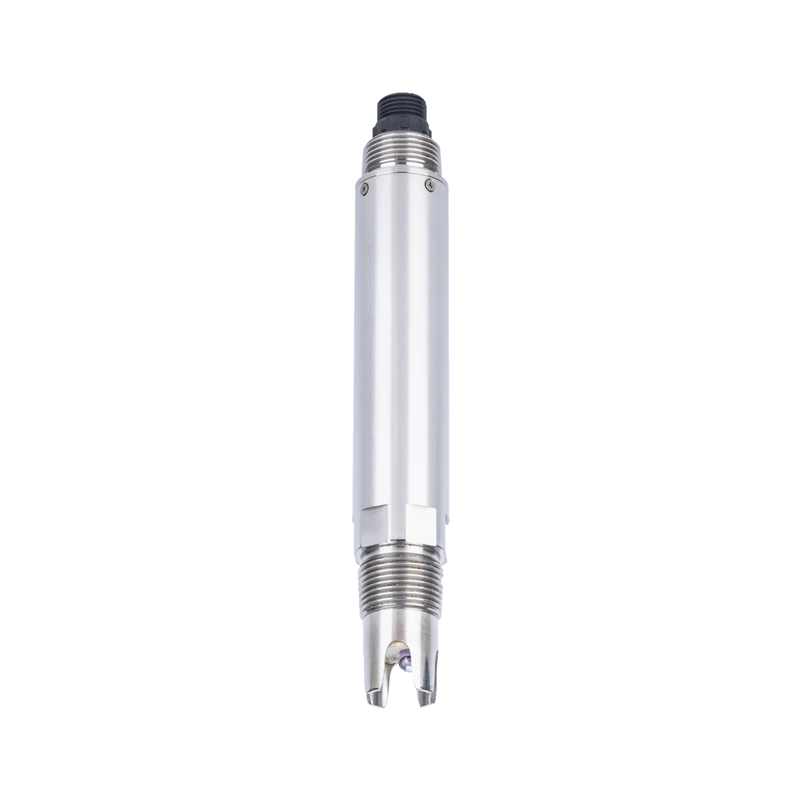
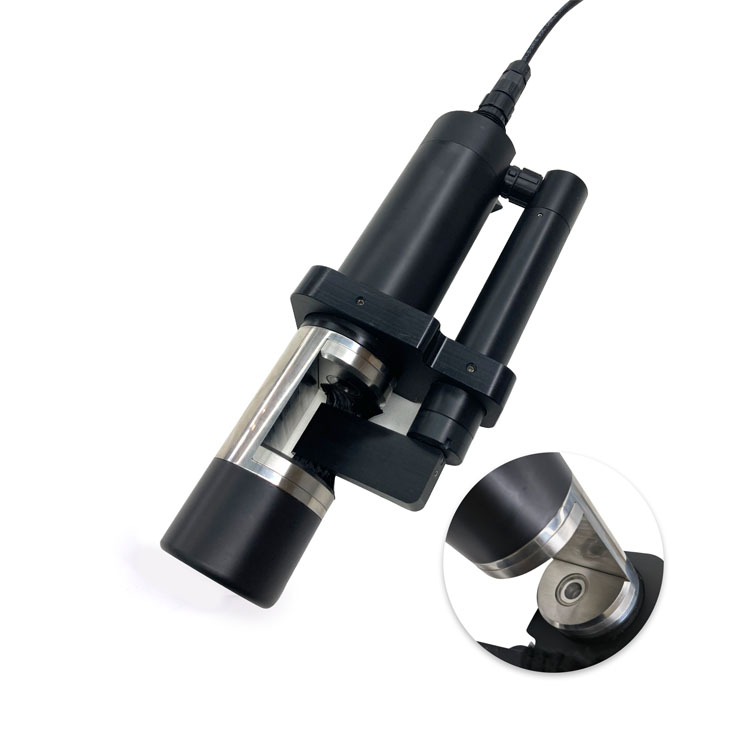
Self-Cleaning Device Selection:
Ultrasonic cleaning devices are recommended first. Compared to water cleaning devices (requiring additional solenoid valves, clean water source, and piping), ultrasonic cleaning requires no additional medium, has simple structure, low maintenance, suitable for most industrial sites. Cleaning cycles can be set to 4-8 hours/times based on water pollution level.
Routine Chemical Cleaning & Calibration:
When deposits appear on the sensor surface, soak in 0.1mol/L dilute hydrochloric acid for 5-10 minutes then rinse with deionized water. Use the two-point method for calibration (recommended pH 4.01 and 6.86 or 9.18 standard buffer solutions), perform at least once per month. Before calibration, rinse the sensor with distilled water and absorb dry with filter paper.
Non-Operational Storage: When the sensor is not in use, clean and store immersed in 3mol/L KCl solution. Never store long-term in distilled water or dry environments. Keep terminals dry; if damp, wipe with absolute alcohol and blow dry.
Q1: What are the absolute advantages of digital differential amplified signals compared to traditional analog 4-20mA in on-site anti-inverter interference?
A: The NiuBoL dual high-impedance differential amplifier combined with RS-485 digital transmission has extremely high common-mode rejection ratio, effectively resisting strong electromagnetic interference from inverters, motors, etc. Analog 4-20mA is susceptible to noise over distances >50m causing signal drift, while digital signals support verification and retransmission mechanisms, offering significantly higher data reliability.
Q2: What specific effect does scaling on the glass membrane have on T90 response time?
A: Scaling increases diffusion impedance, extending T90 response time from normal <30s to several minutes or causing failure, resulting in control system lag. NiuBoL recommends ultrasonic cleaning or periodic acid cleaning to maintain response speed.
Q3: How to design installation for intermittent drainage or frequently dry channels to prevent electrode drying?
A: Use level-linked control, automatically lifting the sensor or switching to a backup electrode when water level falls below set value; or design a protection tube with a water seal structure ensuring the glass bulb remains submerged even at minimum water level.
Q4: What is the process pressure limitation for 3/4 NPT installation on the main pipe?
A: The sensor's maximum working pressure is 0.2MPa (approx. 2Bar). When installing on a main pipe, ensure the pressure at the bypass sampling point does not exceed this value, or use a pressure-protected installation method.
Q5: What is the housing material's resistance to strong acid/alkali wastewater?
A: The ABS/PC alloy housing can withstand pH 1-14 for conventional industrial wastewater. For applications with strong oxidizers or organic solvents, evaluate and consider custom fluorinated material versions.
Q6: Does the equipment provide a detailed secondary development register manual for integration with third-party environmental platforms?
A: Yes, we provide a complete Modbus-RTU register address table and communication protocol documentation, supporting rapid integration with IoT platforms or SCADA systems.
Q8: For large-scale tenders, what is NiuBoL's supply lead time and technical sample testing policy?
A: Standard product lead time is 7-15 working days. Sample testing is supported (free trial for some models). Specialized technical support and custom delivery schedules can be negotiated for large projects.
Reliable operation of industrial online pH meters depends on scientific installation protection, reasonable system integration, and standardized long-term maintenance. The NiuBoL NBL-WQ-PH, with its patented microporous salt bridge, differential amplifier circuit, and industrial-grade protection design, provides a highly reliable solution for pH closed-loop control under complex working conditions.
To obtain complete PLC integration code examples, Modbus protocol documentation, system topology diagrams, or bulk project quotations for the NiuBoL NBL-WQ-PH industrial pH sensor, please contact our application engineers. We will provide tailored technical solutions within 24 hours.
 NBL-WQ-PH Online Water Quality pH Sensor.pdf
Related recommendations
Sensors & Weather Stations Catalog
Agriculture Sensors and Weather Stations Catalog-NiuBoL.pdf
Weather Stations Catalog-NiuBoL.pdf
Agriculture Sensors Catalog-NiuBoL.pdf
Water Quality Sensor Catalog-NiuBoL.pdf
Related products
 Combined air temperature and relative humidity sensor
 TDR Soil Moisture & Temperature Sensor for irrigation| RS485 |4-20mA| NBL-S-THR
 Soil pH sensor RS485 soil Testing instrument soil ph meter for agriculture |NBL-S-PH
 Wind Speed sensor Output Modbus/RS485/Analog/0-5V/4-20mA
 Tipping bucket rain gauge for weather monitoring auto rainfall sensor RS485/Outdoor/stainless steel
 Pyranometer Solar Radiation Sensor 4-20mA/RS485

Screenshot, WhatsApp to identify the QR code
WhatsApp number:+8615367865107
(Click on WhatsApp to copy and add friends)

