





— Blogs —
—Products—
 Consumer hotline +8618073152920
 WhatsApp:+8615367865107
Address:Room 102, District D, Houhu Industrial Park, Yuelu District, Changsha City, Hunan Province, China
Product knowledge
Time:2026-05-23 14:32:18 Popularity:351
In multi-parameter water quality monitoring and fluid process control systems, turbidity is a highly representative core control parameter. From the essence of optoelectronics physics, turbidity is not a direct mass concentration unit of a substance, but a complex optical property. It refers to the physical characterization of suspended particles in a fluid preventing light transmission.
When a collimated beam is injected into a fluid sample, due to the presence of non-homogeneous suspended particles (such as sediment, colloids, algae, microorganisms, and industrial macromolecular polymers) with refractive indices different from the surrounding medium, photons undergo scattering (change in propagation direction) and absorption (energy loss) when passing through these particles. In industrial filtration control, tap water purification and disinfection, and environmental wastewater discharge compliance, turbidity is a key control indicator for assessing system interception efficiency and filter bed penetration risk. Real-time, high-precision online turbidity data directly determines the stability of the process feedback loop. However, in complex on-site conditions, due to the sensitivity of optical characteristics, various parasitic interferences are prone to occur during the measurement process.
In practice, whenever optical measurement is performed, interference causal chains are ubiquitous. To achieve precise process control, the following four underlying interference factors must be deeply analyzed:
2.1 Factor A: Bubble Refraction Interference and Dynamic Jumps
Bubbles are the primary physical interference causing abnormal data jumps in industrial online turbidimeters. The refractive index of water is approximately 1.333, while the refractive index of air inside bubbles is close to 1.000. When micro-bubbles are generated in the fluid due to sudden pressure changes, temperature rise, or mechanical agitation, each bubble acts as a miniature spherical lens in the optical path.
Process Avoidance: Bubble interference must be avoided by optimizing the on-site installation point. Install the sensor in a section with stable flow velocity and no disordered turbulence, vertically or inclined against the flow direction, avoiding the top of pipelines (where gas accumulates) or directly behind pump outlets.
2.2 Factor B: Particle Size, Shape, and Spatial Distribution of Scattering Angles
The physical forms of suspended matter in water vary widely, with particle size distributions often spanning several orders of magnitude, leading to fundamental differences in the spatial energy distribution of scattered light.
Spatial Geometry Control: Differences in particle shape and size cause vastly different lateral and forward light intensity responses. Therefore, the scattering angle must be strictly specified in turbidity measurement. The industry-recognized 90° nephelometric principle offers high stability and superiority in capturing suspended particles of various sizes and balancing the combined scattering contributions of large and small particles.
2.3 Factor C: Spectral Absorption of Light Intensity by Water Color (Colorimetric Negative Bias)
Water color, caused by dissolved organic matter (such as humic acid, tannic acid) or industrial color dyes, has a strong absorption effect on the light source of conventional turbidimeters.
Process Avoidance: Visible light sources must be abandoned, and special invisible wavelengths other than visible light (such as near-infrared light) should be used to minimize spectral absorption and partial fluorescence interference.
2.4 Factor D: External Stray Light and Background Parasitic Reflection (Zero-point Positive Drift)
This interference directly depends on the sensor's physical boundaries and tank installation process.
Physical Consequence: These non-target stray light rays are received and amplified by the 90° detector, directly forming a strong optical background noise, causing severe zero-point overflow and positive drift (non-zero reading when no suspended matter is present).
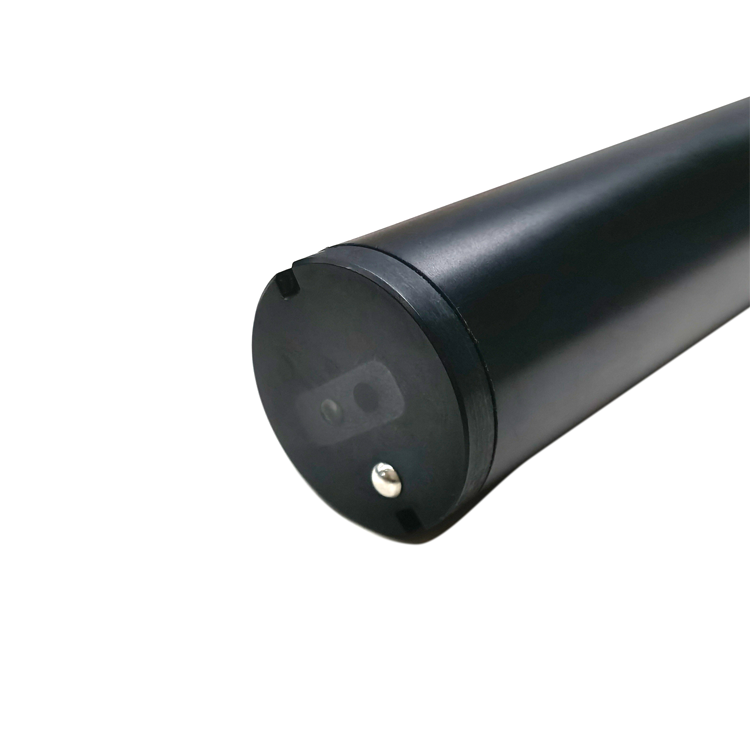
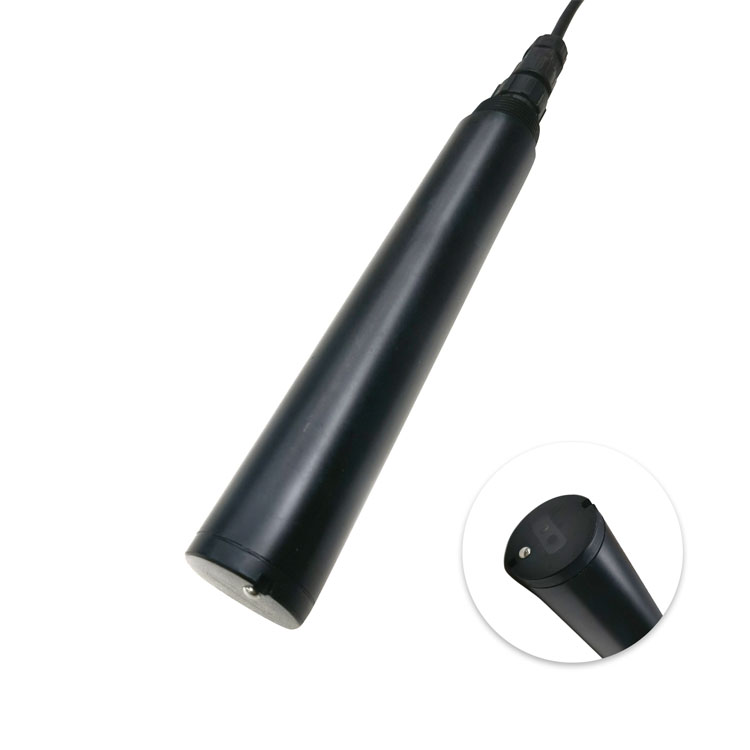
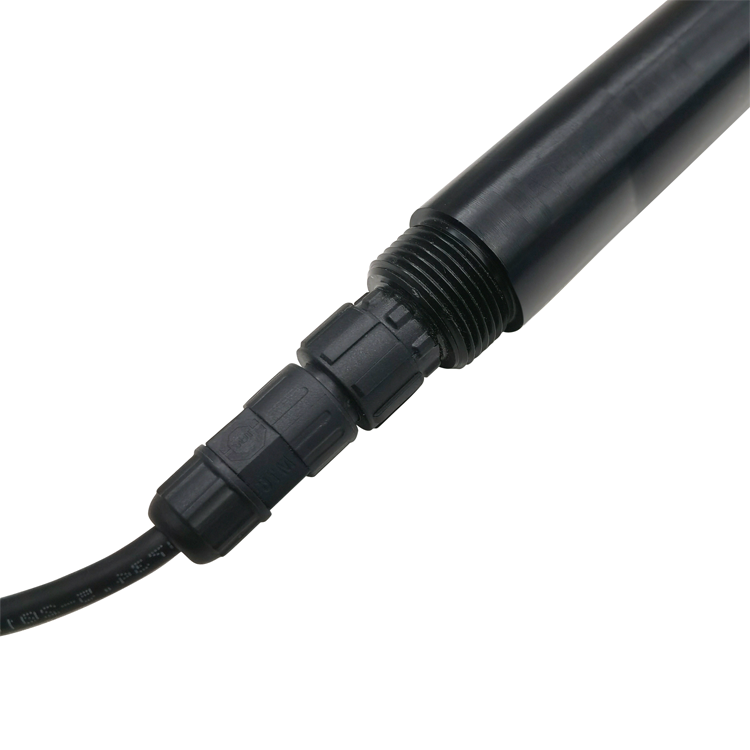
Addressing the four optical interference pain points in industrial conditions, NiuBoL has developed the NBL-WQ-TS integrated online turbidity sensor. This device is strictly designed based on the 90° nephelometric principle, eliminating environmental interference one by one from the physical hardware and optical path architecture:
860nm Near-Infrared LED Light Source:
NBL-WQ-TS abandons conventional visible light sources and uses a highly stable 860nm near-infrared LED. This specific invisible infrared wavelength perfectly avoids the spectral absorption bands of natural water colors (such as yellow, brown, green), completely eliminating color interference. It achieves pure particle scattering measurement even when facing food brewing, printing, and dyeing wastewater.
Fiber Optic Precision Physical Structure:
The device uses a highly concentrated fiber optic transmission and beam collimation design inside, converging the incident light into a parallel energy beam, strictly limiting the spot diffusion area. This closed and highly focused optical path structure gives it strong resistance to external stray light and natural light interference.
Standard 90° Scattering Geometry Design:
Strictly follows ISO 7027 international standard, placing the receiver at a 90° position strictly perpendicular to the incident light. This geometric design has excellent reproducibility for Mie scattering and Rayleigh scattering, ensuring high linearity and accuracy across the entire 0-1000NTU range.
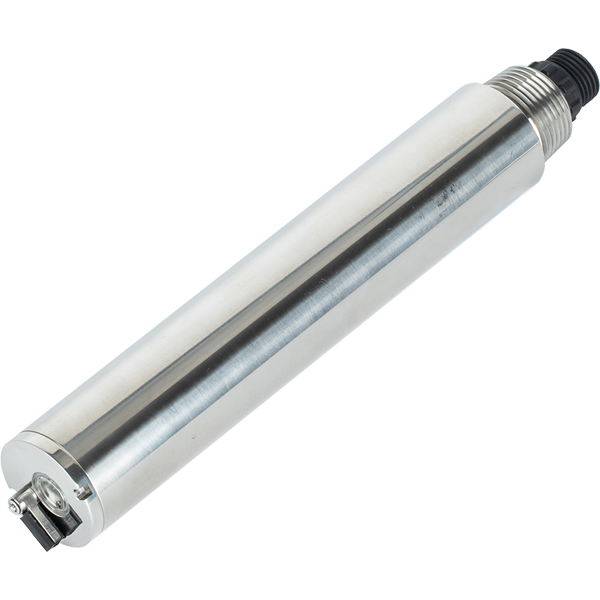
During system integration and engineering bulk procurement selection, standardized hardware, range specifications, and electrical parameters are the foundation for ensuring system compatibility. Specific parameters are as follows:
| Parameter | Specification |
|---|---|
| Model | NBL-WQ-TS |
| Housing Material | POM, ABS Composite Industrial Engineering Plastic |
| Measuring Principle | 90° Nephelometric Method |
| Range & High Resolution | 0-20.00NTU (Resolution: 0.01NTU/0.1℃) 0-200.0NTU (Resolution: 0.01NTU/0.1℃) 0-1000.0NTU (Resolution: 0.1NTU/0.1℃) |
| Multi-segment Accuracy | ±3% or ±1.5NTU (0-20.00NTU) ±3% or ±2NTU (0-200.0NTU) ±5% or ±3NTU (0-1000.0NTU) Temp Accuracy: ±0.3℃ |
| Response Time (T90) | <30s |
| Lower Detection Limit | 0.01 (for 0-20NTU range); 0.3NTU (general) |
| Temperature Compensation | Pt1000 Automatic |
| Digital Output | RS-485 (Modbus/RTU) |
| Operating & Storage Conditions | Operating: 0-50℃, <0.2MPa; Storage: -5-65℃ |
| Installation | Submersible, 3/4 NPT thread |
| Power & Consumption | 12-24V DC, 0.2W @12V |
| Protection & Cable | IP68 (20m depth), Standard 5m cable (customizable) |
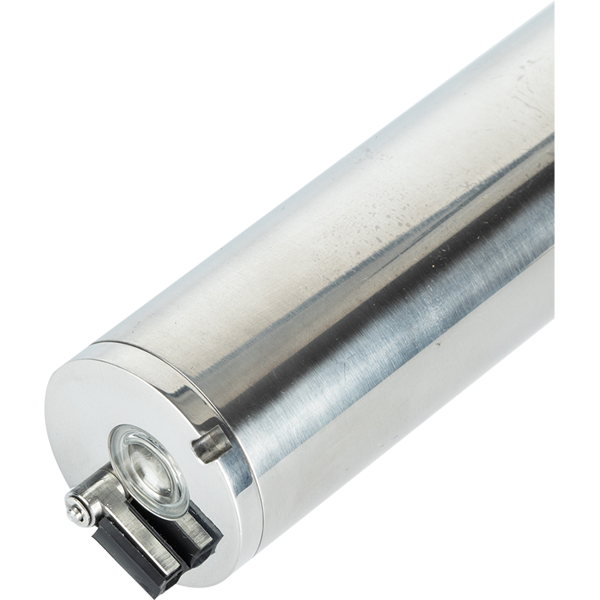
To seamlessly integrate the online turbidimeter into the IoT control network and ensure high reliability, on-site physical installation and electrical integration must strictly follow these specifications:
Physical Installation Avoid Pitfalls: Use 3/4 NPT thread for submersible or fixed pipeline installation. Strictly perform secondary waterproof and anti-corrosion treatment at connection points. Considering cables need long-term immersion in water (including seawater or high-salt industrial wastewater) or exposure to harsh air, all intermediate terminals must be equipped with waterproof sealing tape and anti-corrosion sleeves. Reserve natural slack for cables; never keep cables under tension during suspension to prevent signal loss due to wire fatigue fracture.
Control Topology: The sensor is powered by 12-24V DC, and its ultra-low static power consumption of 0.2W allows direct connection to various solar-powered remote low-power RTUs or plant PLC closed-loop control systems. Via RS-485 direct connection, high-frequency field data polling can be achieved.
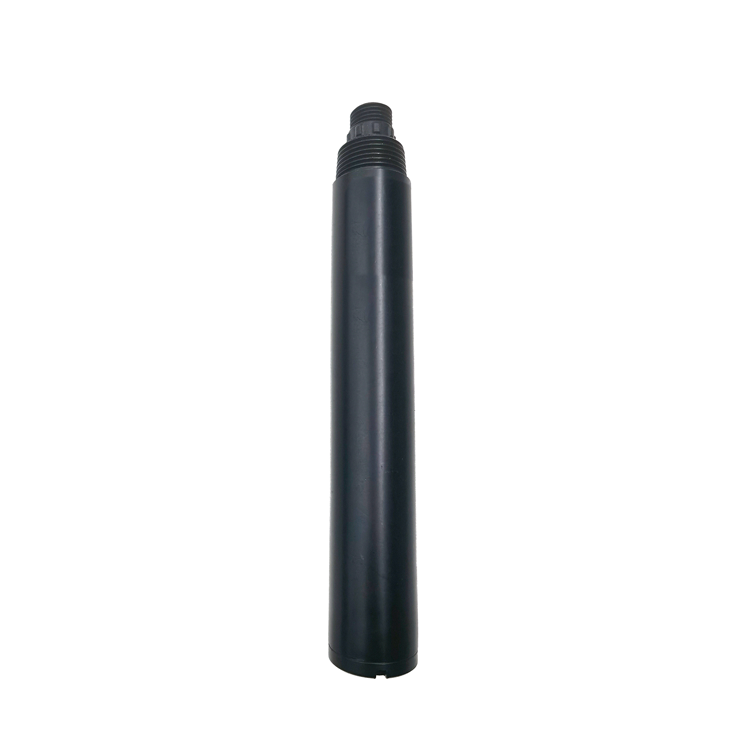
Turbidity measurement relies entirely on optical flux; the cleanliness of the measurement window and standardized calibration procedures are the lifeline of the instrument.
6.1 Strict 10cm Engineering Specification Calibration Process
To completely eliminate parasitic reflection and background noise generated by the calibration container walls, the following standardized two-point calibration procedure must be performed:
Zero Calibration: Use a large beaker to measure an appropriate amount of zero turbidity solution. Vertically suspend the NBL-WQ-TS sensor in the solution. Critical Engineering Specification: The sensor's measuring end face must be kept at least 10cm above the bottom of the beaker and also at least 10cm away from the inner walls. Let it stand for 3-5 minutes until the reading stabilizes completely and micro-bubbles fully rise and escape, then issue the zero calibration command.
Slope Calibration: With the identical physical suspension layout (maintaining >10cm from walls and bottom), vertically immerse the sensor in Formazin standard solution. Let it stand for 3-5 minutes until stable, then perform slope gain calibration.
6.2 Window Cleanliness Daily Maintenance
Sensor Outer Surface & Window: Regularly clean the sensor's outer surface and optical measurement window with low-pressure tap water. If debris or biofilm residues remain, gently wipe with a moist soft non-woven cloth. For stubborn oily dirt, add a small amount of household detergent to tap water for soaking and cleaning.
Maintenance Precautions: The sensor contains extremely sensitive optical precision lenses and micro-current electronic components. During maintenance, ensure the sensor is not subjected to severe mechanical impact. The interior is fully sealed and contains no user-serviceable parts.
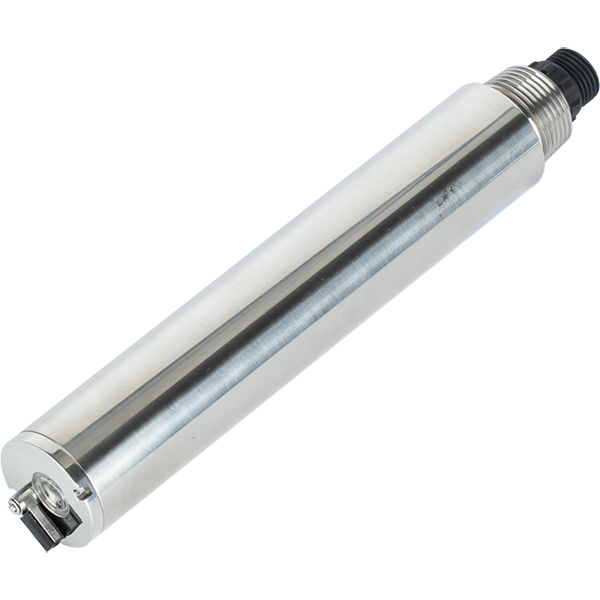
Q1: Why can the 860nm infrared light source used in the NBL-WQ-TS ignore color interference from breweries or high-color water bodies like the Yellow River?
A: Because most colored substances (such as natural yellow molecules in fermentation broth, humic acid, etc.) have spectral absorption bands mainly concentrated in the visible light region of 380nm-780nm. NBL-WQ-TS uses 860nm near-infrared light, which is outside the selective absorption spectrum range of these color molecules. Photons only undergo physical scattering with suspended solid particles when passing through, thus completely eliminating the negative bias caused by color.
Q2: If the sensor is less than 10cm from the beaker bottom during calibration, will it cause a positive or negative deviation?
A: It will cause a significant positive deviation (reading falsely high). When the measuring end face is too close to the container bottom, the high-intensity infrared incident beam hits the solid surface of the beaker, producing non-particle "background parasitic reflected light." This portion of reflected light, received by the 90° detector, is misinterpreted by the instrument as scattering contribution from particles in the water, thus raising the zero point.
Q3: How to precisely match the three different ranges (0-20NTU, 0-200NTU, 0-1000NTU) for municipal clean water and chemical high-purity wastewater treatment?
A:
- 0-20.00NTU (high resolution 0.01NTU): Precisely matches municipal tap water plant effluent, ultrafiltration/reverse osmosis pure water processes, and high-purity semiconductor rinsing wastewater.
- 0-200.0NTU: Suitable for raw water in water treatment plants, reclaimed water reuse process control, and mild industrial wastewater discharge outlets.
- 0-1000.0NTU: Specifically designed for aeration tanks, sedimentation tank effluent in wastewater treatment plants, and large-scale environmental pollution discharge monitoring projects.
Q4: What are the thread fixation requirements for IP68 protection (up to 20m depth) for deep-water reservoir and dam water quality monitoring?
A: The sensor housing is made of POM and ABS composite, offering strong pressure resistance. During deep-water installation, never use the sensor cable directly for lifting. The rear 3/4 NPT thread must be used to lock the sensor to a stainless steel or PVC rigid load-bearing connecting rod, and then the entire rod assembly is fixed to the dam bracket, ensuring the device does not drift or twist under water currents at 20m depth.
Q5: For secondary water supply pipelines containing micro-bubbles, what flow cell layout should be used with this sensor?
A: It is recommended that system integrators do not use direct in-line installation but design a "bypass degassing flow cell." Divert the main pipeline flow to the bottom of the flow cell, with a low flow velocity, allowing fluid to rise slowly. Micro-bubbles will escape and vent from the top under the combined effect of gravity and buoyancy difference. The degassed sample water from the middle-lower layer then passes through the sensor's measuring end face via overflow.
Q6: Does the NiuBoL turbidity sensor provide a standard Modbus-RTU development register manual to support daisy-chaining multiple sensors?
A: Yes. The entire NBL-WQ-TS series natively supports the industrial standard RS-485 interface and Modbus-RTU protocol. Each sensor can have its unique slave address changed via software command. System integrators can connect dozens of sensors in parallel on a single twisted pair bus and directly read turbidity and temperature register data without any third-party conversion modules.
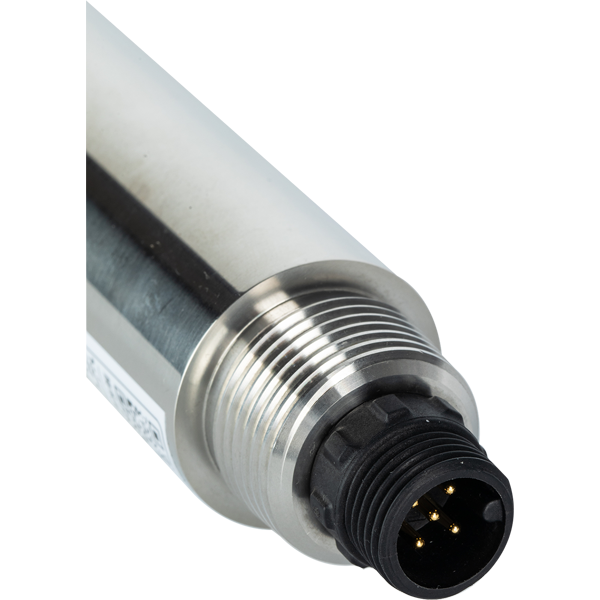
In multi-parameter water quality monitoring IoT and environmental monitoring system integration, precisely controlling bubble interference and eliminating background parasitic reflected light is equivalent to safeguarding the underlying lifeline of the entire monitoring system. With its 860nm infrared optoelectronic mechanism, high-standard 90° geometric architecture, and convenient Modbus-RTU protocol, the NiuBoL NBL-WQ-TS nephelometric online turbidity sensor provides a robust, engineering-quality online solution for global water projects.
Technical Support & Business Acquisition Path:
To obtain the complete Modbus communication register manual, CAD installation drawings for the NiuBoL NBL-WQ-TS online turbidity sensor, or to get special quotes for government environmental bulk procurement, please contact our application engineering team directly. We will provide 1-on-1 technical solution integration support within 24 hours.
 NBL-WQ-TS Online Turbidity Water Quality Sensor.pdf
Related recommendations
Sensors & Weather Stations Catalog
Agriculture Sensors and Weather Stations Catalog-NiuBoL.pdf
Weather Stations Catalog-NiuBoL.pdf
Agriculture Sensors Catalog-NiuBoL.pdf
Water Quality Sensor Catalog-NiuBoL.pdf
Related products
 Combined air temperature and relative humidity sensor
 TDR Soil Moisture & Temperature Sensor for irrigation| RS485 |4-20mA| NBL-S-THR
 Soil pH sensor RS485 soil Testing instrument soil ph meter for agriculture |NBL-S-PH
 Wind Speed sensor Output Modbus/RS485/Analog/0-5V/4-20mA
 Tipping bucket rain gauge for weather monitoring auto rainfall sensor RS485/Outdoor/stainless steel
 Pyranometer Solar Radiation Sensor 4-20mA/RS485

Screenshot, WhatsApp to identify the QR code
WhatsApp number:+8615367865107
(Click on WhatsApp to copy and add friends)

