





— Blogs —
—Products—
 Consumer hotline +8618073152920
 WhatsApp:+8615367865107
Address:Room 102, District D, Houhu Industrial Park, Yuelu District, Changsha City, Hunan Province, China
Product knowledge
Time:2026-05-23 14:03:48 Popularity:361
Against the backdrop of increasingly stringent ecological and environmental supervision, traditional fixed-section monitoring stations cannot meet the demand for full watershed coverage. Particularly during sudden pollution incidents, they suffer from delayed response, inability for personnel to safely access, and difficulty in multi-point, multi-layer sampling. Multi-parameter water quality monitors can simultaneously measure key indicators such as temperature, conductivity, salinity, dissolved oxygen, pH, ORP, turbidity, COD, and ammonia nitrogen, providing data support for rapid assessment of overall water body conditions.
Such instruments are accelerating the upgrade of environmental monitoring from "static points" to "mobile grid + spatiotemporal traceability," playing a key role in river chief system inspections, rapid pollution source localization, and unmanned monitoring of sensitive waters.
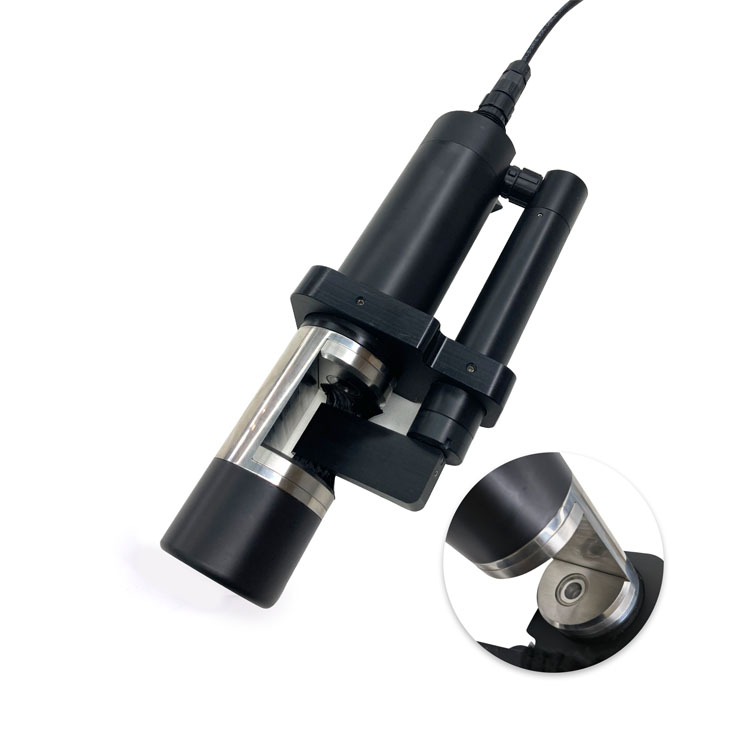
Unmanned vehicle water quality monitoring systems have become an important technological direction for environmental mobile inspection. The core lies in integrating a multi-parameter water quality monitor into the instrument compartment of the unmanned vehicle, equipped with a dedicated flow cell and high-precision sampling device, achieving real-time analysis of multi-point, multi-depth mixed water samples.
System Topology Architecture:
The sensor host and flow cell are installed together in the instrument compartment. The flow cell connects to the unmanned vehicle's sampling pump, enabling continuous flow of dynamic water samples. Automatic maintenance and calibration are performed before each measurement to ensure data accuracy. The digital signal output by the sensor is strongly coupled with the unmanned vehicle's GPS/Beidou positioning module, forming water quality data points with geographic coordinates. Data is uploaded in real-time to the monitoring center via 4G/5G mobile networks, supporting download and visual analysis, and can quickly generate regional water quality distribution heat maps, providing precise spatiotemporal evidence for pollution source tracing.
This architecture is particularly suitable for river sections, lake core areas that are difficult for personnel to access, and emergency response scenarios for sudden pollution incidents, significantly improving monitoring coverage and response speed.
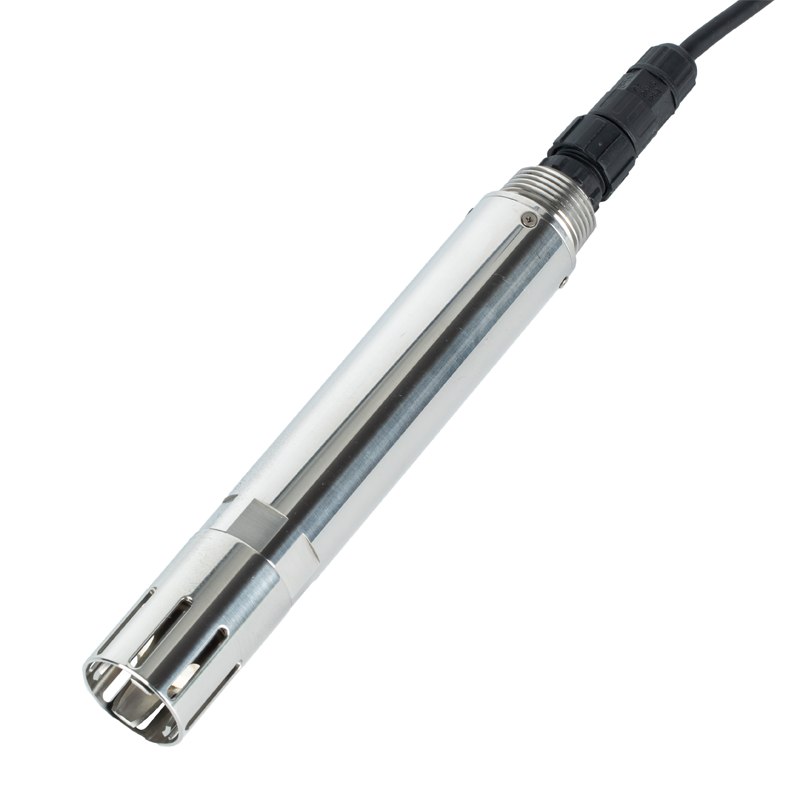
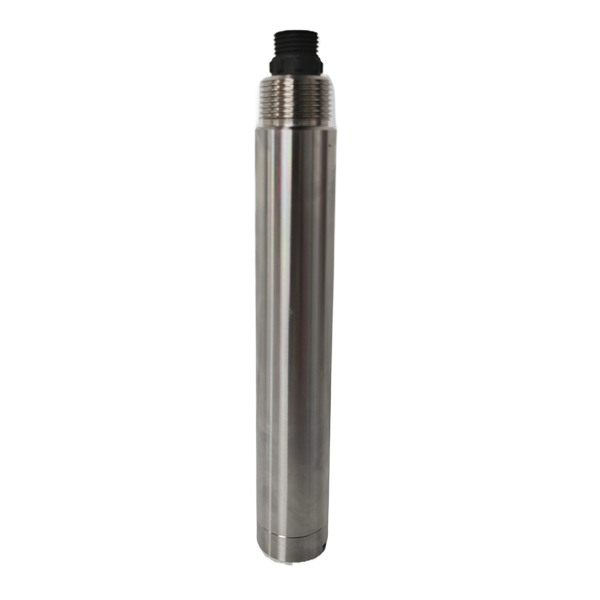
Traditional separate multi-instrument solutions are bulky, have high power consumption, complex wiring, and are difficult to adapt to mobile platforms like unmanned vehicles or buoys. The NiuBoL online multi-parameter self-cleaning digital sensor features an integrated design, supporting simultaneous measurement of up to 8 parameters (including temperature), completely solving the space and energy limitations of mobile platforms.
Core Technical Advantages:
- Digital Bus Architecture: Based on RS-485 bus and Modbus-RTU protocol, all parameters are digitally output through a single cable, supporting quick-connect waterproof connectors, greatly simplifying on-site integration and commissioning. No need to prepare standard solutions or draw curves for fast and accurate measurement.
- Extremely Low Mobile Power Consumption: Total power consumption is only 5W@12V, perfectly matching unmanned vehicle battery packs and field solar power systems, significantly extending single inspection endurance.
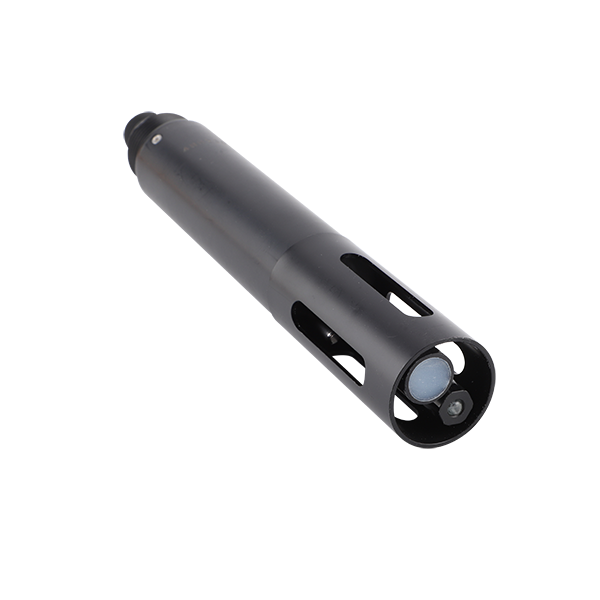
- Physical Protection Optimization: The front sensor protection cover has optimized slots around it, ensuring sufficient water exchange and measurement accuracy while effectively blocking physical damage from large suspended particles and aquatic organisms to the probe.
These designs make NiuBoL sensors a unified hardware platform for unmanned vehicles, buoys, and fixed-section monitoring.
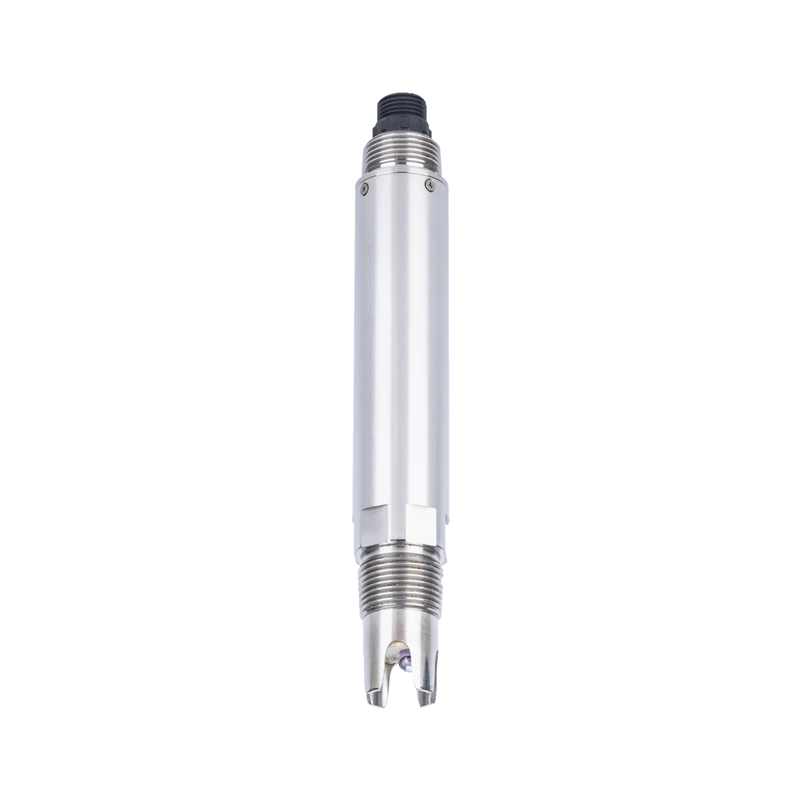
In long-term field online monitoring, algae growth and microbial film attachment are the main factors causing sensor drift and reduced sensitivity. Traditional manual cleaning is frequent and costly.
NiuBoL sensors come standard with an automatic cleaning device. Cleaning intervals and number of cleaning rotations can be freely set via software. The mechanical scraper cleaning effectively removes surface attachments from the sensor, maintaining the cleanliness of sensitive components like glass electrodes and fluorescent membranes, reducing the frequency of manual boarding or on-site maintenance, and significantly lowering the total cost of ownership (TCO) over the project lifecycle.
| Parameter | Measurement Range | Accuracy | Resolution |
|---|---|---|---|
| Dissolved Oxygen | 0~20mg/L | ±2% | 0.01mg/L |
| Turbidity | 0~200NTU / 0~1000NTU | ±3% or ±2NTU / ±5% or ±3NTU | 0.1NTU |
| Conductivity | 0~5000uS/cm / 0~200mS/cm | ±1.5% | 1uS/cm / 0.1mS/cm |
| Salinity | 0~70PSU | ±1.5% | 0.1PSU |
| COD | 0~200 / 0~500mg/L equiv.KHP | ±5% | 0.1mg/L |
| pH | 0~14 | ±0.1 | 0.01 |
| ORP | -1500mV~+1500mV | ±6mV | 1mV |
| Ammonia Nitrogen | 0~100 / 0~1000mg/L | ±10% or ±1mg/L | 0.01/0.1mg/L |
| Temperature | 0~50℃ | ±0.3℃ | 0.1℃ |
Global Specifications:
Output: RS-485 (Modbus-RTU)
Cleaning: Automatic
Power Supply: 12VDC±5%
Power Consumption: 5W@12V
Protection Rating: IP68
Housing Material: POM and 316L
Installation: Submersible
Operating Conditions: 0~40℃, ≤0.2MPa
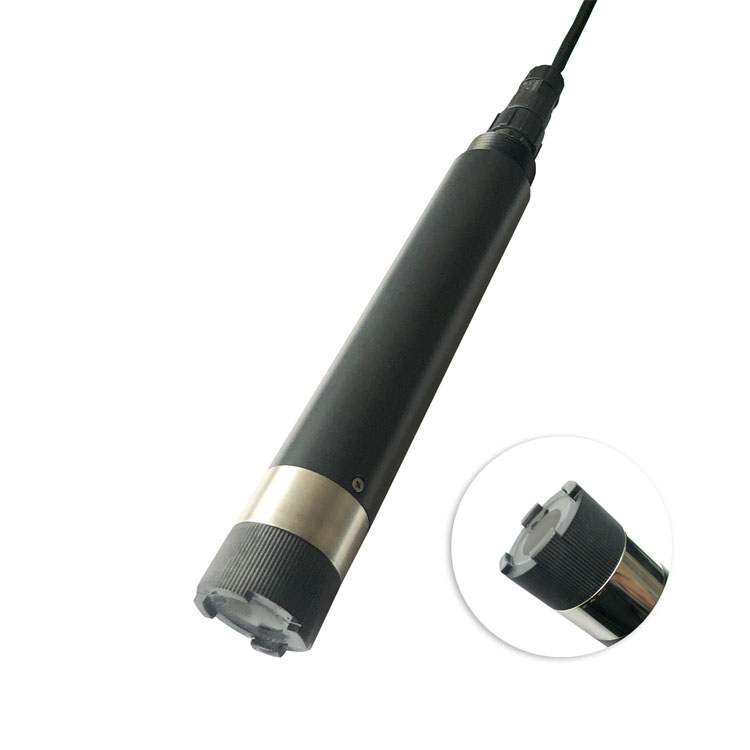
Q1: How does the slot design of the NiuBoL sensor protection cover prevent impact from suspended particles while not affecting measurement reproducibility?
A: The slot size and distribution are optimized through fluid dynamics, effectively blocking large particles to prevent probe damage while ensuring adequate water renewal, avoiding dead zone formation, and ensuring consistency and repeatability of parameter measurements.
Q2: What is the practical engineering significance of 5W@12V extremely low power consumption for power budgeting of field buoys and unmanned vehicles?
A: It significantly reduces battery capacity requirements and solar panel area. During continuous rainy weather or long-distance cruise missions, system endurance can be increased by 30%-50%, reducing energy system investment and maintenance pressure.
Q3: How to adjust the interval time and number of cleaning rotations of the automatic cleaning device via Modbus register commands?
A: The host supports standard Modbus-RTU commands to write to corresponding register addresses, allowing remote dynamic adjustment of cleaning cycles and intensity, adapting to different water pollution levels and achieving intelligent maintenance.
Q4: When sampling at high speed in the unmanned vehicle flow cell, do water flow velocity and bubbles interfere with dissolved oxygen or turbidity readings? How to avoid this?
A: High-speed flow may introduce bubbles interfering with dissolved oxygen readings. It is recommended to add a debubbling structure or install a flow stabilization section in the flow cell design, and perform real-time compensation correction through software algorithms.
Q5: How resistant is the composite POM and 316L stainless steel sensor housing to industrial discharge environments containing acids/alkalis?
A: POM provides wear resistance and chemical stability, while 316L stainless steel enhances structural strength. Together, they can withstand conventional industrial acid/alkali wastewater (pH 2-12). For extreme strong oxidizers or high-concentration organic solvents, advance evaluation is recommended.
Q6: How to achieve fool-proofing and moisture protection when replacing spare parts in the field using quick-connect waterproof connectors?
A: The connectors feature keyed fool-proof design and multiple sealing rings. During operation, power must be cut off first. After connection, immediately check O-ring integrity and apply waterproof silicone grease to ensure IP68 protection performance.
Q7: Does the NiuBoL integrated multi-parameter sensor support flexible customization of "5-parameter" or "8-parameter" combinations based on specific project needs?
A: Yes. Parameter combinations can be flexibly selected based on actual project requirements, reducing costs for unnecessary configurations.
Multi-parameter water quality monitors are evolving from traditional single-point high-maintenance models to a new phase of grid-based, mobile, intelligent maintenance-free operation. The NiuBoL integrated online multi-parameter self-cleaning digital sensor, with its digital bus, low power design, and automatic cleaning capability, provides a unified, highly reliable hardware foundation for environmental unmanned vehicles, fixed sections, and buoy systems.
To obtain the complete Modbus communication protocol manual, system integration topology diagram, or bulk project special quotes for the NiuBoL online multi-parameter digital sensor, please contact NiuBoL senior application engineers. We will provide targeted technical solutions within 24 hours.
 NBL-WQ-CL Water Quality Sensor Online Residual Chlorine Sensor.pdf
NBL-WQ-DO Online Fluorescence Dissolved Oxygen Sensor.pdf
NBL-WQ-NHN Ammonia Nitrogen Water Quality Sensor.pdf
NBL-WQ-COD Online Water Quality COD Sensor.pdf
NBL-WQ-PH Online pH Water Quality Sensor.pdf
NBL-WQ-EC water quality conductivity sensor.pdf
Related recommendations
Sensors & Weather Stations Catalog
Agriculture Sensors and Weather Stations Catalog-NiuBoL.pdf
Weather Stations Catalog-NiuBoL.pdf
Agriculture Sensors Catalog-NiuBoL.pdf
Water Quality Sensor Catalog-NiuBoL.pdf
Related products
 Combined air temperature and relative humidity sensor
 TDR Soil Moisture & Temperature Sensor for irrigation| RS485 |4-20mA| NBL-S-THR
 Soil pH sensor RS485 soil Testing instrument soil ph meter for agriculture |NBL-S-PH
 Wind Speed sensor Output Modbus/RS485/Analog/0-5V/4-20mA
 Tipping bucket rain gauge for weather monitoring auto rainfall sensor RS485/Outdoor/stainless steel
 Pyranometer Solar Radiation Sensor 4-20mA/RS485

Screenshot, WhatsApp to identify the QR code
WhatsApp number:+8615367865107
(Click on WhatsApp to copy and add friends)

