





— Blogs —
—Products—
 Consumer hotline +8618073152920
 WhatsApp:+8615367865107
Address:Room 102, District D, Houhu Industrial Park, Yuelu District, Changsha City, Hunan Province, China
Product knowledge
Time:2026-03-14 10:34:19 Popularity:389
In the process of modern urbanization, infrastructure construction and real estate development are the core engines driving economic growth. However, building demolition, earthwork on exposed surfaces, transportation of construction materials, and frequent road expansions inevitably generate large amounts of particulate matter (PM2.5, PM10, TSP) and noise pollution.
For project contractors and engineering companies, dust pollution is no longer just an environmental issue but a compliance risk. With increasingly stringent environmental policies in various countries, construction sites exceeding dust standards face high fines or even shutdowns for rectification. Therefore, deploying high-precision online dust monitoring stations has become a standard requirement for smart construction sites. NiuBoL is committed to providing stable and reliable hardware foundations for partners to help build efficient urban environmental protection platforms.
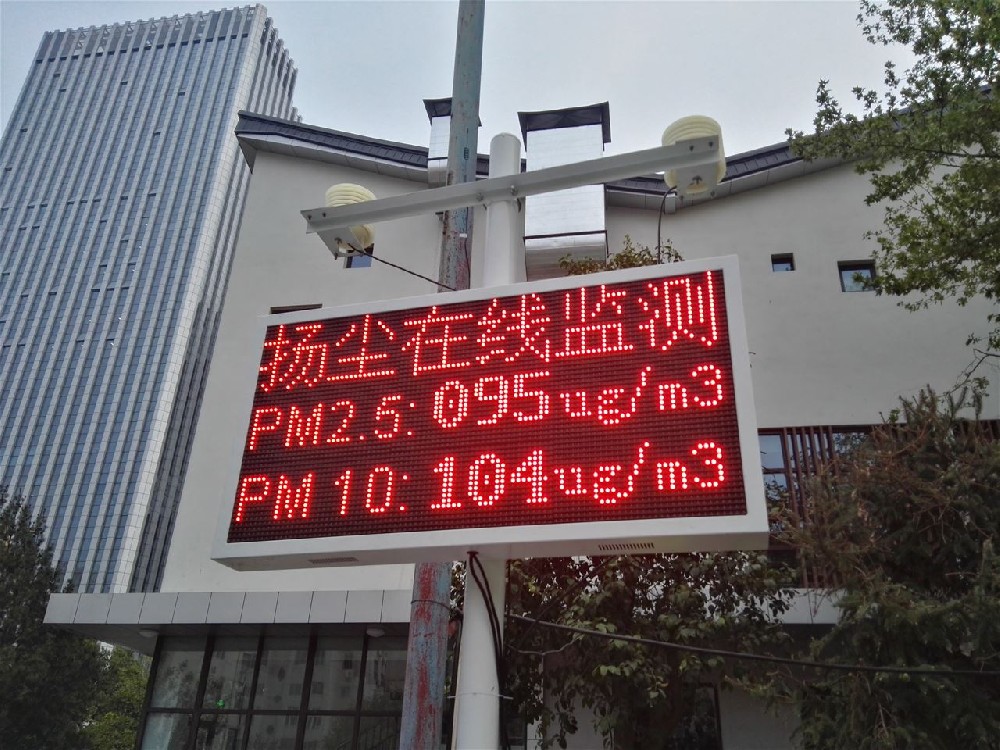
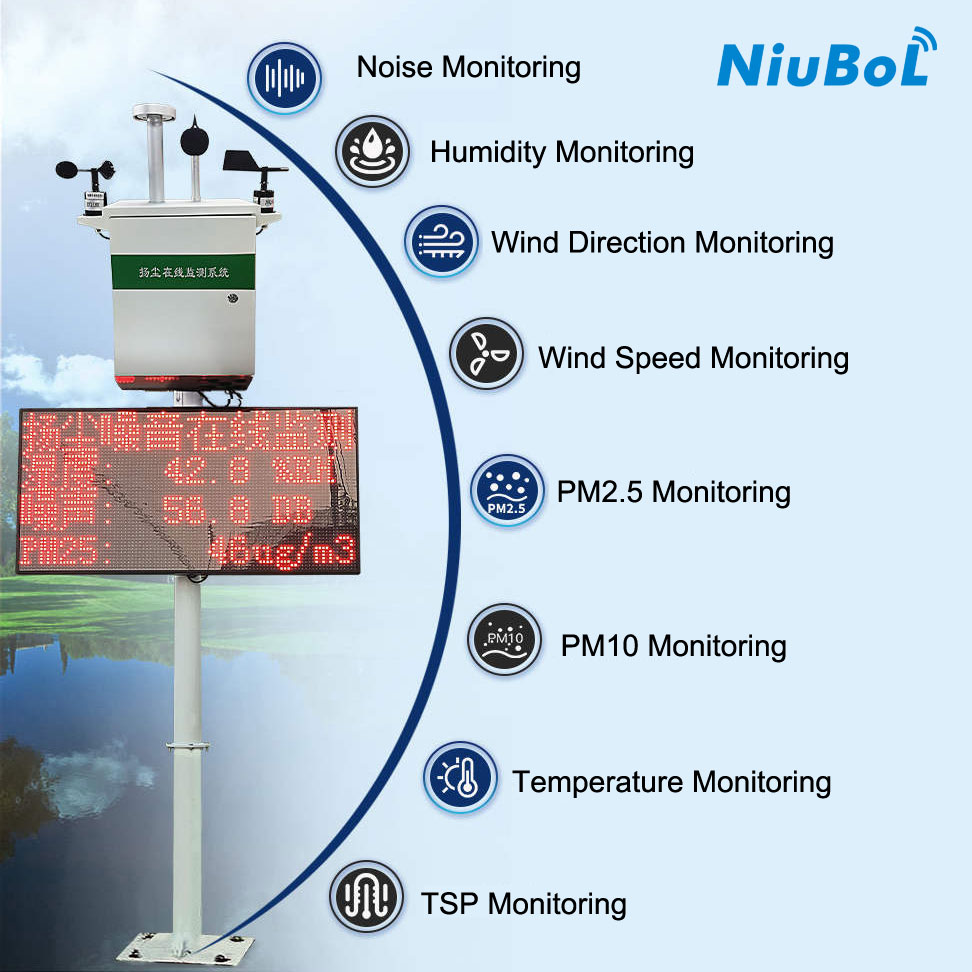
As a professional manufacturer, NiuBoL's dust monitor adopts a modular design with extremely strong system scalability. The system consists of the following core components:
High-Precision Perception Layer: Uses laser scattering principle sensors with minimum detectable particle size of 0.3μm. In addition to core particulate matter indicators, it can integrate noise, temperature, humidity, atmospheric pressure, wind speed, wind direction, and other environmental factors.
Data Acquisition and Processing Center: Built-in industrial-grade data logger with watchdog circuit to ensure 24-hour continuous stable operation in harsh outdoor environments.
Wireless Transmission System: Supports GPRS, 4G, or LoRa and other communication methods for real-time synchronization of test point data with the monitoring backend.
Visualization and Linkage Interface: The system can be equipped with LED large screens for real-time display and supports linkage with on-site fog cannons and sprinkler systems.
In system integration selection, parameter accuracy and stability are key to evaluating solution quality. The following is a comparison table of the core module technical parameters of the NiuBoL dust monitoring system:
| Monitoring Item | Measurement Range | Resolution | Measurement Accuracy |
|---|---|---|---|
| PM2.5 | 0 ~ 1000 μg/m³ | 1 μg/m³ | ±15% (or ±10μg/m³) |
| PM10 | 0 ~ 2000 μg/m³ | 1 μg/m³ | ±15% (or ±10μg/m³) |
| TSP (Total Suspended Particulates) | 0.01 ~ 10000 μg/m³ | 0.01 μg/m³ | ±10% |
| Ambient Noise | 30 ~ 130 dB | 0.1 dB | ±1.5 dB |
| Air Temperature | -40 ~ +85℃ | 0.01℃ | ±0.3℃ |
| Relative Humidity | 0 ~ 100% RH | 0.1% RH | ±2% RH |
| Wind Speed | 0 ~ 60 m/s | 0.01 m/s | ±(0.3+0.03V)m/s |
| Wind Direction | 0 ~ 360° | 0.1° | ±3° |
| Electrical and Physical Characteristics | Power Supply Method | DC 12V-24V or AC 220V (optional solar power system) | - |
| Signal Output | Standard RS485 bus, Modbus-RTU communication protocol | - | |
| Protection Rating | IP65 industrial-grade waterproof and dustproof design | - | |
| Operating Environment | Temperature -20℃~+60℃, humidity 0~99%RH (non-condensing) | - |
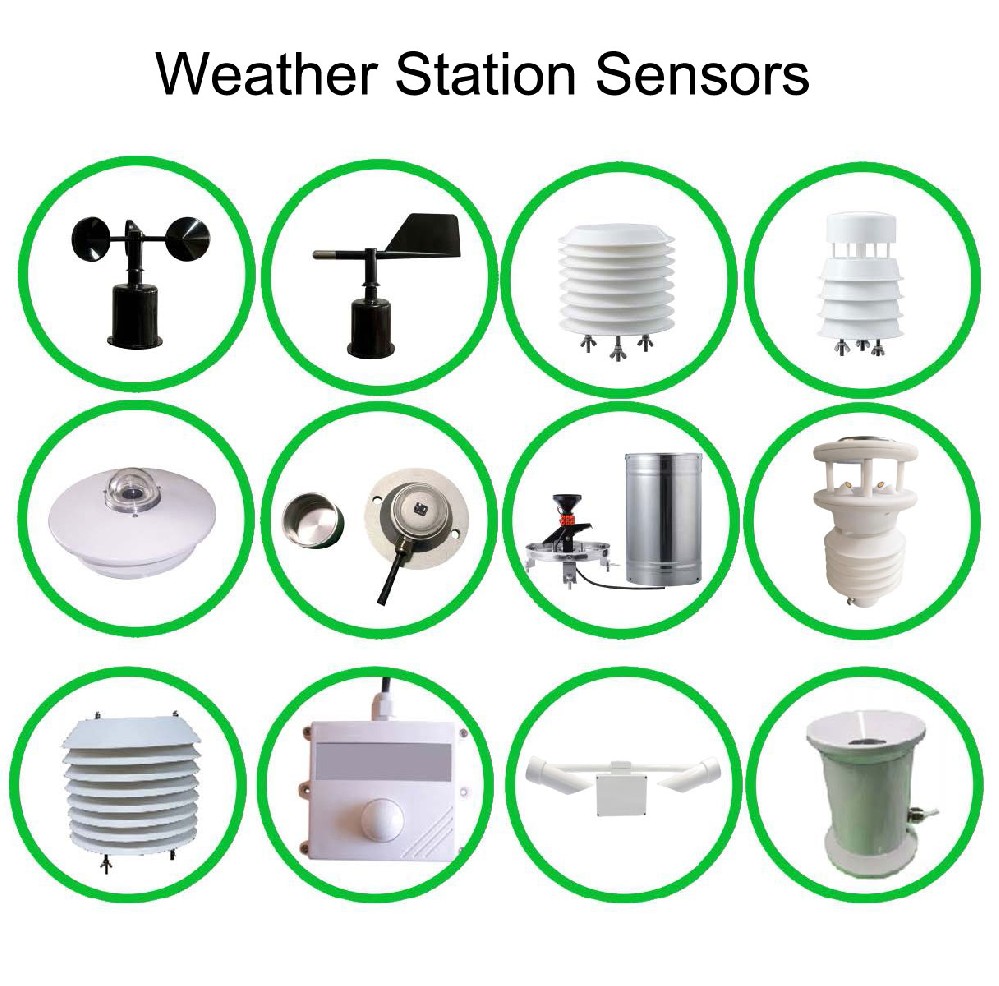
For system integrators, correct installation location directly affects the representativeness of monitoring data and engineering acceptance pass rate. NiuBoL recommends following the following specifications during project deployment:
Downwind Principle: Monitoring stations should be installed downwind of the dominant wind direction at the construction site. This is because dust gathers in this area under wind action, truly reflecting the maximum impact of site operations on the surrounding environment.
Avoid Local Airflow Interference: Installation location should be kept away from artificial airflow interference (such as large blowers, air conditioning outdoor units). Excessive local ventilation can cause dust to diffuse too quickly, making monitored concentration data lower and losing representativeness.
Verticality and Stability: Equipment must be installed vertically on support poles. Pay attention during installation to avoid sticky particles (such as construction glue, oil, willow catkins) entering the module to prevent adhesion on optical components causing failure.
Monitoring Height: It is generally recommended that the sensor air inlet height be 2.5 meters to 3.5 meters above ground, both simulating human breathing zone height and avoiding direct splash interference from ground dust.
1. Reduce Environmental Department Regulatory Costs
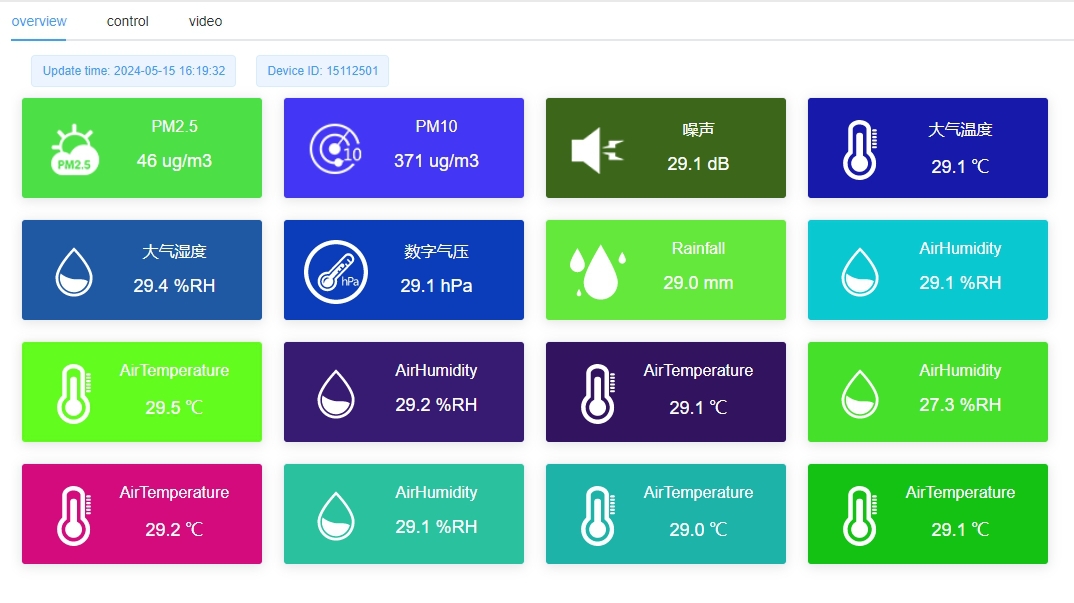
Traditional environmental inspections rely on manpower with limited coverage. Through the NiuBoL dust monitoring network, environmental departments can view emission data from all city construction sites in real time on central large screens. Once values are abnormal, the system automatically triggers warnings, allowing law enforcement personnel to achieve “precise traceability.”
2. Achieve Automated Response for Pollution Control
IoT solution providers can integrate the monitoring system with on-site sprinklers and fog cannons. When the monitoring system detects PM10 concentration reaching preset thresholds (such as 150μg/m³), it automatically triggers relays to activate dust suppression equipment; when concentration falls back, it automatically shuts off. This intelligent processing both saves water resources and significantly reduces delays from manual operation.
3. Core Role of TSP Parameter in Building Demolition
Compared to PM2.5, large particle dust generated in building demolition is more reflected in TSP (total suspended particulates). NiuBoL monitors have an ultra-wide measurement range of 0.01-10000 μg/m³, capable of capturing full-spectrum dust data from mild construction to intense demolition processes.
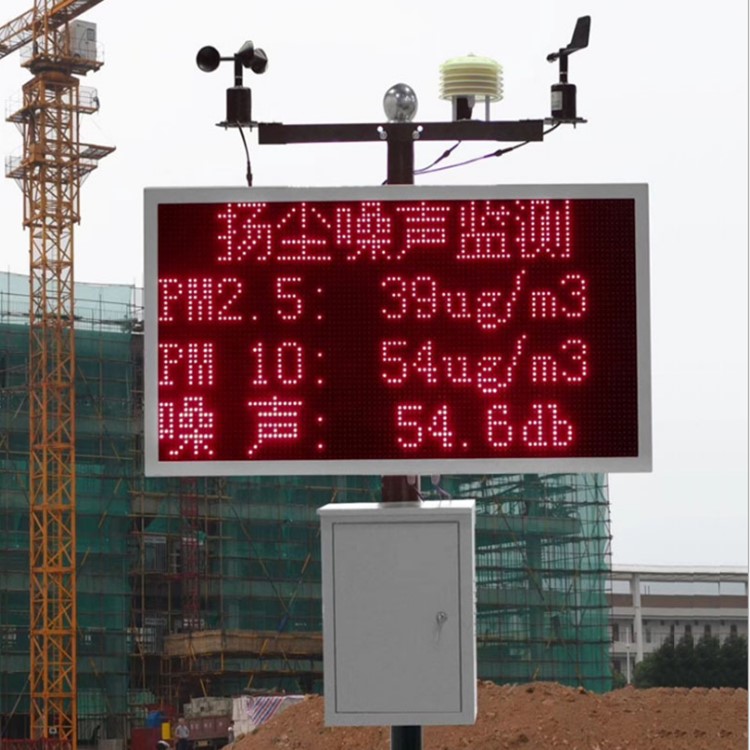
Q1: What principle does the NiuBoL dust monitor's particulate matter sensor use?
A1: We use high-precision laser scattering principle. Built-in imported laser and photosensitive components with active sampling via internal fan. Particle concentration is calculated by measuring intensity changes when particles pass through the light scattering area, providing stable and reliable data.
Q2: Does the system support access to government environmental monitoring platforms?
A2: Yes. The device outputs standard RS485 signals following Modbus-RTU protocol.
Q3: What are the working environment restrictions for the dust monitoring station?
A3: The device is specially designed for all-weather outdoor environments and can operate in temperatures from -20℃ to +60℃. However, note that severe moisture may affect measurement, though moisture protection measures are included in the design.
Q4: How does the device avoid natural light interference?
A4: NiuBoL's optical structure is specially designed with good light isolation inside the sensor module and narrow-band filtering technology, effectively filtering external natural light interference on sampling detection.
Q5: What is the measurement range and sensitivity of the TSP parameter?
A5: TSP measurement range covers 0.01-10000 μg/m³, detection sensitivity reaches 0.01 μg/m³, and accuracy is up to ±10%, fully meeting industrial-grade environmental monitoring needs.
Q6: What matters should be noted in terms of maintenance?
A6: In extremely dusty construction sites, it is recommended to regularly inspect the sampling port. Strictly prohibit viscous substances such as oil or willow catkins from entering the module to prevent measurement deviation.
Q7: What integration support does NiuBoL provide?
A7: We provide complete Modbus command sets, wiring diagrams, and API interface documents. For bulk procurement integrators, we offer remote technical assistance and support docking with various IoT gateways and PLC systems.
Q8: Does the device support solar power supply?
A8: Yes. For remote areas or sites with inconvenient power wiring, we can provide matching 100W/200W solar panels and high-capacity lithium battery packs to achieve off-grid independent operation of the system.
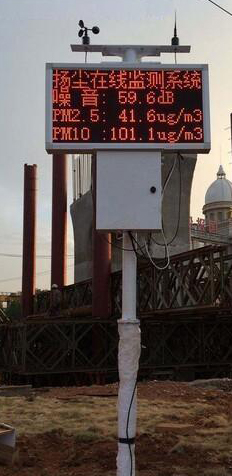
In the context of increasingly normalized environmental supervision, dust monitoring stations are not only “sentinels” for government functional departments but also important tools for system integrators and engineering companies to enhance project value and avoid legal risks.
NiuBoL takes sensing technology as its core and provides partners worldwide with one-stop perception-layer solutions from hardware design to communication protocol support. Our all-weather monitoring system can effectively protect air quality and help urban governance move from “human defense” to “technical defense.” If you are looking for a stable, high cost-performance dust monitoring hardware supplier, NiuBoL will be your most trustworthy partner.
If you need more product specification sheets or bulk procurement quotes, please contact the NiuBoL official team.
Related recommendations
Sensors & Weather Stations Catalog
 Agriculture Sensors and Weather Stations Catalog-NiuBoL.pdf
Weather Stations Catalog-NiuBoL.pdf
Agriculture Sensors Catalog-NiuBoL.pdf
Water Quality Sensor Catalog-NiuBoL.pdf
Related products
 Combined air temperature and relative humidity sensor
 Soil Moisture Temperature sensor for irrigation|NBL-S-THR
 Soil pH sensor RS485 soil Testing instrument soil ph meter for agriculture |NBL-S-PH
 Wind Speed sensor Output Modbus/RS485/Analog/0-5V/4-20mA
 Tipping bucket rain gauge for weather monitoring auto rainfall sensor RS485/Outdoor/stainless steel
 Pyranometer Solar Radiation Sensor 4-20mA/RS485

Screenshot, WhatsApp to identify the QR code
WhatsApp number:+8615367865107
(Click on WhatsApp to copy and add friends)

