





— Blogs —
—Products—
 Consumer hotline +8618073152920
 WhatsApp:+8615367865107
Address:Room 102, District D, Houhu Industrial Park, Yuelu District, Changsha City, Hunan Province, China
Product knowledge
Time:2025-12-03 10:30:21 Popularity:697
In the context of global climate change and increasingly frequent extreme weather events, real-time and accurate rainfall data has become a critical foundation for water resources management, flood prevention, disaster mitigation, and ecological protection.
A rainfall monitoring station is a modern precipitation measurement system that completely revolutionizes traditional manual observation methods. It utilizes advanced Internet of Things (IoT) technology to achieve automated, continuous monitoring of rainfall amount and precipitation intensity.
- Rational utilization of water resources: Scientific scheduling of reservoirs and agricultural irrigation based on real-time rainfall data.
- Flood prevention and disaster early warning: Real-time acquisition of precipitation intensity to provide decision-making basis for reservoir operation and urban waterlogging warning.
- Ecological and meteorological research: Providing accurate basic data support for agriculture, forestry, meteorology, and hydrology.
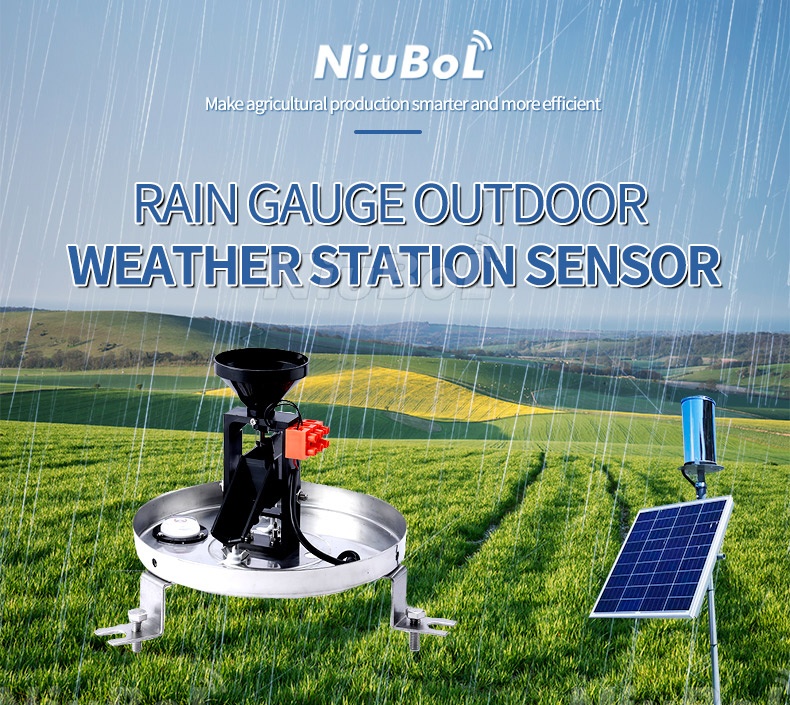
The NBL-W-RS is a high-precision tipping-bucket rain sensor strictly designed, manufactured, and calibrated in accordance with national hydrological standards SL61-2003, GB11831-89, and GB11832-89.
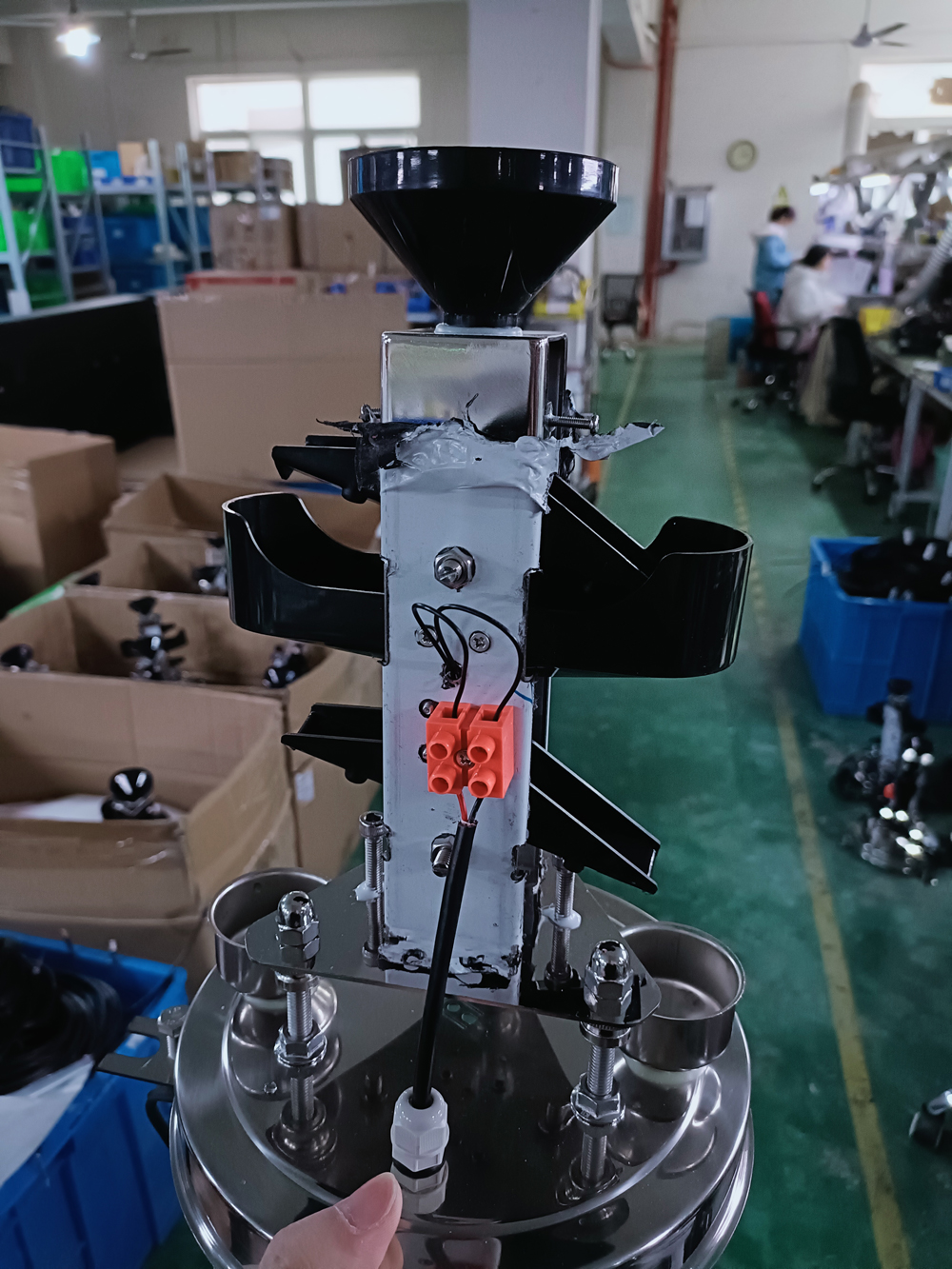
1. Rainwater enters the collection funnel through a Φ200±0.6 mm water-receiving orifice.
2. Rainwater is directed to the tipping bucket mechanism.
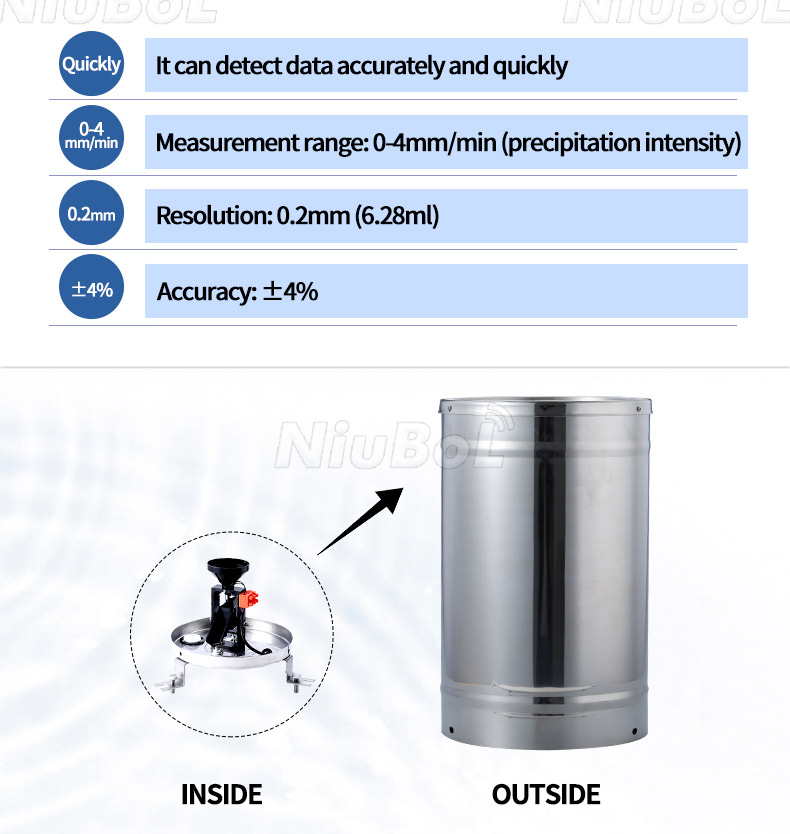
3. When accumulated rainwater reaches a resolution of 0.2 mm (6.28 ml), the precision tipping bucket loses balance and flips instantaneously.
4. Each flip triggers a reed switch on/off signal (or converts it to RS485/voltage signal via integrated circuit), and the data logger records this pulse.
5. Total rainfall is calculated by accumulating pulses; precipitation intensity is derived from pulse frequency within a unit time.
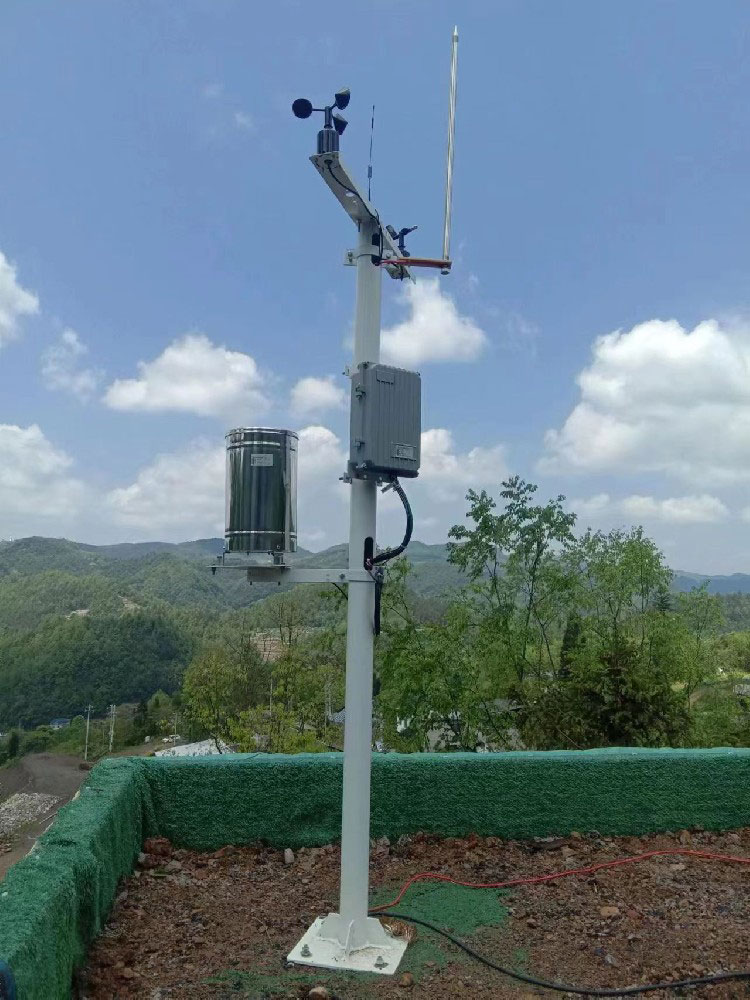
A modern rainfall monitoring station typically includes the following core components:
| Component | Function Description |
| Rain Sensor (NBL-W-RS) | Core measurement component that collects rainwater and converts it into electrical signals (pulse, RS485, etc.). |
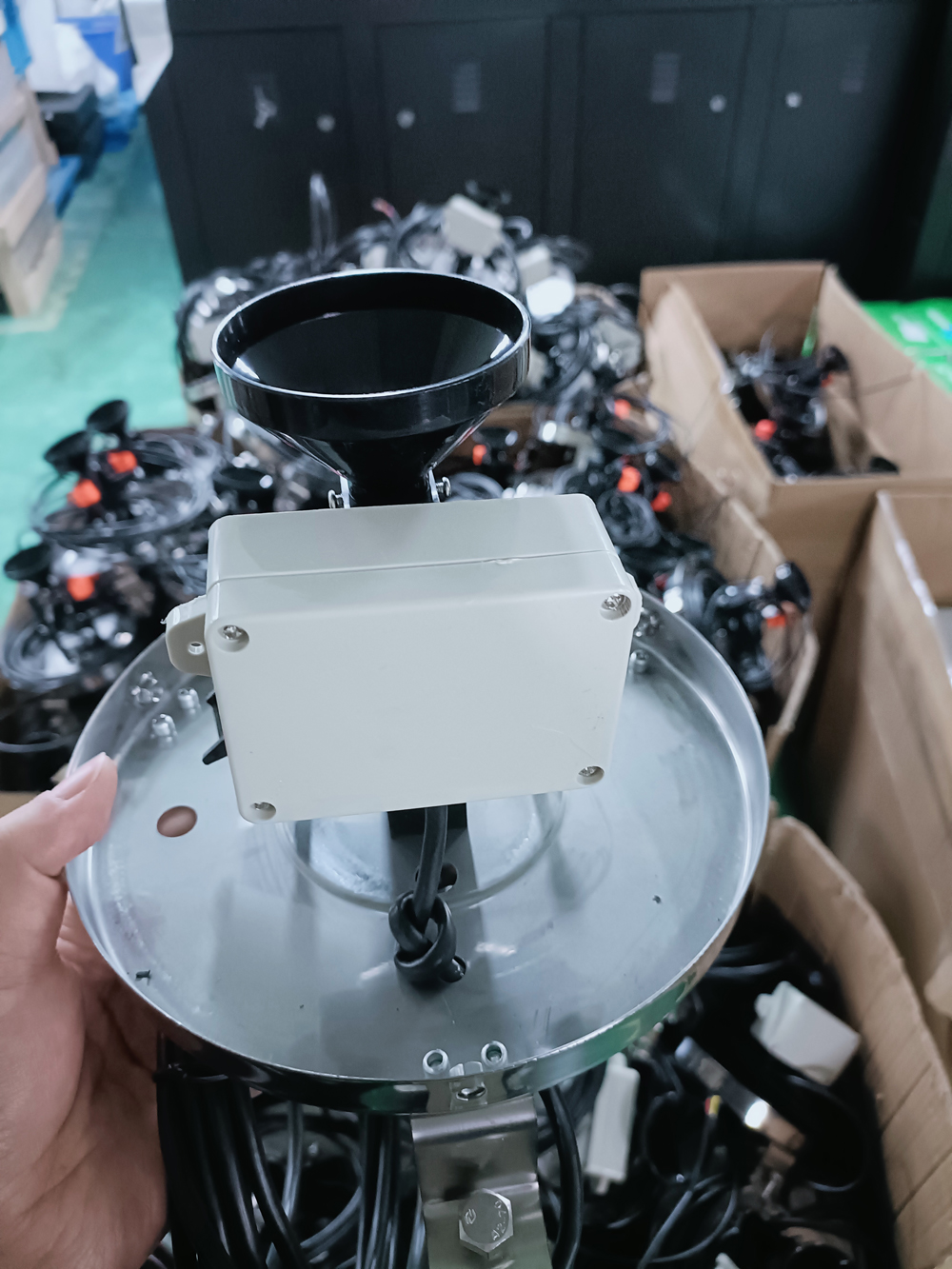
| Data Logger / Transmission Unit | Receives sensor signals, stores and processes data, and integrates wireless communication modules (GPRS/4G/5G). |
| Battery / Power Supply System | Provides stable power; usually equipped with solar power system for long-term field deployment. |
| IoT Cloud Platform | Backend monitoring and management platform for data reception, storage, visualization, analysis, remote configuration, and alarm functions. |
| Parameter | Specification | Remarks |
| Orifice Diameter | Φ200 ± 0.6 mm | Standard diameter ensuring representative rainwater collection |
| Measurement Range | 0–4 mm/min | Precipitation intensity range |
| Resolution | 0.2 mm (6.28 ml) | Minimum measurable rainfall increment |
| Accuracy | ±4% | Indoor static test at 2 mm/min intensity |
| Power Supply | DC 5V or DC 12–24V | Flexible for different power environments |
| Output Signal | Reed switch pulse, Voltage (0-2.5V/0-5V), RS485 | Multiple interfaces for easy system integration |
| Operating Temperature | 0–50°C | Standard operating environment |
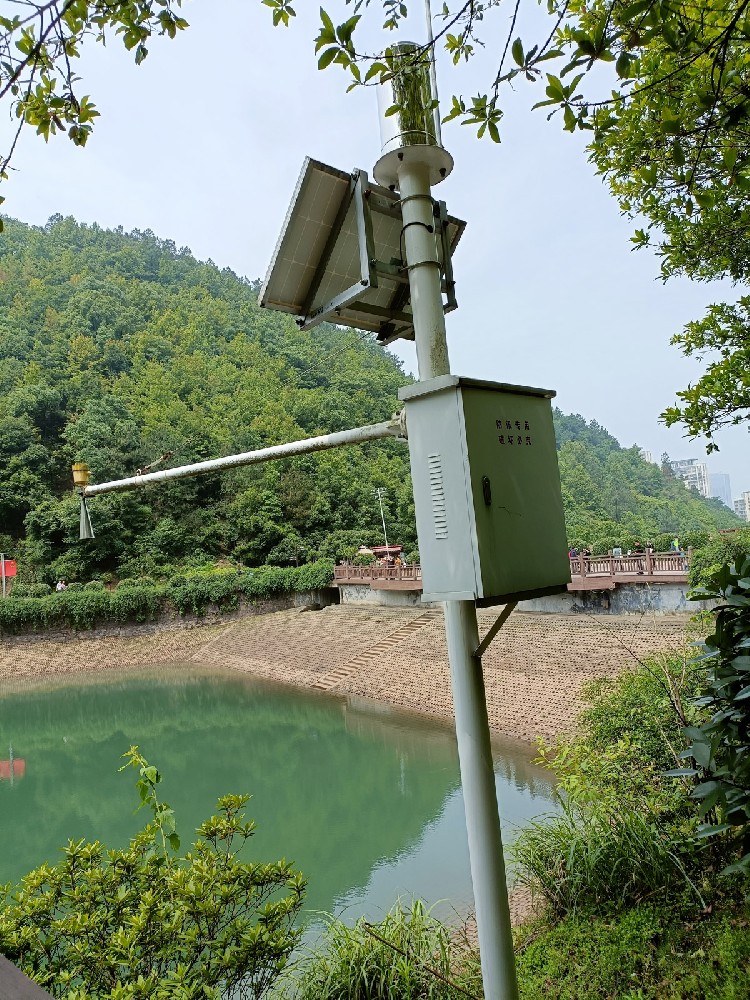
Correct installation is the prerequisite for rain gauge accuracy.
- Pulse (switch) signal: Suitable for legacy or simple pulse-counting data loggers.
- RS485 signal (recommended): Supports multi-point networking, strong anti-interference, stable transmission, and remote calibration/query.
- Power supply: Preferably match the data logger system (e.g., DC 12–24V).
- Site selection: Open, unobstructed location (ground, rooftop, pole flange, etc.). Avoid tall buildings or trees that may bias rainfall collection.
- Leveling: Most critical step. Adjust the three leveling screws on the base until the bubble level is perfectly centered.
- Secure fixation: Use M8×80 expansion bolts to firmly secure the base. Re-check level after tightening.
1. Fix the base with expansion bolts at the selected location.
2. Precisely level using the built-in bubble level.
3. Assemble the sensor (orifice, funnel, tipping bucket, etc.) as per diagram.
- Open the bucket and cut the nylon cable tie on the funnel (transport protection – must be removed).
- Pour calibrated clean water slowly and observe tipping action and data reception.
- Finally pour 60–70 mm of calibrated water; if the displayed value matches the poured amount, the instrument is functioning correctly.
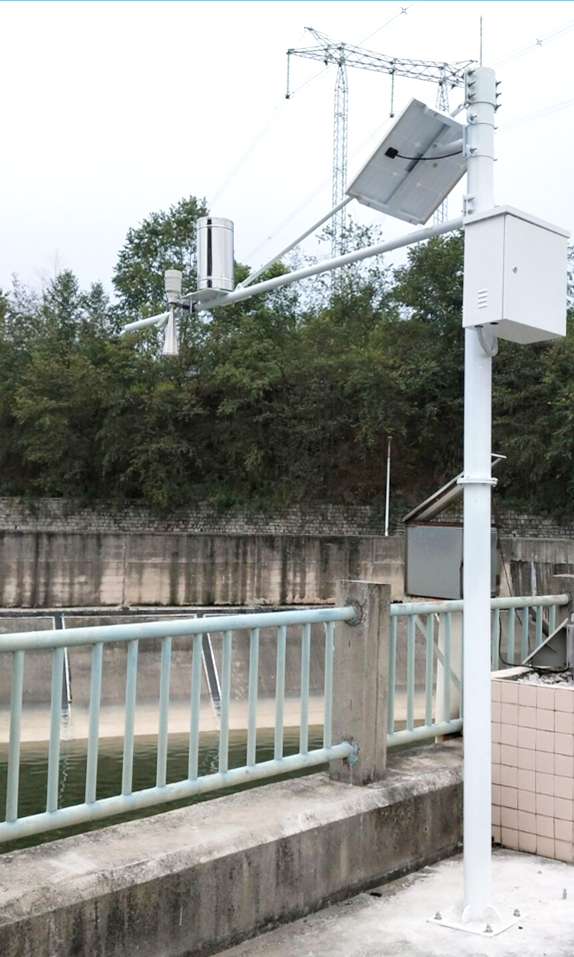
| Symptom | Possible Cause | Solution |
| No reading / data remains zero | 1. Power or wiring erro 2. Transport nylon tie not cut 3. Data logger communication misconfigured | 1. Check power (DC5V/12-24V) and wiring (connect only when powered off) 2. Cut the nylon tie on the tipping mechanism 3. Verify data logger configuration (e.g., RS485 address) |
| Reading significantly deviates from reality / data drift | 1. Blockage in funnel or tipping bucke 2. Instrument not level 3. Internal contamination or damage | 1. Regularly clean orifice, funnel, and cylindrical filter screen 2. Re-level the base (bubble centered) 3. Rinse tipping bucket with water, alcohol, or mild detergent – never touch or wipe with fingers/objects |
| Freezing in winter, unable to operate | Outside operating temperature range | Discontinue use during freezing conditions and store indoors (-40°C to 80°C) |
Thanks to its high reliability and IoT capabilities, the NiuBoL NBL-W-RS is widely used in:
1. Automatic hydrological telemetry systems: Flood control, water supply scheduling, power station reservoir management.
2. Meteorological and agricultural departments: Remote measurement of liquid precipitation, intensity, and duration.
3. Urban waterlogging early warning: Real-time monitoring in key urban areas, linked with drainage systems.
4. Smart agricultural irrigation: Precise irrigation planning based on accurate rainfall data.
- Multi-device access: PC and mobile APP anytime, anywhere.
- Data visualization: Real-time/historical data, trend charts, report generation (Excel/CSV export).
- Remote management: Configure sensors and loggers remotely.
- Alarm push notifications: Threshold alerts for rainfall intensity or accumulation.
- Field integration: Electronic maps + live video monitoring.
A: It means the smallest measurable rainfall increment is 0.2 mm. Every 0.2 mm accumulation triggers one tip and one pulse signal.
A: Immediately check: (1) Power and wiring; (2) Whether the transport nylon tie on the tipping bucket has been cut.
A: Operating temperature is 0–50°C. During freezing periods, discontinue use and store indoors to prevent ice damage.
A: RS485 is recommended for its strong anti-interference and long-distance transmission capability, ideal for field and large-scale networks.
A: Regular inspection is advised. Increase frequency in dusty or leafy environments. Clean orifice, funnel, filter screen, and rinse tipping bucket.
A: Never wipe with fingers or any object – it may leave oil or scratches affecting balance and accuracy. Only rinse gently with water, alcohol, or mild detergent.
A: Use the built-in bubble level on the base. Adjust screws until the bubble is perfectly centered.
A: It verifies overall accuracy (±4%) by comparing poured volume with recorded pulses.
A: Typically several years, depending on the service contract.
A: CE, ISO9001, RoHS, and nationally recognized meteorological calibration certificates.
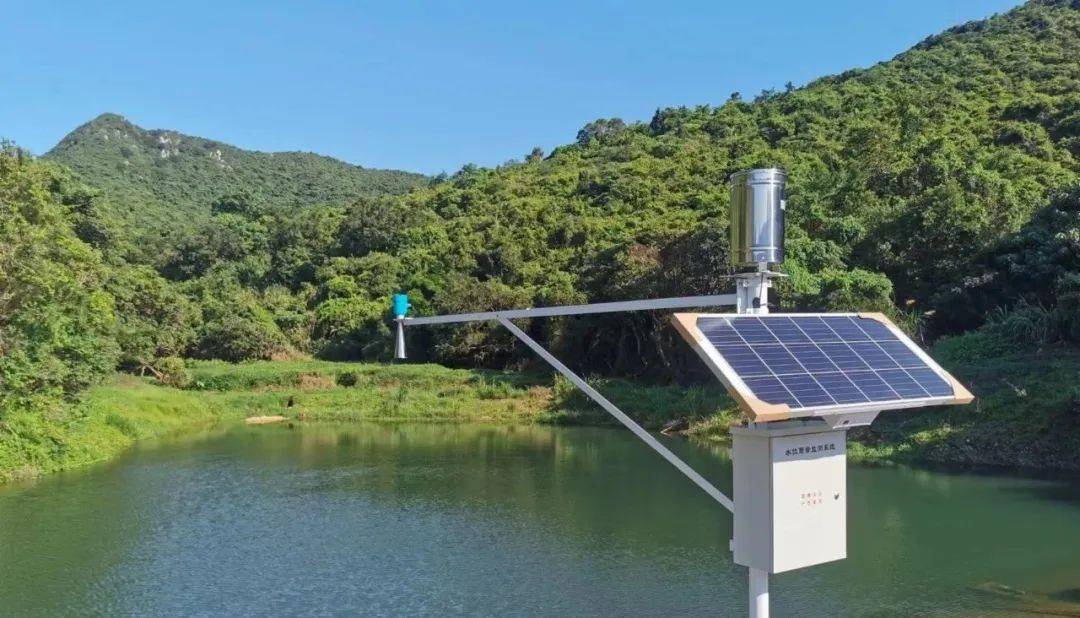
With its high-precision sensor design supporting multiple output formats and powerful IoT cloud platform, the NiuBoL NBL-W-RS rainfall monitoring station provides an efficient and reliable tool for modern hydrology, meteorology, and water resources management. From precise remote measurement of precipitation intensity to real-time alarm notifications, this system ensures timely acquisition and scientific application of critical data – an indispensable cornerstone for addressing global extreme weather challenges and achieving real-time monitoring, early warning, and scheduling of water resources.
 NBL-W-ARS-Tipping-bucket-rain-gauge-instruction-manual.pdf
NBL-W-RS-Rain-sensors-instruction-manual-V4.0.pdf
NBL-W-DRS-Double-Tipping-Bucket-Rain-Sensor-Instruction-Manual.pdf
Prev:Definition and Importance of Highway Traffic Meteorological Stations
Next:Agricultural Meteorological Station Empowering Smart Agriculture and Specialty Crops
Related recommendations
Sensors & Weather Stations Catalog
Agriculture Sensors and Weather Stations Catalog-NiuBoL.pdf
Weather Stations Catalog-NiuBoL.pdf
Agriculture Sensors Catalog-NiuBoL.pdf
Water Quality Sensor Catalog-NiuBoL.pdf
Related products
 Combined air temperature and relative humidity sensor
 TDR Soil Moisture & Temperature Sensor for irrigation| RS485 |4-20mA| NBL-S-THR
 Soil pH sensor RS485 soil Testing instrument soil ph meter for agriculture |NBL-S-PH
 Wind Speed sensor Output Modbus/RS485/Analog/0-5V/4-20mA
 Tipping bucket rain gauge for weather monitoring auto rainfall sensor RS485/Outdoor/stainless steel
 Pyranometer Solar Radiation Sensor 4-20mA/RS485

Screenshot, WhatsApp to identify the QR code
WhatsApp number:+8615367865107
(Click on WhatsApp to copy and add friends)

