





— Blogs —
—Products—
 Consumer hotline +8618073152920
 WhatsApp:+8615367865107
Address:Room 102, District D, Houhu Industrial Park, Yuelu District, Changsha City, Hunan Province, China
Product knowledge
Time:2025-12-02 23:16:15 Popularity:751
In China’s vast and climatically diverse landscape, adverse weather is the No.1 “invisible killer” of road traffic safety and efficiency. Statistics show that approximately 60% of highway traffic disruptions are directly related to severe weather and associated hazards. The highway traffic meteorological station was developed precisely to address this critical pain point as a key intelligent device.
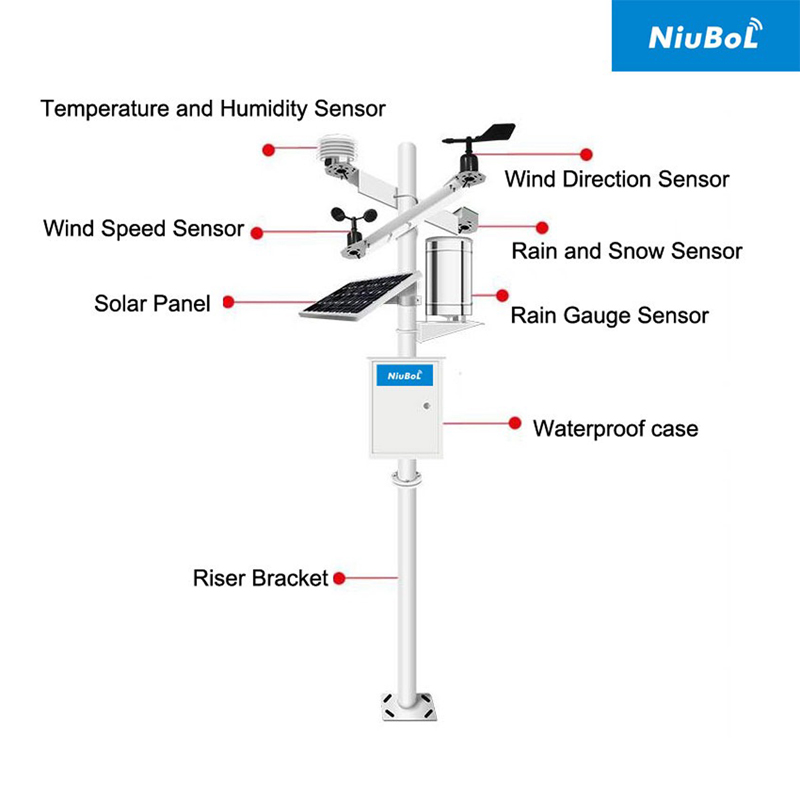
A highway traffic meteorological station is an all-weather, real-time road environment monitoring system that integrates advanced sensors, data acquisition, computer software, and remote communication technology. Its core function is to instantly monitor critical meteorological parameters and road environment indicators on highways and urban expressways under rain, fog, snow, strong winds, and other severe weather conditions, and rapidly and accurately transmit the data to transportation management departments.
Core Value: Proactive Warning, Reducing Accident Rates
1. Proactive prevention: Shifting from traditional post-incident response to active early warning. When visibility, wind speed, and other parameters reach warning thresholds, the system immediately issues alerts, guiding traffic authorities to implement measures such as speed limits, road closures, or traffic diversion.
2. Data support: Providing reliable real-time data and historical analysis for traffic command, meteorological forecasting, and road maintenance.
3. Efficiency improvement: Rapid response to severe weather, shortening traffic interruption time and optimizing evacuation plans.
4. Smart upgrade: Combined with the NiuBoL IoT cloud platform to achieve data storage, analysis, sharing, and remote intelligent management.
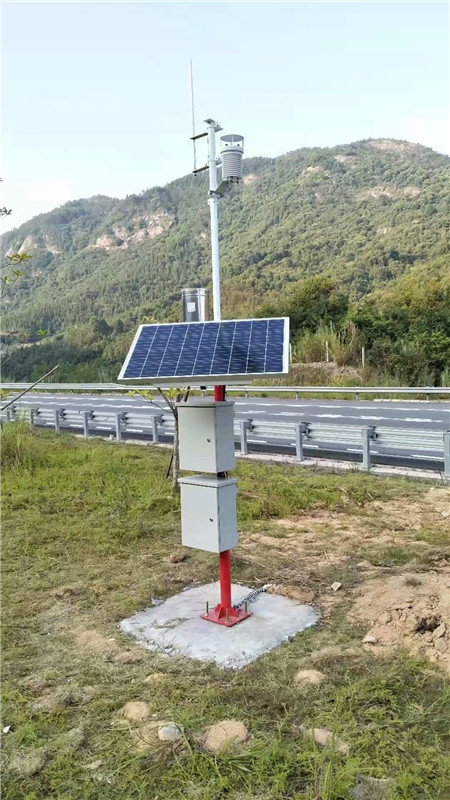
The monitoring accuracy and reliability of the NiuBoL highway meteorological station stem from its adoption of multiple non-contact sensing technologies.
Traditional mechanical anemometers suffer from high starting wind speed, easy wear, and frequent maintenance. NiuBoL employs ultrasonic wind speed and direction sensors that utilize the propagation characteristics of sound waves in air for high-precision measurement.
- Working principle: The sensor measures the time difference of ultrasonic pulses traveling with and against the wind in two or three different directions (acoustic paths) to calculate the wind speed and direction vectors.
- Technical advantages:
- No mechanical wear: No rotating parts, extremely low maintenance.
- High sensitivity: Capable of capturing rapid changes in natural wind, such as instantaneous gusts and subtle direction shifts, providing more accurate gust warnings.
Visibility is a core parameter of traffic meteorological stations, directly affecting driving safety in fog, haze, dust, and other conditions.
- Working principle: Typically uses forward scatter technology. The visibility meter emits a beam of light into the air and measures the intensity of light scattered back by suspended particles (e.g., water droplets, dust) at a specific angle. The scattering intensity is proportional to the atmospheric extinction coefficient, from which horizontal visibility is calculated.
- Core value: Real-time and accurate determination of whether visibility falls below safety thresholds (e.g., 200 m or 50 m), providing immediate basis for traffic control.
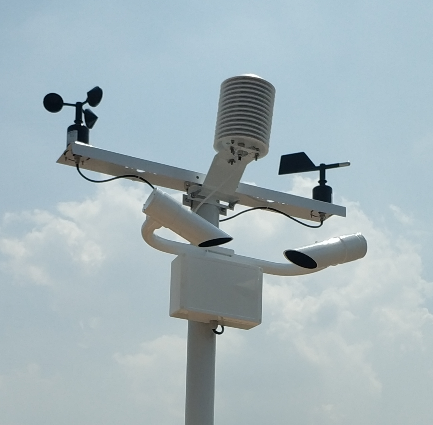
The NiuBoL highway meteorological station can monitor the following key parameters around the clock with high precision:
- Traffic-critical parameters: Visibility
- Environmental meteorological parameters: Road surface and air temperature, humidity, wind speed, wind direction, atmospheric pressure, illumination
- Environmental quality parameters: PM2.5, PM10, noise, CO₂ concentration
System Architecture and Reliable Power Supply Solutions
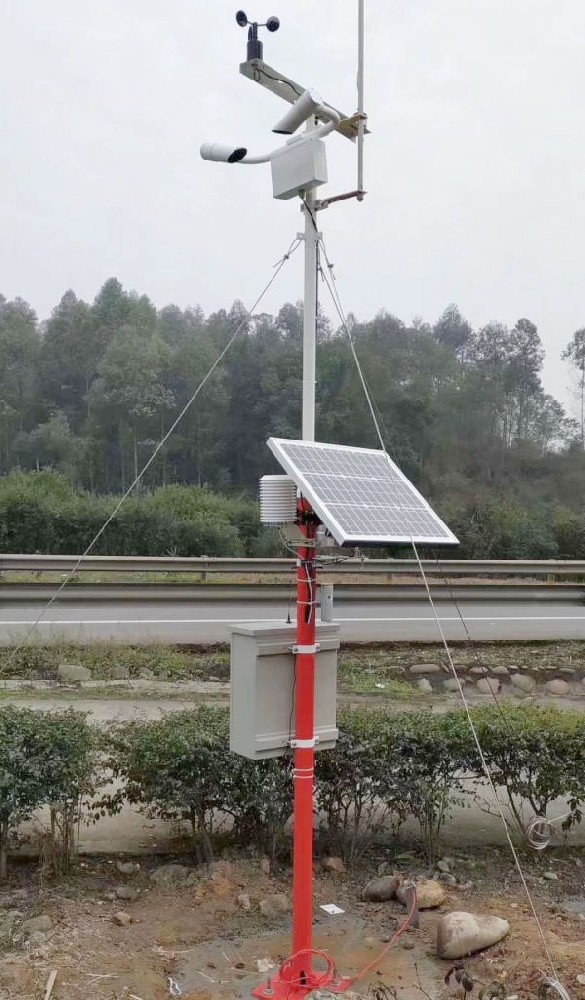
The NiuBoL meteorological station consists of three parts: front-end acquisition system, transmission system, and cloud platform application system.
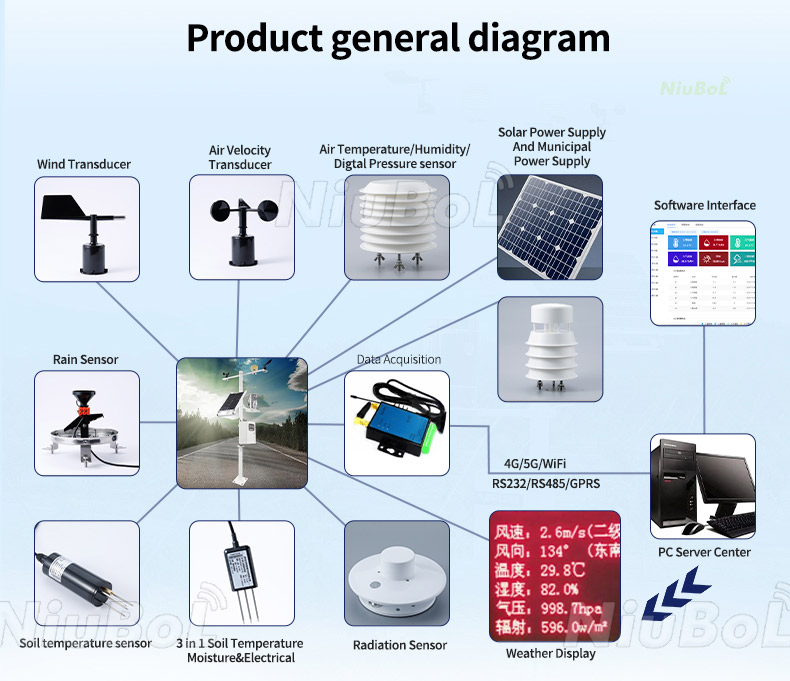
- Visibility meter, ultrasonic anemometer, temperature & humidity sensors, etc.
- High-performance data logger: Responsible for collecting, preliminary processing, and storing sensor data.
- Industrial-grade wireless communication module (4G/5G) for rapid data transmission to the cloud platform.
- NiuBoL Environmental Monitoring Cloud Platform: Provides real-time data display, remote intelligent management, data storage, online analysis, and warning push functions.
- User terminals: Web and mobile APP interfaces.
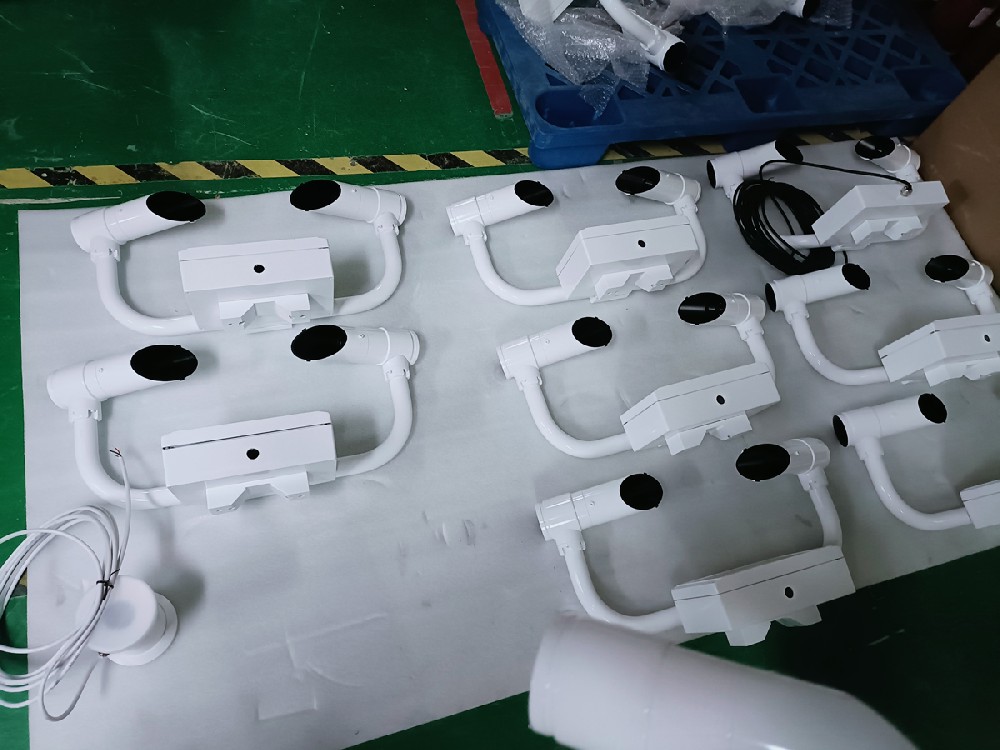
Power stability is critical, especially in remote highway sections with difficult access to grid power. NiuBoL offers flexible and reliable power solutions:
- Grid power priority: Direct mains supply where electricity is available, ensuring full-power operation.
- Solar power (backup/primary): In remote locations, solar panels combined with high-performance battery systems are used. The system is designed to operate continuously for at least one week without sunlight, even during consecutive rainy days.
Choosing NiuBoL means not only obtaining advanced hardware but also a powerful software platform and professional service support.
- Real-time monitoring: Access all parameters anytime via PC or mobile APP.
- Remote intelligent management: Diagnose, reboot, or adjust equipment parameters remotely.
- Data storage and analysis: Long-term storage of historical data (minute/hour level), supporting online query, analysis, export, and printing.
- Warning push: Customizable thresholds with automatic alerts via APP or SMS when limits are exceeded.
Professional Service Guarantee
NiuBoL provides deployment assistance and one-on-one technical support to ensure smooth installation and efficient operation.
A1: To monitor in real time the key meteorological parameters (especially visibility and wind speed) that affect driving safety, providing transportation authorities with immediate warning and decision-making basis to minimize accidents caused by severe weather.
A2: No moving parts → zero wear and extremely low maintenance; near-zero starting wind speed and sensitivity to light breezes; more accurate capture of instantaneous gust data.
A3: The instrument measures atmospheric extinction coefficient (visibility). While it cannot directly distinguish the cause, combined with PM2.5/PM10 data, it can help determine whether reduced visibility is dominated by water vapor (fog) or pollutants (haze).
A4: The optimized solar/battery system guarantees at least one week of continuous stable operation even during prolonged rainy or sunless periods.
A5: Typically installed at bridges, tunnel entrances, sharp curves, steep slopes, frequent fog areas, icing-prone sections, and highway service areas. Sensors must be free from tall obstructions and installed at heights complying with meteorological observation standards.
A6: Acquisition is second-level; upload frequency is usually set to 1–5 minutes but can be increased to near real-time during severe weather or alerts.
A7: Multi-level account management displays all stations on a map with real-time data and status, enabling unified regional command and dispatch.
A8: Industrial-grade components with wide operating temperature range (−40 °C to +70 °C). Critical components (e.g., visibility meter) include heating/dehumidification functions for reliability in low-temperature high-humidity environments.
A9: Strictly designed according to national and industry standards, ensuring data accuracy, system stability, and compatibility.
A10: CE, ISO9001, RoHS, and nationally recognized meteorological calibration certificates.
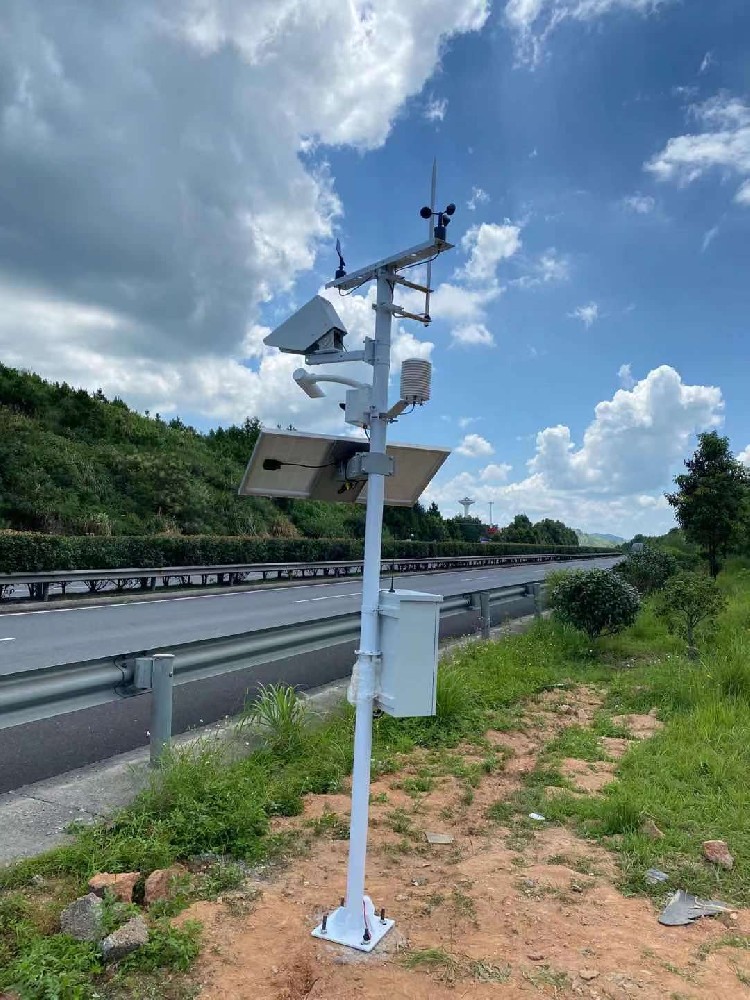
The NiuBoL Highway Traffic Meteorological Station is not only an integration of advanced sensing technology but also an indispensable proactive safety infrastructure in modern transportation systems. By obtaining real-time, accurate visibility, wind speed/direction, temperature, and other critical environmental data, and combining it with a powerful IoT cloud platform, NiuBoL transforms weather risks into controllable information, enabling scientific warning and intelligent decision-making. It builds a reliable, all-weather safety barrier that significantly reduces traffic accidents in adverse weather and improves road capacity and efficiency.
To learn how the NiuBoL Highway Traffic Meteorological Station can be customized for your road management project, please contact our technical consultants immediately.
Prev:Water-Fertilizer Integrated Machine – Working Principle & Practical Application
Next:IoT Rainfall Monitoring Station Technical Analysis and Application Guide
Related recommendations
Sensors & Weather Stations Catalog
 Agriculture Sensors and Weather Stations Catalog-NiuBoL.pdf
Weather Stations Catalog-NiuBoL.pdf
Agriculture Sensors Catalog-NiuBoL.pdf
Water Quality Sensor Catalog-NiuBoL.pdf
Related products
 Combined air temperature and relative humidity sensor
 TDR Soil Moisture & Temperature Sensor for irrigation| RS485 |4-20mA| NBL-S-THR
 Soil pH sensor RS485 soil Testing instrument soil ph meter for agriculture |NBL-S-PH
 Wind Speed sensor Output Modbus/RS485/Analog/0-5V/4-20mA
 Tipping bucket rain gauge for weather monitoring auto rainfall sensor RS485/Outdoor/stainless steel
 Pyranometer Solar Radiation Sensor 4-20mA/RS485

Screenshot, WhatsApp to identify the QR code
WhatsApp number:+8615367865107
(Click on WhatsApp to copy and add friends)

