





— Blogs —
—Products—
 Consumer hotline +8618073152920
 WhatsApp:+8615367865107
Address:Room 102, District D, Houhu Industrial Park, Yuelu District, Changsha City, Hunan Province, China
Product knowledge
Time:2025-12-23 14:16:33 Popularity:913
In modern agriculture, ecological environment research, and disaster prevention and mitigation systems, soil temperature and humidity status is regarded as the “base of environmental data.” It not only directly determines crop root development and nutrient absorption efficiency but also deeply affects land-air-water cycles and geological structure stability.
As a pioneer in agricultural IoT sensing technology, NiuBoL has developed the NBL-S-TMSMS conduit-type multi-layer soil moisture temperature sensor targeting pain points of traditional single-point sensors failing to reflect deep moisture changes. This article will deeply analyze the scientific background of soil monitoring, technical trade-offs of measurement methods, and technical core of this innovative equipment.
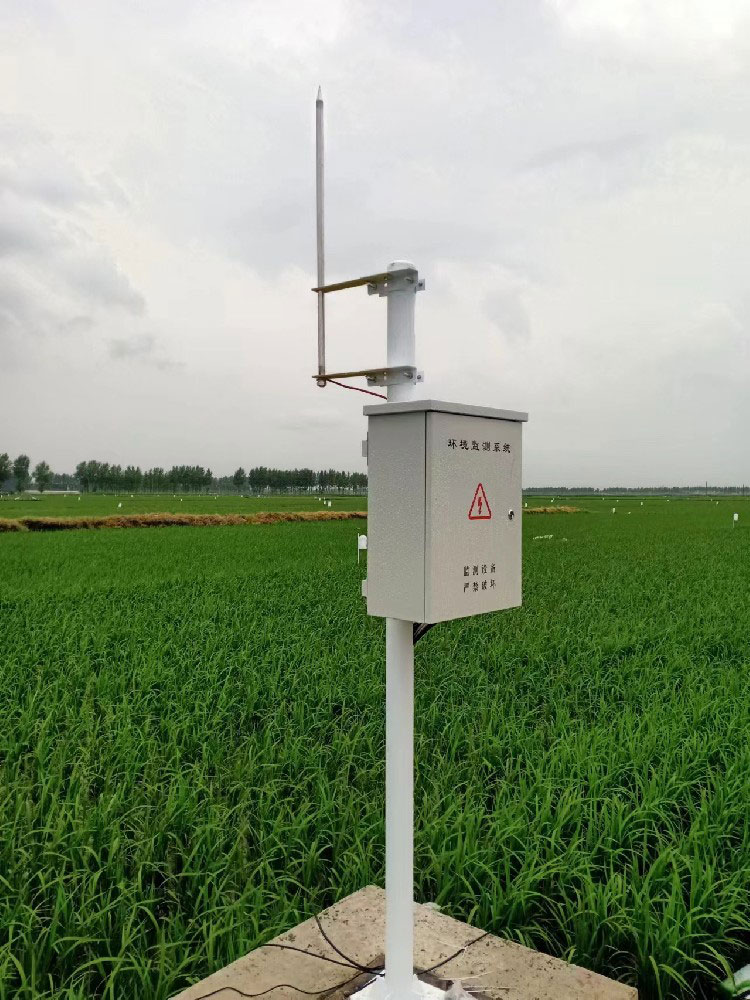
Soil temperature and humidity status refers to heat distribution and water content percentage in soil profiles at specific depths. These two factors do not exist independently but deeply couple through physical and biochemical processes.
Deep Impact of Soil Temperature
Microbial Activity: Most beneficial soil microorganisms have highest activity at 20℃-30℃; drastic temperature changes inhibit nitrogen, phosphorus, potassium biological transformation.
Plant Root Respiration: Overly low ground temperature causes physiological drought in roots (water absorption difficulty); overly high temperature may cause root necrosis.
Energy Balance: Soil temperature is important parameter for studying surface radiation balance, directly affecting near-ground microclimate.
Multi-Dimensional Significance of Soil Humidity
Water Potential and Availability: Not all soil water can be utilized by plants; monitoring humidity helps judge “field capacity” and “wilting coefficient.”
Nutrient Migration: Fertilizers must dissolve in water to be absorbed. Insufficient humidity causes fertilizer damage; excessive humidity causes nutrient loss.
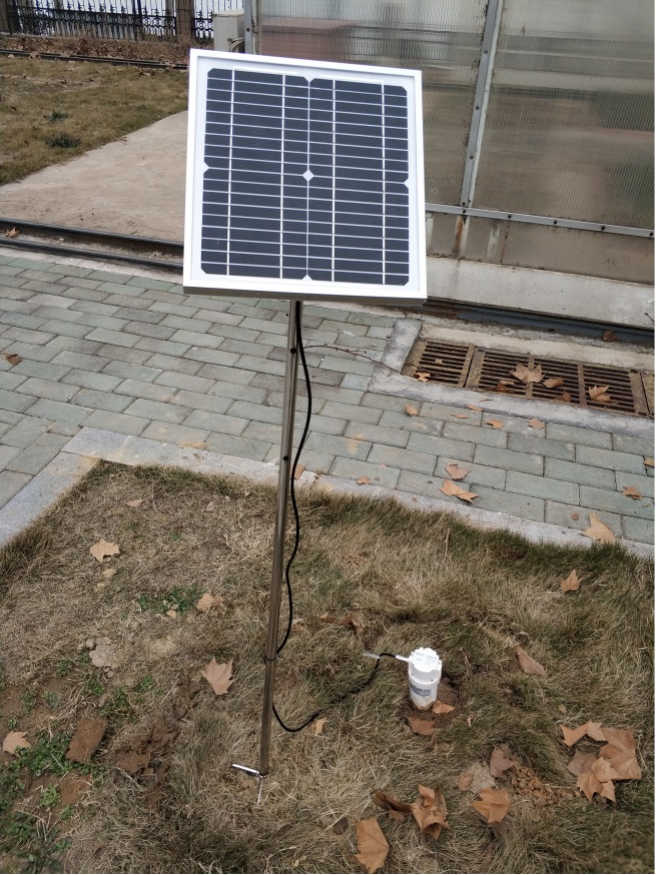
The technological evolution of soil moisture measurement is essentially finding the optimal balance between “precision, efficiency, continuity.”
Classic Measurement Methods (Offline Calibration)
Gravimetric Method (Dry-Wet Method): Through 105℃ constant temperature baking. Advantages: Highest absolute precision, calibration benchmark for all electronic sensors. Disadvantages: Not real-time, sampling destroys site soil quality.
Volumetric Method: Focuses on soil volume and water volume ratio, often used in scenarios needing irrigation quota calculation.
Physical Detection Methods (Real-Time Online)
Resistance Hygrometer: Uses gypsum block internal resistance changes. Limitations: Severe response lag, sensitive to salinity.
Neutron Scattering Method: High precision but has radioactive nuclear source, limited to very few professional research institutions.
Electromagnetic Wave Methods (Mainstream IoT Technology)
TDR (Time Domain Reflectometry): Uses electromagnetic wave reflection time along transmission line for calculation. High precision but extremely complex circuit, expensive cost.
FDR (Frequency Domain Reflectometry): Core technology of NiuBoL products. Uses electromagnetic wave frequency offset in different dielectric constants (water ≈ 80, air ≈ 1, soil solids ≈ 3-5) for measurement.
Advantage Comparison: FDR has better cost-performance ratio than TDR, faster response speed, and stronger customization potential (such as conduit-type multi-layer design).
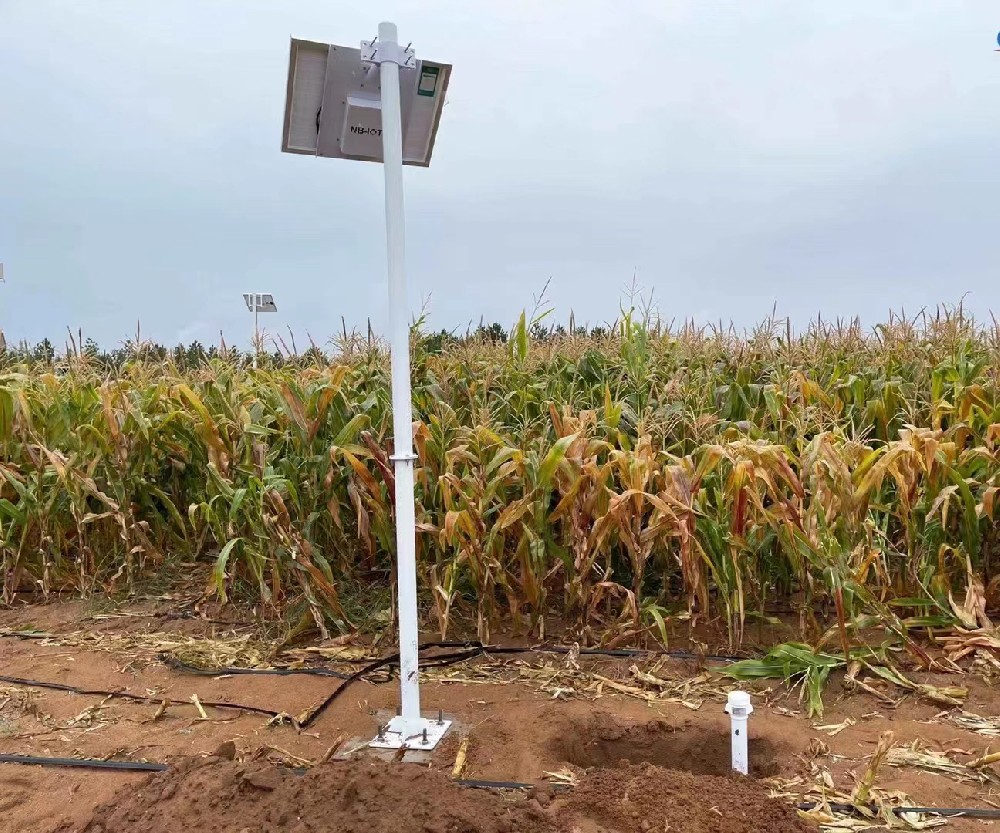
NBL-S-TMSMS is a true “profile-level” full-perception monitoring terminal.
Physical Structure: Non-Invasive Layered Design
Sensor adopts ϕ63mm high-strength, anti-aging plastic conduit. Its interior integrates multiple sensing electrodes, layered at 10cm, 20cm, 30cm, etc. (customizable up to 10 layers).
Technical Advantages: FDR Penetration Sensing
Unlike probes needing soil contact, NiuBoL's developed high-frequency electromagnetic wave detection technology penetrates tube walls, sensing external 10-20cm range soil environment.
Maintenance-Free: Sensor electrodes do not contact soil, avoiding chemical corrosion and electrolytic loss.
High Response: Second-level output, precisely capturing dynamic process of moisture downward penetration after rainfall.
Intelligent Functions: Tilt and Geological Disaster Monitoring (Optional)
Through built-in 3D-MEMS electrostatic capacitance accelerometer, sensor not only monitors moisture but also soil micro-tilt (resolution up to 0.005°). In landslide warnings, moisture saturation is usually landslide trigger, tilt change is precursor; combination forms “double insurance” warning mechanism.
| Parameter Category | NiuBoL NBL-S-TMSMS Technical Indicator |
|---|---|
| Monitoring Layers | Standard 3-4 Layers; Highest Customizable 10 Layers |
| Moisture Range/Precision | 0~100% Volumetric Water Content / ±3% (Laboratory Environment) |
| Temperature Range/Precision | -40~80℃ / ±0.5℃ |
| Communication Protocol | RS-485 (Modbus RTU) or LoRaWAN / 4G Wireless Transmission |
| Power Supply Method | DC 12V-24V or Solar + Lithium Battery Scheme |
| Protection Level | Underground Part IP68; Ground Transmitter IP67 |
| Geological Disaster Monitoring (Optional) | Built-in High-Performance 3-Axis Tilt Sensor & Vibration Alarm Module |
| Material Process | High-Quality Anti-Aging Plastic Tube + Epoxy Resin Full Sealing Potting |
A accurate data, 50% depends on the sensor, 50% on the installation.
Site Selection Specifications: Avoid Interference
Topographic Representativeness: Must be set in flat areas representing large regional soil characteristics.
Lateral Protection: Must maintain more than 50m distance from irrigation channels and water supply pipes to prevent lateral seepage interference.
Signal Assurance: Wireless versions need to ensure antenna height avoids dense metal brackets or vegetation coverage.
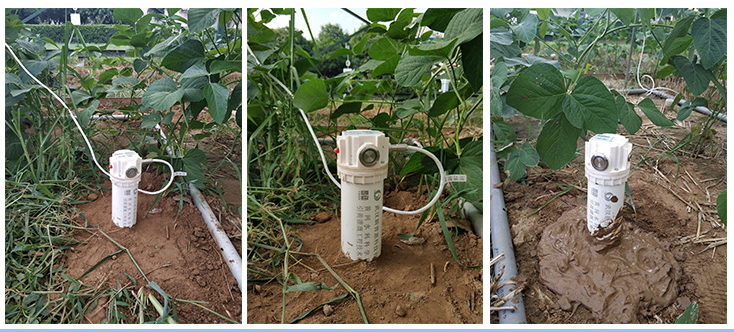
Professional Installation Method: Mud Coupling Installation Method
To eliminate gaps between tube wall and soil hole, engineers usually adopt “mud coupling”:
Mechanical Drilling: Use dedicated soil drill to vertically drill deep holes matching conduit diameter.
Mud Configuration: Use removed soil samples to remove impurities, make uniform thick mud injected into hole bottom.
Push in Sensor: Slowly push conduit in, making mud evenly wrap tube wall, exhausting air.
Surface Waterproof: Top uses sealant or rainproof cover to prevent rainwater direct seepage along tube wall.
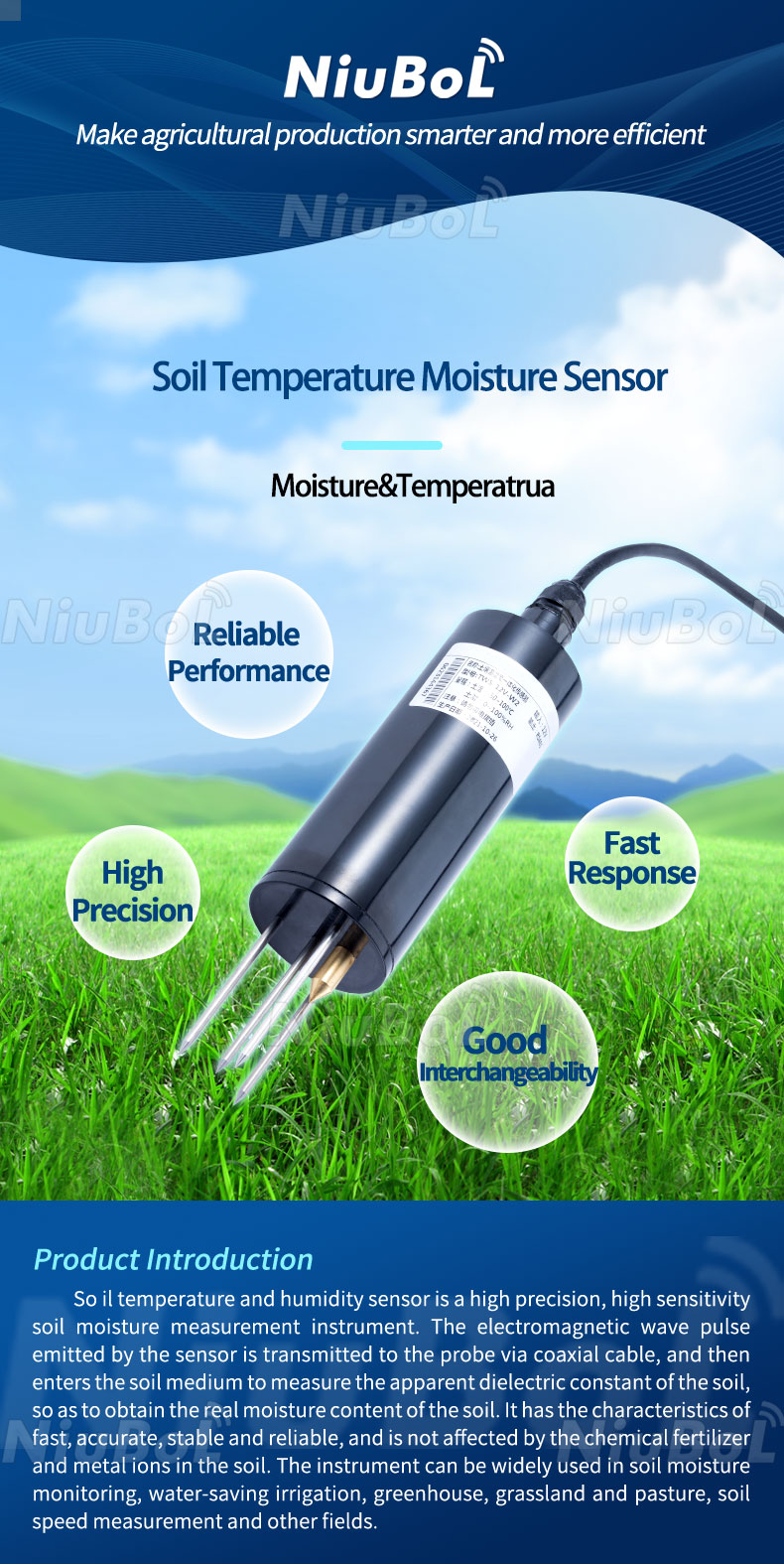
Smart Irrigation: Control Based on “Three-Level Thresholds”
By monitoring moisture in different soil layers, system can set logic:
Surface Layer (0-10cm): Used to determine if irrigation starts.
Deep Layer (40cm+): Used to determine if irrigation stops (prevent excessive downward moisture seepage waste).
Geological Disaster Monitoring: Coupled Model of Moisture and Tilt
In hilly areas, NBL-S-TMSMS uses multi-layer moisture monitoring to capture “infiltration lines.” Combined with built-in tilt sensor's sine function output, when water content reaches critical saturation and tilt offset exceeds safety threshold, automatically triggers vibration alarm and reports GPS data.
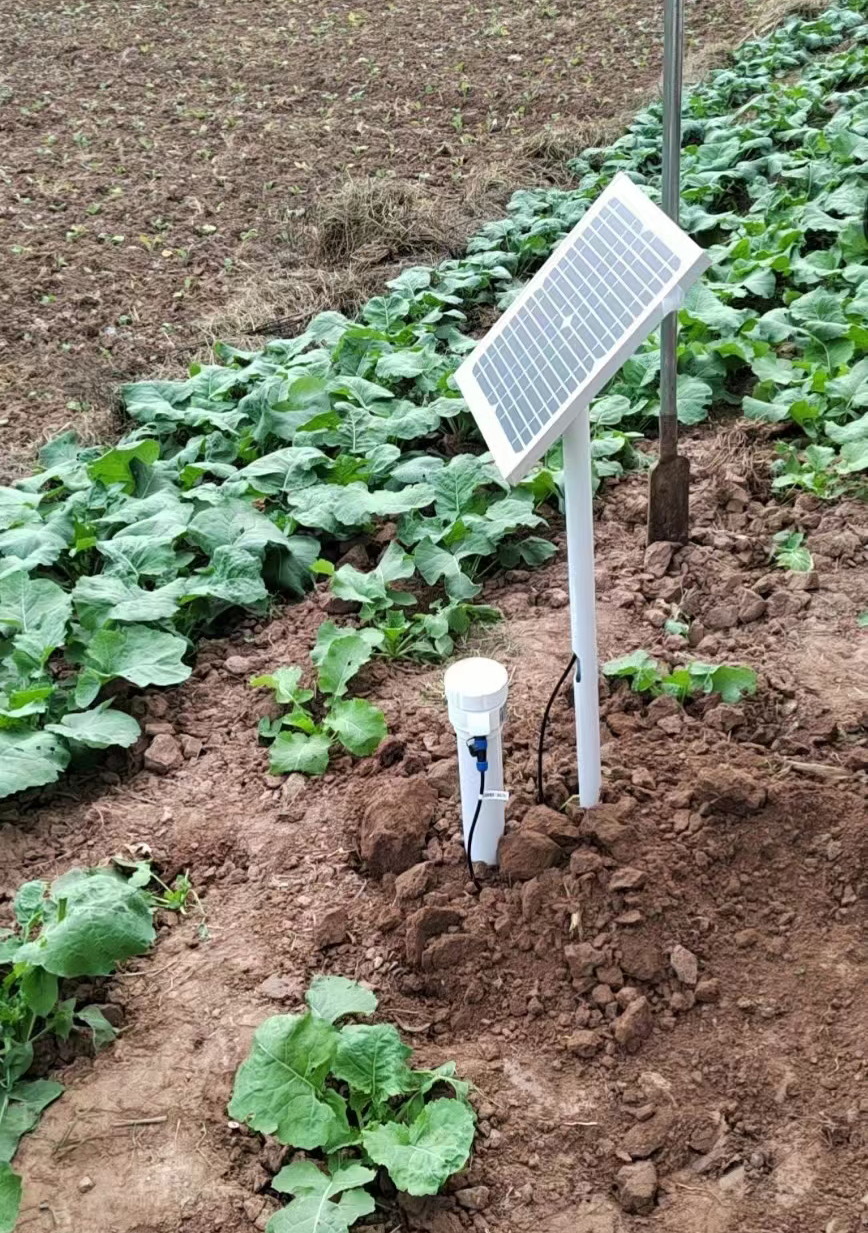
1. Conduit-type sensor or traditional probe-type sensor—which is more accurate?
A: In absolute precision for measuring single points, both are comparable, but in system-level applications, conduit-type sensor measures entire soil profile (multi-layer layered data), more objectively reflecting vertical moisture distribution, with stronger data representativeness.
2. How does the sensor prevent aging? Will it damage after years underground?
A: NiuBoL adopts anti-UV, acid-alkali resistant high-quality industrial plastic tubes and epoxy resin sealing process. This design has extremely strong physical stability underground, normal service life up to 5-10 years.
3. Why is this sensor unaffected by soil salinity?
A: Because FDR principle uses high-frequency detection waves (usually above 100MHz); at this frequency band, water's dielectric characteristics dominate, ion conductivity (salinity) interference to signals minimized, thus obtaining extremely high measurement reliability.
4. Can I receive alarms in real-time via mobile phone?
A: Yes. With NiuBoL's wireless data transmission module and cloud platform, users can set thresholds in mobile APP or WeChat mini-program. Once moisture, temperature, or tilt exceeds safety range, system first-time warns via push, SMS, or email.
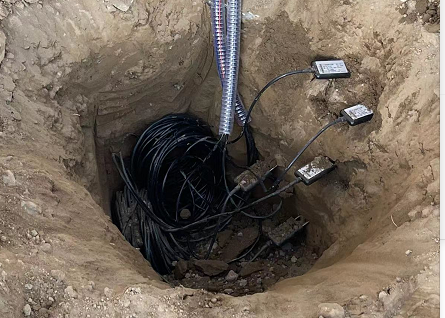
5. Is vibration alarm and GPS positioning mandatory?
A: No. These are optional functions for specific scenarios (such as geological disaster monitoring, anti-theft management). For conventional agricultural greenhouses or experimental research, selecting standard moisture + temperature configuration achieves extremely high cost-performance.
6. Why can the sensor measure outside through plastic tube?
A: Electromagnetic waves have penetrability. Conduit uses non-magnetic, low-loss high-quality plastic material, electromagnetic field radiates to surrounding soil, measuring average humidity within about 15cm around conduit.
7. Must mud be used during installation?
A: Strongly recommend using. Any gaps between tube wall and soil filled with air, air's dielectric constant 1, far lower than water and soil, causes severely low and unstable readings.
8. How long can battery power last?
A: In low-power mode, sensor sleep current less than 1mA. With 10W solar panel and small-capacity lithium battery, achieves 365 days uninterrupted cycle power supply without manual battery replacement.
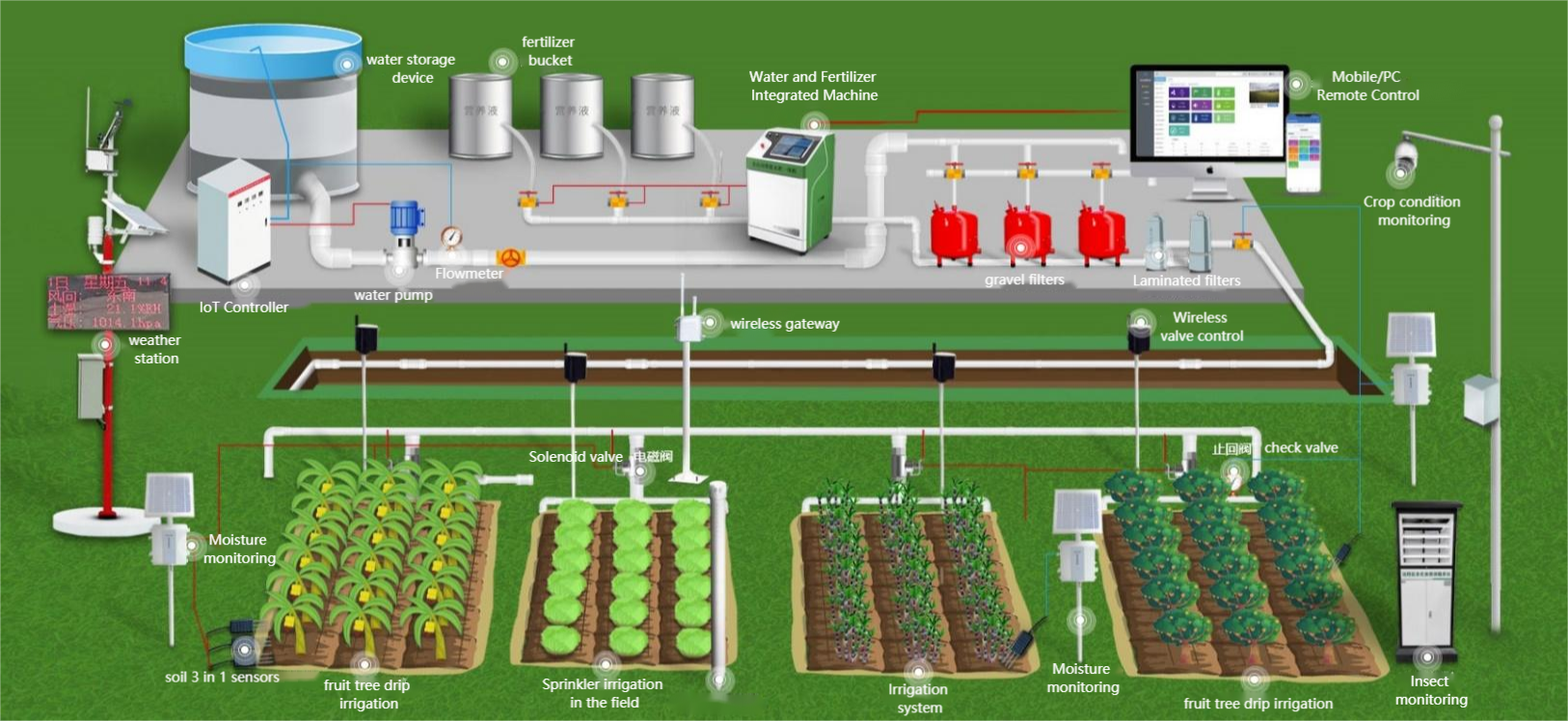
NiuBoL conduit-type multi-layer soil moisture temperature sensor NBL-S-TMSMS is precision instrument developed based on modern agriculture IoT needs. It not only integrates FDR frequency domain reflectometry precision but also achieves digital visualization of underground profiles through innovative conduit structure.
From fine water control in water-saving irrigation to dynamic perception of geological disasters, NiuBoL provides “deep to earth's core” data certainty for every industry decision-maker. In pursuing agriculture 4.0 modernization and efficiency development, this sensor is undoubtedly your most reliable technology partner.
1.NBL-S-THR Soil Temperature Moisture Sensor datasheet
 NBL-S-THR-Soil-temperature-and-moisture-sensors-Instruction-Manual-V4.0.pdf
2. NBL-S-TMC Soil Temperature Moisture EC Sensor datasheet
NBL-S-TMC-Soil-temperature-and-moisture-conductivity-sensor.pdf
3. NBL-S-TM Soil Temperature Moisture Sensor datasheet
NBL-S-TM-Soil-temperature-and-moisture-sensor-Instruction-Manual-4.0.pdf
4. NBL-S-TMCS Soil Temperature, Moisture, Conductivity and Salinity Integrated Sensor
NBL-S-TMCS-Soil-Temperature-Humidity-Conductivity-and-Salinity-Sensor.pdf
NBL-S-TMM-Tubular-Multi-Layer-Soil-Moisture-Sensor-Meter.pdf
Related recommendations
Sensors & Weather Stations Catalog
Agriculture Sensors and Weather Stations Catalog-NiuBoL.pdf
Weather Stations Catalog-NiuBoL.pdf
Agriculture Sensors Catalog-NiuBoL.pdf
Water Quality Sensor Catalog-NiuBoL.pdf
Related products
 Combined air temperature and relative humidity sensor
 TDR Soil Moisture & Temperature Sensor for irrigation| RS485 |4-20mA| NBL-S-THR
 Soil pH sensor RS485 soil Testing instrument soil ph meter for agriculture |NBL-S-PH
 Wind Speed sensor Output Modbus/RS485/Analog/0-5V/4-20mA
 Tipping bucket rain gauge for weather monitoring auto rainfall sensor RS485/Outdoor/stainless steel
 Pyranometer Solar Radiation Sensor 4-20mA/RS485

Screenshot, WhatsApp to identify the QR code
WhatsApp number:+8615367865107
(Click on WhatsApp to copy and add friends)

