





— Blogs —
—Products—
 Consumer hotline +8618073152920
 WhatsApp:+8615367865107
Address:Room 102, District D, Houhu Industrial Park, Yuelu District, Changsha City, Hunan Province, China
Product knowledge
Time:2025-12-19 15:13:34 Popularity:972
In meteorological observation and hydrological disaster prevention systems, the real-time and accuracy of rainfall data directly relate to the success or failure of early warning decisions. The NiuBoL tipping bucket rain gauge sensor, as a classic physical measurement instrument, has become the preferred rainfall collection terminal in global hydrological monitoring stations and smart city constructions due to its simple structure, stable performance, and strong anti-interference capabilities.
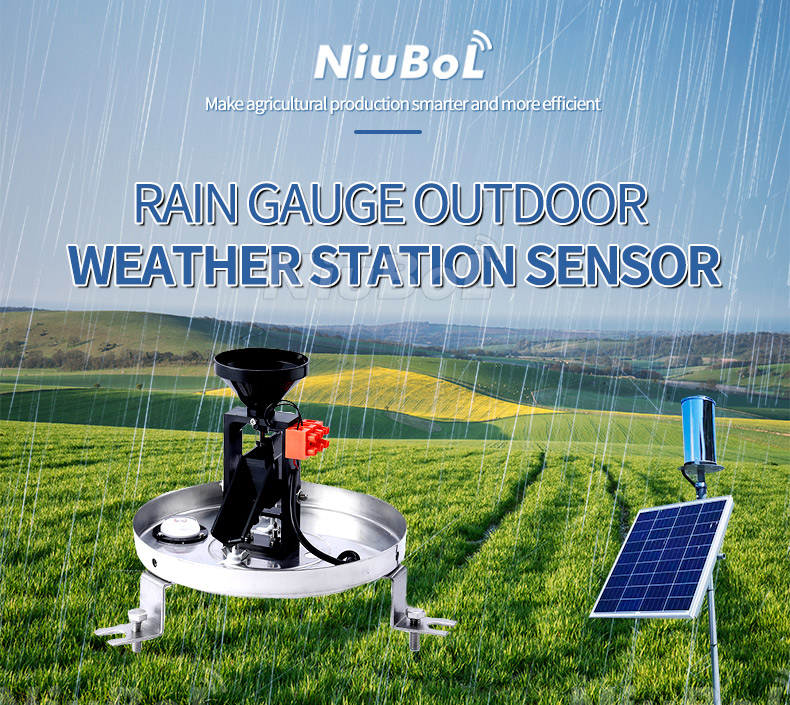
The tipping bucket rain gauge sensor (Tipping Bucket Rain Gauge) is a precision instrument that uses the gravity balance principle to measure precipitation intensity. It discretizes the continuous rainfall process into single “tipping events” and calculates the cumulative precipitation by recording the number of tips.
Compared to expensive laser or radar rain measurement equipment, the NiuBoL tipping bucket sensor does not involve complex electronic algorithm compensation but achieves high-reliability measurement through a pure physical structure, making it the most widely used rainfall monitoring solution in global weather stations currently.
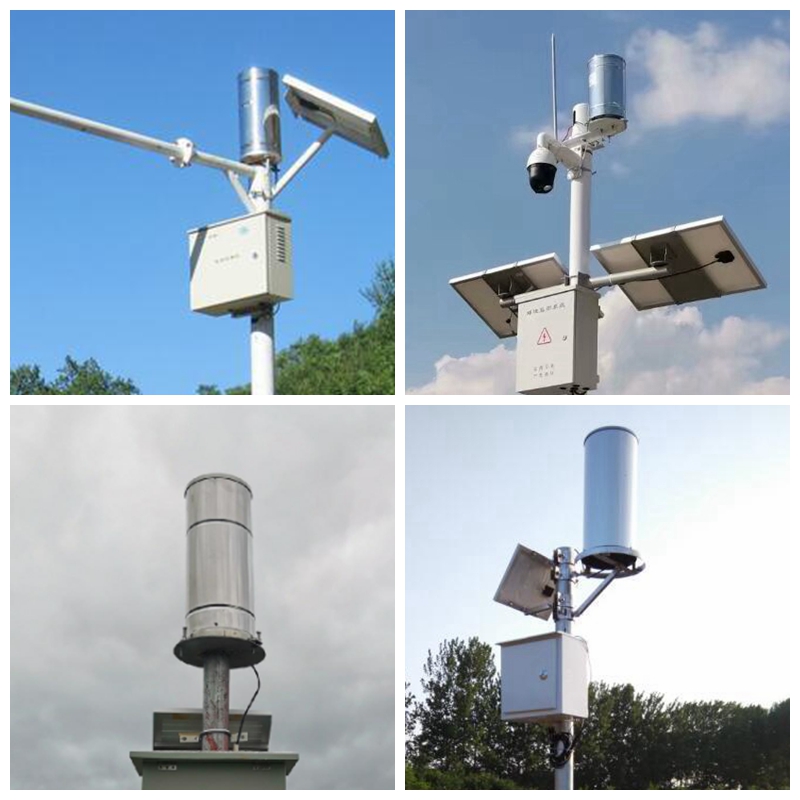
The working process of the NiuBoL tipping bucket rain gauge sensor can be divided into the following three stages:
Collection Stage: Rainwater enters through a standard diameter (usually 200mm) receiving port, filters and converges through an internal funnel, and precisely drips into the tipping bucket below.
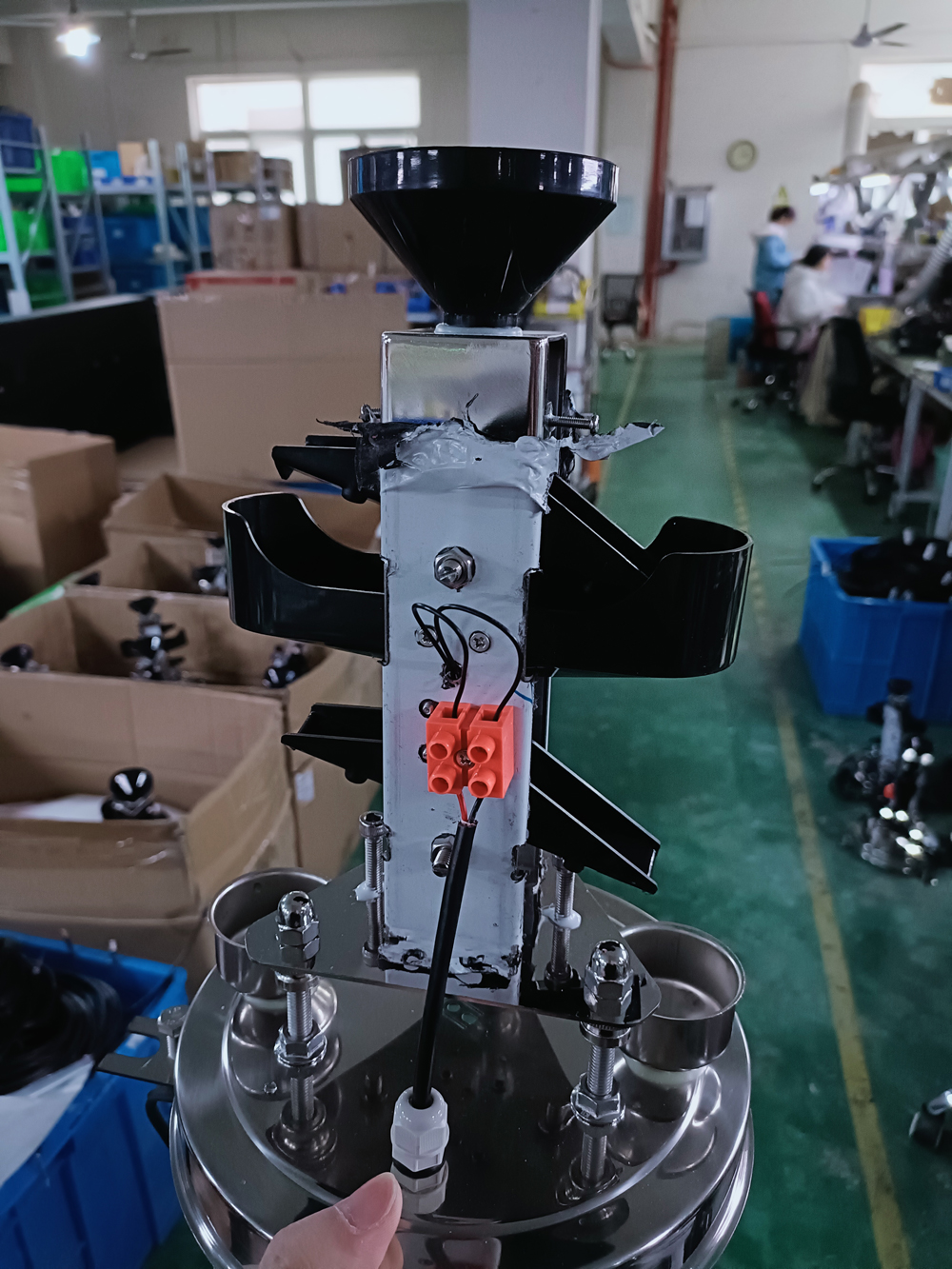
Tipping Stage: The core structure is a symmetrical dual-chamber tipping bucket. When the rainwater accumulated in one chamber reaches the rated capacity (such as the mass corresponding to 0.2mm precipitation), the change in center of gravity causes the tipping bucket to lose balance and tip.
Counting Stage: The magnetic steel on the side of the tipping bucket sweeps over the reed switch during the tip, triggering a pulse electrical signal. The counter records this signal, multiplies it by the single-tip resolution (0.2mm or 0.5mm, 0.1mm), to obtain the real-time total rainfall.
To maintain long-term accuracy in harsh outdoor environments, the NiuBoL sensor has been deeply optimized in construction:
Precision Receiving Port: Made of stainless steel or high-strength engineering plastic, with a cutting edge design to ensure constant sampling area and reduce water adhesion errors.
Dual-Layer Filtration System: The upper cylinder is equipped with a filter screen to effectively prevent branches and sand from blocking the internal guide tube.
Sealed Signal Module: The signal conversion unit adopts IP65 protection to prevent circuit corrosion caused by long-term humid environments.
Extremely High Stability: Measurement based on physical principles, unaffected by temperature, humidity, or air density interference.
Economic Efficiency: Extremely low maintenance costs, suitable for large-scale distributed deployment.
Strong Compatibility: Standard industrial RS485 interface and Modbus-RTU protocol, can directly connect to PLC, DCS, or various industrial control host computers.
Harsh Environment Adaptability: Robust structure, capable of withstanding strong winds, intense UV radiation, and acid rain erosion.
Meteorological Forecasting: Provides real-time rainfall intensity change curves for weather stations.
Hydrological Monitoring: Deployed at basin and reservoir edges for flash flood disaster early warning and reservoir inflow estimation.
Industrial Park Drainage: Links with park pumping station systems to automatically adjust drainage load based on rainfall intensity, preventing waterlogging.
Smart Cities: Integrated into urban street light poles or drainage networks to monitor urban waterlogging risks.
Mining Areas and Stockpile Early Warning: Real-time monitoring of rainfall intensity in open-pit mining areas to prevent landslides and debris flows.
Modern Agriculture: Provides rainfall compensation data for precision irrigation systems to achieve on-demand water supply.
| Parameter Name | Technical Indicators |
|---|---|
| Receiving Port Diameter | 200mm |
| Resolution | 0.2mm / 0.5mm |
| Measurement Intensity Range | 0 ~ 4mm/min (maximum up to 8mm/min) |
| Accuracy Error | ±3% |
| Output Signal | Pulse signal or RS485 (Modbus) |
| Communication Protocol | Supports LoRaWAN expansion |
| Operating Temperature | 0~ 80℃ |
Site Selection Principles
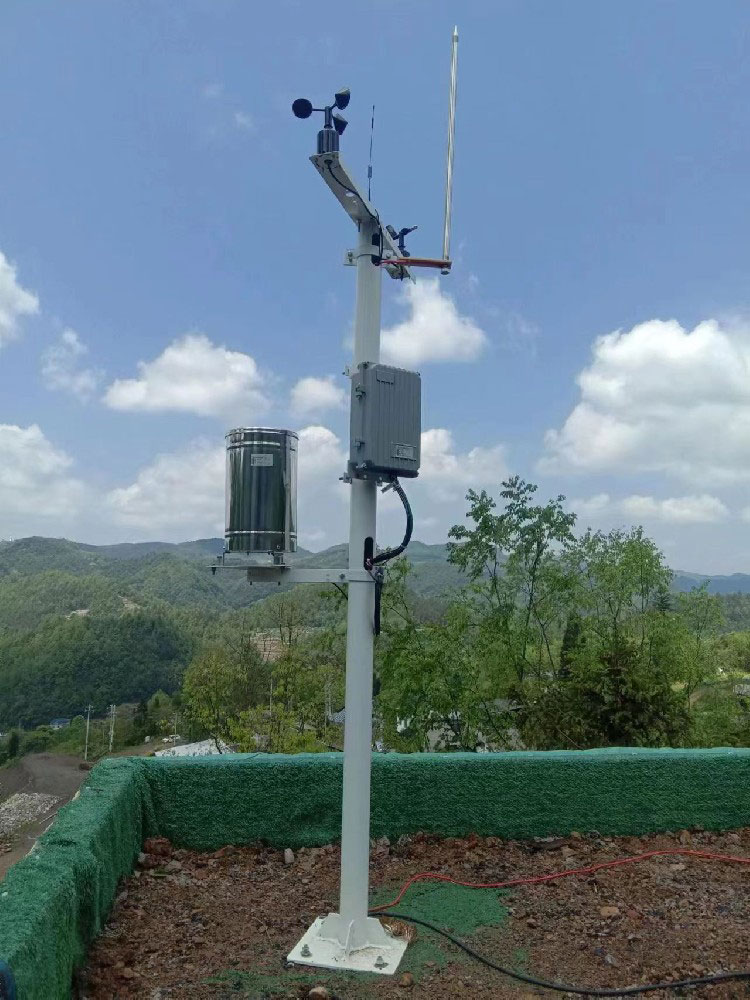
The installation point should be away from buildings and trees. It is recommended that the distance between the sensor and obstacles be at least twice the height of the obstacles.
Level Adjustment (Key Point)
The device base is equipped with a level bubble. During installation, adjust the three leveling screws on the bracket to make the bubble strictly centered. An unlevel base will cause inconsistency in the rainfall required for tipping bucket tipping, resulting in systematic underestimation or overestimation of data.
Internal Cleaning
After installation, the rain gauge bucket shell must be opened, and the nylon tie protecting the tipping bucket must be cut off.
Accuracy Verification
Inject 60-70mm of quantitative clean water for simulation testing, observe whether the data logger value matches the injected water volume.
Regular Desilting: It is recommended to check the funnel and filter screen once a quarter to remove accumulated dust, fallen leaves, and bird droppings.
Inner Wall Cleaning: Strictly prohibit wiping the inner wall of the tipping bucket with fingers to avoid leaving fingerprint grease causing water adhesion. It can be rinsed with clean water or alcohol.
Winter Management: In freezing seasons (temperature below 0 degrees Celsius), stop using and retrieve the sensor indoors to prevent ice expansion from breaking the tipping bucket or blocking the funnel.
Cable Protection: Check the cable for signs of animal bites and ensure reliable connection of the RS485 shielded wire.
Q: Why is the system reading zero when there is rainfall?
A: Check if the sensor wiring is correct; confirm if the internal tipping bucket tie has been removed; check if the funnel is completely blocked by foreign objects.
Q: Rainfall data obviously overestimated or underestimated?
A: First check if the device is level; second check if there are foreign objects (such as dead leaves) causing blockage at the funnel; check if the sensor has tilted causing the level bubble to shift.
Q: No data update in the data logger during rainfall?
A: Check if the RS485 wiring is reversed; confirm if the internal tipping bucket tie has been removed; measure if the power supply voltage is within 9-24V.
Q: How to perform system-level linkage?
A: Through the Modbus register manual provided by NiuBoL, rainfall data can be written to configuration software or PLC logic to achieve closed-loop control of “rainfall trigger - pumping station activation.”
 NBL-W-ARS-Tipping-bucket-rain-gauge-instruction-manual.pdf
NBL-W-RS-Rain-sensors-instruction-manual-V4.0.pdf
NBL-W-DRS-Double-Tipping-Bucket-Rain-Sensor-Instruction-Manual.pdf
Related recommendations
Sensors & Weather Stations Catalog
Agriculture Sensors and Weather Stations Catalog-NiuBoL.pdf
Weather Stations Catalog-NiuBoL.pdf
Agriculture Sensors Catalog-NiuBoL.pdf
Water Quality Sensor Catalog-NiuBoL.pdf
Related products
 Combined air temperature and relative humidity sensor
 TDR Soil Moisture & Temperature Sensor for irrigation| RS485 |4-20mA| NBL-S-THR
 Soil pH sensor RS485 soil Testing instrument soil ph meter for agriculture |NBL-S-PH
 Wind Speed sensor Output Modbus/RS485/Analog/0-5V/4-20mA
 Tipping bucket rain gauge for weather monitoring auto rainfall sensor RS485/Outdoor/stainless steel
 Pyranometer Solar Radiation Sensor 4-20mA/RS485

Screenshot, WhatsApp to identify the QR code
WhatsApp number:+8615367865107
(Click on WhatsApp to copy and add friends)

