Call Phone +8618073152920 Hotline: +8618073152920
Call Phone +8618073152920
CONTACT US/ CONTACT US
Consumer hotline +8618073152920
Changsha Zoko Link Technology Co., Ltd.

Email:Arvin@niubol.com

WhatsApp:+8615367865107

Address:Room 102, District D, Houhu Industrial Park, Yuelu District, Changsha City, Hunan Province, China

Position:Home >> Blogs >> Product knowledge

Product knowledge

Online Dissolved Oxygen Sensor System Integration: Fluorescence Method Technical Solution and Project Application Guide

Time:2026-06-01 10:44:31 Popularity:9

I. Technical Core: Working Principle of Fluorescence Dissolved Oxygen Sensor and System Compatibility Advantages

For water quality monitoring system integrators and project contractors, dissolved oxygen (DO) is a core indicator for assessing water self-purification capacity, ecological health and biochemical reaction processes. Traditional electrochemical (polarographic or galvanic) sensors have inherent limitations such as electrolyte consumption, electrode polarization, flow velocity dependence and frequent membrane head maintenance, which increase system operation and maintenance complexity and long-term ownership costs.

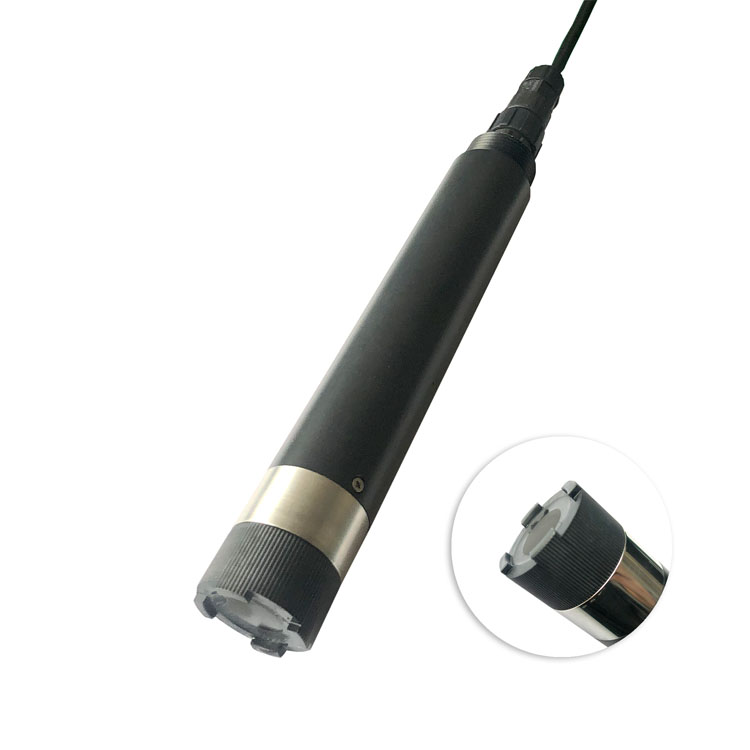
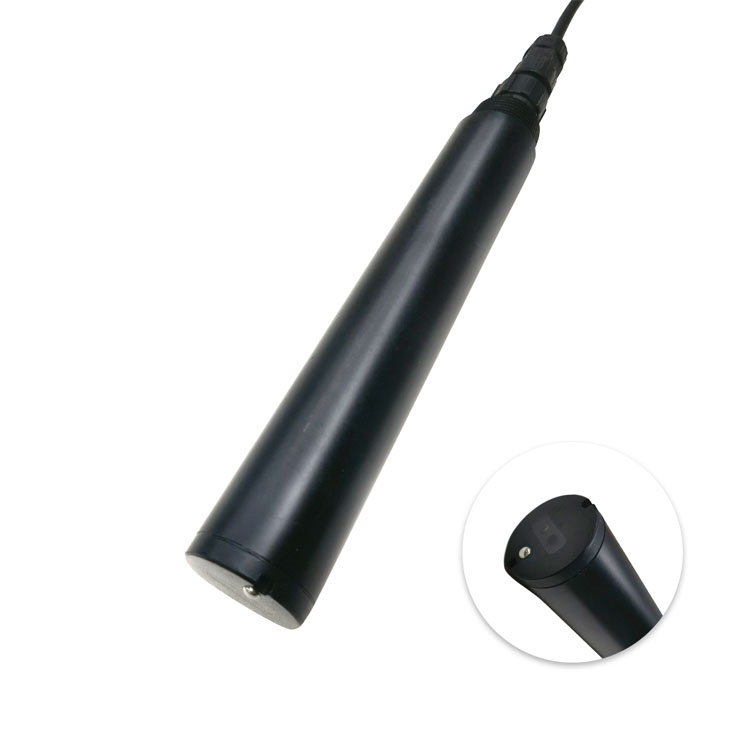
NiuBoL NBL-WQ-DO integrated online fluorescence dissolved oxygen sensor adopts the optical quenching principle, fundamentally solving the above engineering pain points.

NBL-WQ-DO online fluorescence dissolved oxygen sensor

1.1 Brief Description of Measurement Principle

The sensor has a built-in excitation light source that illuminates the ruthenium metal-organic complex on the surface of the fluorescent membrane head. The fluorescent substance is excited to emit fluorescence. Oxygen molecules in water interact with the fluorescent substance causing fluorescence quenching, and the fluorescence lifetime shortens as oxygen partial pressure increases. By detecting the phase difference between the excitation light and the emitted light, combined with the internal calibration curve, after temperature (Pt1000 automatic compensation) and salinity correction, the dissolved oxygen concentration value (mg/L) or saturation (%) is output.

1.2 Performance Comparison Concerned by System Integrators

CharacteristicTraditional Electrochemical SensorNBL-WQ-DO Fluorescence Sensor
ElectrolyteRequires electrolyte, needs regular replacementNo electrolyte required
Polarisation TimeRequires several hours of polarisation each time power is appliedNo polarisation required, plug and play
Flow Velocity DependenceRequires water flow disturbance, minimum flow velocity requiredNo flow velocity requirement, accurate measurement in still water
Interfering SubstancesSusceptible to interference from sulfides, grease, H₂S and other chemicalsStrong chemical interference resistance, suitable for complex water quality
Membrane Head MaintenanceFrequent replacement of membrane and electrolyteReplace fluorescent membrane head once per year
Drift CharacteristicsElectrode aging causes baseline driftGood long-term stability with minimal drift
Communication InterfaceMostly analog (4-20mA), requires additional calibrationRS-485, standard Modbus/RTU protocol
Power ConsumptionRelatively high0.2W@12V, low power consumption design

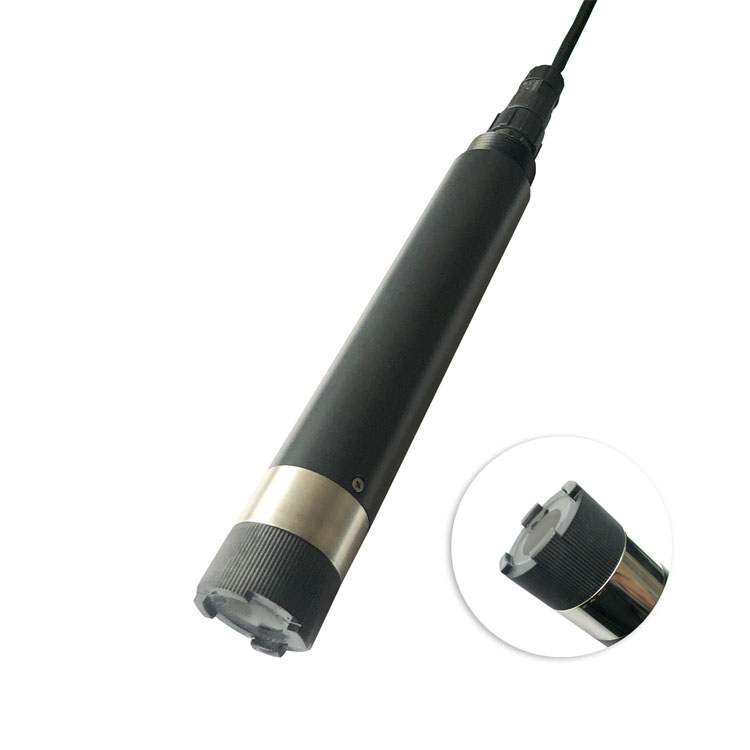
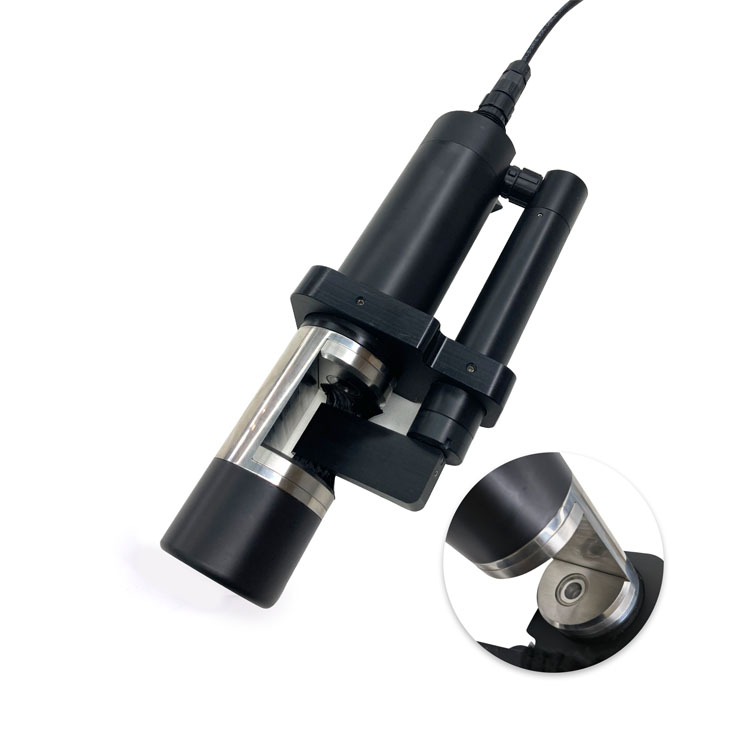
Fluorescence dissolved oxygen sensor for water quality monitoring

II. Typical Application Scenarios for System Integrators

NBL-WQ-DO fluorescence dissolved oxygen sensor has been deployed in batch projects in water environment monitoring, aquaculture, sewage treatment and industrial process control. The following analyzes typical application scenarios and solution value from the perspective of integrators:

2.1 Factory Aquaculture Intelligent Aeration Control System

Scenario Requirements: In high-density aquaculture ponds, dissolved oxygen levels directly affect stocking density, feed coefficient and survival rate. Traditional manual timed aeration leads to energy waste or insufficient aeration causing pond turnover risks.

Integration Solution: Integrators connect the NBL-WQ-DO dissolved oxygen sensor to PLC or IoT edge gateway to collect real-time DO data (0-20 mg/L, accuracy ±2%). Set upper and lower threshold values to link blowers, liquid oxygen valves or aerators. When DO is below 4 mg/L, aeration equipment is automatically turned on; when above 6.5 mg/L, it is delayed off. The system records daily DO change curves to assist in optimizing feeding strategies — automatic feeding during dissolved oxygen peak periods to reduce feed coefficient.

Project Benefits: After deploying an automatic aeration system for 32 ponds in a shrimp farming base, annual electricity costs decreased by 28%, feed costs decreased by 15%, and survival rate increased by 12%.

2.2 Precise Aeration Control in Municipal Sewage Plant Biochemical Tanks

Scenario Requirements: In A²/O, oxidation ditch and other processes, dissolved oxygen in the aerobic zone needs to be maintained at 2-4 mg/L to ensure nitrification efficiency. Excessive aeration causes energy waste (accounting for 50%-70% of total sewage plant energy consumption), while insufficient aeration affects effluent ammonia nitrogen compliance.

Integration Solution: Submerge the NBL-WQ-DO sensor at the end of the aerobic tank, with RS-485 output connected to SCADA system or PID controller. Forms closed-loop control with variable frequency blowers: real-time DO is compared with the set value to adjust fan speed or guide vane opening. Sensor response time T90 < 30 seconds meets process control real-time requirements. The fluorescent membrane head is not affected by sulfides and activated sludge attachment in the mixed liquor, extending maintenance cycle to more than 30 days.

2.3 Surface Water and Water Source Automatic Monitoring Stations

Scenario Requirements: Environmental protection departments require routine monitoring of dissolved oxygen indicators in rivers, lakes and reservoirs, with data uploaded in real time to regulatory platforms. Monitoring stations are often in remote locations, requiring long-term stability and low maintenance.

Integration Solution: Integrate NBL-WQ-DO into multi-parameter water quality analyzers (along with pH, conductivity, turbidity, ammonia nitrogen sensors). Data is collected via 4G RTU using Modbus RTU protocol and uploaded to environmental protection cloud platform. The system uses solar power, sensor power consumption is only 0.2W, enabling continuous operation for more than 7 days in cloudy and rainy days when paired with low-power RTU. Only one fluorescent membrane head replacement per year, reducing on-site maintenance labor by 80% compared to electrochemical solutions.

2.4 River Ecological Restoration and Water Quality Improvement Projects

Scenario Requirements: In black and odorous water treatment and artificial wetland operation, dissolved oxygen is a key indicator for evaluating aeration reoxygenation effect and aquatic plant photosynthesis oxygen production capacity. Requires multi-point, long-term monitoring.

Integration Solution: Deploy buoy-type monitoring points at 200-500 meter intervals along the treatment river section, each buoy equipped with NBL-WQ-DO and temperature sensors. Data is collected to the central server via wireless gateway to generate DO spatiotemporal distribution heat maps, evaluating aeration equipment start-stop positions and operating durations. IP68 protection rating (continuous operation submerged 1.5 meters underwater) meets field deployment requirements.

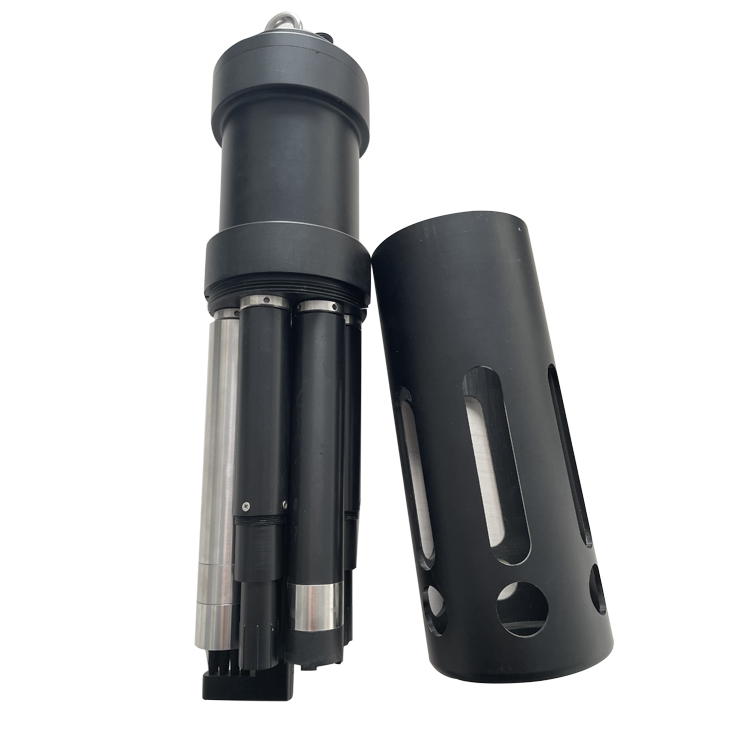
Multi-parameter sensor for DO, pH, ORP and conductivity monitoring

III. NBL-WQ-DO Dissolved Oxygen Sensor Selection Guide and Integration Precautions

3.1 Core Selection Parameter Checklist

ParameterNBL-WQ-DO SpecificationSelection Recommendation
Range0~20.00 mg/L; 0~200% saturationFreshwater aquaculture: 0-15mg/L; Seawater aquaculture requires salinity compensation; Sewage plant: 0-10mg/L
Accuracy±2% of readingLaboratory level monitoring requires calibration traceability certificate
Response TimeT90 < 30 secondsAeration control closed loop requires <60 seconds, this product meets
Resolution0.01 mg/L, 0.1℃Meets environmental protection and industrial process control requirements
Output InterfaceRS-485, Modbus/RTUSupports multiple station addresses (1-247), bus can mount 32 nodes
Power Supply12~24V DC, 0.2WSolar system recommends 12V, industrial control system recommends 24V
Protection RatingIP68Permanent submersion installation must be IP68
Fluorescent Membrane Head Life1 year (normal use)Calculate consumable costs at procurement, recommend bulk purchase of spare parts

3.2 System Integration Precautions

(1) Communication Protocol and Data Parsing
   The sensor adopts standard Modbus RTU protocol. Register address definitions should be obtained from the product manual.

(2) Power Supply Design and Signal Isolation

  • When the sensor shares power with motors and inverters, it is recommended to install DC-DC isolation power modules or signal isolators to avoid EMI interference causing RS-485 communication abnormalities.

  • For long-distance transmission (>500 meters), install 120Ω terminal matching resistors at the beginning and end of the bus.

(3) Installation Position and Working Condition Adaptation

  • Avoid installation in areas with bubble accumulation (directly above aeration discs) or turbulent flow that may cause mechanical damage.

  • Sewage plant aerobic tank installation: recommended 0.5-1 meter from the bottom and more than 0.3 meters from the wall to avoid sludge accumulation covering the fluorescent membrane head.

(4) Calibration Strategy

  • Two-point calibration: zero point calibration uses sodium sulfite anhydrous solution (zero oxygen environment), slope calibration uses air-saturated water (100% saturation).

  • Field calibration frequency: every 3-6 months or after membrane head replacement. If the competent department requires more frequent verification, follow the regulations.

(5) Data Quality Assurance

  • The sensor has built-in temperature compensation (Pt1000), but in extreme temperature fluctuation scenarios, additional temperature correction algorithms are recommended.

  • Scratches or aging of the fluorescent membrane head surface will cause measurement deviation. It is recommended to establish a membrane head replacement ledger and replace them centrally every year.

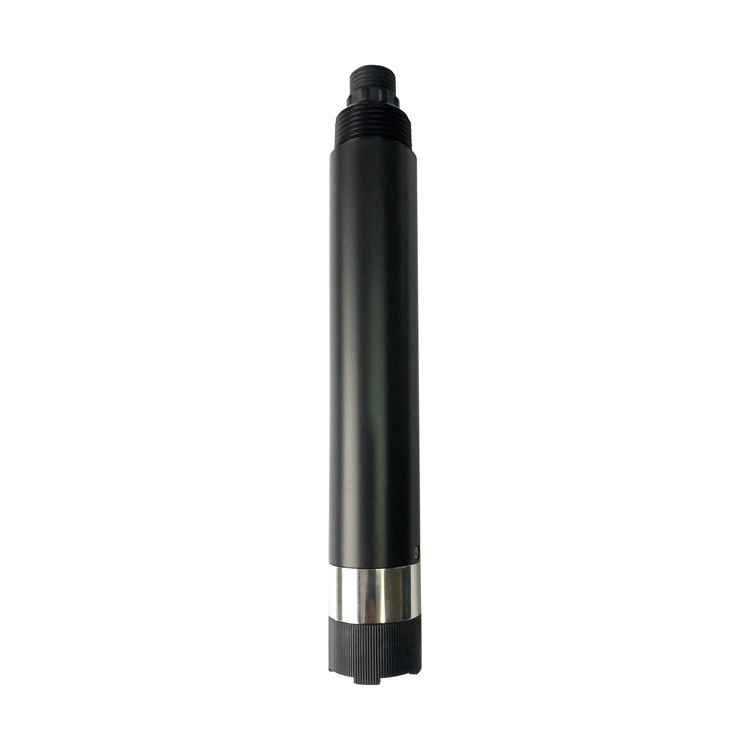
Dissolved Oxygen Sensor.png

IV. Maintenance and Calibration: Key Points to Reduce Long-term Project Operation and Maintenance Costs

For system integrators, sensor later maintenance cost is a key competitive point in bidding solutions and after-sales service commitments. The NBL-WQ-DO fluorescence method design significantly reduces operation and maintenance burden:

Daily Maintenance Checklist:

Maintenance TaskFrequencyOperation Description
Clean sensor housingOnce per monthRinse with clean water, wipe stubborn dirt with soft cloth (do not use organic solvents)
Fluorescent membrane head cleaningOnce per monthRinse gently with clean water, use household detergent for oil stains, wipe dry with lint-free cloth
Internal membrane head cleaningAs neededUnscrew membrane head, clean interior and optical window, reinstall after drying
Fluorescent membrane head replacementOnce per yearUnscrew old membrane head and tighten new one (no electrolyte required)
Sensor calibrationEvery 3-6 monthsTwo-point calibration (zero oxygen + air saturated water)
Cable inspectionEvery quarterCheck for sheath damage, root breakage, junction box sealing

Important Note: When the fluorescent membrane head is not in use for a long time (more than 7 days), cover it with a rubber protective sleeve containing a wet sponge to keep the measurement area moist. If the membrane head has dried out, soak it in clean water for 48 hours to restore balance before use.

Water Quality senseor.jpg

FAQ

Q1: Does the NBL-WQ-DO fluorescence sensor require polarisation?

A: No. The fluorescence method is based on optical detection without electrode reaction. The sensor can output stable data immediately after power-on, suitable for mobile monitoring or intermittent power supply scenarios that require frequent on/off.

Q2: How to connect the sensor to existing PLC or RTU systems?

A: The sensor provides RS-485 interface with standard Modbus RTU protocol. Most PLCs (Siemens, Rockwell, Mitsubishi, Delta) and industrial RTUs support this protocol. You only need to read the corresponding register addresses (32-bit floating point), or purchase our 4-20mA isolation conversion module.

Q3: What is the actual service life of the fluorescent membrane head? What is the replacement cost?

A: Under normal water quality conditions (0-40℃, non-strong acid/alkali, no organic solvent immersion), the fluorescent membrane head life is 12 months. Beyond this period, response may slow down or accuracy may decrease. Bulk purchase is recommended. The replacement cost of a single unit is far lower than the total cost of frequent membrane and electrolyte replacement for electrochemical sensors.

Q4: Can the sensor be used in seawater or high salinity water?

A: Yes. The housing is made of 316L stainless steel + POM/ABS alloy, resistant to salt spray corrosion. Built-in salinity compensation algorithm automatically corrects the measured value by entering salinity value (0-40ppt) through configuration software.

Q5: In sewage plant aerobic tanks, will sludge attachment affect measurement?

A: The fluorescent membrane head surface has anti-biofouling coating design. A small amount of sludge can be rinsed with clean water. If severely fouled due to long-term lack of maintenance, fluorescence signal intensity will attenuate, but cleaning can restore it. Recommended maintenance cycle is 30 days.


NBL-COD-208 Online COD Water Quality Sensor.jpg


Q6: Can the sensor response speed meet aeration PID control requirements?

A: T90 response time < 30 seconds, better than the common time constant of aeration control loops (1-5 minutes). With reasonable PID parameter tuning, stable closed-loop control can be achieved.

Q7: Does the sensor require a separate transmitter or controller?

A: No. The sensor directly outputs RS-485 digital signal and can be directly connected to Modbus master devices (PLC, gateway, IPC). If 4-20mA analog output is required, an additional signal conversion module can be configured.

Q8: Can the sensor measure accurately in low flow velocity or still water?

A: Yes. The fluorescence method is not affected by flow velocity and can measure accurately even in still water lakes, deep wells, and aquaculture pond bottoms. Unlike polarographic sensors that rely on water flow to generate oxygen reduction current.

Q9: Is recalibration required after replacing the fluorescent membrane head?

A: Two-point calibration is recommended. Although each membrane head is factory calibrated for consistency, calibration after replacement ensures highest accuracy due to differences in optical windows and electronic components. The operation is simple: zero oxygen solution + air saturated water, completed within 5 minutes.

Q10: Will the sensor be interfered with under direct sunlight or high brightness ambient light?

A: No. The optical detection system uses specific wavelength excitation light and filtering detection, and ambient light (including sunlight) interference has been suppressed. However, avoid direct exposure of strong light sources to the fluorescent membrane head window during installation.

Water Quality senseor.jpg

Summary

Online dissolved oxygen sensor is the core sensing layer device of water environment monitoring and process control systems. NiuBoL NBL-WQ-DO fluorescence dissolved oxygen sensor has become the preferred solution for system integrators, IoT solution providers and engineering companies in the following fields due to its engineering advantages of no electrolyte, no polarisation, immunity to flow velocity and sulfide interference, low power consumption (0.2W), standard Modbus/RTU interface and once-a-year maintenance:

  • Factory aquaculture intelligent aeration and feeding optimization

  • Municipal sewage plant aeration precise control and energy-saving renovation

  • Long-term stable operation of surface water automatic monitoring stations

  • River ecological restoration project efficiency evaluation

As a manufacturer, we provide complete product technical documents, Modbus register protocol documentation, configuration software tools and technical support to help integrators quickly complete hardware selection, communication debugging and project delivery. If you need samples, technical specification sheets or to discuss specific application solutions, please contact NiuBoL sales representative.

NiuBoL NBL-WQ-DO —— Fluorescence Dissolved Oxygen Measurement, Designed for System Integration.

Water Quality Sensor Data Sheet


NBL-WQ-CL Water Quality Sensor Online Residual Chlorine Sensor.pdf    


NBL-WQ-DO Online Fluorescence Dissolved Oxygen Sensor.pdf    


NBL-WQ-NHN Ammonia Nitrogen Water Quality Sensor.pdf    


NBL-WQ-COD Online Water Quality COD Sensor.pdf    


NBL-WQ-PH Online pH Water Quality Sensor.pdf    


NBL-WQ-EC water quality conductivity sensor.pdf    


NBL-WQ-BOD-4A Online BOD Sensor.pdf    


NBL-WQ-TH-4S online total hardness sensor.pdf

Related recommendations

Sensors & Weather Stations Catalog

Agriculture Sensors and Weather Stations Catalog-NiuBoL.pdf

Weather Stations Catalog-NiuBoL.pdf

Agriculture Sensors Catalog-NiuBoL.pdf

Water Quality Sensor Catalog-NiuBoL.pdf

Related products

Tell us your requirements, Let's discuss more about your project.we can do more.

Name*

Tel*

Email*

Company*

Country*

Message

online
Contacts
Email
Top
XOnline Dissolved Oxygen Sensor System Integration: Fluorescence Method Technical Solution and Project Application Guide-Product knowledge-Automatic Weather Stations_Industrial, Agricultural, Water & Environmental IoT Monitoring Solutions—NiuBoL

Screenshot, WhatsApp to identify the QR code

WhatsApp number:+8615367865107

(Click on WhatsApp to copy and add friends)

Open WhatsApp

The WhatsApp ID has been copied, please open WhatsApp to add consultation details!
WhatsApp