





— Blogs —
—Products—
 Consumer hotline +8618073152920
 WhatsApp:+8615367865107
Address:Room 102, District D, Houhu Industrial Park, Yuelu District, Changsha City, Hunan Province, China
Product knowledge
Time:2026-06-01 10:54:46 Popularity:436
Quick Answer: Conductivity sensor installation must keep the sensing region in representative water without trapped gas, deposits or interfering boundaries. Check the exact model before choosing a pipe fitting, sample cell or immersion holder. The NiuBoL EC-4A has a 0-5000 uS/cm range; other ranges in the basic EC family are not automatically EC-4A options.
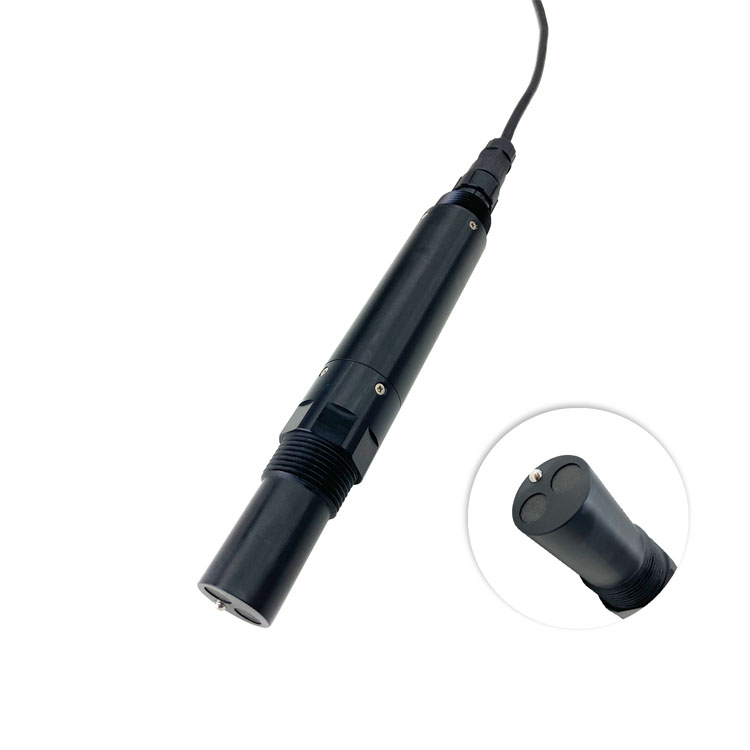
A conductivity probe measures the electrical behavior of the water around its electrodes. Partial immersion, retained gas or heavy deposits can change that condition. A correctly powered instrument may therefore return a repeatable but unrepresentative value if the installation creates an empty pocket or isolates old water.
Trace the proposed liquid path during normal flow, low flow and shutdown. Check whether the sensing region remains wetted and exchanges water. The ammonium probe below has a different sensing assembly; a mounting or cleaning arrangement used for it is not automatically appropriate for a conductivity cell.
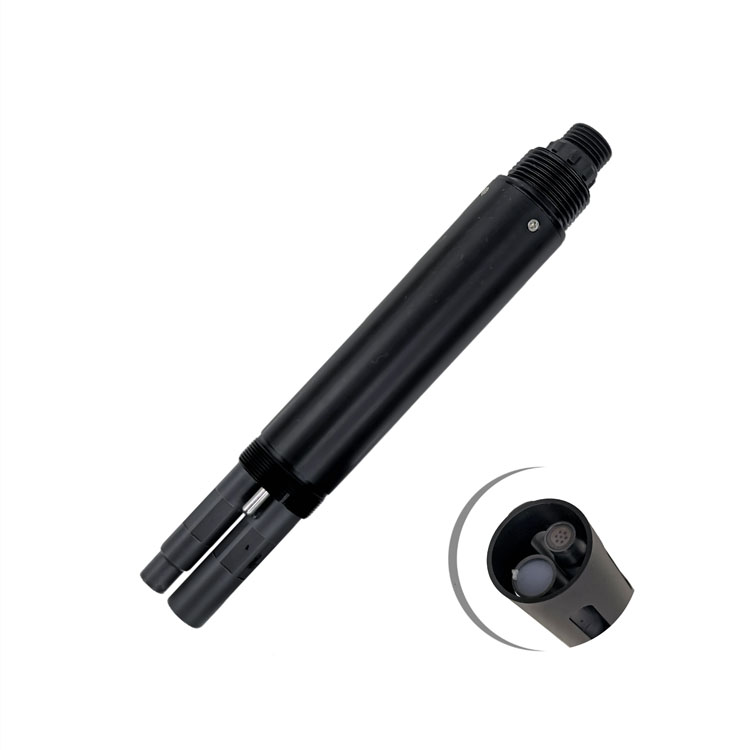
Establish the expected band and credible maximum, then compare accuracy at the decision threshold. A sensor may fit mechanically while its selected span is unsuitable. Basic EC range options and a dedicated salinity configuration, such as the one below, must remain identifiable in the order and controller.
Conductivity, TDS and salinity are not interchangeable names for the same reported number. Do not select an assembly from its stainless-steel appearance or assume that EC identifies the dissolved chemicals. The conductivity range-selection guide covers the threshold decision separately.
| Item | NBL-WQ-EC-4A | Installation implication |
|---|---|---|
| Range / resolution | 0-5000 uS/cm; 1 uS/cm | Do not substitute another EC-family span without identifying the configuration. |
| Accuracy | +/-1.5% F.S.; temperature +/-0.3 degrees C | Full-scale accuracy is not a percentage of the current reading. |
| Working liquid | 0-50 degrees C; pressure below 0.6 MPa | Check operating conditions and the complete fitting assembly. |
| Wetted materials | ABS / SUS316L in the default configuration | Assess the actual chemicals, seals and cable jacket. |
| Mounting / protection | Immersion or pipe installation with 3/4 NPT thread; IP68 | Support the probe and protect external joints and terminations separately. |
| Supply / consumption | 12-24 V DC; 0.2 W at 12 V | Verify voltage at the installed probe under load. |
| Output | RS485 Modbus RTU; optional 4-20 mA | Order the required interface and verify its wiring. |
| Compensation / cable | Pt1000 automatic temperature compensation; standard 5 m cable | Record the reporting convention and protect the cable route. |
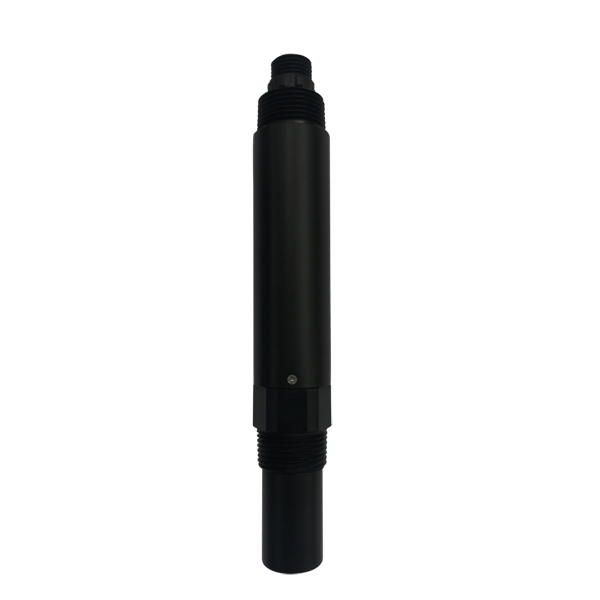
A pipe position should provide a filled sensing region through the operating states that matter. Gas can collect at a high point, while a low pocket can collect settled material. Check the actual pipe geometry rather than adopting a universal top, bottom or side rule without reviewing water contact.
For immersion, keep the electrodes away from a sludge bed and provide adequate clearance from structures. Verify the model's specified clearance rather than copying dimensions from an optical probe. A guard or sleeve must not create a stagnant chamber around the conductivity cell.
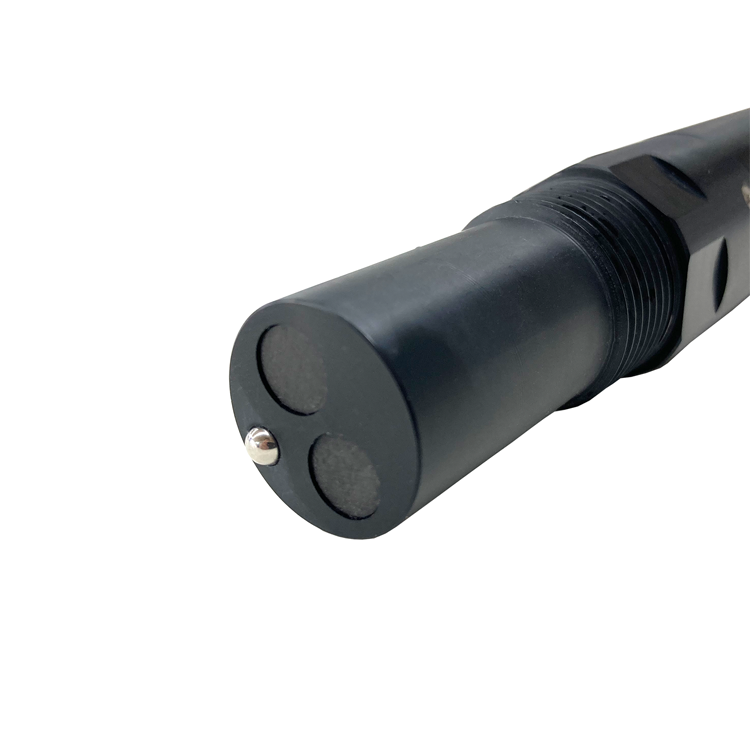
A side stream can make inspection easier, but its flow and temperature may differ from the main process. Cooling, gas release, chemical reaction or contamination in the line can change the measured water. Identify whether the required result describes the process or the conditioned sample.
Do not add filtration, dilution or chemical cleaning upstream merely to protect an electrode without considering the measurement. A changed sample can be easier to measure but answer a different question. Use an independent comparison at the intended boundary when accepting the sampling arrangement.
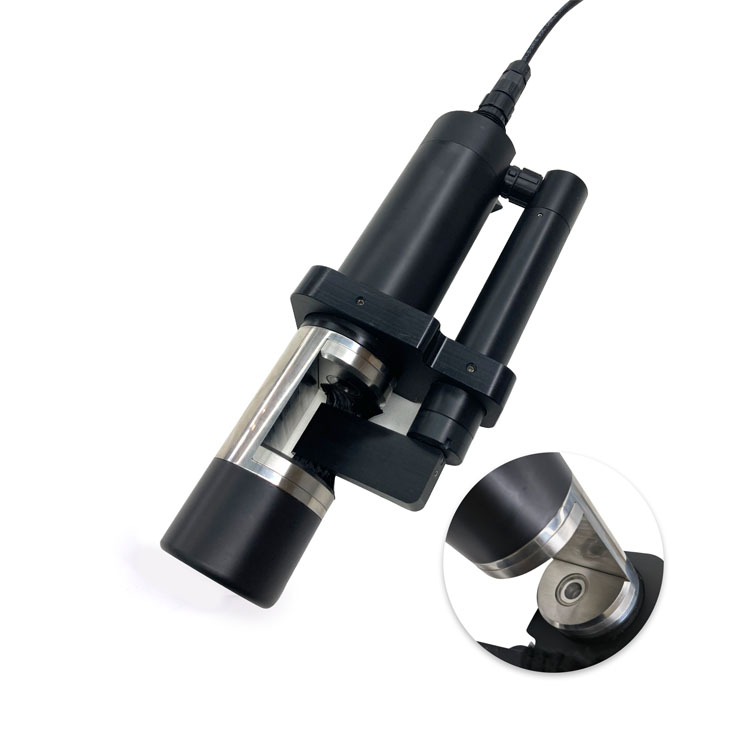
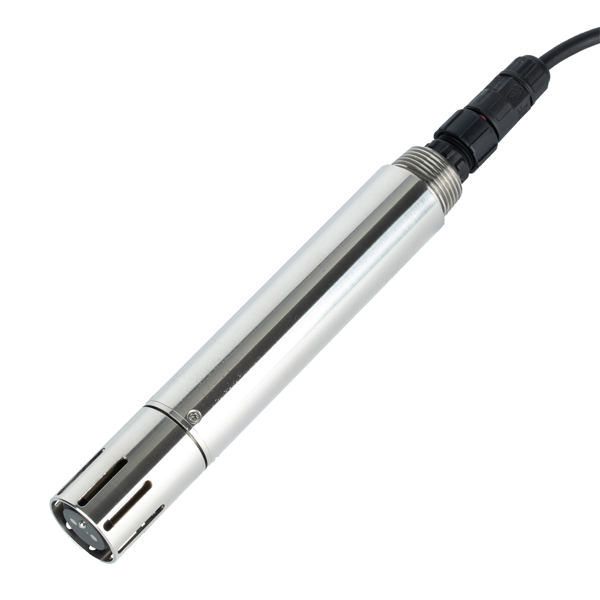
The transparency instrument above is an optical measurement with its own water path and clearance requirements. In a multiparameter installation, mechanical proximity does not establish that all channels see equivalent samples. Decide which probes can share a vessel and which need separately controlled arrangements.
Allow safe removal, inspection and refitting without pulling the sensor cable or changing the established immersion. Protect joints against water ingress and strain. For any mounting exposed to pressure, use an isolation and service arrangement designed for the site rather than treating the thread or IP68 rating as a removal procedure.
Choose cleaning and verification for the exact electrode, not a generic 24-hour activation soak copied from another technology. After service, check water contact, geometry, temperature and reference performance before changing calibration. The EC cleaning and calibration guide addresses those checks.
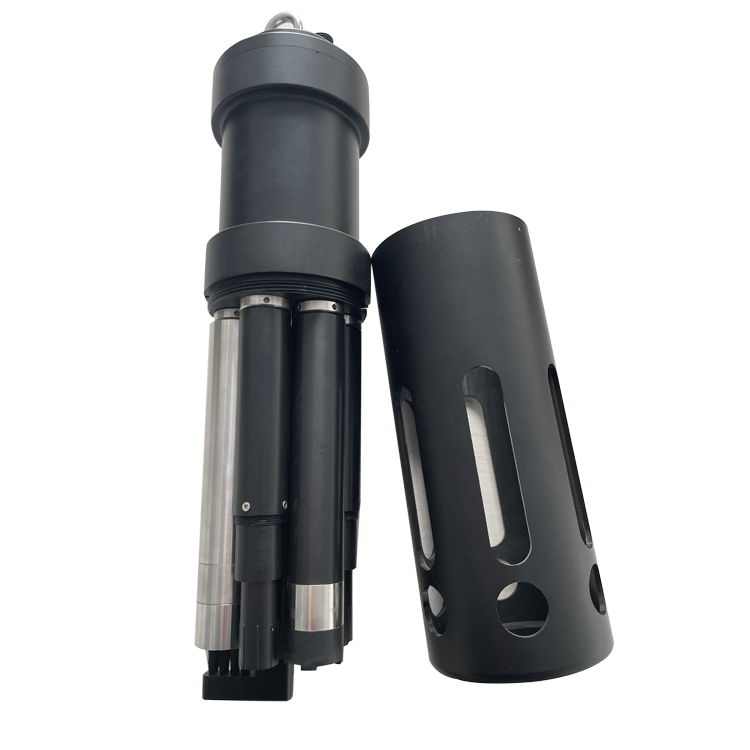
Compare the probe's direct result with the receiving PLC or logger over RS485 Modbus RTU. A correctly decoded value that changes with bubbles or water level calls for a different investigation from a timeout or wrong decimal scale. Network design, termination and shielding should match the actual installation; avoid fixed-distance promises.
The multiparameter assembly above and chlorine probe below have different sample requirements from EC-4A. Keep channel identity, status and reference procedures separate. One successful bus reply or one clean sensor cannot validate every measurement in the station.
No. Check sensor pressure and temperature, the complete cell or fitting, materials, sealing and the site's isolation arrangement. The thread size is only one part of mechanical suitability.
Do not assume that. The identified EC-4A specification is 0-5000 uS/cm. Select and document another configuration where the measurement requires a different span.
No. Check immersion, bubbles, deposits, sample temperature and controller interpretation first. Calibration cannot repair a measurement region that intermittently fills with gas.
No. Establish representative exchange and evaluate temperature, chemical changes and transport conditions. Verify the sample arrangement against the intended process observation.
Provide the selected model and range, expected water chemistry, temperature and pressure, pipe or vessel drawing, normal and low-flow states, cable route and receiving interface. NiuBoL can assess probe fit and sampling conditions before the mounting is finalized.
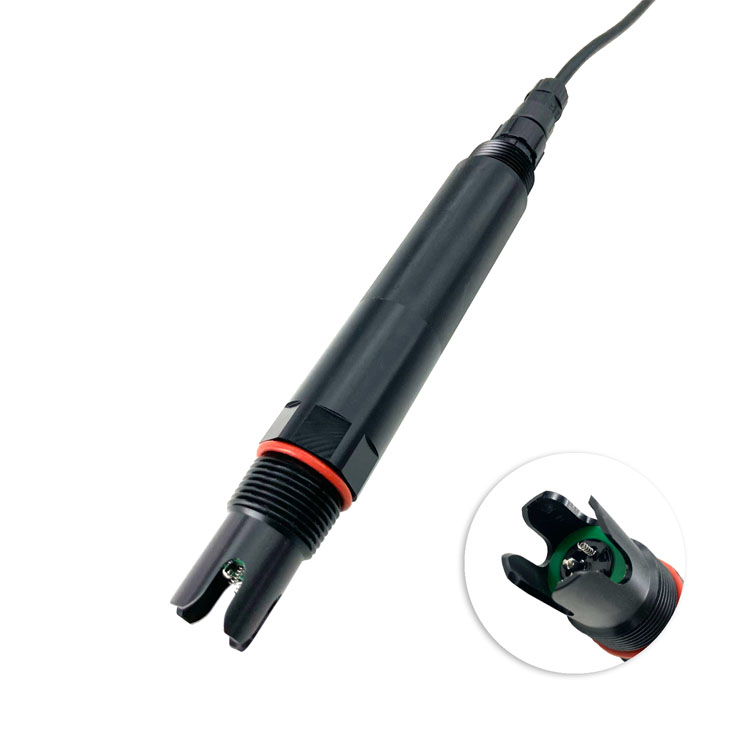
Conductivity sensor installation succeeds when the exact probe measures representative water through normal operation and service recovery. Resolve gas, deposits, clearance and sample conditioning before treating a stable output as an accepted process value. Keep the EC-4A specification separate from other EC and multiparameter configurations.
 NBL-WQ-CL Water Quality Sensor Online Residual Chlorine Sensor.pdf
NBL-WQ-DO Online Fluorescence Dissolved Oxygen Sensor.pdf
NBL-WQ-NHN Ammonia Nitrogen Water Quality Sensor.pdf
NBL-WQ-COD Online Water Quality COD Sensor.pdf
NBL-WQ-PH Online pH Water Quality Sensor.pdf
NBL-WQ-EC water quality conductivity sensor.pdf
Prev:Optical DO Sensor Startup: Verify Recovery After Power or Cap Changes
Next:Online pH Meter Acceptance: Resolution, Accuracy and Application Claims
Related recommendations
Sensors & Weather Stations Catalog
Agriculture Sensors and Weather Stations Catalog-NiuBoL.pdf
Weather Stations Catalog-NiuBoL.pdf
Agriculture Sensors Catalog-NiuBoL.pdf
Water Quality Sensor Catalog-NiuBoL.pdf
Related products
 Combined air temperature and relative humidity sensor
 TDR Soil Moisture & Temperature Sensor for irrigation| RS485 |4-20mA| NBL-S-THR
 Soil pH sensor RS485 soil Testing instrument soil ph meter for agriculture |NBL-S-PH
 Wind Speed sensor Output Modbus/RS485/Analog/0-5V/4-20mA
 Tipping bucket rain gauge for weather monitoring auto rainfall sensor RS485/Outdoor/stainless steel
 Pyranometer Solar Radiation Sensor 4-20mA/RS485

Screenshot, WhatsApp to identify the QR code
WhatsApp number:+8615367865107
(Click on WhatsApp to copy and add friends)

