





— Blogs —
—Products—
 Consumer hotline +8618073152920
 WhatsApp:+8615367865107
Address:Room 102, District D, Houhu Industrial Park, Yuelu District, Changsha City, Hunan Province, China
Product knowledge
Time:2026-05-31 12:04:12 Popularity:393
Quick Answer: Industrial pH sensor control depends on a valid measurement and a process that has time to respond. Mixing, sample transport, electrode stabilization and controller updates contribute different delays. Verify those stages before changing dosing logic; faster Modbus polling does not make the reaction or the electrode settle faster.
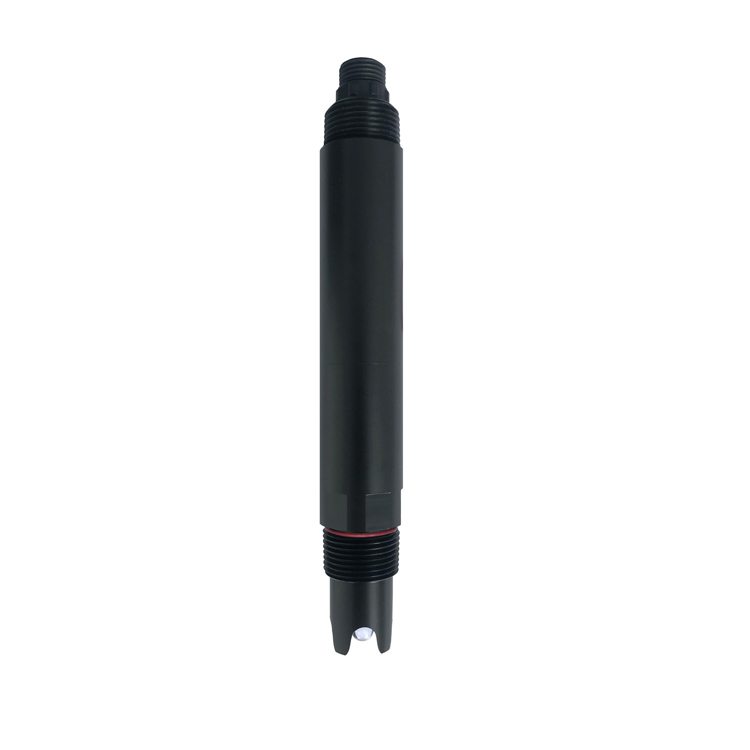
A dosing change first affects water near the addition point. Mixing distributes that change through the process, the measuring point observes its local condition and the acquisition system reports the sensor's response. If a sample line is used, transport adds another delay. These stages should be identified before a control loop is tuned.
A probe beside an injection point may report a chemical slug instead of representative process water. A distant sample can be representative but late. Both arrangements can produce excessive corrections if the controller repeatedly acts before the previous addition has been measured. Locate the observation according to the process decision rather than the shortest cable route.
| Parameter | Basic NBL-WQ-PH | PH-4A / PH-4S |
|---|---|---|
| Measuring range / resolution | 0-14 pH; 0.01 pH | 0-14 pH; 0.01 pH |
| Accuracy | +/-0.1 pH; temperature +/-0.3 degrees C | +/-0.1 pH; temperature +/-0.3 degrees C |
| Temperature compensation | NTC | Pt1000 |
| Water temperature / pressure | 0-65 degrees C; below 0.2 MPa | 0-50 degrees C; at or below 0.2 MPa |
| Materials | POM | 4A: POM/ABS; 4S: POM/316L |
| Output / supply | RS485 Modbus RTU; 12-24 V DC | RS485 Modbus RTU; optional 4-20 mA; 12-24 V DC |
| Power / mounting / cable | 0.2 W at 12 V; immersion, 3/4 NPT; standard 5 m cable | 0.2 W at 12 V; immersion, 3/4 NPT; standard 5 m cable |
| Protection / calibration | IP68; two-point calibration | IP68; two-point calibration |
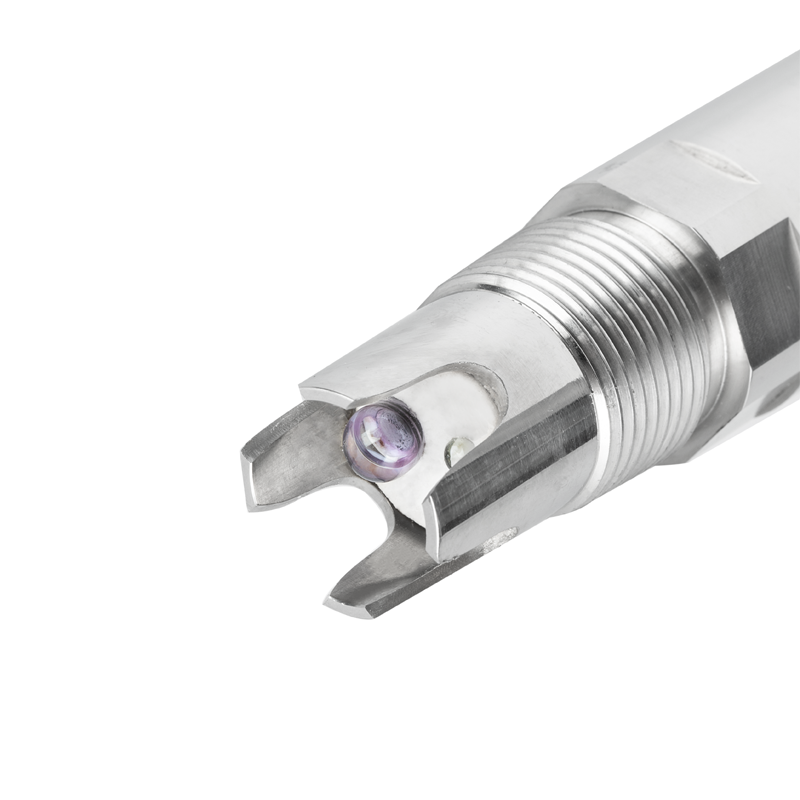
The basic NBL-WQ-PH is not a PH-4 with a different housing name. Check the exact model, chemical exposure, seals and cable jacket. A complete control arrangement also needs appropriate mounting and service access; the probe's IP68 rating does not rate the entire cabinet or pressurized assembly.
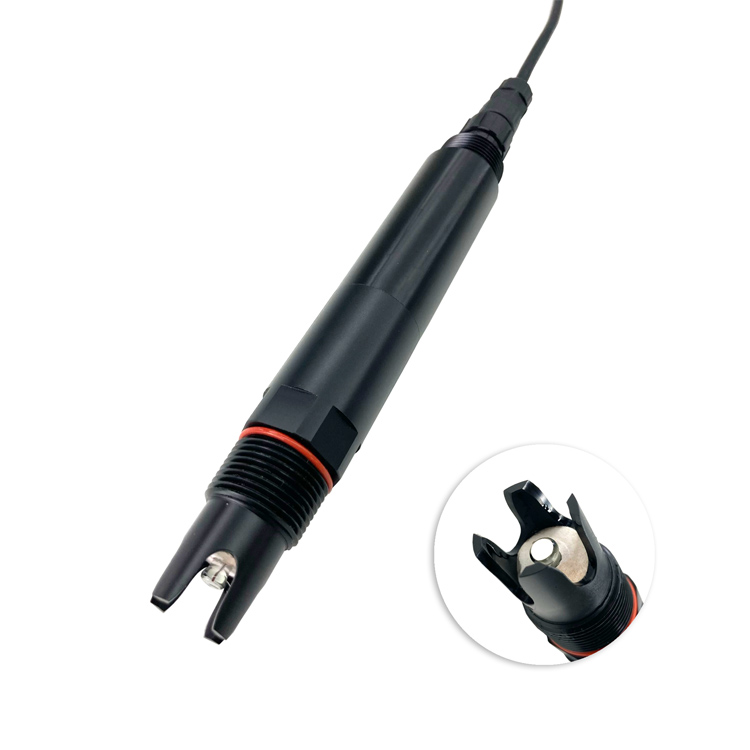
Compare the probe location with the reagent addition, mixing and outlet. Record whether the tank is filling, reacting or discharging when a pH change occurs. If the process alternates states, one fixed controller response may not be appropriate throughout. Do not infer chemical consumption or discharge compliance from the probe's nominal accuracy alone.
Evaluate the actual chemistry and whether reaction or mixing continues after dosing stops. A return sample may no longer represent the reactor if cooling, gas release or phase separation changes it. Confirm the measurement boundary before treating the returned result as the reactor pH.
A local addition can take time to reach a return-water point; an environmental station may observe a changing stream without controlling it at all. Distinguish a trend used for diagnosis from feedback used to command an actuator. A remote monitoring channel should not be promoted into automatic control without reviewing its delay and validity.
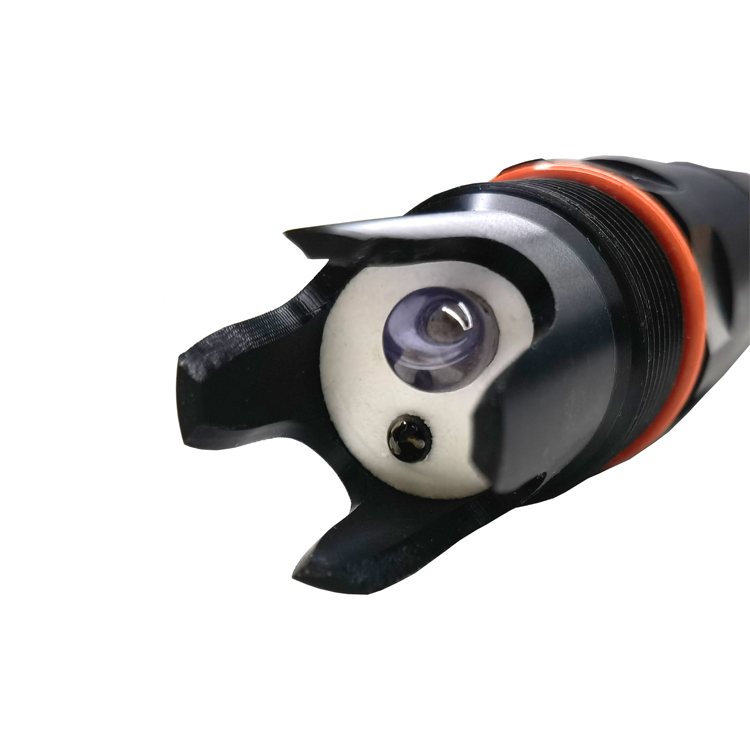
Automatic temperature compensation addresses the electrode response, not every temperature-related change in water chemistry. There is no universal pH-per-degree correction applicable to all process waters. Record pH and temperature together; use the pH temperature-compensation guide for the detailed distinction.
A fouled or inadequately prepared electrode can respond slowly even when the process mixes well. Check the glass, reference junction and correct storage or preparation before blaming the controller. Do not impose a universal 24-hour distilled-water soak. For the basic PH, avoid long-term storage in pure water and use the specified electrode storage arrangement.
Verify with appropriate buffers, using their values at the actual temperature and allowing the assembly to stabilize. A passed buffer check and a representative process comparison answer different questions. The pH calibration-check guide explains when adjustment is justified rather than using calibration to conceal a delay.
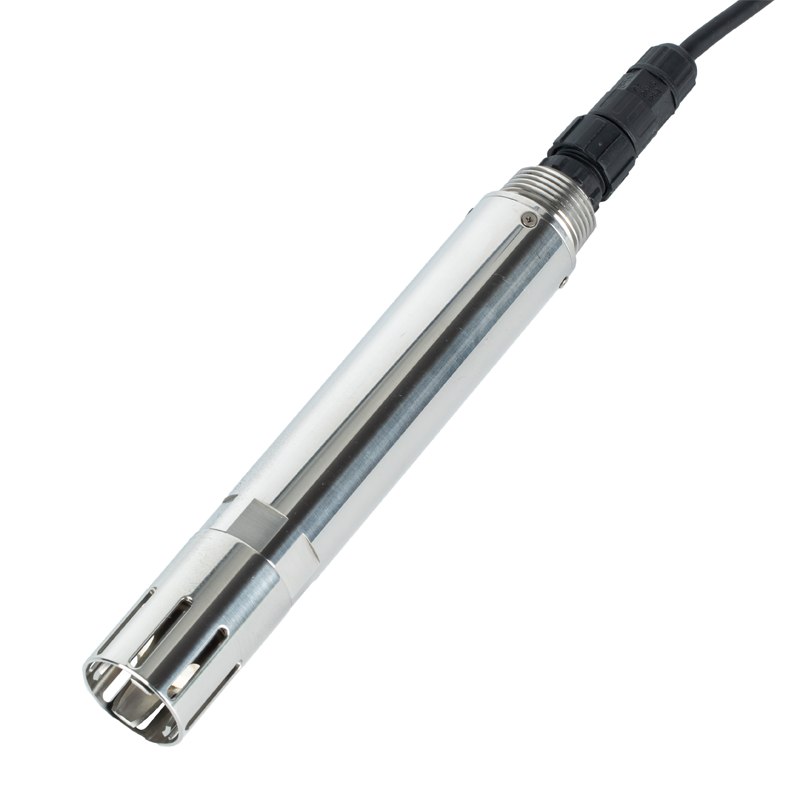
A PLC or RTU can request pH and temperature through RS485 Modbus RTU, but a rapid scan may return successive values before the water and electrode have reached the new condition. Log command changes, sensor values, acquisition time and process state on an aligned time base when investigating the loop.
Check that the remote display decodes the supplied register format and does not retain a last value without a stale-data indication. A direct probe reading that changes while the PLC remains fixed points to a different fault from a slow electrode. Establish the valid measurement before altering control parameters.
Do not select a dosing limit or controller setting solely from a general article. The process engineer must define the permitted actions, actuator constraints and failure response for the actual plant. The pH probe supplies one measurement input; it does not independently establish process safety or product quality.
Not if mixing, transport or electrode stabilization is the limiting delay. Verify each stage and the controller's use of the data before changing the scan interval or tuning.
First distinguish electrode condition, sample delivery and real process delay. Calibration changes the measurement relationship; it does not shorten a sample line or improve mixing.
No. The configurations have different compensation elements, materials, temperature limits and output options. Select the assembly for the actual duty rather than treating the element name as a general performance ranking.
Only after the complete feedback duty is assessed, including location, sample delay, measurement validity and controller failure behavior. A useful trend channel is not automatically a suitable control measurement.
Provide the process diagram, addition and measurement points, mixing and sample arrangement, normal and upset chemistry, temperature and pressure, expected changes, receiving interface and intended control duty. NiuBoL can review the sensor configuration while the process team defines the control strategy.
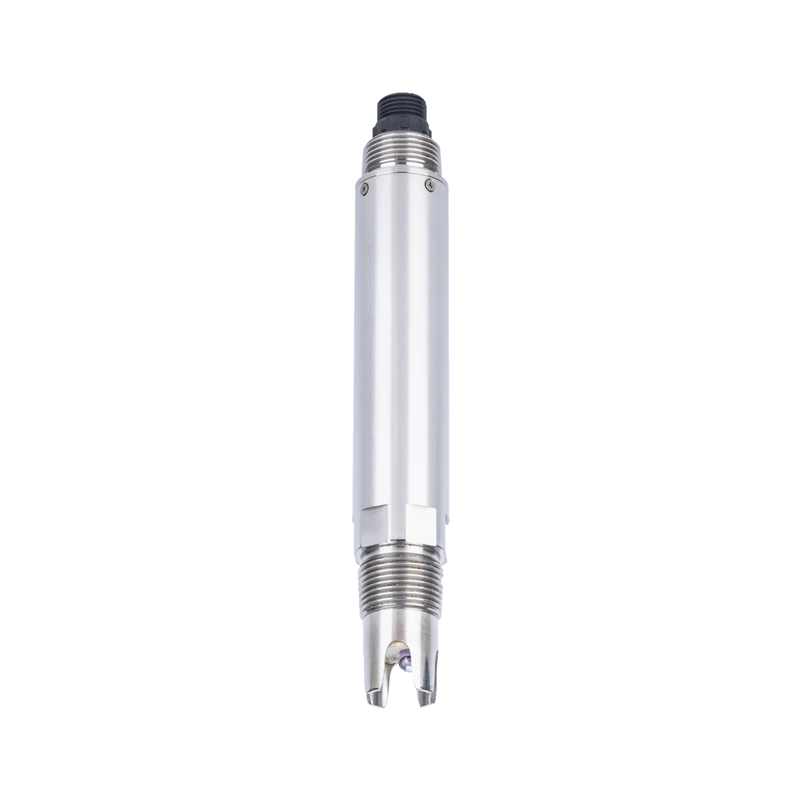
Industrial pH sensor control should be commissioned as a chain from process change to valid acquired observation. Select the exact probe, distinguish chemical and measurement effects, and identify mixing and sample delays before tuning. This gives the control engineer a usable input without attributing the whole process response to sensor speed or temperature compensation.
 NBL-WQ-PH Online Water Quality pH Sensor.pdf
Prev:Conductivity Sensor Calibration After Cleaning: Zero, Slope and Reinstallation
Next:Optical DO Sensor Startup: Verify Recovery After Power or Cap Changes
Related recommendations
Sensors & Weather Stations Catalog
Agriculture Sensors and Weather Stations Catalog-NiuBoL.pdf
Weather Stations Catalog-NiuBoL.pdf
Agriculture Sensors Catalog-NiuBoL.pdf
Water Quality Sensor Catalog-NiuBoL.pdf
Related products
 Combined air temperature and relative humidity sensor
 TDR Soil Moisture & Temperature Sensor for irrigation| RS485 |4-20mA| NBL-S-THR
 Soil pH sensor RS485 soil Testing instrument soil ph meter for agriculture |NBL-S-PH
 Wind Speed sensor Output Modbus/RS485/Analog/0-5V/4-20mA
 Tipping bucket rain gauge for weather monitoring auto rainfall sensor RS485/Outdoor/stainless steel
 Pyranometer Solar Radiation Sensor 4-20mA/RS485

Screenshot, WhatsApp to identify the QR code
WhatsApp number:+8615367865107
(Click on WhatsApp to copy and add friends)

