





— Blogs —
—Products—
 Consumer hotline +8618073152920
 WhatsApp:+8615367865107
Address:Room 102, District D, Houhu Industrial Park, Yuelu District, Changsha City, Hunan Province, China
Product knowledge
Time:2026-02-13 15:23:03 Popularity:520
In the context of large-scale construction of photovoltaic power stations and refined management of O&M costs, the photovoltaic power station dust monitoring system has become a core sensing device for system integrators, IoT solution providers, project contractors, and engineering companies to improve power generation efficiency. These systems quantify Soiling Ratio (SR value) attenuation, transmittance loss, and dust thickness caused by dust on module surfaces in real time through optical closed-loop measurement, supporting RS485/MODBUS RTU protocol, 4G/5G wireless transmission, and MQTT protocol, ensuring seamless integration into existing SCADA systems, inverter monitoring platforms, or cloud AI O&M platforms.
NiuBoL provides high-precision photovoltaic power station dust monitoring equipment tailored to various typical conditions such as desert sandstorms, coastal salt spray, and high-humidity agri-PV complementarity, helping engineering projects shift from periodic manual cleaning to data-driven predictive maintenance, quantifying power generation losses due to dust accumulation and dynamically optimizing cleaning cycles.
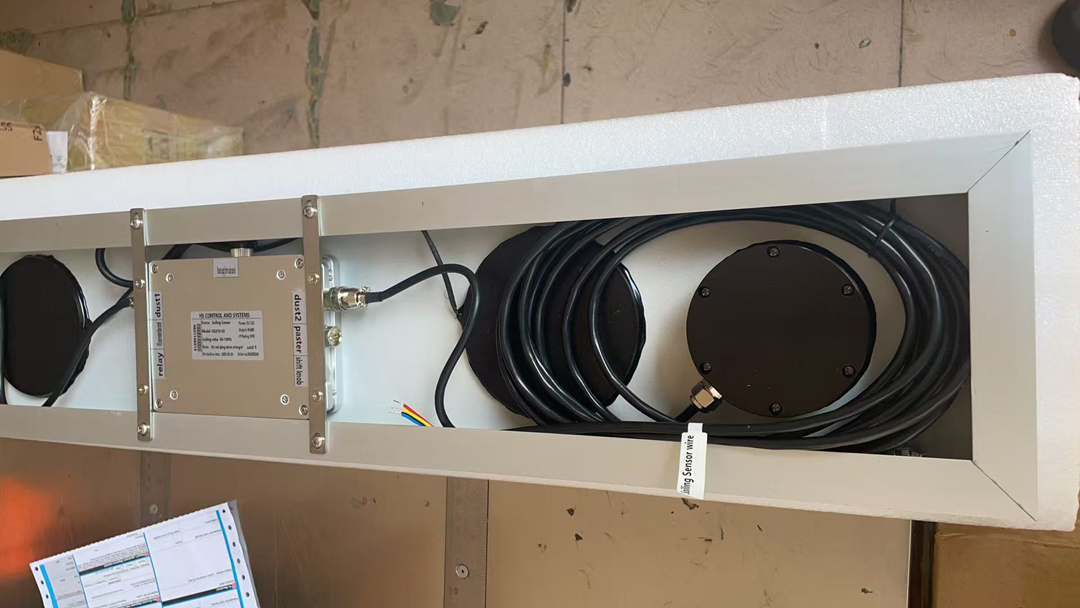
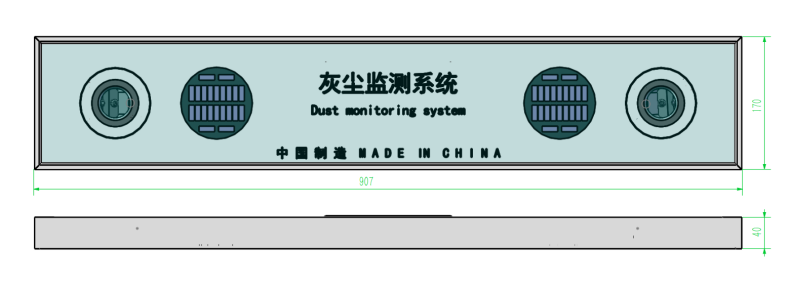
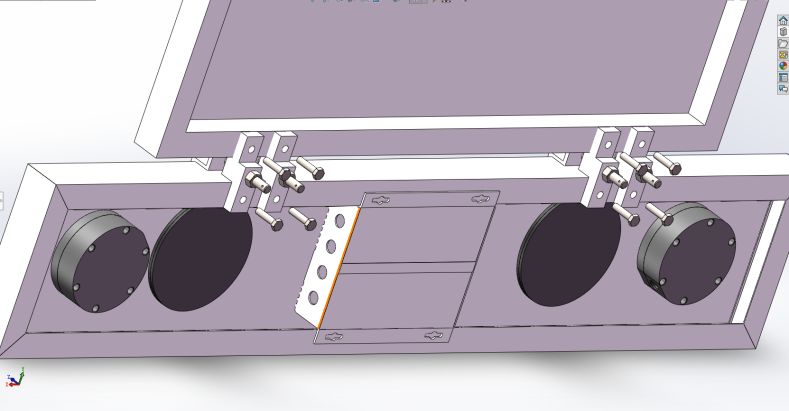
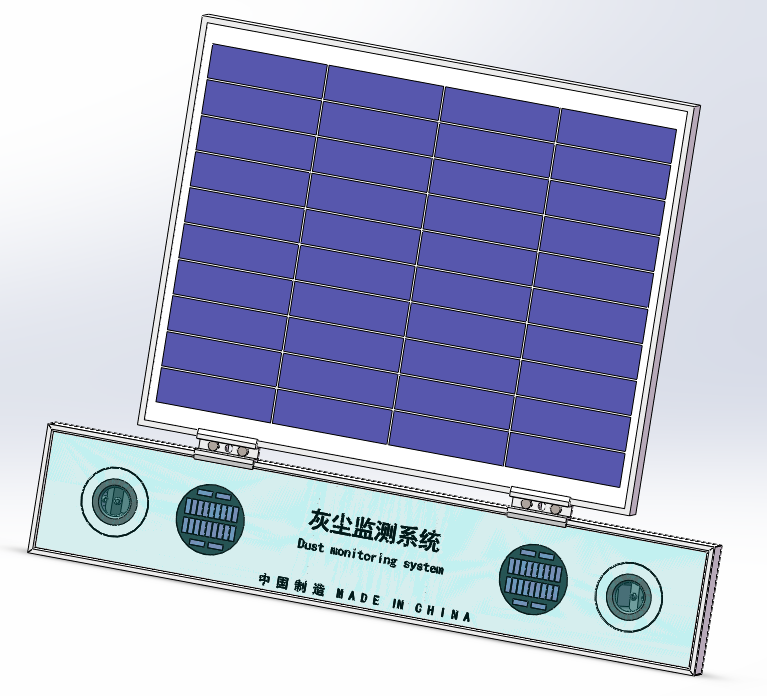
NiuBoL photovoltaic power station dust monitoring equipment adopts a dual-probe optical closed-loop measurement principle (reference probe kept clean, soiling probe exposed to natural dust accumulation environment), real-time calculation of Soiling Ratio (SR, from 1.0 fully clean to near 0 fully blocked) and transmittance attenuation percentage. The device samples dust thickness estimation values at second-level intervals and integrates auxiliary parameters such as module backsheet temperature, ambient temperature and humidity, wind speed and direction, forming a complete dust impact dataset.
The system has a built-in dust-attenuation-cost economic model, combined with historical SR curves, local meteorological forecast data, and CFD (computational fluid dynamics) dust deposition simulation algorithms, to predict dust accumulation trends and power generation loss curves for the next 7-30 days. When predicted power generation loss exceeds the preset cleaning cost threshold, it automatically generates optimized cleaning recommendations (including cleaning timing, priority areas, and expected benefits). Data is uploaded to the cloud platform via 4G/5G module or RS485 gateway, supporting full-station pollution heat maps, time-series trend analysis, and power generation loss quantification reports. O&M personnel can remotely view via web backend or mobile APP.
Compared with traditional manual inspection or fixed-cycle cleaning, the system controls monitoring error within ±2-5%, supports 24-hour continuous operation (including nighttime隐性 attenuation caused by dew condensation), and is particularly suitable for multi-sandstorm desert power stations, coastal high-salt-spray areas, and distributed rooftop photovoltaic projects. Long-term deployment data shows that in severely dust-affected northwest regions, system-assisted optimization can reduce annual power generation loss to within 3%, significantly improving power station IRR (internal rate of return).
The following table summarizes the typical specifications of NiuBoL photovoltaic power station dust monitoring equipment (supports project customized configurations):
| Parameter | Range/Specification | Remarks |
|---|---|---|
| Soiling Ratio (SR) | 0~1.0 | Dual-probe optical closed-loop, reference/soiling comparison |
| Transmittance Attenuation | 0~100% | Real-time calculation of power generation loss ratio |
| Dust Thickness Estimation | 0~5 mm | Based on optical attenuation and thickness model |
| Module Backsheet Temperature | -40~+100℃ | PT100 or NTC digital sensor |
| Ambient Temperature | -40~+80℃ | Built-in radiation shield |
| Relative Humidity | 0~100%RH | High-humidity compensation algorithm |
| Wind Speed | 0~60 m/s | Optional ultrasonic module |
| Power Supply Method | DC 9-24V / Solar + Battery | Average power consumption<1W |
| Communication Interface | RS485 / 4G/5G | Supports MODBUS RTU, MQTT, HTTP |
| Protection Rating | IP67 | Corrosion-resistant, salt-spray-resistant, UV-resistant |
| Operating Temperature | -40~+80℃ | All-weather operation |
In digital O&M transformation projects of photovoltaic power stations, system integrators typically use NiuBoL dust monitoring equipment as a key node in the environmental perception layer, forming a data closed loop with existing power station systems. Common integration solutions include:
Array-level dust distribution visualization: Deploy 2-4 sets of equipment per 10-20MW array in ground-mounted power stations (edges, middle, areas prone to shadow dust accumulation), aggregate data via RS485 bus or gateway. After accessing the cloud platform, integrators use GIS engine to generate real-time pollution heat maps, accurately identifying high-attenuation areas. In desert power stations, the system can locate pollution gradients within 1 hour after a sandstorm, guiding drones or rail cleaning robots for priority operations and avoiding resource waste from uniform full-field cleaning.
Predictive cleaning decision and economic optimization: Link equipment SR data with real-time inverter power generation and irradiance data, input into the “dust – power generation loss – cleaning cost” model. Integrators can configure threshold rules: when cumulative loss exceeds preset economic threshold (e.g., 0.8-1.5 CNY/kWh cleaning cost), automatically push cleaning work orders to O&M APP and recommend optimal windows (combined with weather forecasts to avoid secondary pollution after rain). In coastal salt-spray power stations, the model can identify “salt-dust hard shell layer” formation patterns, dynamically adjust thresholds, and optimize cleaning cycles from 30 days to 20-25 days.
Compatible integration with mainstream inverters and SCADA systems: Supports MODBUS RTU/TCP protocol, directly interfacing with Huawei SmartLogger, Sungrow, Growatt inverter collectors; accesses Siemens WinCC, ABB Ability, or self-built private clouds via MQTT or OPC UA interfaces. IoT solution providers can standardize SR values into JSON format, integrate with power station BOS (business operation system), achieving differentiated diagnosis of dust attenuation from module aging and junction box faults.
Adaptation for distributed and agri-PV complementarity projects: Rooftop or agri-PV complementarity power stations mostly use standalone 4G equipment, with low-power design compatible with solar power supply. Integrators can combine data with crop growth models to evaluate the impact of dust shading on underlying agricultural output, supporting centralized monitoring platforms for multiple power stations.
When selecting, system integrators should evaluate based on power station geographic location, dust characteristics, and O&M mode:
Desert/multi-sandstorm areas: Prioritize high-frequency sampling (second-level update), sand-dust-resistant shell models, mandatory SR, dust thickness, wind speed and direction modules; recommend 2-3 sets per 10MW array.
Coastal/high salt-spray high-humidity areas: Choose IP67 corrosion-resistant type, emphasize humidity compensation and backsheet temperature sensors to monitor salt-dust composite layers.
Distributed rooftop/agri-PV complementarity projects: Recommend low-power 4G standalone type, support battery + solar; integrate humidity sensors to evaluate dew condensation impact.
Communication and expansion requirements: Good network coverage selects RS485+4G; remote areas prioritize LoRaWAN. For deep predictive analysis, choose models supporting API output and historical data interfaces.
Accuracy and long-term stability: High requirements for power generation loss quantification select equipment with SR accuracy ±2%; reserve interfaces for irradiance and wind speed expansion. Recommend on-site POC testing to verify compatibility with inverters/SCADA and evaluate MTBF >50,000 hours.
Installation position and angle: Soiling probe fully consistent with module glass tilt and orientation, reference probe placed in dedicated clean cover; avoid array edges or local shadow areas.
Power supply and lightning protection: Use isolated DC 24V supply + SPD surge protection; solar system battery capacity must support 5-7 consecutive rainy days.
Data transmission security: Enable MODBUS RTU encryption or TLS over 4G/MQTT; use NTP protocol to synchronize timestamps and avoid data time deviations.
Optical maintenance and calibration: Clean dual-probe optical surfaces every 1-2 months; perform SR zero/span calibration every 6-12 months using standard dust simulator, recommend cooperation with CNAS institutions.
1. How does the photovoltaic power station dust monitoring system accurately quantify power generation loss?
Calculate loss kWh by multiplying SR value with real-time irradiance and module rated power, support cross-validation with actual inverter power generation data, error <±5%.
2. How is the long-term stability of the equipment in coastal salt-spray or high-humidity environments?
Adopts IP67 corrosion-resistant shell and humidity compensation algorithm, actual tests in salt-spray environments show optical drift
<±5%, optical="" component="" lifespan="">3 years.
3. Which mainstream inverters/SCADA systems does it support interfacing with?
Supports MODBUS RTU/TCP, MQTT protocols, compatible with Huawei, Sungrow, Growatt inverters and Siemens, ABB SCADA platforms.
4. What are the main precautions for installation and deployment?
Probe tilt consistent with module, reference probe kept clean; requires lightning grounding, recommend professional team on-site survey to avoid local interference.
5. How to ensure long-term reliability of optical measurement accuracy?
Dual-probe closed-loop design + periodic calibration; SR accuracy ±2%, built-in self-diagnosis function, automatic alarm for excessive deviation.
6. Which types of photovoltaic power stations is it suitable for?
Covers large ground-mounted power stations, distributed rooftops, agri-PV complementarity, coastal salt-spray areas, and desert sandstorm power stations, supports customization for different dust characteristics.
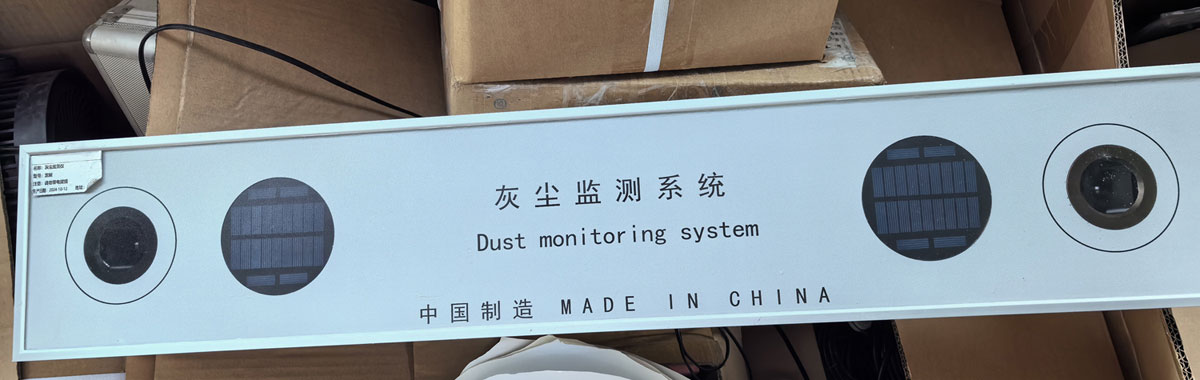
NiuBoL photovoltaic power station dust monitoring system, with high-precision optical closed-loop measurement and intelligent predictive models as its core, provides system integrators with a full-chain solution from dust perception to cleaning decision-making. Through real-time monitoring, heat map analysis, economic optimization, and system-compatible integration, these devices help engineering projects significantly reduce O&M costs, minimize power generation losses, and enhance overall asset returns. Whether for rapid response to sandstorms in desert power stations or early warning of salt-dust composite attenuation in coastal projects, NiuBoL is committed to delivering stable and precise environmental data, supporting the digitalization and green transformation of the photovoltaic industry.
 NBL-W-PSS Soiling Sensor Photovoltaic Dust Monitoring Instrument Data Sheet.pdf
Related recommendations
Sensors & Weather Stations Catalog
Agriculture Sensors and Weather Stations Catalog-NiuBoL.pdf
Weather Stations Catalog-NiuBoL.pdf
Agriculture Sensors Catalog-NiuBoL.pdf
Water Quality Sensor Catalog-NiuBoL.pdf
Related products
 Combined air temperature and relative humidity sensor
 TDR Soil Moisture & Temperature Sensor for irrigation| RS485 |4-20mA| NBL-S-THR
 Soil pH sensor RS485 soil Testing instrument soil ph meter for agriculture |NBL-S-PH
 Wind Speed sensor Output Modbus/RS485/Analog/0-5V/4-20mA
 Tipping bucket rain gauge for weather monitoring auto rainfall sensor RS485/Outdoor/stainless steel
 Pyranometer Solar Radiation Sensor 4-20mA/RS485

Screenshot, WhatsApp to identify the QR code
WhatsApp number:+8615367865107
(Click on WhatsApp to copy and add friends)

