





— Blogs —
—Products—
 Consumer hotline +8618073152920
 WhatsApp:+8615367865107
Address:Room 102, District D, Houhu Industrial Park, Yuelu District, Changsha City, Hunan Province, China
Product knowledge
Time:2026-02-09 16:03:27 Popularity:693
A laser snow depth sensor does not measure snowfall as it falls. It measures the changing distance from a fixed head to the surface below and calculates snow depth against a snow-free reference. That distinction controls the whole installation: the reference patch must remain representative, the mount must not move, and the surface must stay within the instrument's working distance as snow accumulates. For a NiuBoL station, the buyer should define the observation area, communications path and acceptance method before ordering a laser head or a complete mast package.
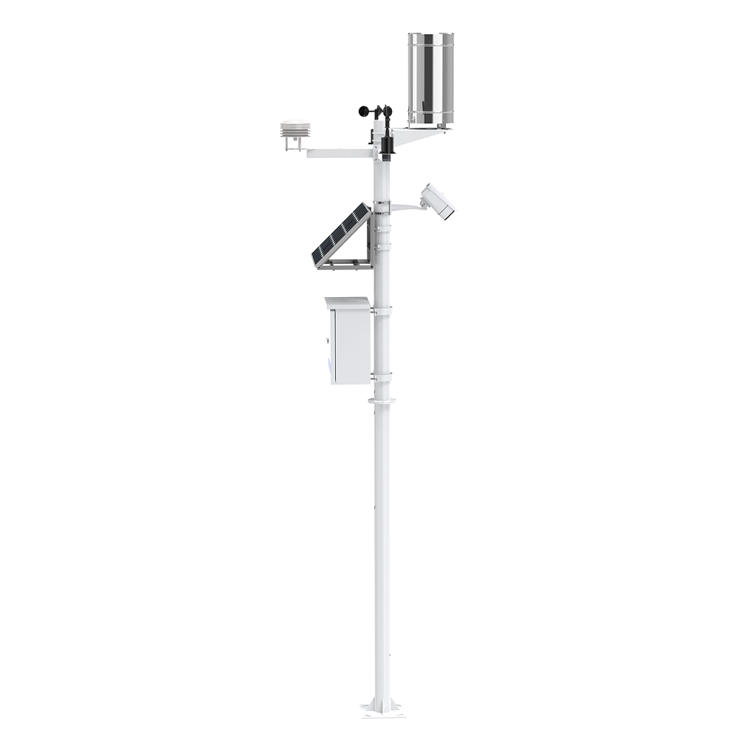
Place the measurement spot away from plowed piles, roof drip, exhaust outlets, vehicle spray, path clearing and drifting created by walls or fences. A laser reads a small patch, not the average snow cover across a road, runway or catchment. If the operational decision concerns a broad area, inspect the local snow distribution and consider more than one point or a manual reference route. The first station photograph shows a possible mast-mounted arrangement, but it does not certify that its ground patch represents another project.
Record coordinates, ground type, slope, surrounding obstructions and the height of the sensor face above the bare surface. A smooth board can provide a stable reference in some research sites, but its thermal and drifting behavior may differ from natural ground. The station owner should choose and document the reference surface that matches the monitoring purpose. Mark it so a grounds crew does not move or cover it. A sensor installed over vegetation may show growth as an apparent loss of clearance even before snowfall begins.
For transport and utility sites, separate snow depth from the actual risk. A depth reading near a track or road does not directly measure adhesion, pavement temperature or structural load. Those decisions need their own instruments, inspection or approved operating rules. The laser channel supplies a time-stamped local observation for that wider assessment.
Write down the maintenance boundary at the patch as well. If a road crew clears snow within a few metres of the head, the subsequent reading may reflect disturbed snow rather than natural accumulation. If a research team wants undisturbed snow, fence or mark the patch without creating a drift trap. For a roof project, consider whether the sensor sees the roof area that governs the structural assessment; one point cannot describe all loading caused by drift. These decisions should be made with the operator before pouring the mast foundation.
During snow-free commissioning, measure the distance from the sensor reference point to the chosen surface with a suitable independent method. Configure or record that zero distance. Snow depth is then the reference distance minus the current measured distance, subject to the model's geometry and compensation. Document whether a positive value means accumulation and how negative values are handled; negative readings can flag ground movement, vegetation or a changed reference rather than actual snow loss.
Calculate the lowest surface position and expected maximum accumulation against the selected sensor's range and near-field limit. NiuBoL's laser snow depth product is presented with a 0.05-2.5 m distance range, RS485 Modbus RTU output and DC 10-30 V supply; confirm the exact order variant and mounting dimensions. A station pole that is tall enough for routine snow may still place the highest drift inside the instrument's near limit. A too-high mounting point can make the snow-free patch fall outside the useful range.
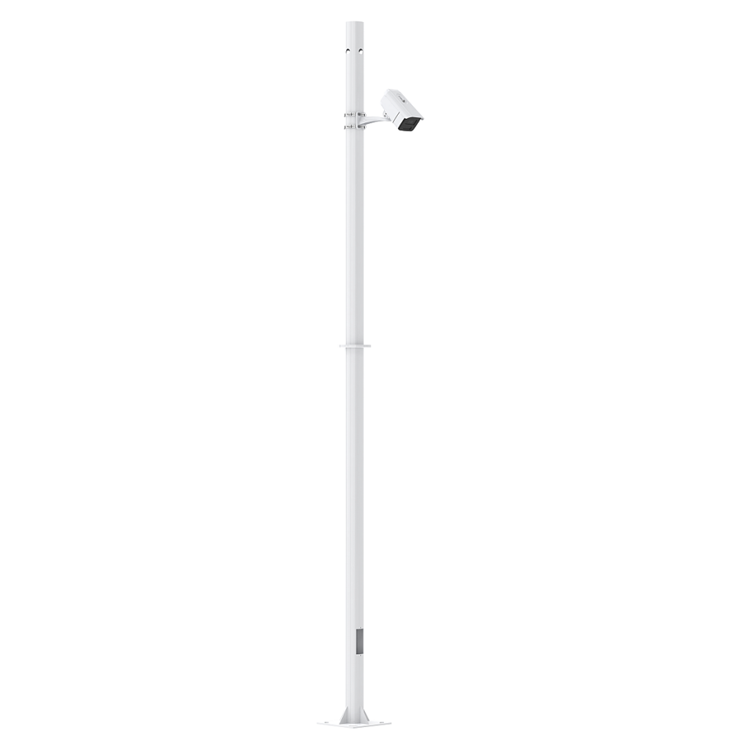
Structural stability matters. If frost heave or a loose bracket changes the head height by 20 mm, the calculated snow depth changes by about the same amount even when the snow has not. Survey or check the mounting reference after pole work and severe weather. The second photograph shows a high pole; its height should be selected from the measurement range and local snow conditions, not copied as a standard dimension.
| Field check | Why it matters | Evidence to retain |
|---|---|---|
| Snow-free reference distance | Sets the zero used in every depth calculation | Measurement date, method and configured value |
| Beam landing point | Defines the small patch represented by the reading | Ground photo and marked position |
| Mount stability | Movement becomes an apparent depth change | Pole and bracket inspection record |
| Highest expected snow | Must remain inside the usable distance range | Range check against site design conditions |
NiuBoL describes its laser snow depth sensor as a phase-method ranging device with a narrow measurement spot. This can help target a defined patch, but it also makes spot selection important: a protruding twig, ice crust, gravel or footprint can dominate the return. A clear optical window is necessary. Snow or ice on the window may attenuate or redirect the beam, and blowing snow can temporarily interrupt the reading. A heater option and tilt compensation are described for the product, but they should be checked against the ordered configuration and power budget, not treated as a reason to omit field inspection.
The nominal ±1 mm accuracy and 1 mm resolution shown on the NiuBoL product page describe the sensor under specified conditions. They do not mean that a field site can determine mean snowpack depth to a millimetre. Patch variability, settling, drifting, mount movement and manual reference uncertainty are separate effects. For a regulatory or research specification, state the required uncertainty for the installed observation and how it will be assessed.
Depth and snowfall are also different quantities. Fresh snow may compact while precipitation continues; the measured depth can stay nearly constant or even decrease. A rise in depth can result from drifting without new precipitation at the site. If the project requires snowfall amount, a precipitation instrument and an agreed observation method are separate scope. Label depth and precipitation charts separately so an operator does not interpret every depth change as a precipitation total.
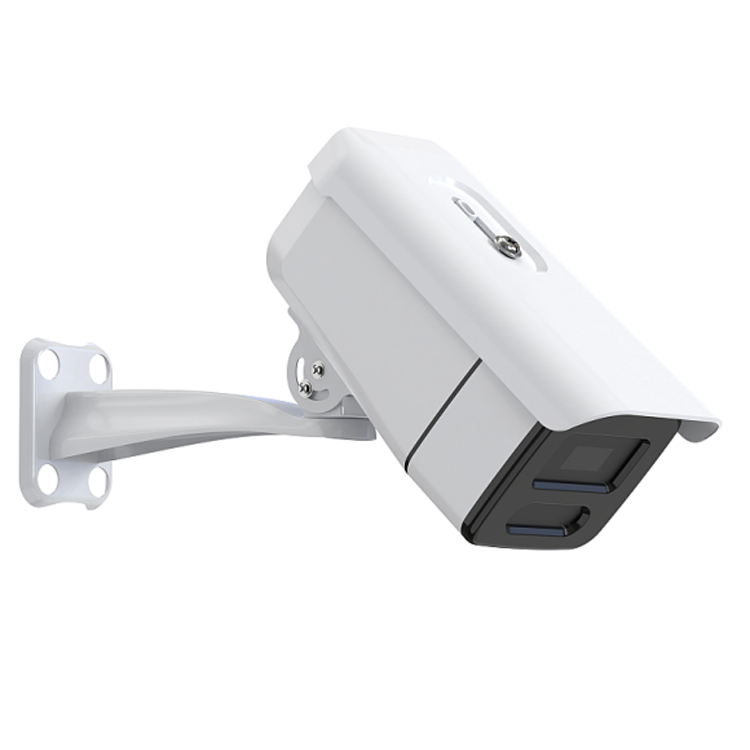
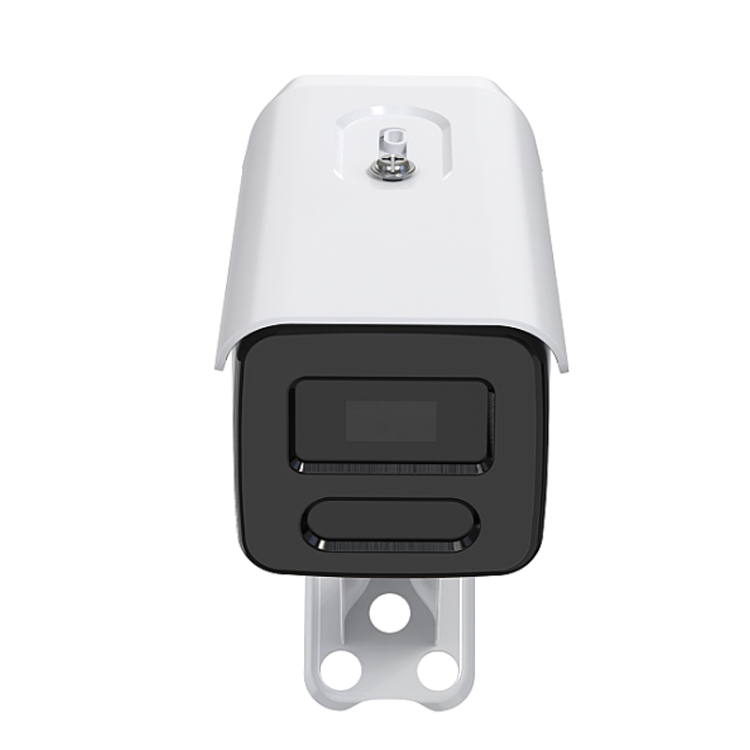
The two close-up photographs show the sensing head and bracket. Keep the beam pointed at the recorded patch, with no mast cable, guy wire or solar panel edge in its path. Tilt compensation cannot correct a beam that lands on the wrong surface. Avoid direct viewing of the laser aperture when setting the beam position and follow the supplied laser-safety instructions.
Use the ordered instrument's RS485 Modbus RTU register map to configure the data logger or RTU. Document address, baud rate, unit, scale, polling interval and diagnostic state. Keep raw distance, calculated depth and sensor health available where the logger supports them. A remote platform also needs a timestamp, station ID and the reference-distance version. If the zero is changed after maintenance, record the change so the time series remains interpretable.
Cellular or other remote reporting is a separate gateway function. Decide whether the station needs local storage during an outage and how missing samples are represented. A sensor that returns no echo must not be reported as zero snow. The system should distinguish no snow, invalid echo, disconnected RS485 and stale communications. Test those states at commissioning and in the receiving application.
At a solar-powered site, calculate energy demand for the head, any heater, logger and modem under the project's sampling and transmission schedule. Heating can be a meaningful load during the very weather when generation is poor. The product's stated sensor power does not size the complete battery. Locate the panel so it does not shade or drip onto the reference patch.
Before snow, verify the reference distance, live logger value and platform record. During the first snowfall, compare readings with a manual depth measurement at or near the defined patch, noting that a ruler may itself disturb loose snow. Repeat during accumulation, settling and melt. Review unexpected step changes against maintenance visits, wind events and window condition. A sensor can pass an electrical test while measuring a shifted patch or an iced window.
Set a service method for optical cleaning, bracket inspection, reference-patch upkeep and battery checks. After moving the pole or resurfacing the ground, re-establish the snow-free distance instead of continuing the previous zero. For an RFQ, state the snow-depth range, patch type, mast layout, required output, power source, climate and reporting interval. Price the sensor, mount, logger, communications and witnessed field check separately.
No. It measures distance to a surface and derives depth from a reference. Snow water equivalent also depends on density and requires another measurement or defensible model.
Only if its location is representative for the operator's question. Plowing, drifting, shade and traffic can produce different depths over short distances.
The current measured distance may exceed the stored snow-free reference because of mount movement, vegetation change, surface erosion or configuration error. Investigate before clipping the value to zero.
No. Resolution describes the instrument increment. Field uncertainty also includes reference measurement, patch variability, settling, beam position and mount movement.
No. RS485 Modbus RTU is the local instrument interface. Remote access needs a compatible logger or gateway, network service and receiving application.
Recheck the beam landing point, snow-free reference distance, range limits, wiring and the platform's station metadata. The previous zero may no longer apply.
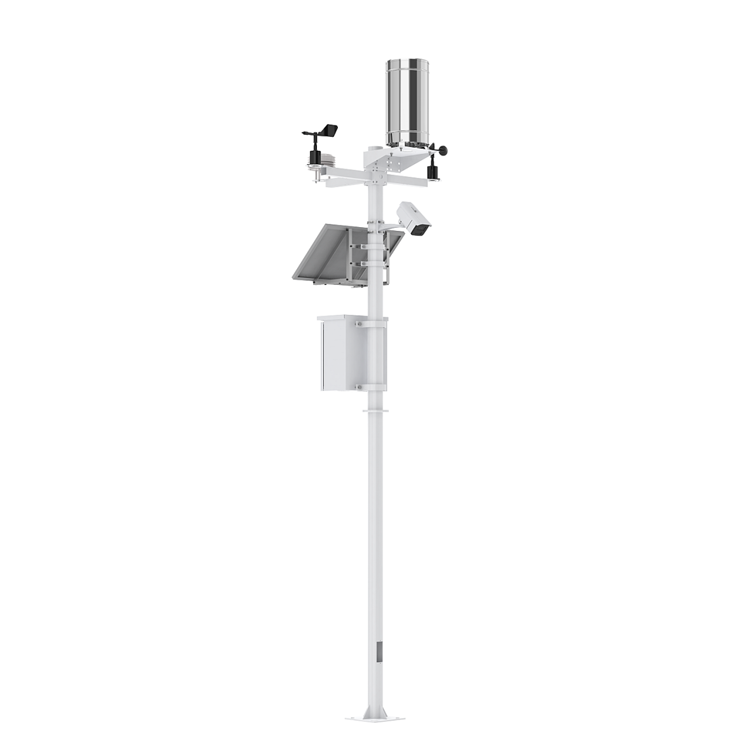
A laser snow depth sensor is most useful when its zero reference and small measurement patch remain stable and documented. NiuBoL can supply the optical head and compatible field interface; the installer must verify range, mounting, fault states and snow-season behavior before treating the time series as an operational observation.
Prev:Street Lamp Weather Station Siting for Urban Microclimate Networks
Next:Laser Snow Depth Sensor Troubleshooting: Jumps, Dropouts and Frozen Values
Related recommendations
Sensors & Weather Stations Catalog
 Agriculture Sensors and Weather Stations Catalog-NiuBoL.pdf
Weather Stations Catalog-NiuBoL.pdf
Agriculture Sensors Catalog-NiuBoL.pdf
Water Quality Sensor Catalog-NiuBoL.pdf
Related products
 Combined air temperature and relative humidity sensor
 TDR Soil Moisture & Temperature Sensor for irrigation| RS485 |4-20mA| NBL-S-THR
 Soil pH sensor RS485 soil Testing instrument soil ph meter for agriculture |NBL-S-PH
 Wind Speed sensor Output Modbus/RS485/Analog/0-5V/4-20mA
 Tipping bucket rain gauge for weather monitoring auto rainfall sensor RS485/Outdoor/stainless steel
 Pyranometer Solar Radiation Sensor 4-20mA/RS485

Screenshot, WhatsApp to identify the QR code
WhatsApp number:+8615367865107
(Click on WhatsApp to copy and add friends)

