





— Blogs —
—Products—
 Consumer hotline +8618073152920
 WhatsApp:+8615367865107
Address:Room 102, District D, Houhu Industrial Park, Yuelu District, Changsha City, Hunan Province, China
Product knowledge
Time:2026-02-13 15:07:46 Popularity:583
In the context of frequent extreme weather, real-time and precise monitoring of snow depth has become a core element in meteorological early warning, traffic dispatching, and aviation safety. Traditional manual observation and ultrasonic measurement methods, limited by environmental interference and measurement blind zones, can no longer meet the stringent requirements of modern Industrial Internet of Things (IIoT) for data continuity and accuracy.
As a professional sensing device manufacturer, NiuBoL's industrial-grade laser snow depth sensor, with its phase laser ranging technology and excellent system compatibility, is rapidly becoming the preferred solution for global system integrators and engineering contractors.
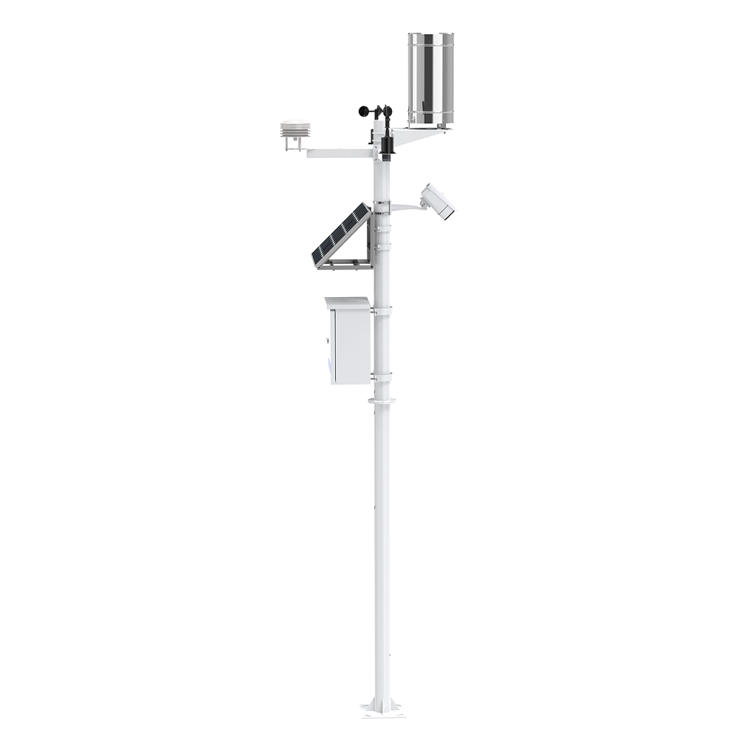
In snow depth measurement engineering selection, differences in technical principles directly determine the delivery quality and maintenance costs of later projects.
1. Millimeter-Level Accuracy and Extremely Strong Environmental Immunity
Traditional ultrasonic sensors rely on sound wave echo, which are highly susceptible to interference from air density, ambient temperature, and strong wind refraction. NiuBoL laser snow depth sensor adopts the phase method laser ranging principle, with laser beams featuring extremely high directionality and energy density. Through built-in temperature compensation algorithms, it solves the stability issues of lasers in severe cold environments. Even under extreme conditions such as blizzards or strong winds, it maintains ±1mm measurement accuracy.
2. Elimination of Measurement Blind Zones and False Target Filtering
Ultrasonic beam angles are large, easily mistaking brackets, weeds, or fences for snow. The laser sensor has an extremely small spot (only 5mm at 10 meters), enabling point-to-point precise targeting. Additionally, laser measurement has no near-distance blind zone, achieving full-range continuous observation from the sensor reference point to the snow surface, resulting in more representative data.
3. Ultra-Low Power Design for Unattended Stations
For power-limited remote unattended stations, NiuBoL devices consume only 0.8W in non-heating state, perfectly compatible with solar power systems. Its non-contact design eliminates mechanical wear, significantly extending equipment service life in harsh outdoor environments.
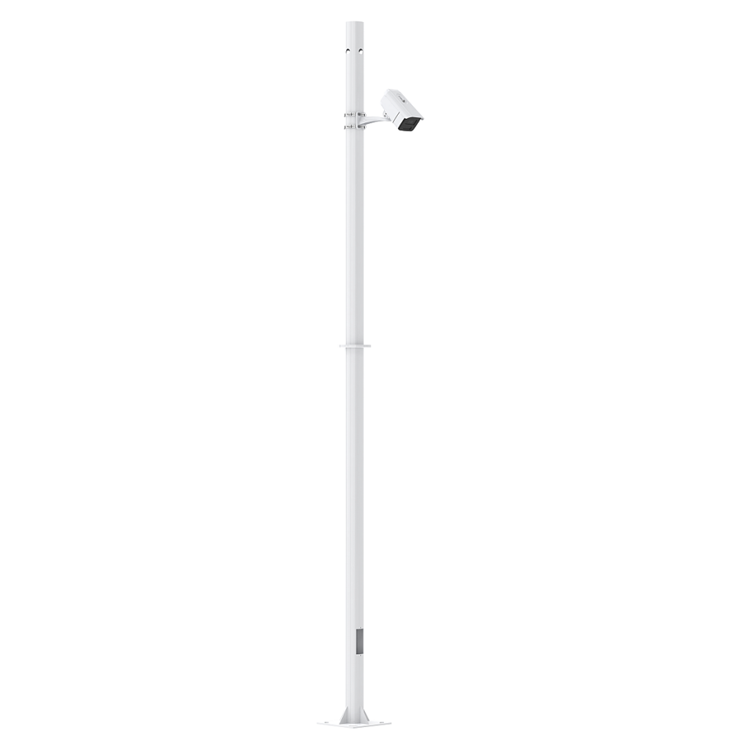
For project contractors, initial procurement cost is only one consideration. NiuBoL laser snow depth sensors demonstrate excellent economic performance in long-term operations:
Reduce Invalid Attendance:
Traditional ultrasonic solutions are prone to centimeter-level drift due to temperature differences or strong winds, often causing system false alarms and forcing maintenance teams to perform on-site verification. The laser solution's millimeter-level certainty reduces over 90% of invalid inspection costs.
High-Value Asset Protection:
In photovoltaic power stations or large-span industrial plant projects, excessive snow accumulation may lead to structural collapse. The precise data provided by NiuBoL can trigger timely snow removal warnings, protecting asset values far exceeding the sensor investment — a highly premium "insurance-type" investment.
NiuBoL is committed to providing standardized underlying data interfaces for integrators, simplifying system-level development processes.
1. Intelligent Traffic and Highway Early Warning Systems
On highways, bridges, and tunnel exits, snow accumulation poses serious traffic hazards.
Integration Solution: Integrators can connect NiuBoL laser snow depth sensors to road monitoring gateways via RS485 bus.
Logic Linkage: When snow depth reaches a preset threshold (e.g., 50mm), the system automatically triggers information boards to display speed limit warnings and synchronously activates road de-icing or snow-melting agent automatic spraying devices.
2. Aviation and Airport Runway Monitoring
Runway snow depth directly affects aircraft takeoff and landing safety distances.
Engineering Advantages: NiuBoL sensor's fast sampling capability (0.05-1S) supports real-time dynamic refresh of runway snow thickness, providing second-level data support for tower control decisions.
3. High-Standard Meteorological Stations and Scientific Expeditions
Data Reliability: Digital output and automatic angle correction functions greatly reduce debugging difficulty in field installations. The device supports multi-point networked deployment, providing high-confidence snow accumulation comparative observation data for global climate change research.
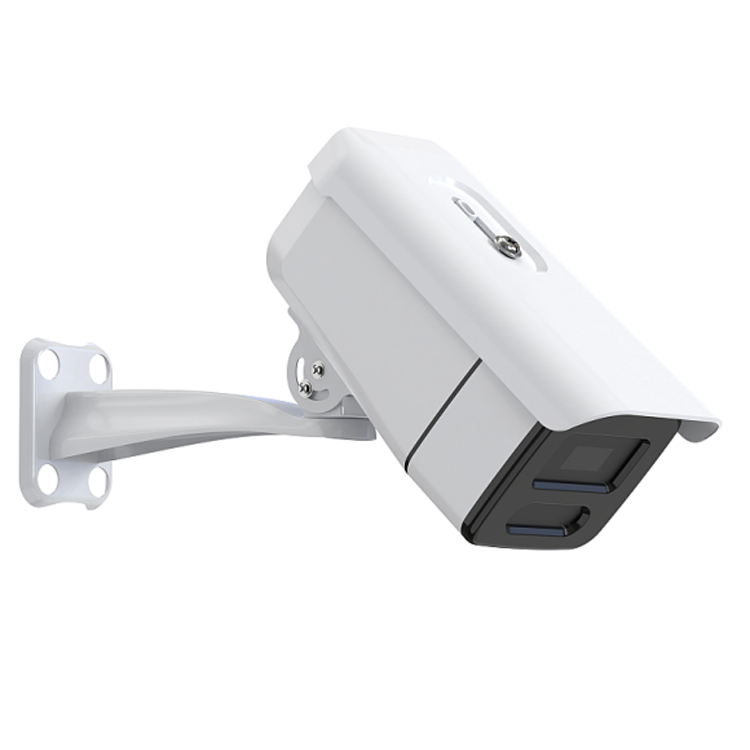
| Parameter Item | Industrial Specification Standard |
|---|---|
| Power Supply Voltage | DC 10-30V (wide voltage design) |
| Measurement Principle | Phase method laser ranging |
| Measurement Range | 0.05 ~ 2.5m |
| Measurement Accuracy / Resolution | ±1mm / 1mm |
| Communication Protocol | RS485 (standard Modbus-RTU) |
| Laser Parameters | 635nm, < 1mw (Class II safety laser) |
| Protection Rating | IP65 |
| Power Consumption | Static 0.8W / Automatic heating activated 3.5W |
| Single Measurement Time | 0.05 ~ 1S |
| Operating Temperature Range | -40℃ ~ +50℃ |
| Spot Size | Point spot 5mm @10m |
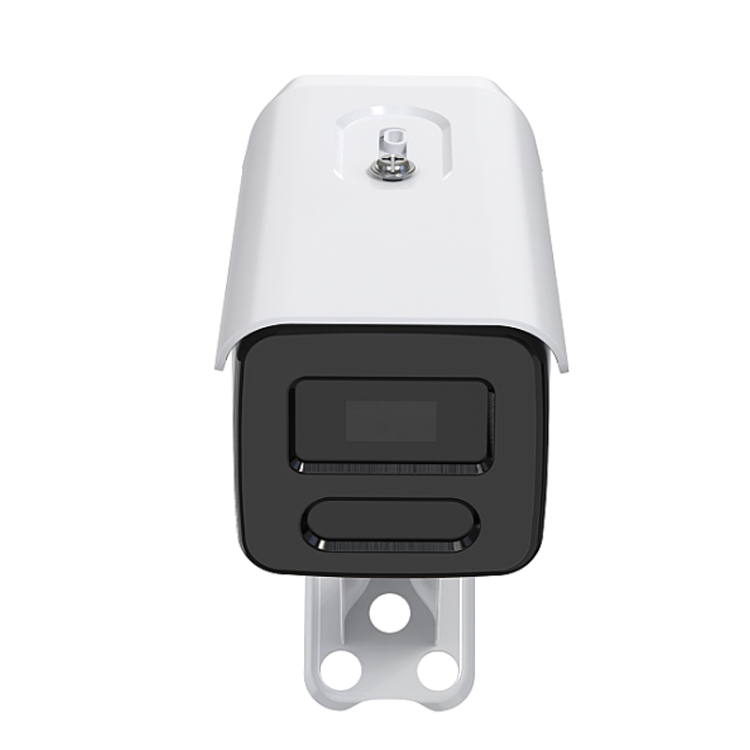
As a manufacturer, we provide the following engineering recommendations to system integrators to ensure long-term stable operation of projects:
1. Communication and Protocol Integration
NiuBoL full range products support Modbus protocol. Integrators should note:
Data Polling: It is recommended to set the polling cycle above 1S to ensure smooth updating of the internal laser algorithm.
Exception Handling: The product has built-in abnormal data filtering algorithms. If the read value shows instantaneous drastic jumps, it is recommended to add software filtering logic to enhance system robustness.
2. Automatic Heating Logic
The device has built-in automatic heating function. When the temperature is below the set value, the heating module will automatically activate to prevent lens frosting or icing from affecting laser transmittance. When calculating system power budget, integrators should reserve power capacity based on 3.5W peak power consumption.
3. Installation and Angle Correction
NiuBoL sensors have built-in angle sensors supporting automatic tilt compensation. This means that in non-vertical installation applications, the device can automatically convert to vertical snow depth, greatly reducing the workload of horizontal verification during on-site construction.
4. Focus on "Automatic Angle Compensation" Function
In actual engineering installations, due to terrain or pole deviations, it is difficult for sensors to achieve absolute verticality.
Technical Hazard: If the sensor lacks angle compensation, even small tilts will lengthen the measurement path (slant distance), resulting in systematically larger measurement values.
NiuBoL Solution: Our laser snow depth transmitter has a built-in high-precision tilt sensor supporting automatic conversion for installation angles. Regardless of the installation environment, the device always outputs "vertical snow depth" corrected by algorithms, greatly reducing on-site calibration difficulty.
1. Will the laser snow depth sensor fail under strong direct sunlight?
NiuBoL adopts special filter technology, but under extremely strong ambient light conditions (such as high-altitude strong reflections), the measurement range may be slightly shortened. Our algorithm can effectively identify background light interference to ensure the validity of output data.
2. Does this sensor require periodic calibration?
Due to the extremely high physical stability of laser ranging and no mechanical wear in the device, no frequent calibration is required under normal conditions. It is recommended to clean the lens glass annually for maintenance.
3. How to prevent the laser from overheating during continuous observation?
The sensor has intelligent control logic. After completing a single measurement task, the laser enters standby mode, and the phase method ranging technology itself generates very low heat.
4. Will rough target surfaces (such as uneven snow) affect accuracy?
Laser ranging has good adaptability to rough surfaces. NiuBoL sensors utilize point spot measurement, providing high-precision distance feedback even when the snow surface has texture.
5. Can the sensor measure water depth or ice thickness?
Due to different absorption and reflection characteristics of water to 635nm laser, this device is mainly designed for snow accumulation. For ice thickness monitoring, algorithm customization is required based on specific scenarios.
6. What is the maximum transmission distance of RS485 signals?
Under standard twisted-pair shielded cable with 120Ω terminating resistors, RS485 can stably transmit up to 1200 meters.
7. Why is the price of laser snow depth sensors usually higher than ultrasonic?
Laser sensors integrate precision optical modules, phase detection circuits, and complex temperature compensation algorithms. Although the initial procurement cost is slightly higher, in projects with high precision requirements and harsh environments, the low maintenance rate and long lifespan result in a TCO (Total Cost of Ownership) far lower than ultrasonic.
7. Does NiuBoL sensor support access to cloud platforms?
Yes. The device can seamlessly connect to NiuBoL's meteorological gateway and cloud platform, supporting remote real-time monitoring of snow depth changes via PC or mobile devices.
8. Can it perform real-time measurements during heavy snowfall (blizzard)?
Yes. Phase method ranging has extremely strong resistance to floating dust and precipitation interference. Through NiuBoL's proprietary abnormal data filtering algorithm, the system can intelligently filter out instantaneous echoes from falling snowflakes, locking and outputting stable snow baseline surface data.
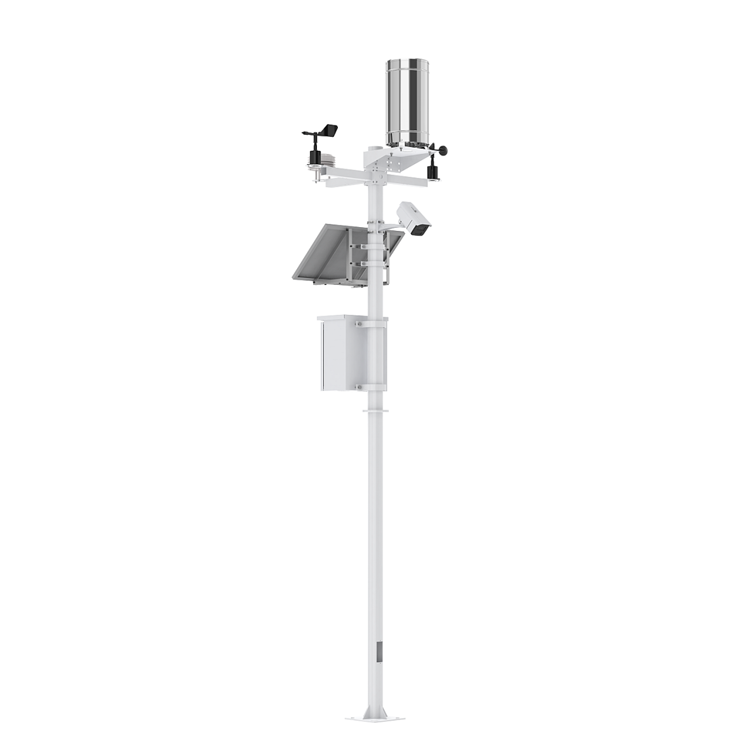
From mountain base stations to airport runways, snow monitoring is undergoing a transition from "fuzzy perception" to "precise measurement". NiuBoL laser snow depth sensor, with its phase ranging technology, low-power architecture, and standard Modbus integration capabilities, provides highly competitive perception-layer solutions for system integrators.
By reducing manual maintenance workload and improving observation quality, NiuBoL is assisting global partners in redefining standards for winter safety management.
If you are currently selecting equipment for traffic warning, automatic weather station, or aviation monitoring projects, please contact NiuBoL. We will provide you with complete communication protocol manuals, installation drawings, and highly competitive bulk purchasing solutions.
Related recommendations
Sensors & Weather Stations Catalog
 Agriculture Sensors and Weather Stations Catalog-NiuBoL.pdf
Weather Stations Catalog-NiuBoL.pdf
Agriculture Sensors Catalog-NiuBoL.pdf
Water Quality Sensor Catalog-NiuBoL.pdf
Related products
 Combined air temperature and relative humidity sensor
 TDR Soil Moisture & Temperature Sensor for irrigation| RS485 |4-20mA| NBL-S-THR
 Soil pH sensor RS485 soil Testing instrument soil ph meter for agriculture |NBL-S-PH
 Wind Speed sensor Output Modbus/RS485/Analog/0-5V/4-20mA
 Tipping bucket rain gauge for weather monitoring auto rainfall sensor RS485/Outdoor/stainless steel
 Pyranometer Solar Radiation Sensor 4-20mA/RS485

Screenshot, WhatsApp to identify the QR code
WhatsApp number:+8615367865107
(Click on WhatsApp to copy and add friends)

