





— Blogs —
—Products—
 Consumer hotline +8618073152920
 WhatsApp:+8615367865107
Address:Room 102, District D, Houhu Industrial Park, Yuelu District, Changsha City, Hunan Province, China
Product knowledge
Time:2026-02-13 15:15:40 Popularity:685
Under the dual demands of large-scale construction and refined operation and maintenance in photovoltaic power stations, the solar panel dust soiling monitoring system has become a key device for system integrators, IoT solution providers, project contractors, and engineering companies to achieve on-demand cleaning, cost reduction, and efficiency improvement. The system adopts blue light pollutant optical closed-loop measurement technology, real-time calculation of Soiling Ratio (SR value, i.e., soiling ratio 50~100%), quantifies module transmittance loss and converts it into power generation attenuation, supports RS485/MODBUS RTU protocol and 4G/5G transmission, ensuring seamless integration into power station SCADA, OMS (operation and maintenance management system), or cloud AI decision platforms.
NiuBoL NBL-W-PSS series solar panel dust soiling monitoring equipment takes the dual-sensor closed-loop design as its core, providing high-precision, low-maintenance soiling monitoring solutions for various conditions such as desert sandstorms, coastal salt spray, and high-humidity agri-PV complementarity, helping engineering projects shift from scheduled cleaning to data-driven predictive maintenance.
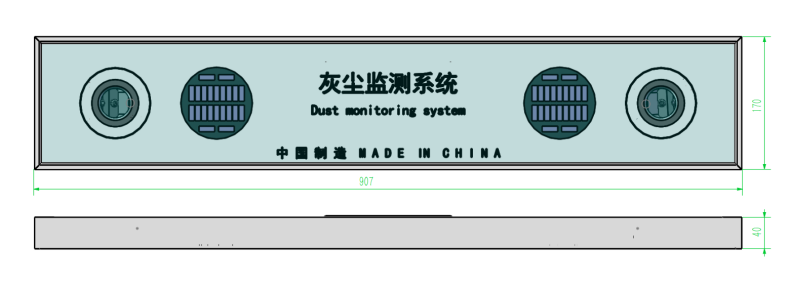
NiuBoL NBL-W-PSS adopts the blue light pollutant optical closed-loop measurement principle. Through a pair of reference sensor (kept clean) and soiling sensor (exposed to natural dust accumulation environment), it continuously compares transmittance differences and outputs the soiling ratio (SR value) in real time. The system directly maps SR to power generation loss percentage, with accuracy of ±1% (90~100% range), ±3% (80~90% range), ±5% (50~80% range), average power consumption only 1W, DC 12V power supply, compatible with solar power supply or on-site AC220V to DC12V converter.
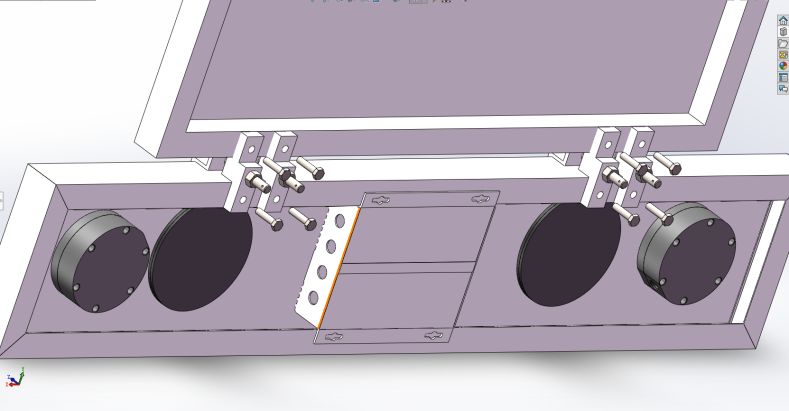
The device is integrally installed on the top or side of the module frame, maintaining the same level as the module glass, without additional brackets. Built-in temperature measurement module (optional, -50℃~+100℃, accuracy ±0.5℃@25℃) is used to compensate for the impact of high or low temperatures on optical measurements. Data is output via RS485 interface at 9600 bps baud rate using standard MODBUS protocol, supporting remote parameter configuration and firmware upgrade.
Core functions of the solar panel dust soiling monitoring system include:
Real-time soiling loss quantification: 7×24 hours continuous monitoring, capturing processes such as dew condensation and nighttime隐性 dust accumulation.
Economic threshold decision: Built-in “soiling – power generation loss – cleaning cost” model, automatically generating cleaning recommendations when loss exceeds preset critical point.
O&M closed-loop linkage: Can output Modbus registers or DO signals to directly trigger cleaning robots, rail vehicles, or atomizing spray systems.
Data visualization support: After uploading to cloud platform, generates full-station soiling heat map, trend curves, and loss reports, facilitating centralized management of multiple stations.
Compared with traditional manual inspection or fixed-cycle cleaning, the system shifts O&M decisions from experience dependence to quantitative model driving, significantly reducing invalid cleaning times while avoiding potential damage to module coatings from over-cleaning.
| Parameter | Specification/Range | Accuracy/Remarks |
|---|---|---|
| Power Supply Voltage | DC 12V | Supports AC220V to DC12V converter |
| Average Power Consumption | 1W | Low power design |
| Signal Output | RS485 | - |
| Communication Protocol | Standard MODBUS protocol | Baud rate 9600 bps |
| Soiling Ratio (SR) | 50~100% | Dual-sensor closed-loop measurement |
| Soiling Measurement Accuracy | ±1% (90~100%) ±3% (80~90%) ±5% (50~80%) | Typical conditions |
| Temperature Measurement (Optional) | -50℃~+100℃ | ±0.5℃ @25℃ |
| Installation Method | Special fixture fixed on module frame | Same level as module |
| Operating Environment | -40℃~+80℃, 0~95%RH | All-weather operation |
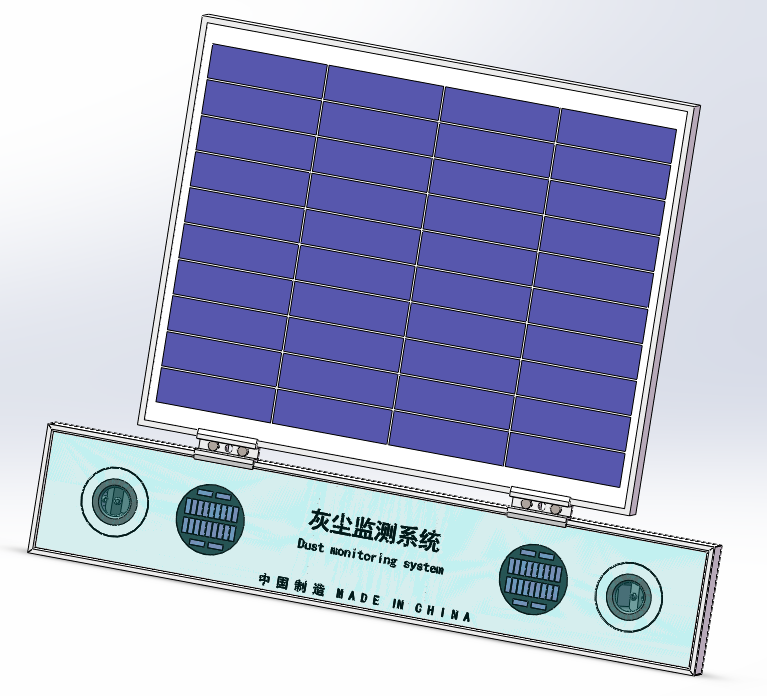
In digital transformation or new construction projects of photovoltaic power station O&M, system integrators typically use NiuBoL NBL-W-PSS Soiling Sensor as a key node in the environmental perception layer, forming a complete closed loop with upper-layer systems. Typical integration solutions include:
On-demand cleaning decision and work order automation: Multiple devices deployed at representative positions in the array (edges, middle, different tilt zones), RS485 data aggregated to edge gateway or 4G module and pushed to cloud platform. Integrators can input SR values into OMS or custom algorithms; when cumulative power generation loss exceeds economic threshold (e.g., 0.8-1.5 CNY/kWh cleaning cost), automatically generate priority work orders pushed to O&M APP, or trigger cleaning robot start via Modbus write register.
Full-station soiling distribution visualization: Combined with GIS engine, the system generates real-time soiling heat map and time-series curves to help locate high-soiling areas. In desert power stations, post-sandstorm soiling gradients can be quickly identified to guide rail cleaning vehicles or drones for priority operations, avoiding uniform cleaning of the entire array.
Compatibility with mainstream inverters and SCADA systems: Standard MODBUS RTU protocol directly interfaces with Huawei SmartLogger, Sungrow collectors, or Growatt inverters; accesses Siemens WinCC, ABB Ability, etc., via RS485 to TCP gateway. IoT solution providers can standardize SR data into JSON format, linking with module power generation, irradiance, and inverter efficiency for differentiated diagnosis of soiling attenuation and hardware faults.
Pre-construction data collection in new power stations: Deploy monitoring equipment in planning stage to long-term record site soiling rate and seasonal characteristics, providing basis for module tilt optimization and cleaning system selection (e.g., robot path planning), reducing later O&M difficulty.
Adaptation for agri-PV complementarity and distributed projects: Low-power design compatible with solar power supply, integrated temperature sensor evaluates dew condensation impact; data can fuse with crop growth models to support comprehensive management in agricultural-PV composite scenarios.
These solutions are modular and scalable, supporting future access to AI edge computing for local SR prediction and automatic trigger execution.
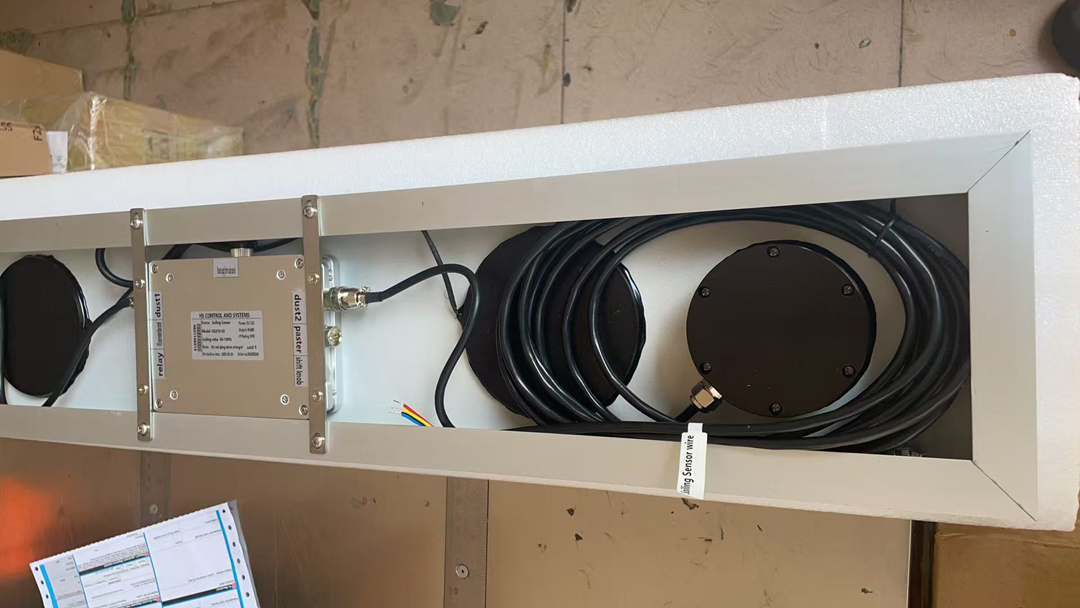
When selecting, system integrators should evaluate based on power station type, soiling characteristics, and O&M mode:
Desert/multi-sandstorm areas: Prioritize high-frequency sampling type, support heat map output; recommend 4-6 sets per 10-20MW array.
Coastal/high salt spray high humidity areas: Choose model with temperature compensation to handle salt spray-dust composite layers; optional humidity expansion module.
Distributed rooftop/agri-PV complementarity: Recommend standalone 4G type, prioritize low power, support battery power supply.
Communication requirements: Good network coverage selects RS485+4G.
Decision depth: Need economic model and linkage selects configuration supporting Modbus write operations; reserve interfaces for future addition of irradiance or wind speed sensors. Recommend on-site POC testing to verify compatibility with inverters/SCADA, MTBF typically >50,000 hours.
Installation position: Sensor at same level as module glass, special fixture fixed on frame top or side; avoid local shadow or water accumulation areas.
Power configuration: Stable DC 12V supply; use outdoor waterproof converter for on-site AC220V, recommend adding SPD surge protection module.
Initial calibration: Perform on clear weather noon 12:00-14:00, wipe probe and hold calibration button for 10 seconds; record calibration timestamp.
Routine maintenance: Clean dual-probe optical surfaces synchronously during each module cleaning; verify SR accuracy every 6 months.
Data security and synchronization: Enable MODBUS encrypted transmission; use NTP to synchronize timestamps for data consistency.
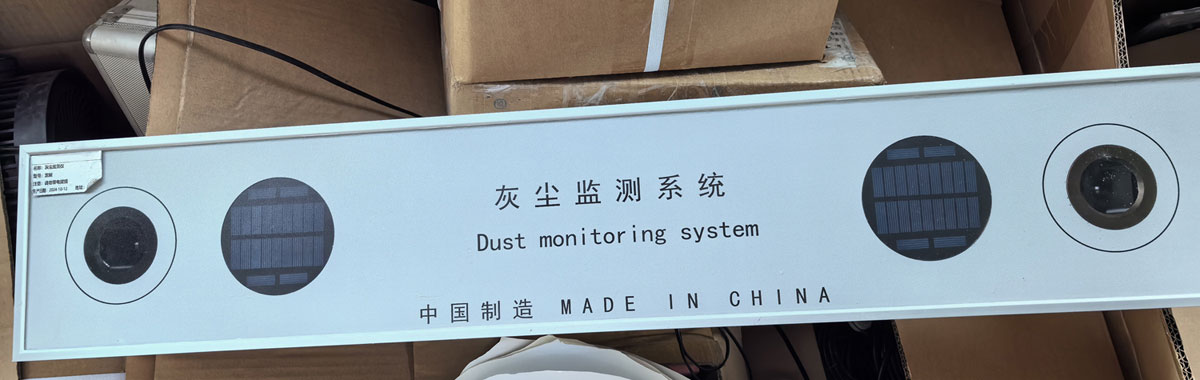
1. How does the solar panel dust soiling monitoring system calculate power generation loss?
Directly maps transmittance attenuation via SR value, combines real-time irradiance and module rated power to calculate loss kWh, supports cross-validation with inverter data.
2. How stable is the measurement in high humidity or salt spray environments?
Dual-sensor closed-loop + temperature compensation design, actual tests in coastal high-humidity conditions show accuracy drift <±5%, optical components corrosion-resistant.
3. Which mainstream inverters or OMS systems does it support docking with?
Standard MODBUS RTU protocol, compatible with Huawei, Sungrow, Growatt inverters and mainstream SCADA/OMS platforms.
4. What are the main precautions for installation and calibration?
Sensor at same level as module, calibrate at clear noon; record baseline SR value after calibration, avoid artificial occlusion.
5. How to ensure long-term cleanliness and accuracy of optical probes?
Synchronize cleaning with modules; closed-loop design self-diagnoses deviation, segmented accuracy guarantee (90-100% range ±1%).
6. Which types of photovoltaic power stations is it suitable for?
Covers large ground-mounted stations, distributed rooftops, agri-PV complementarity, desert sandstorm, and coastal salt spray areas, supports customized configurations.
7. What is the warranty and after-sales service mechanism?
Whole unit warranty 12 months; 7×24 hours technical support, 48-hour response.
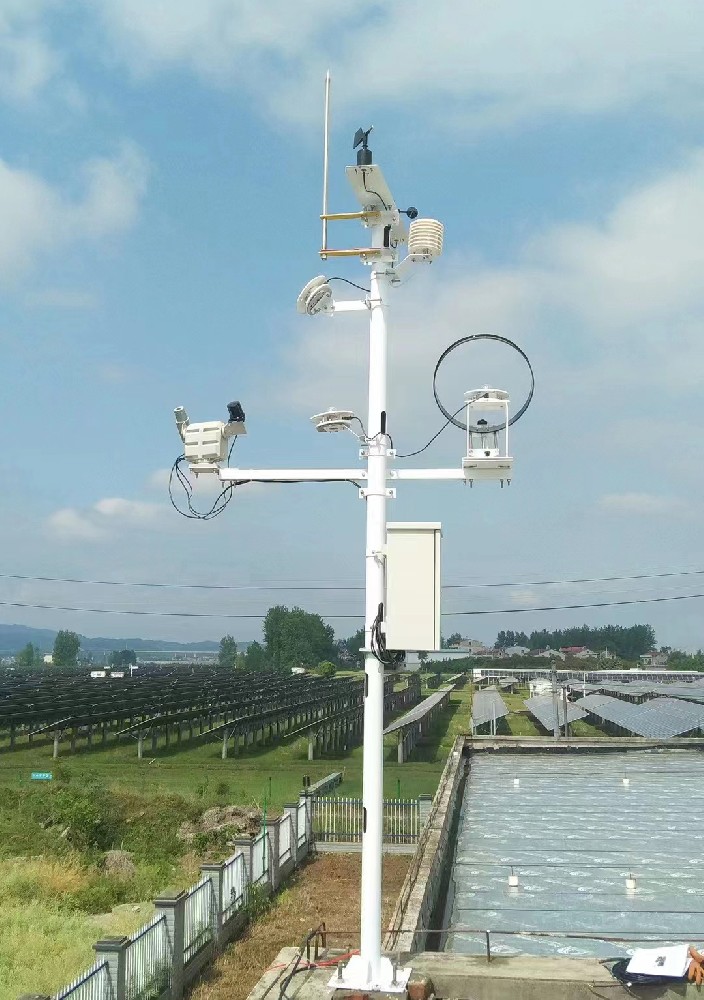
NiuBoL NBL-W-PSS solar panel dust soiling monitoring system, with blue light closed-loop measurement technology and economic decision model as its core, provides system integrators with a full-chain solution from soiling perception to cleaning execution. Through real-time SR quantification, predictive maintenance, O&M closed-loop linkage, and system-compatible integration, the device helps engineering projects maximize power generation revenue, optimize O&M costs, and extend module lifespan. Whether for on-demand cleaning in large-scale ground-mounted power stations or remote management in distributed projects, NiuBoL is committed to delivering accurate and reliable soiling data, supporting intelligent operation and value enhancement of photovoltaic assets. Welcome to submit project requirements via email or online form; we will provide targeted selection advice, technical solutions, and prototype testing support within 24 hours.
 NBL-W-PSS Soiling Sensor Photovoltaic Dust Monitoring Instrument Data Sheet.pdf
Prev:Industrial-Grade Laser Snow Depth Sensor: High-Precision Solution for Winter Snow Monitoring
Next:Photovoltaic Power Station Dust Monitoring System: Reliable Integrated Solution for O&M Optimization
Related recommendations
Sensors & Weather Stations Catalog
Agriculture Sensors and Weather Stations Catalog-NiuBoL.pdf
Weather Stations Catalog-NiuBoL.pdf
Agriculture Sensors Catalog-NiuBoL.pdf
Water Quality Sensor Catalog-NiuBoL.pdf
Related products
 Combined air temperature and relative humidity sensor
 TDR Soil Moisture & Temperature Sensor for irrigation| RS485 |4-20mA| NBL-S-THR
 Soil pH sensor RS485 soil Testing instrument soil ph meter for agriculture |NBL-S-PH
 Wind Speed sensor Output Modbus/RS485/Analog/0-5V/4-20mA
 Tipping bucket rain gauge for weather monitoring auto rainfall sensor RS485/Outdoor/stainless steel
 Pyranometer Solar Radiation Sensor 4-20mA/RS485

Screenshot, WhatsApp to identify the QR code
WhatsApp number:+8615367865107
(Click on WhatsApp to copy and add friends)

