





— Blogs —
—Products—
 Consumer hotline +8618073152920
 WhatsApp:+8615367865107
Address:Room 102, District D, Houhu Industrial Park, Yuelu District, Changsha City, Hunan Province, China
Product knowledge
Time:2026-02-09 15:17:07 Popularity:725
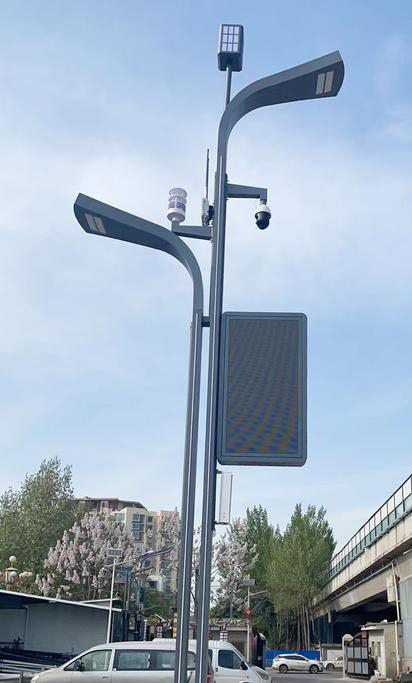
Street lamp weather station siting determines what an urban monitoring network can actually compare. A sensor beside a shaded park, one above a traffic queue and one near a sunlit wall may all report valid local conditions, yet answer different questions. For a NiuBoL pole-mounted network, choose the observation purpose before choosing the available poles. Existing infrastructure can make installation practical, but regular pole spacing does not create an equally spaced meteorological observation grid or guarantee the resolution of a temperature map.
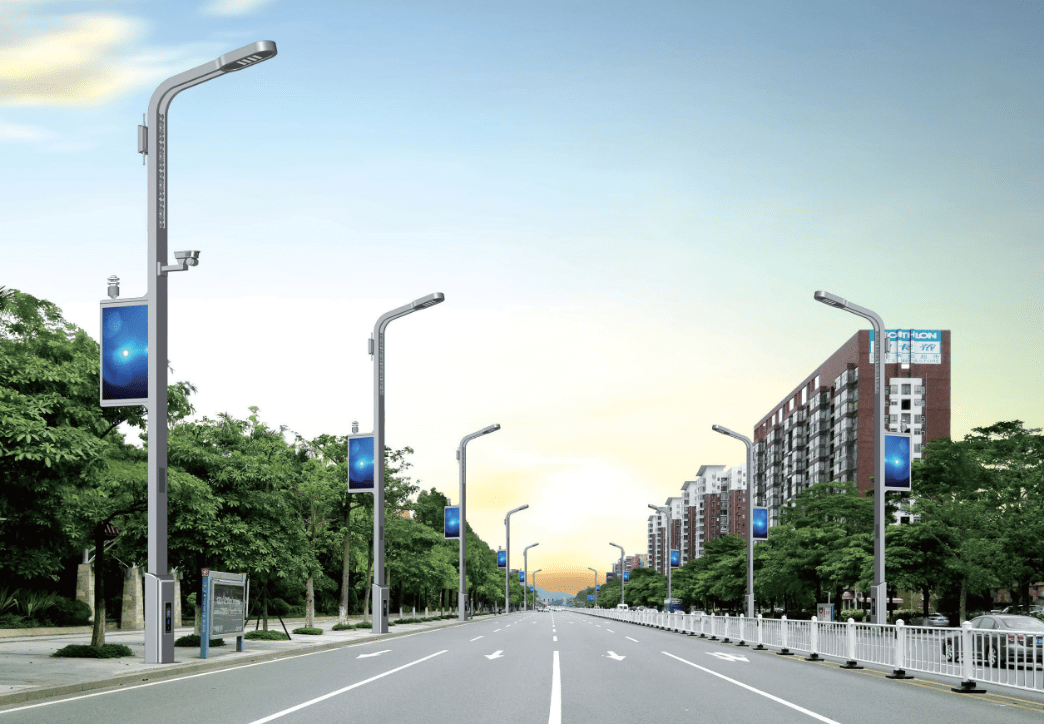
For a heat study, the question might be the air-temperature difference between comparable urban and less-built-up locations. For a roadside project, it might be conditions at a specific pedestrian route or junction. Those objectives need different exposure choices. Write the intended use beside each proposed point and keep traffic, vegetation, building form and surface materials in the site record.
Do not specify a universal distance between nodes. Walk or survey the proposed route to find transitions: open square to enclosed street, planted verge to paved frontage, or low-rise district to tall buildings. A small pilot across those contrasts can show which points add information and which merely duplicate one exposure. Communications coverage and mounting access constrain the shortlist, but they should not silently redefine the measurement objective.
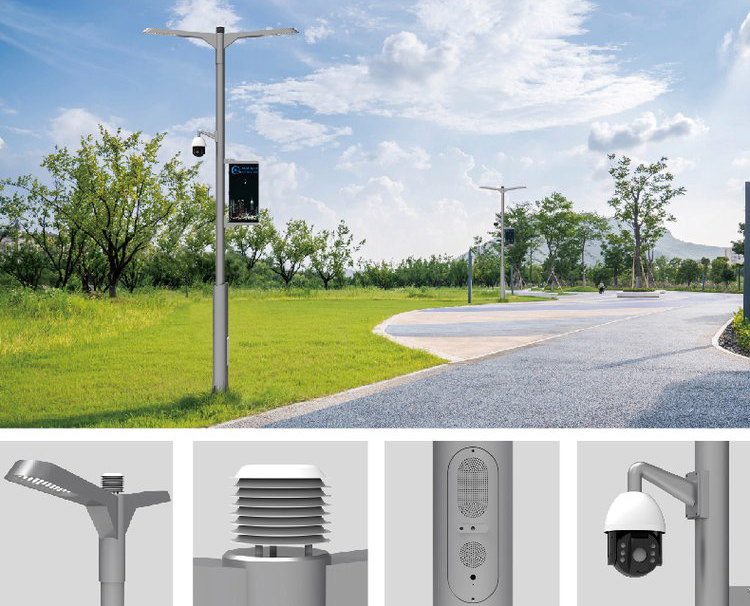
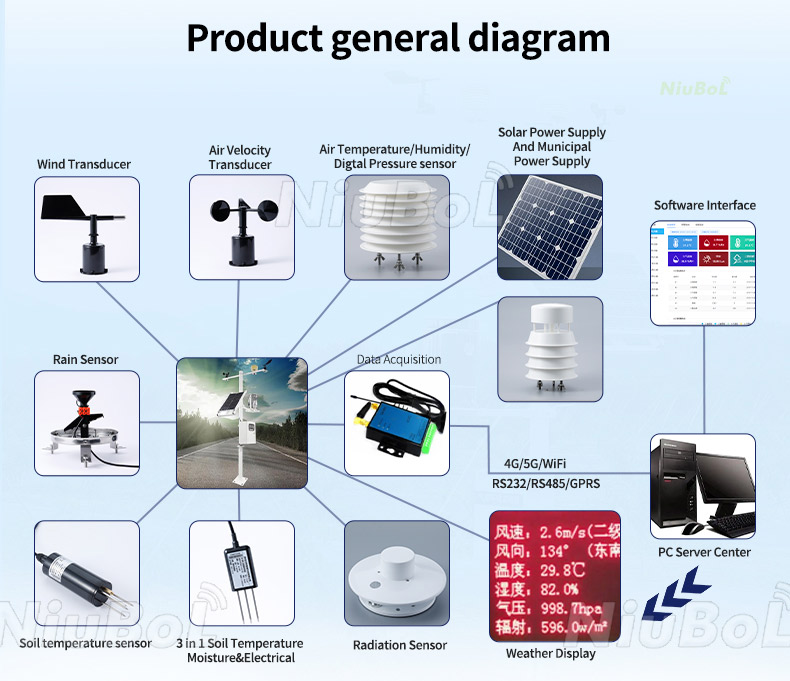
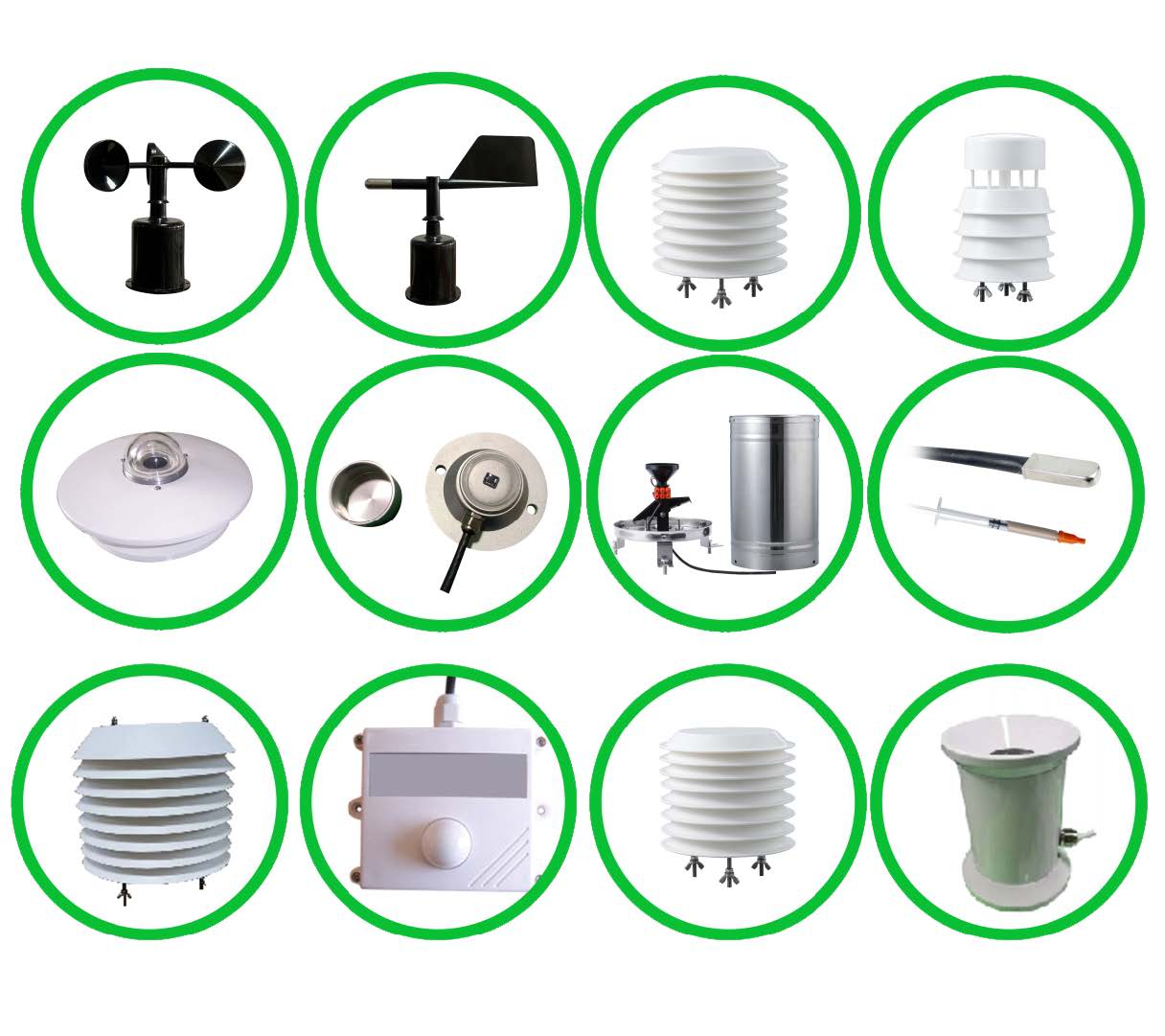
The cabinet may be convenient at the pole base while the air sensor needs separation from hot equipment and reflected radiation. Rain requires an open collecting position; wind responds to obstructions at the head's height. A modular station can use separate brackets where necessary. The system diagram illustrates different measurement components, not a requirement to install every pictured sensor on every lamp pole.
Assign a station ID to the site and an installation record to each channel. Include sensor height, bracket orientation, distance to nearby structures, relevant photographs and the date of any change. If a tree canopy grows around a head, or a new sign obstructs it, the site can change even when the electronics remain untouched. Such changes affect interpretation of a long-term comparison.
A cup anemometer near a building measures the locally disturbed flow at its position. That can be relevant to a street-level observation, but it is not automatically equivalent to an open-terrain wind station or a design wind-load measurement. Note upstream obstructions for the directions of interest. Moving a head a short distance on the same pole may change its shielding by the lamp arm or camera assembly.
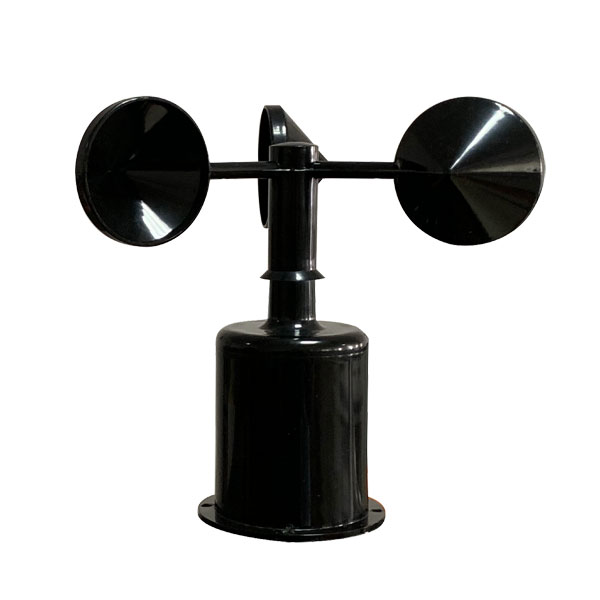
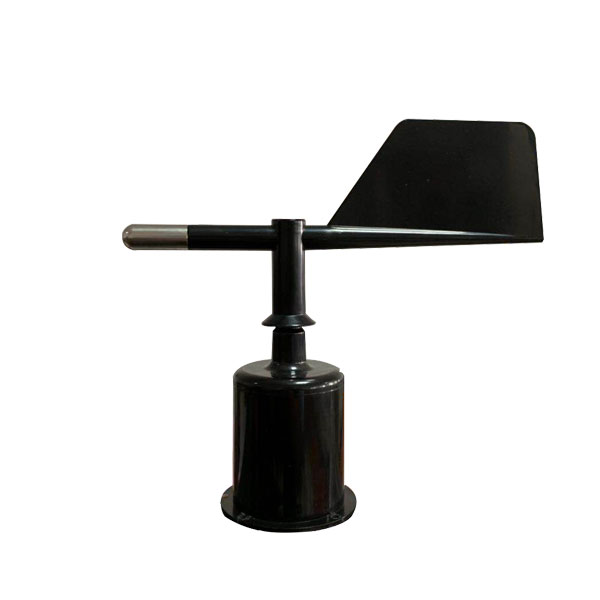
Direction adds meaning only when the installation reference is known. Record geographic north, head orientation and any offset applied in the logger. A direction change caused by rotating the bracket during service should not appear as a change in the urban wind field. When speed is very low, interpret direction with the instrument's behavior in mind rather than treating every fluctuating angle as a meaningful transport direction.
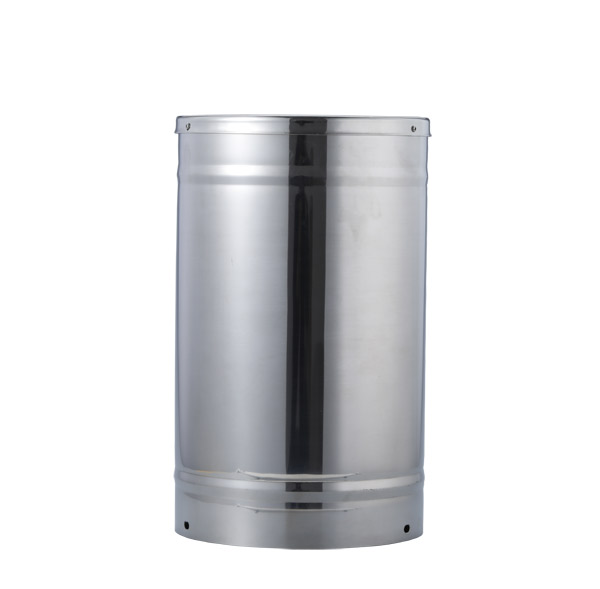
A rain collector beneath a lamp, camera or branch can receive sheltering or extra drips. Locate it with an unobstructed opening and a practical cleaning route. If a high pole position exposes it to unsuitable turbulence or makes debris removal impractical, consider a separate measurement point. Specify the selected collector and counting method; a piezoelectric rain channel and a tipping bucket are different instruments, not interchangeable descriptions of one mechanism.
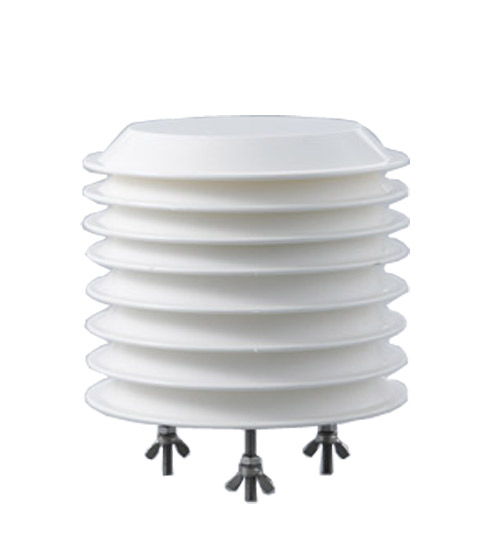
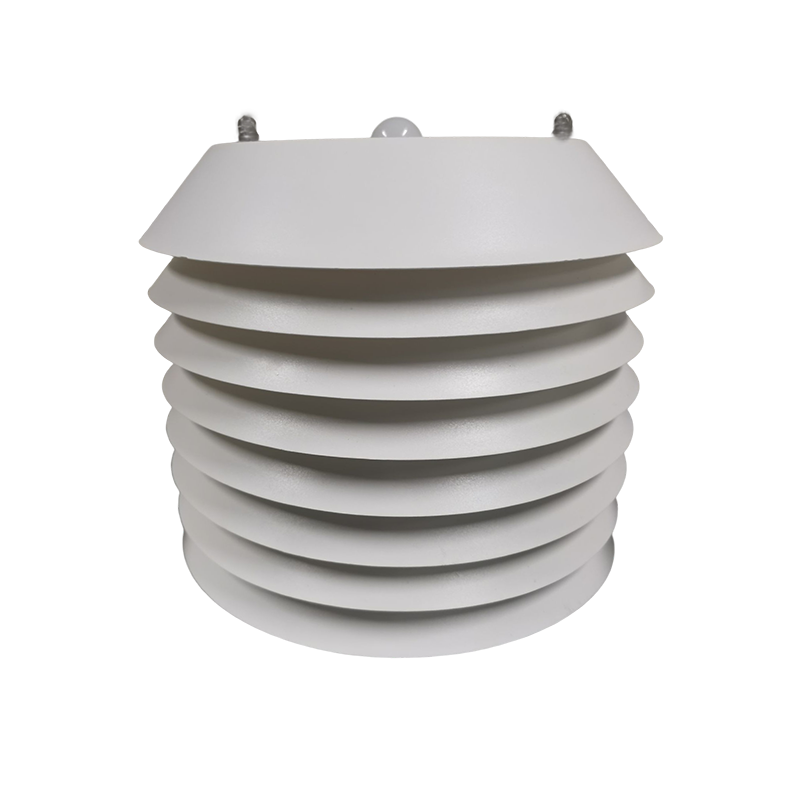
A radiation shield reduces direct radiative exposure of the sensing element, but it cannot make converter exhaust, a warm wall or a poorly ventilated cavity representative of the wider street. Keep air passage clear and inspect the shield condition. For comparison sites, use a consistent sensor type and observation method where possible. Different shields and response times can introduce differences that resemble a neighborhood temperature pattern.
Record height and exposure rather than treating any lamp-pole height as a standard pedestrian observation level. If access forces different mounting heights at two sites, label that difference in the analysis. Do not claim a human heat-stress index from air temperature and humidity alone when the required method also needs other quantities. Sensor availability should follow the intended calculation, not the other way around.
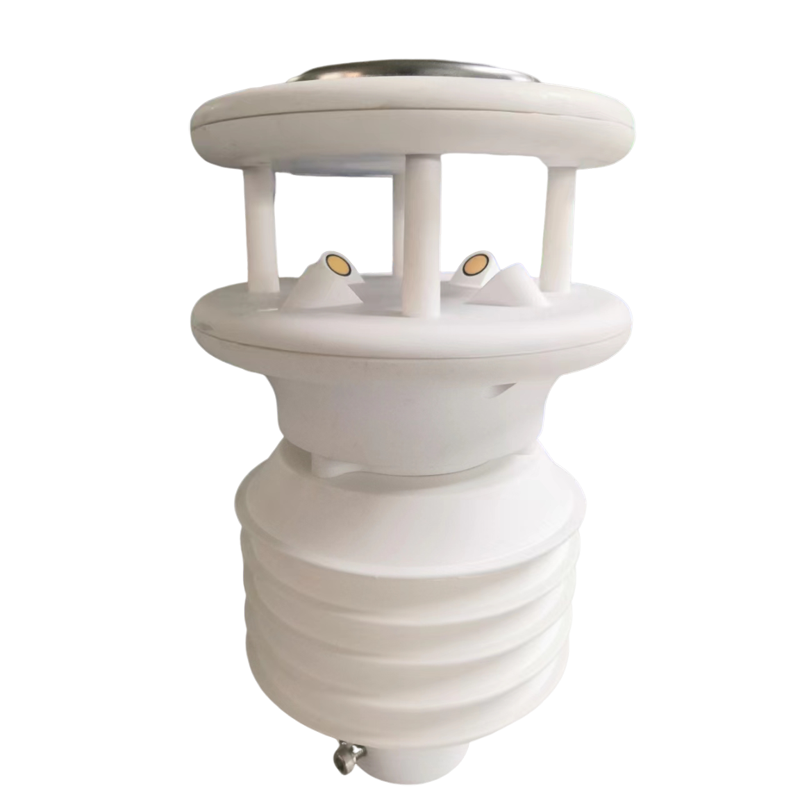
The configurable ultrasonic weather sensor family offers a shared head for five core meteorological quantities, with additional measurements depending on configuration. The following values apply to that product family, not to every separate instrument shown here. Verify the exact order variant before using them as the acceptance schedule.
| Quantity or interface | Product specification |
|---|---|
| Air temperature | -40 to 80 C; specified accuracy +/-0.5 C; resolution 0.1 C |
| Relative humidity | 0-100% RH; specified accuracy +/-5% RH; resolution 0.1% RH |
| Barometric pressure | 10-1100 hPa; specified accuracy +/-1.5 hPa; resolution 0.1 hPa |
| Wind direction | 0-359 degrees; specified accuracy +/-3 degrees; resolution 1 degree |
| Local interface | RS485 Modbus RTU |
| Supply option | DC 9-24 V or DC 12-24 V depending on selected variant |
| Protection | IP65 |
An integrated head gives these channels a common position. If the rain, solar or air-quality exposure cannot be satisfied there, either change the mounting arrangement or select a separate instrument. Adding more parameters is not useful if the available position prevents them from observing the intended environment.
A horizontal pyranometer records irradiance on its measurement plane. Shadows from a luminaire, camera or cable can change that record. Trace likely shadow paths before fixing the bracket, and document obstructions that cannot be avoided. A shaded street may be the subject of the study, but an unintentionally shaded solar reference is a different exposure and should be labeled accordingly.
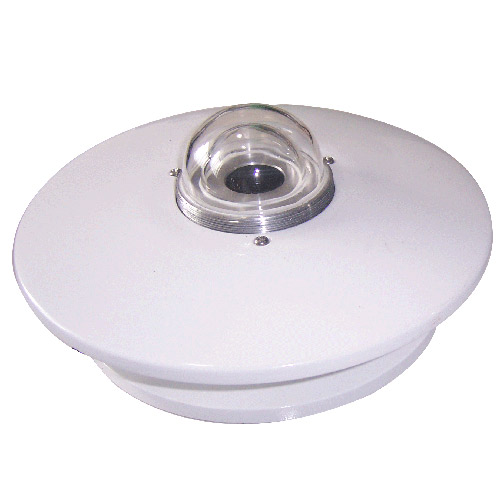
Ultraviolet radiation, visible illuminance and broadband solar irradiance describe different spectral or response-weighted quantities. Choose the one required by the study. A UV sensor does not replace a pyranometer, and a lux channel does not directly measure thermal energy input. Where a pole also controls lighting, keep the lighting-control illuminance tag separate from radiation quantities used in environmental analysis.
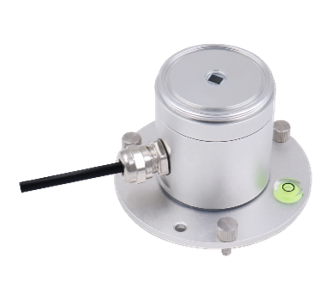
A particulate inlet close to traffic may be intended to track local roadside conditions. Another in a park may represent a different exposure. Comparing them is useful only with those purposes stated. Inspect airflow around the housing, nearby dust-generating activity and the effects of vegetation. Do not describe the difference between two such sites as a calibrated city-wide pollution gradient without a suitable monitoring method and quality assessment.
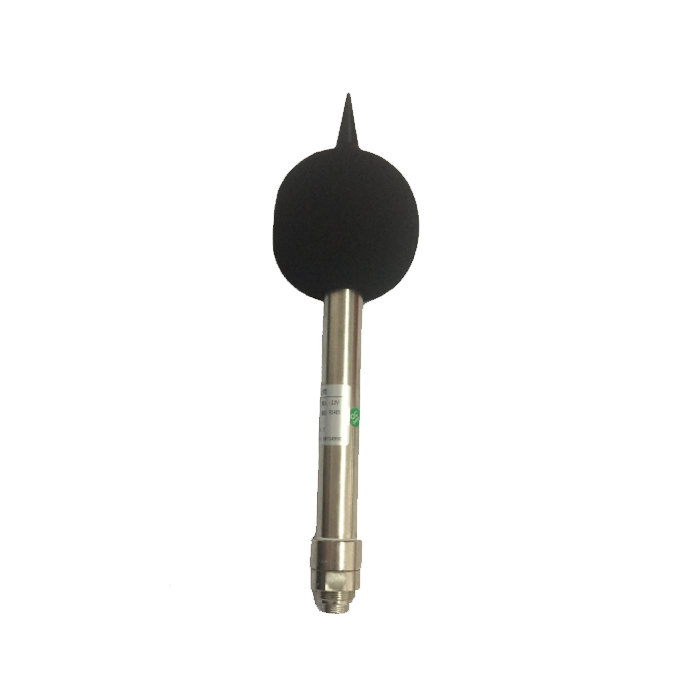
For noise, decide whether the target is the traffic environment, a facility boundary or the pole equipment itself. A nearby public-address speaker, cooling fan or loose mounting plate can dominate a reading. Retain the microphone height and distance to local sources. Acoustic acceptance requires the appropriate instrument, weighting, averaging period and calibration; a microphone-shaped accessory alone does not establish a compliance measurement.
Gas measurements add further siting and maintenance constraints. State which gases are installed, the ambient application and the calibration method. A multi-gas housing does not identify a source on its own, and adding wind data does not turn a single concentration point into a validated dispersion model. Use additional observations and a defined assessment method when source attribution is the purpose.
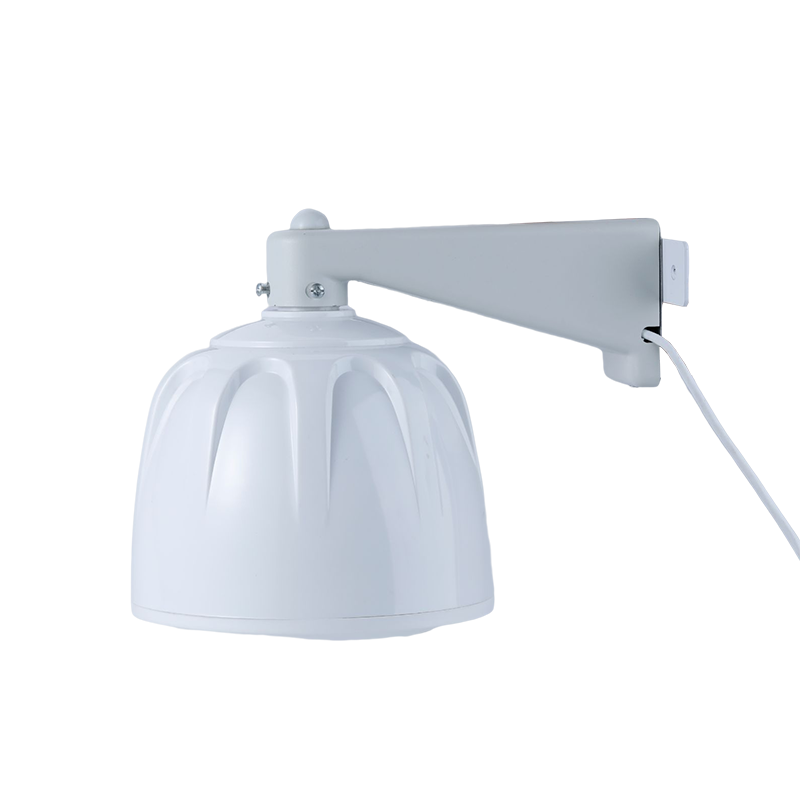
Use observation timestamps, not simply the time a mobile network message reaches the server. Match averaging windows when comparing heat, humidity or wind patterns. Mark missing samples before calculating a difference. If one site reports every minute and another only after reconnection, comparing their most recently displayed numbers can create a false spatial contrast from a real change over time.
A mapped value between stations is an estimate, not an observation at every pixel. Keep the measurement points visible, state the interpolation method and avoid displaying more spatial detail than the site distribution supports. If the project needs a street-canyon comparison, retain individual sites as well as any map so the operator can inspect exposure and data availability directly.
Co-locate instruments under shared conditions before deployment where a comparison is practical, then inspect each installed site. Agreement before installation helps identify instrument differences; differences afterward may reflect exposure as well as sensor behavior. Use an appropriate independent reference for accuracy assessment. Two sensors agreeing with each other does not establish traceable accuracy.
For a NiuBoL layout review, provide the urban monitoring question, candidate pole photographs, mounting heights and required time resolution. Request only the measurements needed to answer that question. Price unusual brackets, access equipment and separate exposure points explicitly, because those can change the installed scope even when sensor models are identical.
No. Useful spatial detail depends on exposure, measurement quality, site distribution and the analysis method. A dense set of similarly biased points does not establish conditions between those points.
Not necessarily. Use comparable core channels for network comparisons, then add channels where their exposure and purpose justify them. Some rainfall or radiation tasks may need a separate open site.
Only within an observation design that accounts for height and exposure. Record the actual height and do not equate different vertical positions without evidence supporting that comparison.
It reports wind at its location, where the building may alter speed and direction. Regional or standard-exposure reporting needs a suitable site and the applicable observation method.
Record the relocation time, coordinates, height, orientation and exposure change. Retain the old site metadata so a step in the series can be assessed as a site change rather than assumed climate behavior.
Define suitable urban and comparison locations, compatible instruments and matching time windows. Document exposure and missing-data rules before interpreting their temperature difference as a heat-island indicator.
Street lamp weather station siting should preserve the connection between each reading and the place it represents. A useful NiuBoL urban network combines appropriate instruments with documented exposure, comparable timing and a realistic spatial interpretation. Select poles for the monitoring question, then confirm that mounting and maintenance can support the chosen observation.
Prev:Smart Pole Weather Instrument Integration: Power and Data Interfaces
Next:Laser Snow Depth Sensor Installation: Reference Patch and Data Checks
Related recommendations
Sensors & Weather Stations Catalog
 Agriculture Sensors and Weather Stations Catalog-NiuBoL.pdf
Weather Stations Catalog-NiuBoL.pdf
Agriculture Sensors Catalog-NiuBoL.pdf
Water Quality Sensor Catalog-NiuBoL.pdf
Related products
 Combined air temperature and relative humidity sensor
 TDR Soil Moisture & Temperature Sensor for irrigation| RS485 |4-20mA| NBL-S-THR
 Soil pH sensor RS485 soil Testing instrument soil ph meter for agriculture |NBL-S-PH
 Wind Speed sensor Output Modbus/RS485/Analog/0-5V/4-20mA
 Tipping bucket rain gauge for weather monitoring auto rainfall sensor RS485/Outdoor/stainless steel
 Pyranometer Solar Radiation Sensor 4-20mA/RS485

Screenshot, WhatsApp to identify the QR code
WhatsApp number:+8615367865107
(Click on WhatsApp to copy and add friends)

