





— Blogs —
—Products—
 Consumer hotline +8618073152920
 WhatsApp:+8615367865107
Address:Room 102, District D, Houhu Industrial Park, Yuelu District, Changsha City, Hunan Province, China
Product knowledge
Time:2025-12-10 13:53:11 Popularity:737
Using Modern IoT Road Weather Monitoring Systems for Scientific Early Warning to Ensure Road Traffic Safety
SEO Description: Explore how modern IoT road weather monitoring systems use real-time data collection, intelligent analysis, and scientific early warning to effectively prevent traffic accidents and improve safety and efficiency on highways and urban roads. Discover NiuBoL road monitoring stations’ sensor technology, working principles, and critical role in visibility, road surface conditions, wind, snow, and other adverse weather.
Keywords: Road Weather Monitoring, Internet of Things (IoT), Road Safety Early Warning, Traffic Sensor, Visibility Meter, Road Surface Condition Sensor, Road Weather Disaster Prevention, Smart Transportation, Highway Safety
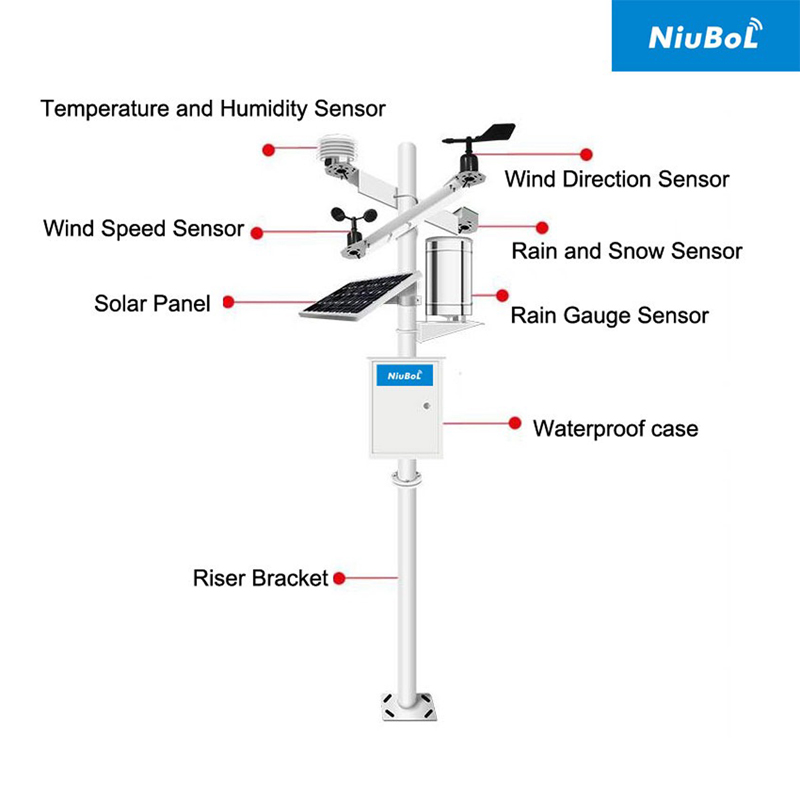
With the rapid expansion of modern highway networks, the demands for transportation efficiency and safety continue to rise. However, weather conditions remain a major factor restricting traffic safety and efficiency. Sudden adverse weather phenomena such as rain, snow, fog, freezing, and strong winds not only sharply reduce road visibility and surface friction but also easily lead to driver errors, causing serious traffic accidents that threaten lives, property, and national economic operations.
Therefore, strengthening road weather services and using technology for scientific early warning and real-time monitoring of hazardous weather conditions has become a key issue that traffic management departments urgently need to address.
With the maturity of Internet of Things (IoT) technology, building an IoT information platform to achieve real-time online monitoring, intelligent analysis, and precise prediction has become a major trend in enhancing road weather early warning capabilities.
Definition of Road Weather Scientific Early Warning: It refers to the use of modern meteorological monitoring technology, IoT information transmission, and data processing technology to collect, analyze, and predict meteorological elements (such as visibility, road surface condition, wind speed/direction, precipitation) that may affect road safety and efficiency in real time, and promptly issue warnings to traffic management departments and drivers so that measures can be taken in advance to avoid or reduce accidents.
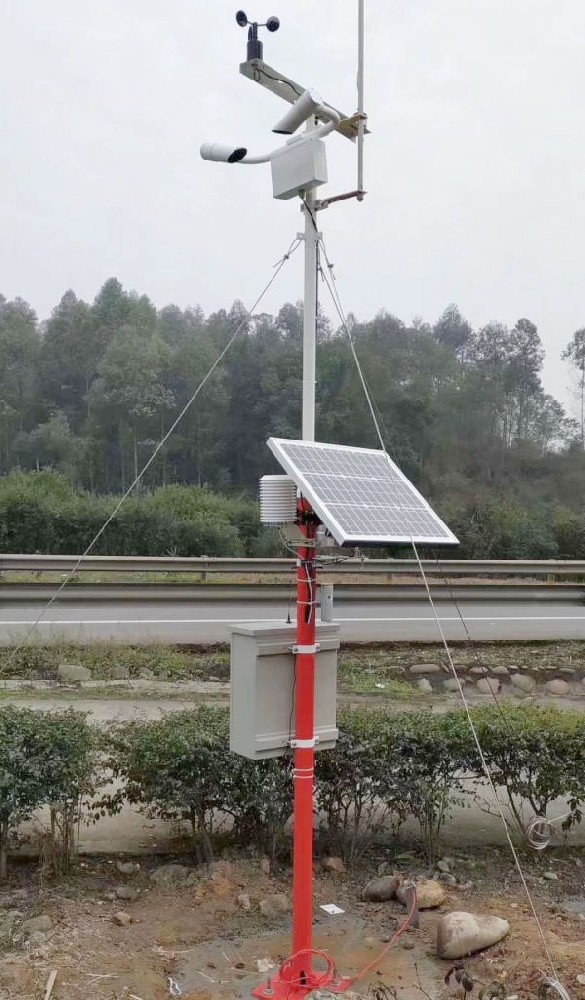
A modern IoT road weather monitoring system is a complex system integrating multiple high technologies, relying on five functional modules working together:
Data Acquisition Module (Sensors): The system’s “eyes” and “nerve endings,” responsible for real-time, accurate acquisition of road environment and meteorological parameters — the core of the entire system.
Network Transmission Module: Reliably and efficiently transmits massive real-time data to the data center via wired or wireless methods (4G/5G, LoRa).
Database Storage Module: Stores real-time and historical data to support subsequent analysis, model training, and trend prediction.
Intelligent Analysis & Alarm Module: The system’s “brain” that performs real-time analysis based on preset disaster thresholds and intelligent algorithms, immediately triggering alarms when dangerous levels are reached.
Comprehensive Display & Release Module: The system’s “user interface” that intuitively displays real-time results and warnings via large screens, computers, mobile apps, or variable message signs (VMS) for traffic managers and the public.
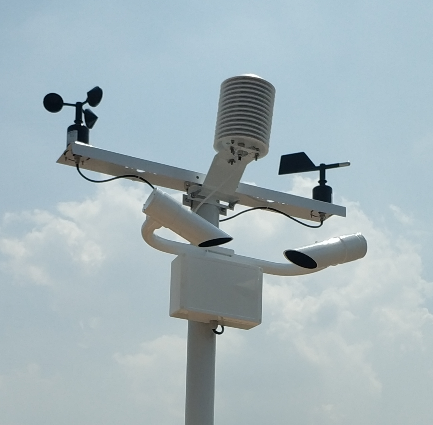
NiuBoL road weather stations integrate automatic observation, remote control, and wireless transmission, with the core lying in highly reliable sensors.
| Sensor Name | Key Monitoring Parameters | Technical Principle | Role in Transportation |
|---|---|---|---|
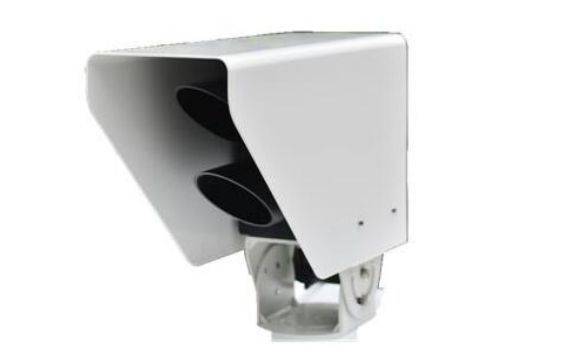
NBL-W-VS Visibility Meter | Meteorological Visibility | Forward light scattering: Emits infrared pulses, measures forward-scattered light intensity from suspended particles (fog, haze, snow), converts to visibility value | Quickly detect low-visibility conditions, guide speed limits and warnings |
NBL-W-RSCS Road Surface Condition Sensor | Road icing, snow, water, ice thickness | Non-contact multi-spectral measurement: Remote sensing analyzes reflected spectral characteristics to distinguish water, ice, snow, and thickness | Real-time monitoring of slippery/icy risks, prompts de-icing and salt spreading |
NBL-W-LBTH Air Temp/Humidity/Pressure Sensor | Air temperature, relative humidity, pressure | Electronic measurement: Resistance/capacitance for temp/humidity, pressure sensor for atmospheric pressure | Provides environmental parameters for icing prediction models, assists in restriction strategies |
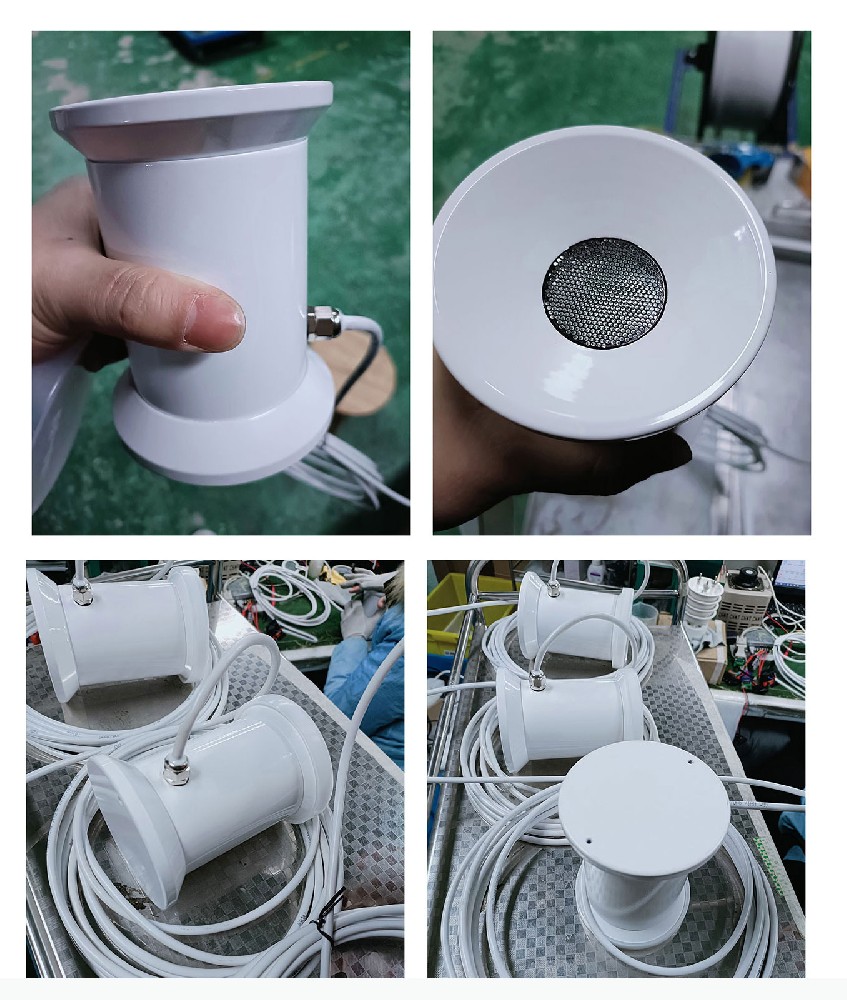
NBL-W-SNOW | Snow depth | Ultrasonic remote measurement: Measures time difference between emission and return to calculate depth | Real-time snow accumulation monitoring, assists snow disaster grading and road clearance |
NBL-W-SS | Wind speed | Three-cup design: Wind rotates cups, speed calculated from rotation | Monitors strong wind risks (typhoons, crosswinds), prevents overturning and loss of control |
NBL-W-DS | Wind direction | Vane with magnetic chip: Vane indicates direction, high-precision chip captures angle | Combined with wind speed for comprehensive weather info, assists disaster path judgment |
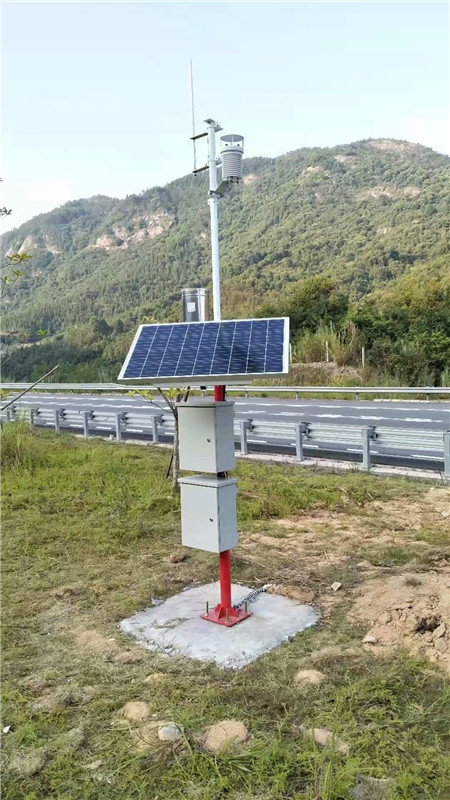
High reliability and stability: Sensors operate stably from -40°C to 50°C, protected by enclosures (e.g., radiation shields) against rain and UV.
Non-contact road condition monitoring: NBL-W-RSCS uses remote sensing, no road damage, no traffic interference, detection distance up to 8 m.
Real-time data and precision: 24/7 operation with low latency, providing valuable response time for traffic management.
Comprehensive observation capability: One system integrates visibility, road condition, temp/humidity/pressure, wind, rain/snow, etc.
Powerful early warning: Timely detection of abnormal conditions with alarms for preventive measures.
Highways & Major Bridges: Critical for fog-prone sections, long bridges (wind monitoring), mountain tunnel entrances, and icing-prone areas.
Urban Expressways & Main Roads: Monitors water accumulation and icing, especially in winter and heavy rain seasons, aiding drainage and traffic guidance.
Highway Tunnels: Monitors wind speed, pressure changes, and visibility for safe tunnel entry/exit.
Airports & Ports: Provides accurate wind, rain, and visibility data for aircraft and ship operations.
Scientific Research & Meteorological Services: Supplies real-time foundational data for model optimization and decision-making.
1. What is road weather monitoring?
A: Real-time monitoring of weather elements closely related to traffic safety using professional equipment (sensors), including visibility, road temperature, road condition (icing, water, snow), wind speed/direction, temperature, humidity, and precipitation, to provide warnings and decision support for traffic management and drivers.
2. How is IoT technology applied to road weather monitoring?
A: IoT deploys numerous intelligent sensors (data acquisition), uses wireless networks (transmission) to upload massive data to the cloud (storage), processes it with intelligent algorithms (analysis), and finally releases information through various terminals, forming a closed loop of “perception-transmission-processing-application.”
3. What is the working principle of the NBL-W-VS visibility meter?
A: It uses forward light scattering. It emits infrared pulses and measures forward-scattered light intensity from suspended particles (fog droplets, haze). Stronger scattering indicates lower visibility, converted into standard meteorological visibility values.
4. Why is the NBL-W-RSCS road condition sensor non-contact? What are the advantages?
A: Non-contact (remote sensing) avoids damaging road structure, reduces installation traffic interference, and simplifies maintenance. Multi-spectral technology accurately distinguishes water, ice, snow, and thickness at distances up to 8 m.
5. What can monitoring data predict?
A: Road icing risk (based on temperature, humidity, precipitation); low-visibility warnings (fog/haze); strong wind risks (overturning); water/snow accumulation for drainage/snow removal operations.
Q6: What certifications does NiuBoL have?
A6: CE, ISO9001, RoHS, and nationally recognized meteorological calibration certificates.
7. How do sensors maintain reliability in adverse weather?
A: High protection ratings (IP65/IP66), low-temperature operation (-40°C), heating/dehumidification functions, and radiation shields resist rain, dust, and solar radiation.
8. What are the impacts of strong winds on traffic safety? How do wind speed sensors help?
A: Strong winds, especially crosswinds, can cause loss of control or overturning (especially trucks). Wind speed sensors trigger warnings when exceeding safe thresholds (e.g., >Level 8), enabling speed limits or vehicle restrictions.
9. How long does it take to install a complete system?
A: Depends on road length and site conditions. A single station typically takes 1–3 days; large-scale networks take weeks to months. Modular design accelerates installation.
10. How does the system improve traffic management efficiency?
A: Provides scientific real-time data for precise decisions (de-icing, speed limits), resource optimization (targeted snow removal), and early warnings to reduce congestion and accidents.
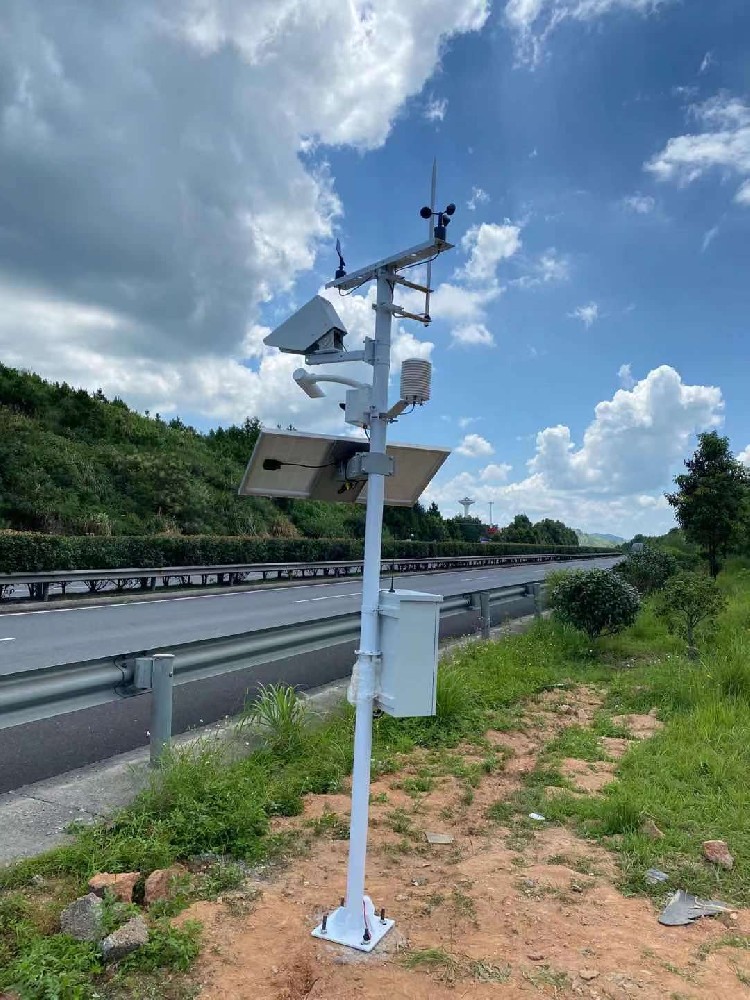
Using modern IoT and sensor technology to build smart road weather monitoring systems is an inevitable trend for ensuring road traffic safety and improving efficiency. NiuBoL’s road weather stations, with high reliability, non-contact monitoring, and multi-dimensional data acquisition, provide strong scientific support for traffic management departments.
In the future, as economic development continues and smart city construction deepens, higher demands will be placed on transportation. NiuBoL will continue to innovate, constantly upgrading sensor technology and data analysis models to build a more precise, efficient, and convenient smart road weather monitoring system, contributing to a safe and smooth travel environment for everyone.
Related recommendations
Sensors & Weather Stations Catalog
 Agriculture Sensors and Weather Stations Catalog-NiuBoL.pdf
Weather Stations Catalog-NiuBoL.pdf
Agriculture Sensors Catalog-NiuBoL.pdf
Water Quality Sensor Catalog-NiuBoL.pdf
Related products
 Combined air temperature and relative humidity sensor
 TDR Soil Moisture & Temperature Sensor for irrigation| RS485 |4-20mA| NBL-S-THR
 Soil pH sensor RS485 soil Testing instrument soil ph meter for agriculture |NBL-S-PH
 Wind Speed sensor Output Modbus/RS485/Analog/0-5V/4-20mA
 Tipping bucket rain gauge for weather monitoring auto rainfall sensor RS485/Outdoor/stainless steel
 Pyranometer Solar Radiation Sensor 4-20mA/RS485

Screenshot, WhatsApp to identify the QR code
WhatsApp number:+8615367865107
(Click on WhatsApp to copy and add friends)

