





— Blogs —
—Products—
 Consumer hotline +8618073152920
WhatsApp:+8615367865107
Address:Room 102, District D, Houhu Industrial Park, Yuelu District, Changsha City, Hunan Province, China
Product knowledge
Time:2025-11-01 15:11:53 Popularity:963
A scenic weather station vs conventional weather station comparison should start with the installed channels and intended use, not the application label. Both can measure the same atmospheric quantities. For an existing NiuBoL installation, a scenic-area upgrade may mean adding a particular environmental instrument or visitor display rather than replacing the weather sensors that already meet the requirement.
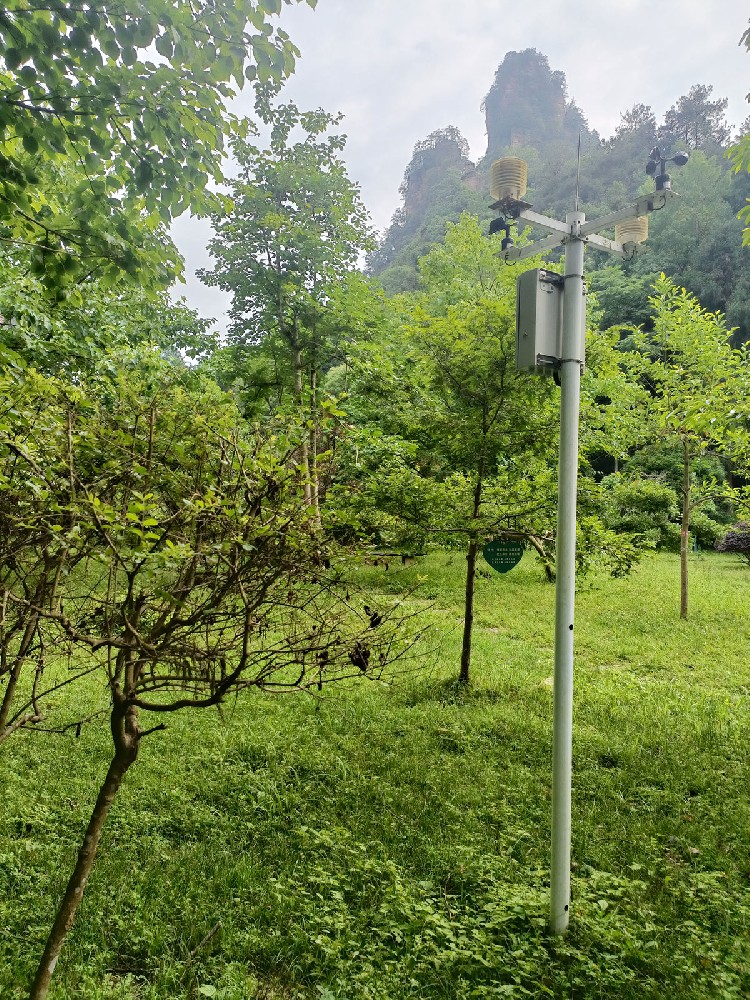
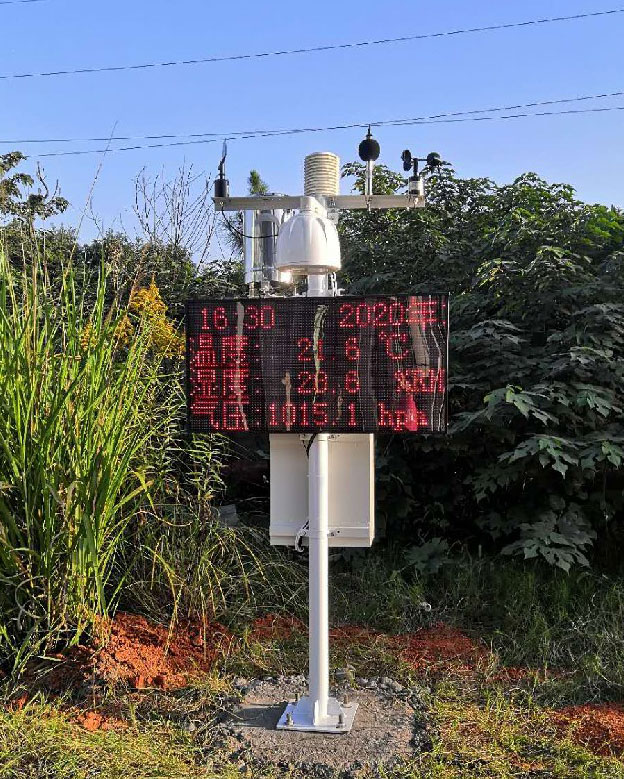
A conventional station might already record air temperature, humidity, wind and rainfall near a visitor center. If the new task is to show those observations on an entrance display, the missing component may be the display and its data connection. Calling the system a scenic station does not change how temperature or rainfall is measured.
Other projects genuinely need new observations. A forest research point may need an air ion counter, while a busy vehicle entrance may need particulate monitoring. These are different additions. Specify the question that each new measurement answers, then check the instrument and acquisition requirements individually.
| New requirement | Potential change to an existing station | Check before ordering |
|---|---|---|
| Visitor-center weather display | Use existing valid channels with a suitable display connection | Units, timestamps and unavailable-data indication |
| Air ion observations | Add a dedicated counter where the measurement has a defined purpose | Sampling arrangement, location and model-specific interface |
| Particulate observations | Add appropriate PM instruments | Method, inlet position and required reporting period |
| UV information | Add a suitable UV measurement or identify a separate information source | Required quantity; general solar radiation is not a UV index channel |
| Another visitor area | Add an observation point if the existing site is not representative | Exposure differences and service access |
Farm and campus stations can also use additional air ion or UV instruments when those measurements are required. The engineering differences are the selected channels, locations and data services, not restrictions imposed by the application name.
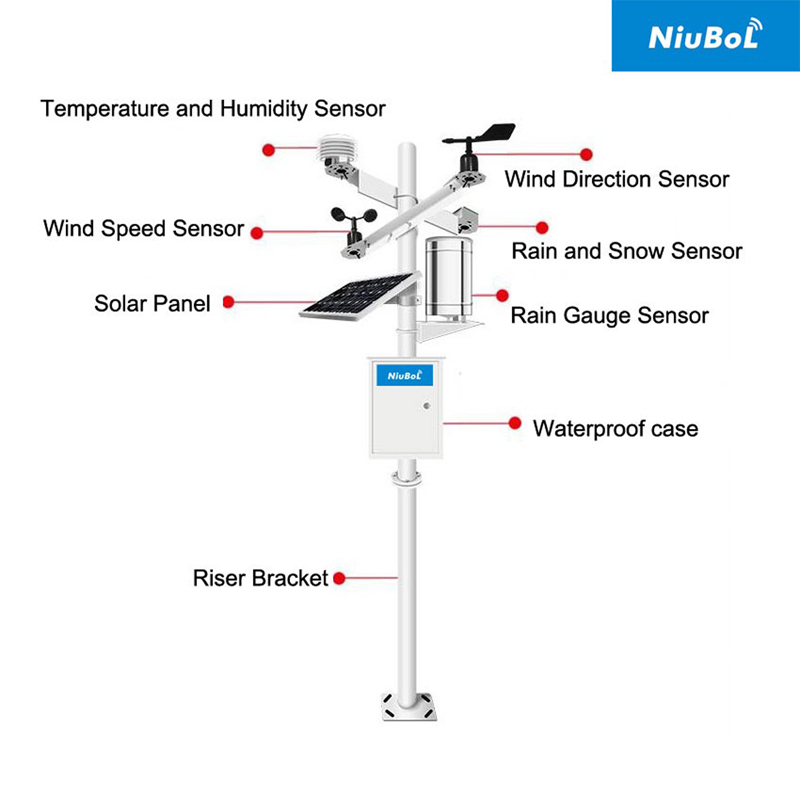
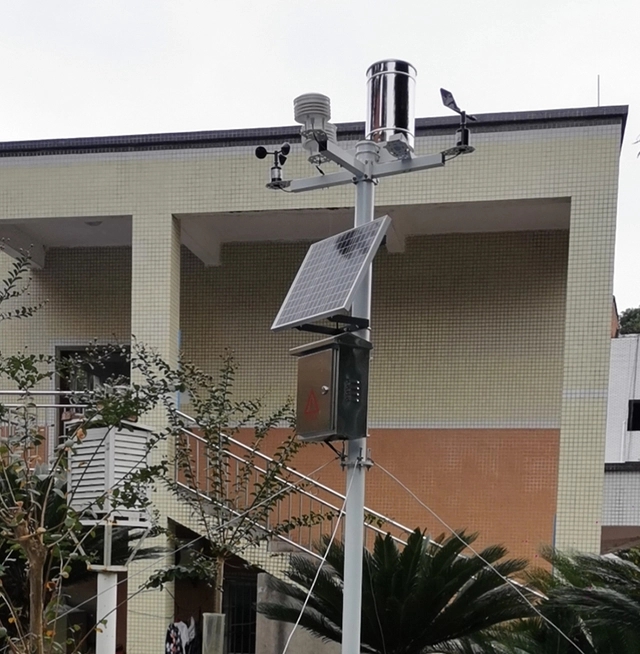
List the sensor models, output versions, power supply and receiving logger. Check whether each channel still operates correctly and whether its position remains suitable. A working sensor beside a newly built wall may need relocation rather than replacement. A logger with spare physical terminals may still lack the input type or decoding needed by an additional instrument.
The NBL-W-LBTH supplies air temperature, relative humidity and barometric pressure. Its RS485 Modbus RTU version uses DC 12-24 V and a default baud rate of 9600 bps. Match an addition to the actual acquisition arrangement; do not assume that another device can share the supply or communications settings without checking it.
For a 4-20 mA installation, review analog input availability and wiring instead of treating it as a digital-bus expansion. Keep the old channel names and units recognizable during an upgrade so operators can compare records before and after the change.
An air ion concentration is a particular environmental observation. By itself it does not establish health benefits, oxygen content, cleanliness or overall visitor comfort. Similarly, PM2.5 and PM10 are particulate measurements, not a complete assessment of every pollutant. Keep the displayed label close to the quantity actually measured.
If a project requests a comfort score, air-quality index or other derived result, identify its method, required inputs and reporting period separately. Missing inputs cannot be replaced by an attractive label. NiuBoL can review the instruments needed for specified measurements; the purchase scope should also identify who supplies and validates any calculation.
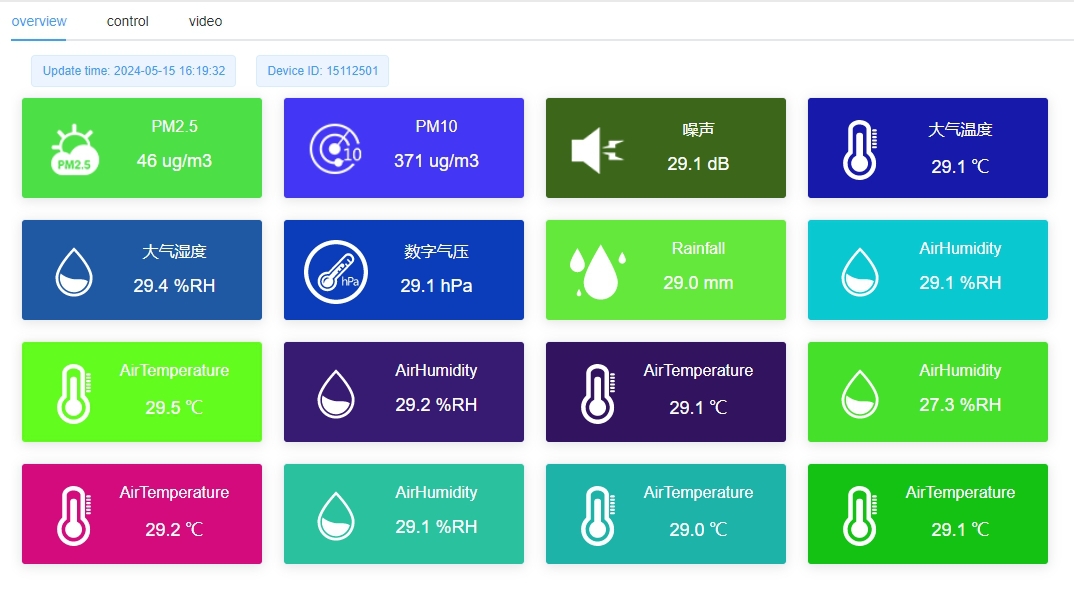
For a scenic weather station vs conventional weather station upgrade, test one value from the sensor through the logger to the new screen. Confirm that the screen shows the correct unit and observation location. Check the rainfall accumulation period: a running instrument counter and today's rainfall are not necessarily the same number.
Then interrupt the screen's data connection without interrupting acquisition. Observe whether the last received value is marked as old or unavailable. Reconnection should be checked with the selected software; historical recovery and duplicate handling are not implied by an RS485 connection. A display load also belongs in the power calculation, especially when the original station uses a small solar supply.
A separate observation point can be more useful when the new purpose needs a different exposure. Wind on an exposed viewpoint and humidity beside a shaded water feature do not describe the same local environment. Forcing every instrument onto an existing mast can reduce installation work while producing observations that do not answer the intended question.
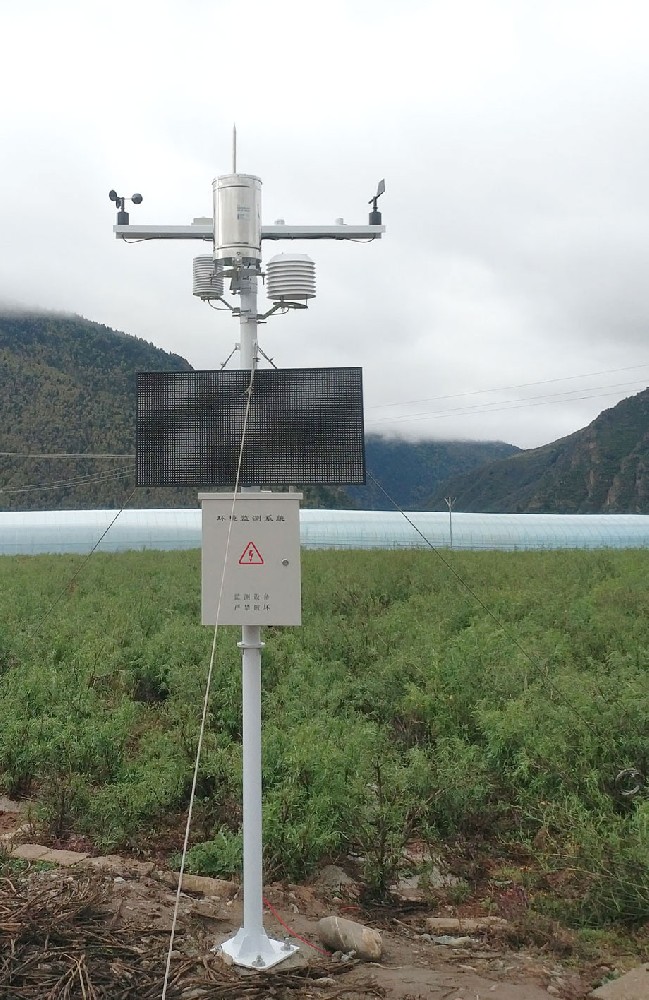
Keep the working station if its location and performance remain suitable. Add or replace only the components required by the new task. For a review, send NiuBoL the existing instrument schedule, a site photograph and the measurements or display functions that are missing.
No. Accuracy is specified for each instrument and channel. The application name does not improve a temperature sensor, rainfall collector or wind instrument.
Not necessarily. If the measurements remain suitable, check the logger's supported data access and the proposed display interface first. Reuse depends on the actual equipment and software arrangement.
Do not assume it. Specify a suitable UV measurement or a clearly identified information source. Broadband irradiance in W/m2 is not a UV index reading.
No such conclusion follows from the reading alone. Identify it as an ion concentration observation with its location, units and time rather than presenting it as a health or oxygen measurement.
The missing instruments, spare acquisition capacity, display arrangement, power and site work determine the scope. Request a quotation against an equipment inventory rather than an assumed price for a scenic label.
A scenic weather station vs conventional weather station comparison is most useful when it reveals what can be reused and what must change. Retain suitable measurements, add instruments with a defined purpose and test how the new information reaches its users. This avoids buying a replacement package for a problem that a focused addition can solve.
Prev:Forest Fire Meteorological Station Price: Weather, Software and Detection Scope
Next:Tourism Weather Station Manufacturer: Evaluate the Site Proposal
Related recommendations
Sensors & Weather Stations Catalog
 Agriculture Sensors and Weather Stations Catalog-NiuBoL.pdf
Weather Stations Catalog-NiuBoL.pdf
Agriculture Sensors Catalog-NiuBoL.pdf
Water Quality Sensor Catalog-NiuBoL.pdf
Related products
 Combined air temperature and relative humidity sensor
 TDR Soil Moisture & Temperature Sensor for irrigation| RS485 |4-20mA| NBL-S-THR
 Soil pH sensor RS485 soil Testing instrument soil ph meter for agriculture |NBL-S-PH
 Wind Speed sensor Output Modbus/RS485/Analog/0-5V/4-20mA
 Tipping bucket rain gauge for weather monitoring auto rainfall sensor RS485/Outdoor/stainless steel
 Pyranometer Solar Radiation Sensor 4-20mA/RS485


Screenshot, WhatsApp to identify the QR code
WhatsApp number:+8615367865107
(Click on WhatsApp to copy and add friends)

