





— Blogs —
—Products—
 Consumer hotline +8618073152920
 WhatsApp:+8615367865107
Address:Room 102, District D, Houhu Industrial Park, Yuelu District, Changsha City, Hunan Province, China
Product knowledge
Time:2026-01-07 11:22:30 Popularity:873
In the process of modern agriculture advancing toward digitization and automation, water-fertilizer integration (Fertigation) technology has become a core tool for achieving grain yield increase and resource conservation. Simply put, this technology dissolves crop-required nutrients in water and delivers them evenly and accurately to crop root zones through pressure pipeline systems, like “administering drips.”
As a brand in smart agriculture monitoring and control, NiuBoL is committed to upgrading traditional “empirical irrigation” to “digital precise focus” through high-precision automatic fertilizer applicators and IoT sensing platforms. This article delves into regime formulation, equipment highlights, and practical details to reveal the secrets of efficient water-fertilizer management.
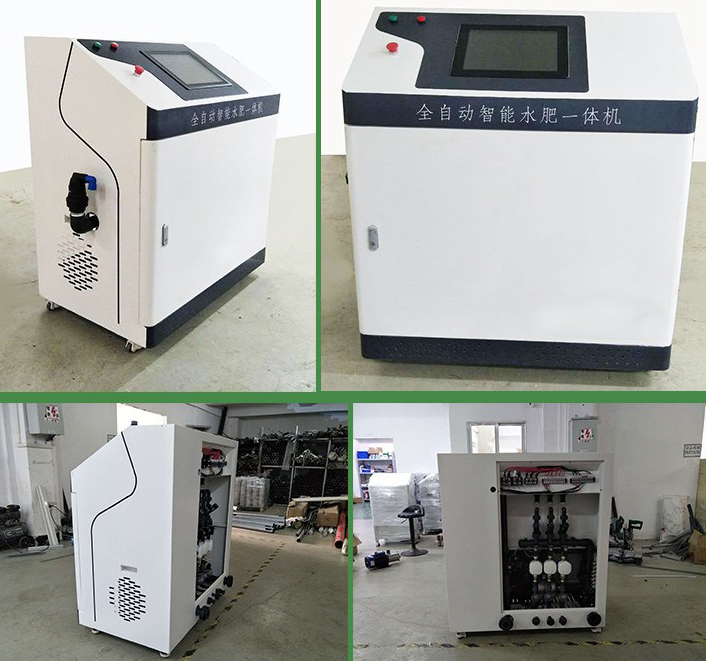
Water-fertilizer integration is far more than simple “water + fertilizer” mixing; its core lies in water-fertilizer coupling. Scientific regime formulation is the premise for maximum system efficiency.
1.1 Irrigation Regime: Art of Dynamic Balance
Irrigation quotas must follow “on-demand supply” principles. Managers should calculate actual gaps by subtracting natural precipitation from crop total water needs during growth periods.
Key Indicators: Single irrigation quota, times, intervals.
Data Support: Dynamically adjust using NiuBoL soil moisture monitoring data, real-time meteorological parameters, and facility conditions (e.g., greenhouse vs. open field) to keep moisture in main root layers.
1.2 Fertilization Regime: Phased Nutrient Focus
Traditional broadcasting has low utilization; water-fertilizer integration reduces amounts by 30%-50% compared to conventional.
Calculation Model: Actual fertilization = (total fertilizer need for target yield - soil nutrient supply) ÷ fertilizer utilization rate.
Phased Fitting: Follow “fertilizer follows water” principle. Allocate total fertilizer reasonably across irrigation tasks based on physiological characteristics in different growth periods (e.g., seedling root promotion, fruit expansion).
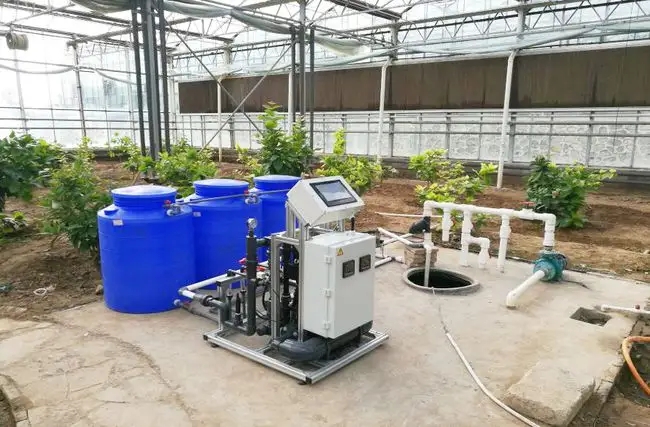
As the “heart” of the system, automatic fertilizer applicator performance directly determines nutrient supply stability and precision.
2.1 Structure and Performance Highlights
Industrial-Grade Quality: Aluminum alloy frame structure, pipelines using chemical-grade high-pressure and corrosion-resistant materials, adapting to various acid-alkaline nutrient solutions.
Full-Scenario Adaptation: High injection pressure, perfectly matching drip, micro-spray, traditional spray, reel, and center-pivot irrigation forms.
Dual-State Compatibility: Supports liquid fertilizer injection and stirring for quick uniform dissolution of solid granular fertilizers; can double as automated pesticide application system.
2.2 Intelligent Control Hub
PID Precise Control: NiuBoL water-fertilizer integrators stably control nutrient/pesticide solution ratios via PID self-tuning, ensuring minimal output concentration fluctuations.
EC/pH Real-Time Monitoring: Core of smart machines. Controller dynamically adjusts fertilizer channels based on preset conductivity (EC) and pH values, avoiding “seedling burn” from high concentrations or pH imbalance affecting nutrient uptake.
Multi-Channel Selectivity: Standard multiple independent channels—apply same fertilizer for higher throughput or N, P, K separately for precise nutrient blending.
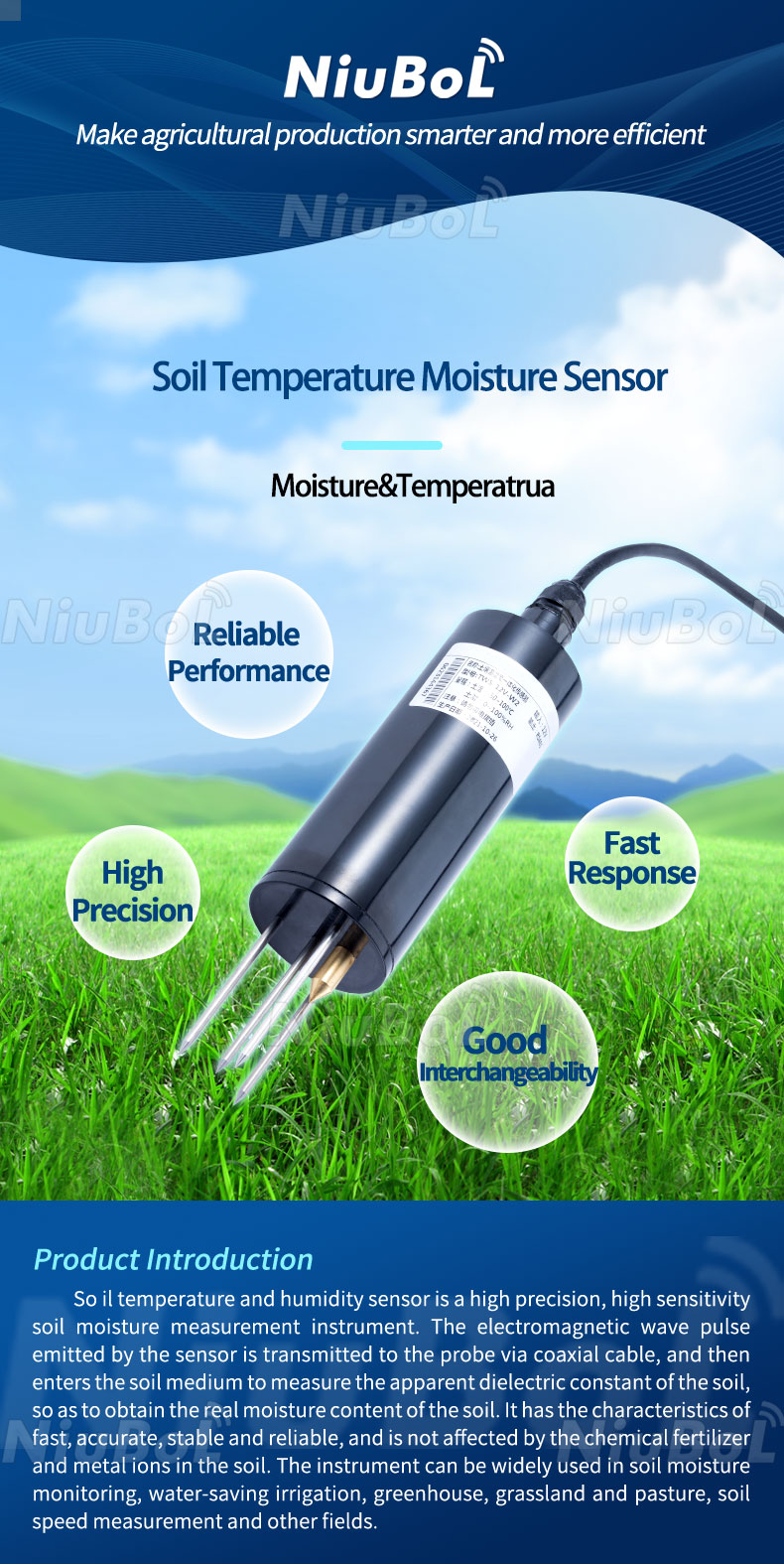
Even with advanced applicators, improper fertilizer selection easily causes drip system clogs, leading to high maintenance costs.
Full Solubility (Zero Precipitation): Must select high-purity fully water-soluble fertilizers. Dissolved solutions should be clear without impurities; strictly prohibit cheap granular fertilizers with heavy fillers.
Excellent Compatibility: Conduct mixing tests before combining different fertilizers. E.g., calcium and phosphorus mix easily forms calcium phosphate precipitate; such “conflicting” fertilizers should inject via separate channels or at different times.
Base and Topdressing Coordination: To protect micro-irrigation, low-mobility and scale-prone fertilizers like phosphorus recommended as base applied once during soil preparation.
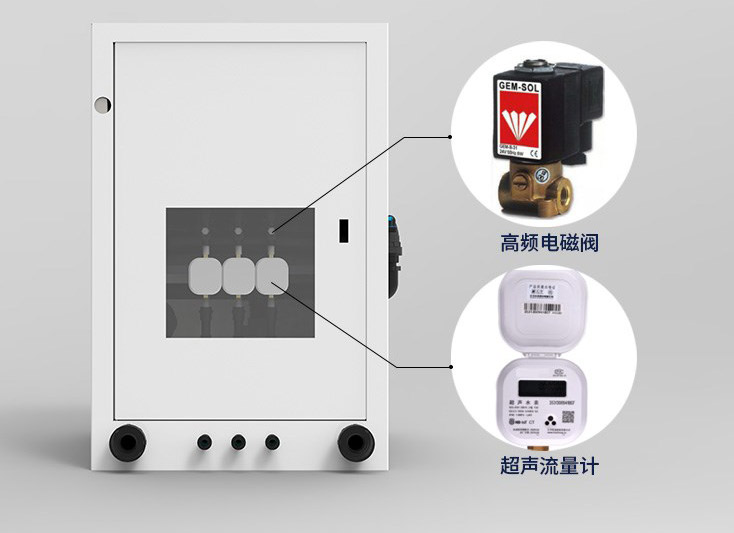
| Question | Answer |
|---|---|
| Q1: Does water-fertilizer integration really save money? | A: In the long run, yes. Though initial equipment higher than traditional, it saves over 50% labor, reduces 30%+ fertilizer purchases, and significantly boosts crop marketable rates. |
| Q2: How to prevent fertilizer corrosion of irrigation system? | A: NiuBoL equipment uses high corrosion-resistant chemical-grade pipelines. Operationally, run 15+ minutes clear water flush post-fertilization to drain residual solution. |
| Q3: Can fertilizer applicator link with weather stations? | A: Yes. Via NiuBoL IoT platform, smart integrators auto-pause irrigation on rain forecasts or adjust frequency based on light intensity for true “unattended.” |
| Q4: Why does my EC monitoring fluctuate greatly? | A: Usually unstable injection pressure or uneven fertilizer dissolution. Ensure stirring on; check fertilizer channel ball valve in reasonable range. |
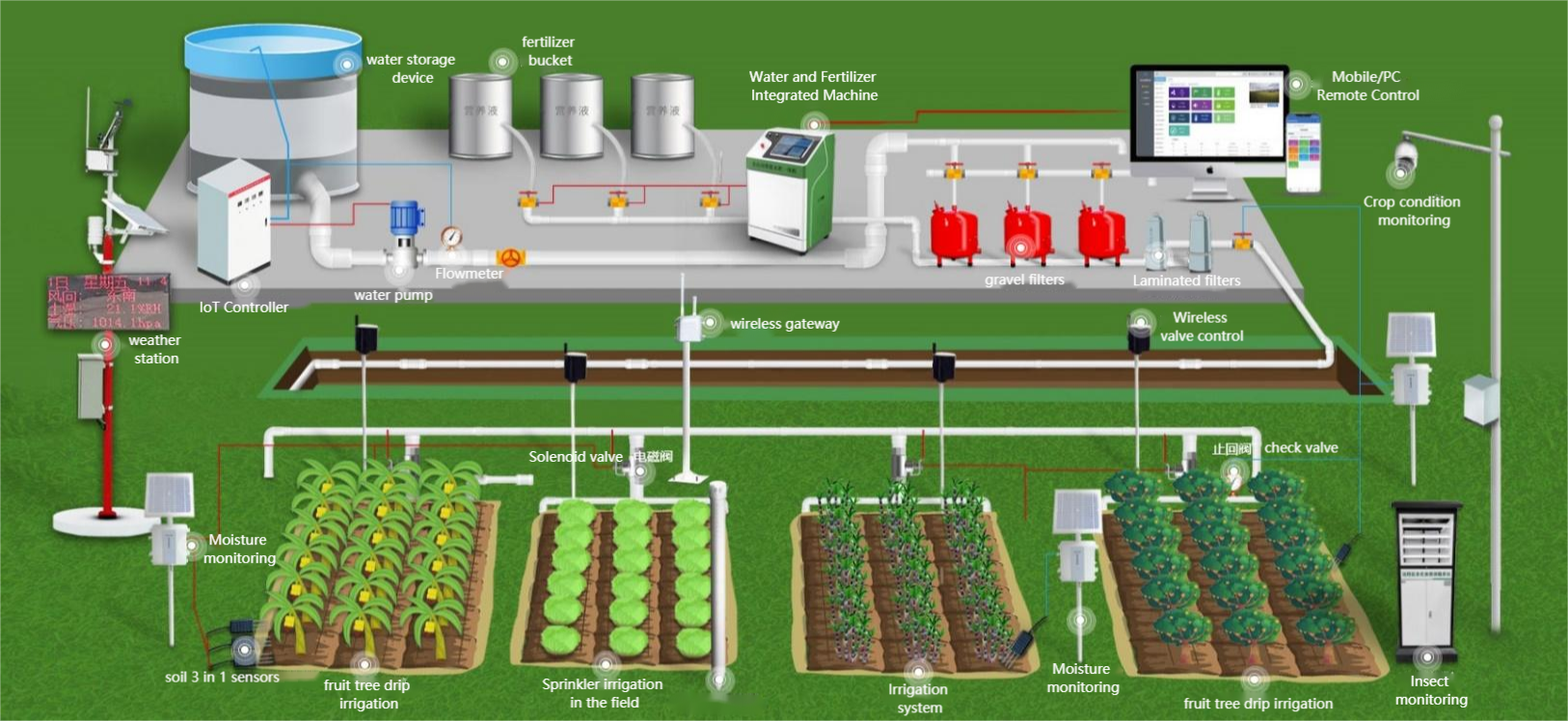
Water-fertilizer integration technology's core is “precision.” Through rigorous control of applicator, distribution network, and regimes, farmers achieve most effective land feedback.
With IoT maturity, NiuBoL propels integration toward automation/intelligence. Online monitoring soil nutrients/moisture/meteorology auto-adjusts drip durations/ratios. Not just innovation but solid step to green/sustainable agriculture.
If your base faces low efficiency or shortages, contact NiuBoL for full technical support from planning/design to installation/debugging.
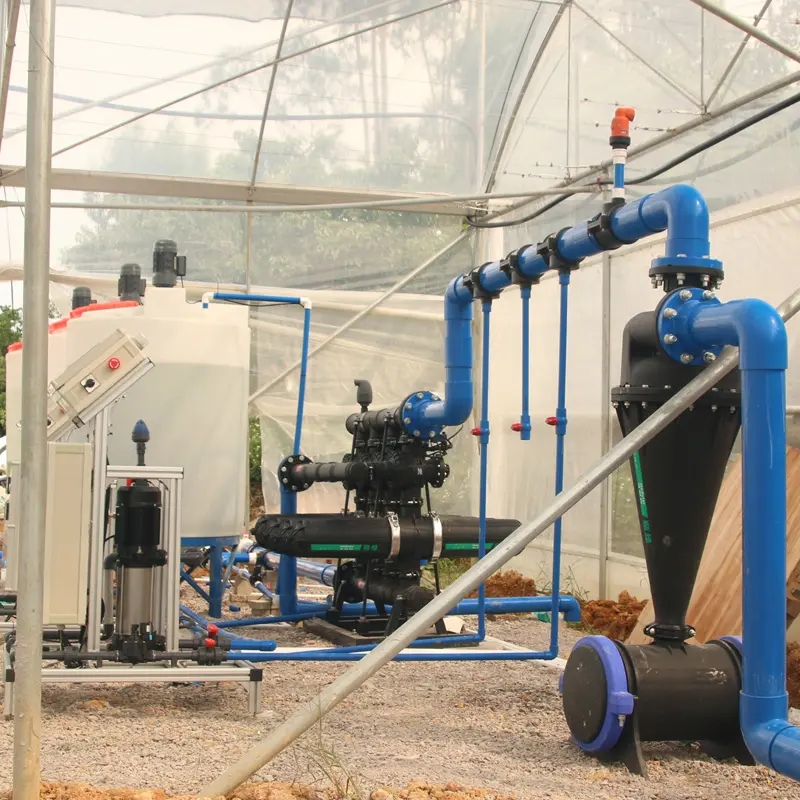
Technical Indicators and Communication Reference:
Control Technology: PID automatic adjustment and self-tuning
Communication Protocol: Modbus RTU
Interface Standard: RS485
Power Requirement: AC 220V / 380V
Monitoring Indicators: Flow (m³/h), injection pressure (MPa), EC (mS/cm), pH value
Transmission Link: Supports 4G, Ethernet or local LAN to control center
Material Specification: Aluminum alloy frame, chemical-grade high-pressure pipelines, industrial-grade electrical components
Next:Core advantages and technologies of NiuBoL's integrated smart irrigation system for agriculture
Related recommendations
Sensors & Weather Stations Catalog
 Agriculture Sensors and Weather Stations Catalog-NiuBoL.pdf
Weather Stations Catalog-NiuBoL.pdf
Agriculture Sensors Catalog-NiuBoL.pdf
Water Quality Sensor Catalog-NiuBoL.pdf
Related products
 Combined air temperature and relative humidity sensor
 TDR Soil Moisture & Temperature Sensor for irrigation| RS485 |4-20mA| NBL-S-THR
 Soil pH sensor RS485 soil Testing instrument soil ph meter for agriculture |NBL-S-PH
 Wind Speed sensor Output Modbus/RS485/Analog/0-5V/4-20mA
 Tipping bucket rain gauge for weather monitoring auto rainfall sensor RS485/Outdoor/stainless steel
 Pyranometer Solar Radiation Sensor 4-20mA/RS485

Screenshot, WhatsApp to identify the QR code
WhatsApp number:+8615367865107
(Click on WhatsApp to copy and add friends)

