





— Blogs —
—Products—
 Consumer hotline +8618073152920
 WhatsApp:+8615367865107
Address:Room 102, District D, Houhu Industrial Park, Yuelu District, Changsha City, Hunan Province, China
Product knowledge
Time:2026-01-07 11:15:06 Popularity:833
In the evolutionary process of modern agriculture, transforming “water” and “nutrients” from extensive flood irrigation to precise “point-to-point” supply is the core proposition for enhancing agricultural productivity. The popularization of water-fertilizer integration (Fertigation) technology has completely changed the limitations of traditional agriculture relying on weather and empirical fertilization.
Utilizing pressure irrigation systems, water-fertilizer integration mixes soluble fertilizers into nutrient solutions and delivers them uniformly and accurately to crop roots along with irrigation water. This “small meals frequently” supply method not only aligns with crop growth patterns but also demonstrates immense potential in water and energy saving, as well as soil environment protection. As an explorer in smart agriculture, NiuBoL always advocates using precise sensing data and automated control to maximize the efficiency of every drop of nutrient water.
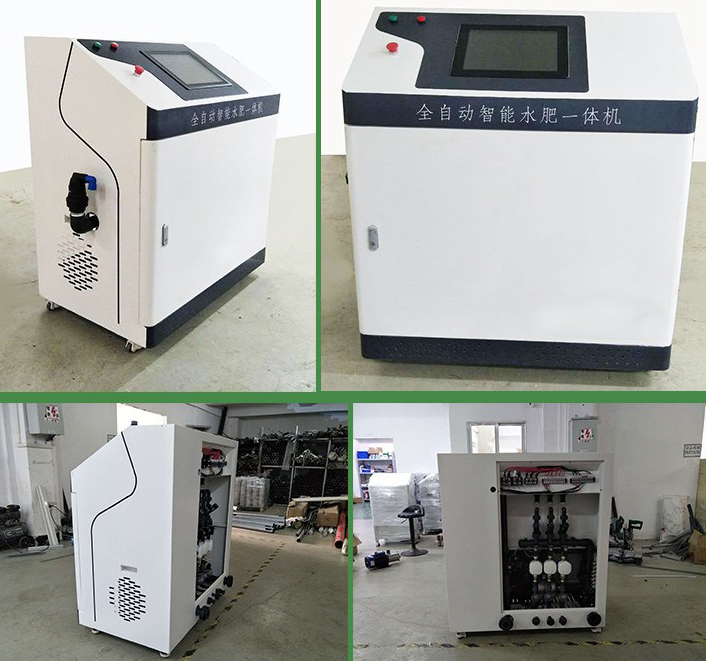
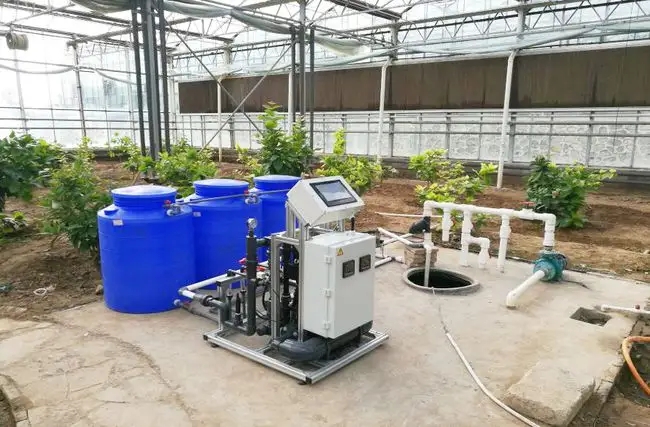
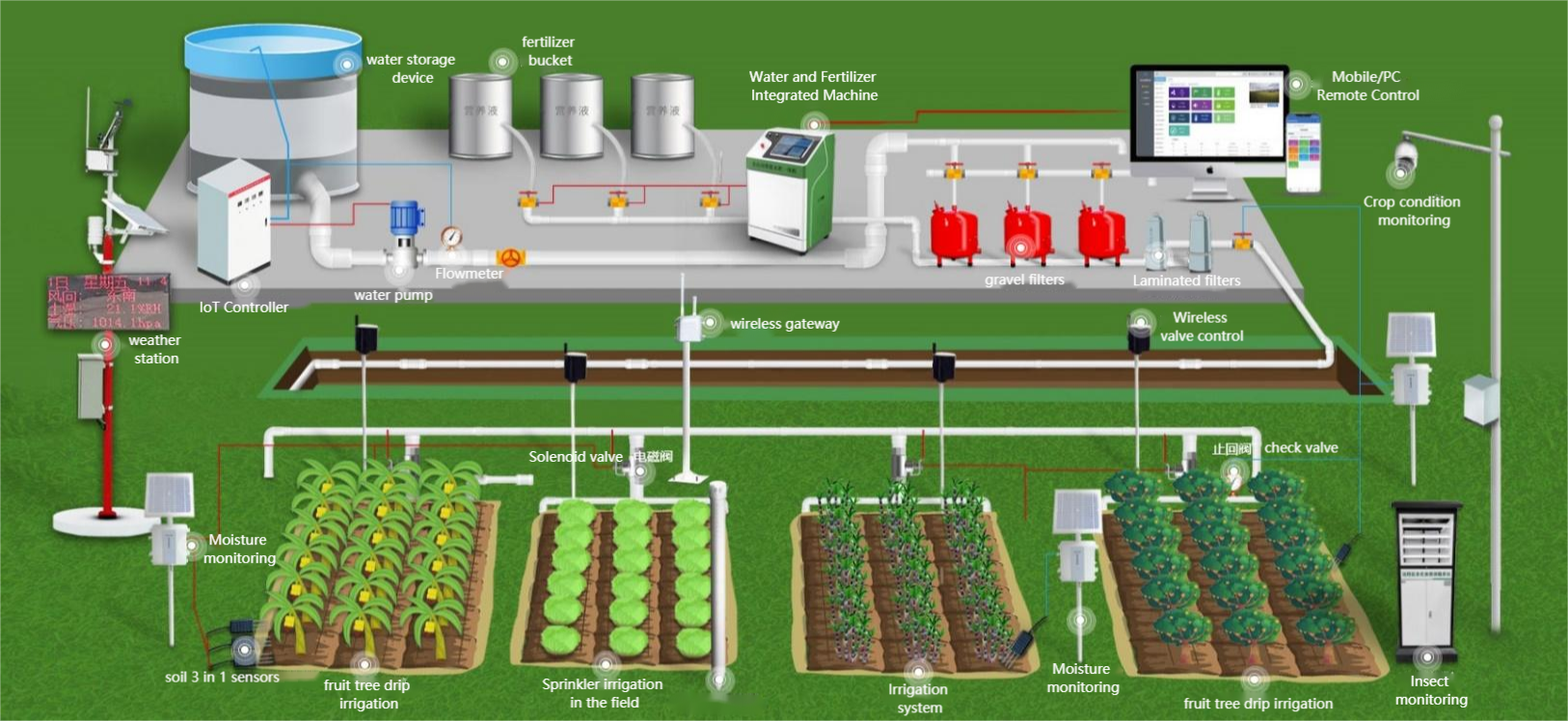
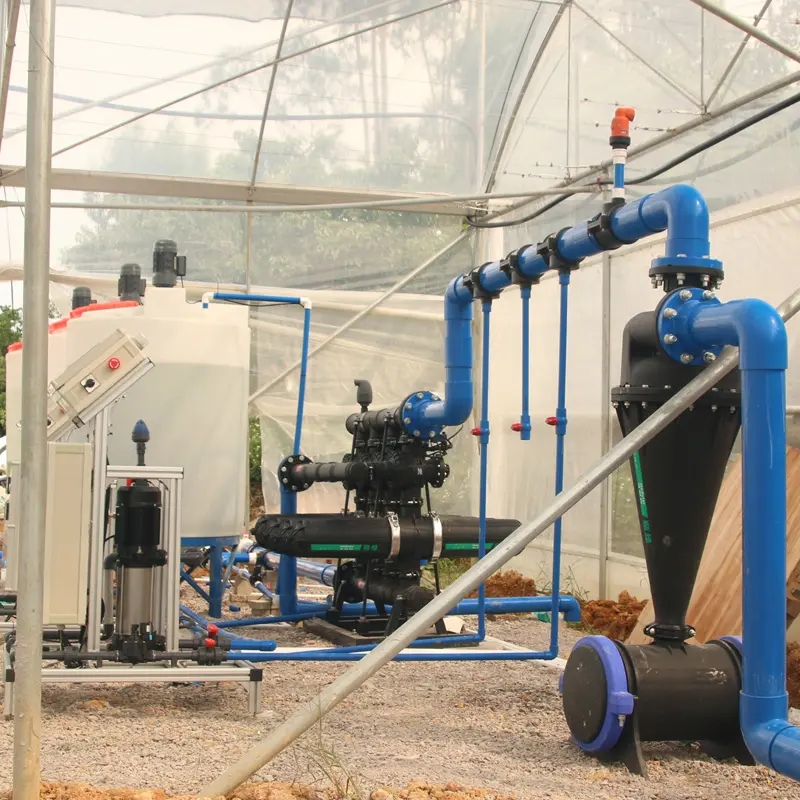
A complete water-fertilizer integration system is not a simple pipeline connection; it is a precise network composed of four core parts: water source, head hub, distribution pipelines, and emitters.
Water Source System: Includes rivers, reservoirs, wells, ponds, etc. Water quality stability is the lifeline of the system; if necessary, integrate NiuBoL water quality monitoring sensors for real-time alerts.
Head Hub: This is the “brain” and “power source” of the system.
Power Equipment: Motors and pumps provide water delivery pressure.
Filtration System: Key to preventing emitter clogging.
Fertilization Device: Venturi fertilizer applicator, differential pressure fertilizer tank, or precision injection pump.
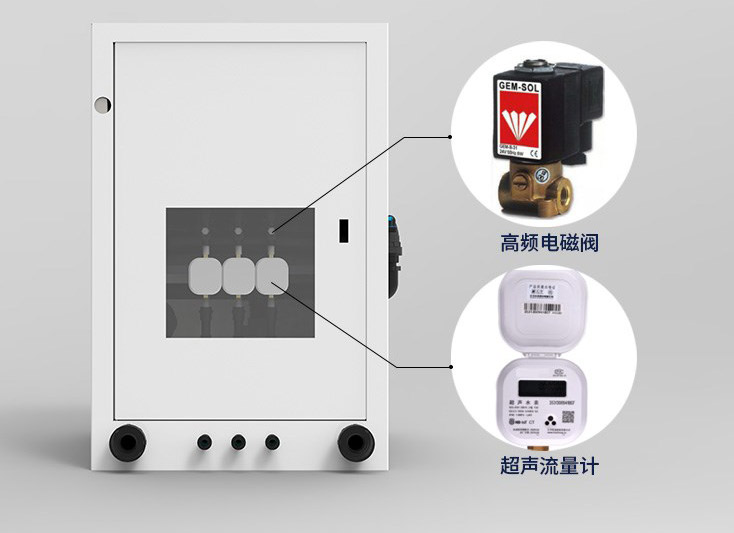
Control and Measurement: Pressure gauges, flow meters, and automated control cabinets.
Distribution Pipelines: Composed of main, trunk, branch, and capillary levels, responsible for long-distance nutrient water transport and pressure distribution.
Emitters: The system's terminals, including drippers, sprinklers, or drip tapes. They moisten crop root zones with minute flows.
The difficulty in implementing water-fertilizer integration lies not in “hardware installation” but in “software design”—how to formulate scientific water-fertilizer plans based on crop needs.
2.1 Confirmation of Irrigation Regime
Irrigation volume should be precisely calculated based on crop water requirements and precipitation during growth periods.
Water-Saving Indicators: Micro-irrigation fertilization typically reduces open-field quotas by about 50% compared to flood irrigation; protected areas (greenhouses) by 30%-40%.
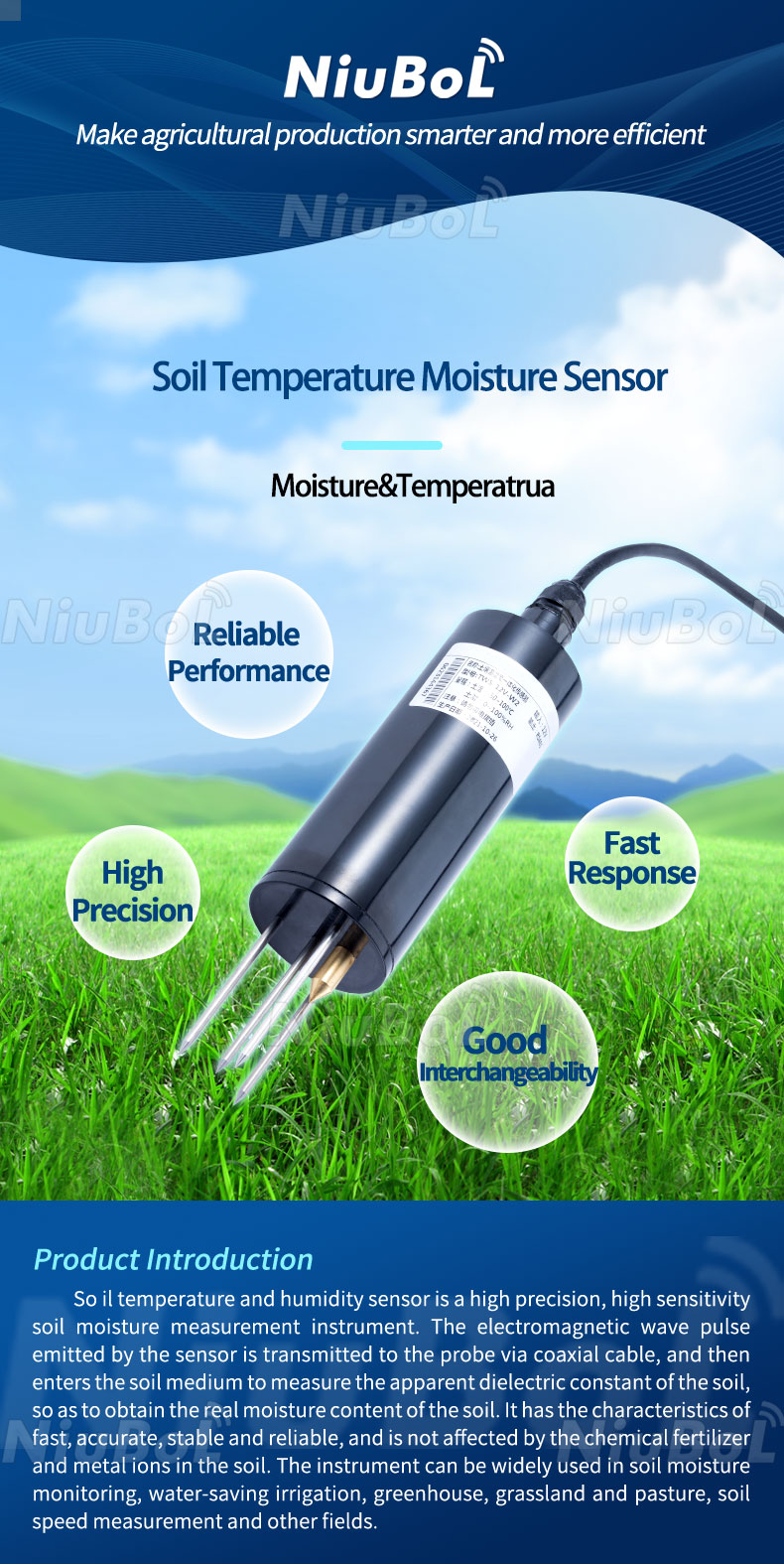
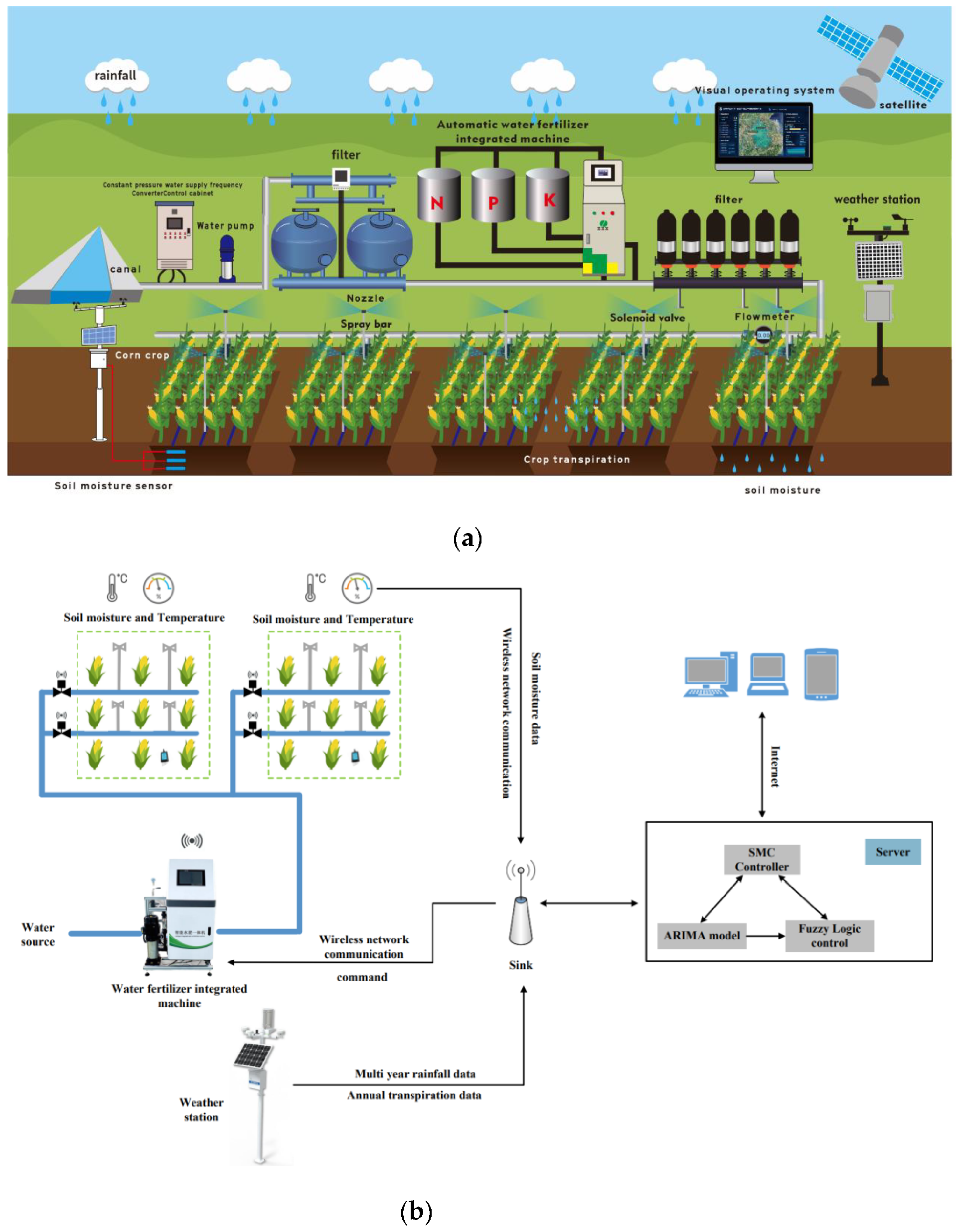
Dynamic Adjustment: Use NiuBoL soil moisture sensors for real-time monitoring, combined with weather station data to predict transpiration, determining optimal irrigation timing and frequency.
2.2 Confirmation of Fertilization Regime
Water-fertilizer integration significantly improves fertilizer utilization (by 40%-50%), so fertilizer amounts are usually only 50%-60% of conventional.
Total Control: Calculate total N, P, K demands based on target yields and soil fertility.
Phased Allocation: Base fertilizers applied before soil preparation; topdressings via irrigation system in multiple doses. For example, tomatoes require increased potassium during peak fruiting, so adjust ratios accordingly.
Nutrient Balance: Strictly calculate N-P-K ratios. For 10,000 kg/acre tomato yield, consider nutrient uptake and seasonal utilization rates (N ~60%, P ~40%, K ~75%) for refined plans.
Not all fertilizers can enter water-fertilizer systems. Insufficient solubility or precipitation risks expensive drip system failure.
Full Solubility Requirement: Topdressings must use high-purity soluble fertilizers like urea, ammonium bicarbonate, ammonium chloride, potassium sulfate, potassium chloride.
Phosphorus Fertilizer Selection: Phosphorus easily precipitates with calcium/magnesium in water. Recommend high-solubility types like monopotassium phosphate for system topdressing.
Chemical Compatibility: Absolutely prohibit mixing trace element fertilizers with phosphorus unless chelated. Otherwise, insoluble phosphates form, clogging drippers.
Secondary Dissolution: Fully stir and dissolve fertilizers in small buckets before adding to tanks, filtering impurities through screens.
Different crop scenarios demand varying systems; NiuBoL recommends targeted configurations:
4.1 Protected Areas and Field Cash Crops
Selection: Prioritize drip irrigation fertilization systems.
Fertilizer Applicator: Protected areas generally choose Venturi applicators or injection pumps—compact, sensitive adjustment.
4.2 Orchard Cultivation
Selection: Recommend micro-spray fertilization systems.
Advantages: Micro-sprays cover extensive orchard root areas while improving local microclimate humidity. Fertilization devices mostly use injection pumps; conditional bases should equip NiuBoL automatic irrigation fertilization systems.
Water-fertilizer integration does not exist in isolation; it needs combination with advanced cultivation techniques for “1+1>2” effects.
Under-Mulch Drip Irrigation: Lay drip tapes under mulch. This mode further reduces evaporation, suppresses diseases—benchmark for cotton, melon/fruit cultivation.
Improved Varieties and Management: Must pair with crop varieties and pest control. Improved conditions often accelerate weeds, so precise field management essential.
Sensor Linkage: Integrate NiuBoL soil temperature/humidity and EC sensors for real-time root zone salinity monitoring, avoiding fertilizer damage from excess—true “on-demand fertilization.”
| Question | Answer |
|---|---|
| Q1: If dripper flow decreases after system operation, what to do? | A: Usually clogging sign. First check filter damage; then determine physical (sediment) or chemical (salt precipitation). For latter, periodically flush with acidic cleaner. |
| Q2: Must system close immediately after fertilization? | A: Absolutely not. Continue 15-30 minutes pure water irrigation post-fertilization to flush residual solution from pipes/drippers, preventing crystallization clogs and pushing nutrients deeper into roots. |
| Q3: How high are system water quality requirements? | A: Micro-irrigation sensitive to physical impurities. For river/pond sources, equip multi-stage filtration (e.g., gravel + screen). |
| Q4: Can water-fertilizer integration reduce pesticide use? | A: Yes. Under-mulch drip greatly lowers greenhouse humidity, reducing fungal spread. Some systemic pesticides can be precisely applied to roots via system. |
The core of water-fertilizer integration technology lies in “precision.” Through rigorous control of system head, distribution network, and water-fertilizer plans, farmers can achieve the most affectionate feedback to the land.
With IoT maturity, NiuBoL drives water-fertilizer integration toward automation and intelligence. By online monitoring soil nutrients, moisture, and meteorological parameters, systems automatically adjust drip durations and nutrient ratios. This is not just technological innovation but a solid step toward green, sustainable agriculture.
Is your base facing low fertilizer efficiency or water shortages? Contact us for one-stop technical support from water source analysis, system design to NiuBoL smart monitoring solutions.
Technical Details and Specification Reference:
Communication Protocol: Modbus RTU
Interface Standard: RS485
Common Sensors: Soil temperature and humidity sensor, soil EC sensor, water flow meter, pressure transmitter
Power System: DC 12V / 24V
Core Units: Irrigation quota (m³/acre); flow (L/h); fertilizer amount (kg/acre); conductivity (mS/cm)
Head Pressure Range: 0.1 MPa - 0.3 MPa (depending on system scale)
Fertilizer Solubility Requirement: >99% (fully soluble)
Prev:Three Core Categories of Agricultural Weather Station Equipment and Their Key Sensors
Next:Technical Highlights of the NiuBoL Smart Water-Fertilizer Integrated Irrigation System
Related recommendations
Sensors & Weather Stations Catalog
 Agriculture Sensors and Weather Stations Catalog-NiuBoL.pdf
Weather Stations Catalog-NiuBoL.pdf
Agriculture Sensors Catalog-NiuBoL.pdf
Water Quality Sensor Catalog-NiuBoL.pdf
Related products
 Combined air temperature and relative humidity sensor
 TDR Soil Moisture & Temperature Sensor for irrigation| RS485 |4-20mA| NBL-S-THR
 Soil pH sensor RS485 soil Testing instrument soil ph meter for agriculture |NBL-S-PH
 Wind Speed sensor Output Modbus/RS485/Analog/0-5V/4-20mA
 Tipping bucket rain gauge for weather monitoring auto rainfall sensor RS485/Outdoor/stainless steel
 Pyranometer Solar Radiation Sensor 4-20mA/RS485

Screenshot, WhatsApp to identify the QR code
WhatsApp number:+8615367865107
(Click on WhatsApp to copy and add friends)

