





— Blogs —
—Products—
 Consumer hotline +8618073152920
WhatsApp:+8615367865107
Address:Room 102, District D, Houhu Industrial Park, Yuelu District, Changsha City, Hunan Province, China
Product knowledge
Time:2025-01-16 11:44:27 Popularity:1500
Vibrating insecticidal lamps attract responsive flying insects with a light source and use an electric grid to kill or stun insects that contact it. The product name is not evidence that shaking the pole attracts pests. For a farm installation, distinguish the attraction spectrum, grid condition and operating hours from the separate question of whether crop damage is reduced.

A frequency-vibration insect lamp has several functions that are easy to confuse. The light source provides an attraction signal. An insect must approach and reach the grid before electrical contact can occur. A collection container receives fallen insects. The solar panel and battery supply energy, while the controller determines when the lamp can run. A fault in any one of these stages can change the catch without changing pest pressure in the crop.
The NiuBoL frequency-vibration solar insect trap uses light attraction and a high-voltage grid. Do not interpret the term vibration as a specification for a mechanically oscillating head, acoustic deterrence or ultrasonic pest repelling. None of those functions should be added to a purchase specification without a separately identified device and technical description.
Light attraction is also selective. It concerns insects that respond to the installed light under the field conditions. It does not establish control of eggs, larvae feeding inside plant tissue, soil-dwelling stages or every insect present nearby. A catch of adult moths can justify closer crop inspection, but it does not measure the number of larvae already feeding in the crop.
| Component | NiuBoL configuration | Meaning for the installation |
|---|---|---|
| Attraction source | LED T8; 320-680 nm; main wavelength 365 nm; rated at no more than 20 W | Spectrum and electrical power describe the source, not a universal pest-response rate |
| Electric grid | Grid voltage at least 4000 V | High-voltage contact stage; not the battery supply voltage |
| Battery | 12.8 V DC, 12 Ah LiFePO4 | Nominal stored energy is not a guaranteed overnight operating duration |
| Solar module | Monocrystalline silicon, at least 40 Wp | Peak rating does not describe daily energy under shade or overcast skies |
| Protection | IP65 | Does not remove high-voltage precautions or the need to keep the collection path serviceable |
Use these values for the specified configuration, then match the quotation and replacement parts to the ordered version. The lamp's electrical ratings do not support a promise that every attracted insect is killed, that all insects are target pests or that one lamp protects a fixed area in every orchard. Those are different performance questions.
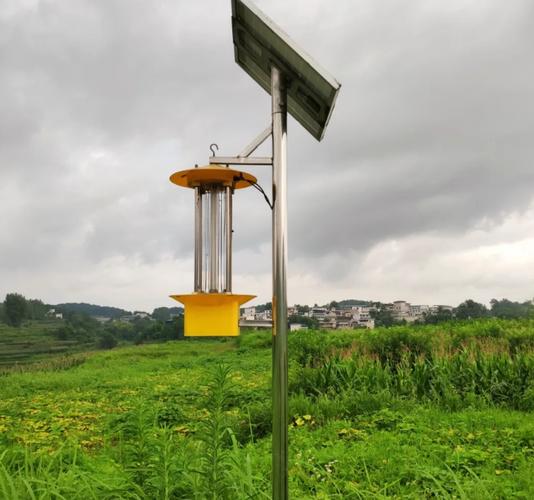
A lamp that glows has demonstrated light emission, not the condition of the grid or collection system. Insects, moisture and debris can affect the exposed capture path. Before a service inspection, isolate the equipment and follow the discharge and waiting procedure for the supplied unit. Solar equipment may have both panel and battery energy sources; switching off a user control is not, by itself, proof that all accessible parts are safe.
Do not bridge the grid with a tool, touch it to test for voltage or improvise a live spark test. An authorized technician should use the approved diagnostic method. Record whether insects accumulate on the grid, whether the collection container is blocked and whether the controller has deliberately stopped operation. These observations separate a capture-path problem from a night when few responsive insects were active.
A replacement tube needs the correct electrical connection, source specification and controller compatibility. A visually similar lamp from another application is not automatically interchangeable. Keep the equipment identification and failed-part photographs with a spare-parts request so NiuBoL can check the assembly rather than quote by appearance alone.
Automatic light and time control can restrict the active interval. Rain or low-energy protection can also interrupt a planned night. A smaller morning catch after an early shutdown should not be reported as an improvement in crop protection. Record the actual operating period alongside the catch and inspect the reason for the interruption before changing the schedule.
The solar system must recover enough energy for the intended duty. A 40 Wp panel is not a 40 W generator throughout the night, and lamp power alone is not a complete battery calculation. For the separate energy-sizing task, use the site's seasonal solar conditions, all active loads, usable battery capacity and the intended protection behavior. Avoid extending the run time simply to increase catch if that leaves the battery depleted before the next planned night.
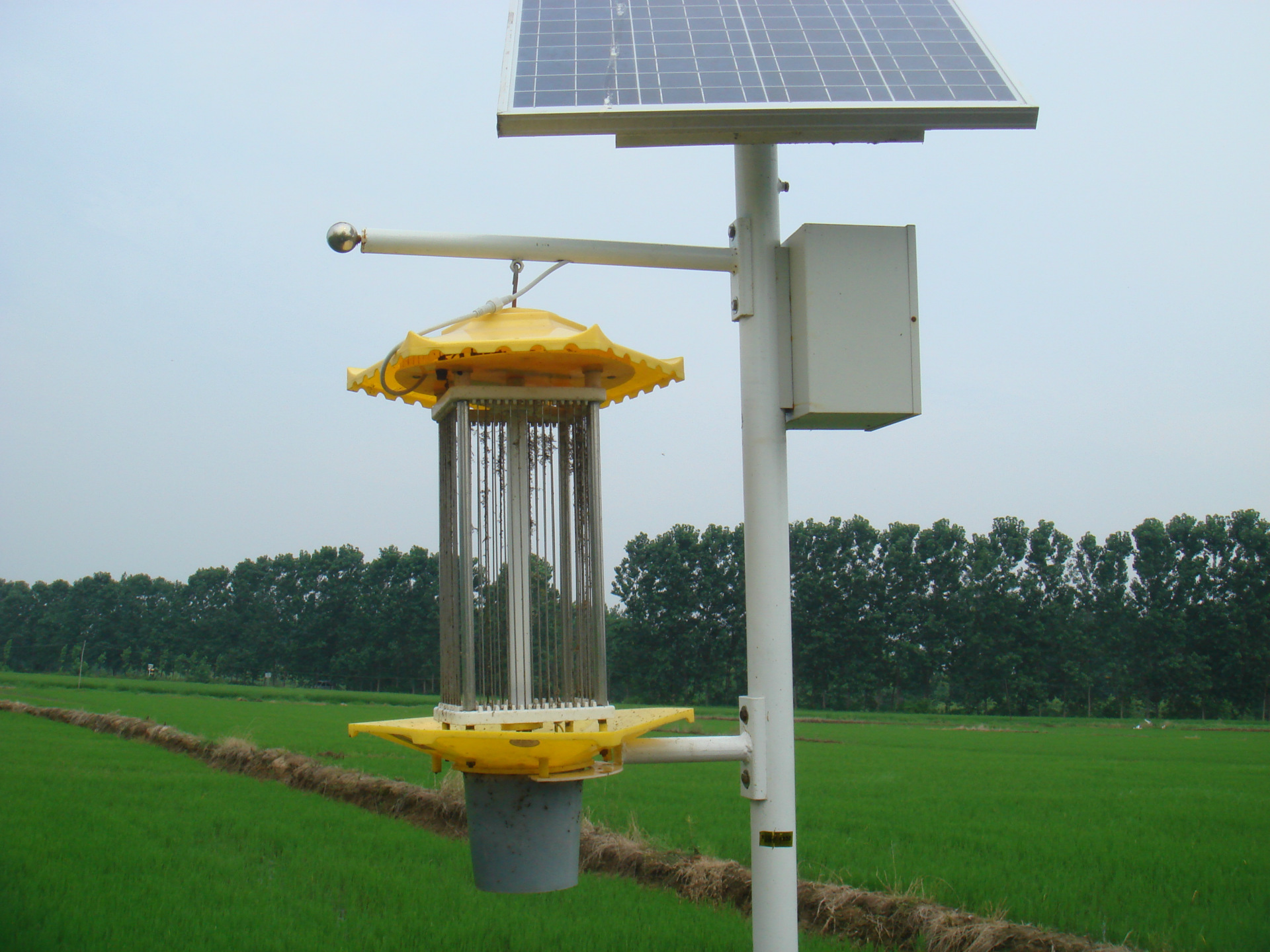
For an orchard, the useful comparison is between the target pest's activity, crop scouting and observed injury over the relevant crop stage. For a vegetable block, changing crop rows or nearby lights can change which insects approach the lamp. Neither application can be accepted solely because a collection box contains many insects. Non-target catches require review rather than being counted automatically as useful pest removal.
A short field evaluation should keep location and schedule identifiable, record service interruptions and have the responsible crop adviser examine target and non-target catches. Note any other treatment applied during the same period. If pest damage changes, those records help avoid attributing the entire outcome to the lamp.
Where the project needs dated photographs, species labels and remote records, a remote insect monitoring station is a different equipment class. A solar grid lamp does not become a camera monitoring terminal merely because the farm has a gateway. Request only the control or data functions that the ordered lamp actually exposes.

No mechanical shaking function should be inferred from the name. The described capture process uses light attraction and electrical contact. Unexpected movement should be assessed as a mounting or equipment issue, not accepted as proof of normal attraction.
No. The specified battery is 12.8 V DC, while the grid operates at a much higher voltage. Both the energy sources and the high-voltage section require the correct isolation and service procedure.
Not when the project requires image acquisition, reviewed identifications or a dated remote sample record. The grid lamp and camera station have different processing paths and deliverables.
No. Confirm target species, operating time, non-target capture and crop injury. A large catch can reflect attraction conditions without establishing a reduction in economically important damage.
Provide crop, target insect, installation location, intended nightly schedule, seasonal charging conditions and service access. Ask NiuBoL to identify the lamp, controller, battery, panel and replacement-source configuration separately.
Vibrating insecticidal lamps should be evaluated as light-attraction and electric-grid capture equipment. Verify the installed components and safe operating condition, then judge the agricultural result through target-pest observations and crop checks. The name, visible light and number of fallen insects answer different questions.
Prev:Pest Monitoring System Relocation: Keep Site Changes Visible in Trends
Next:Ultrasonic Snow Depth Monitoring Station: Zero Reference and Mast Movement
Related recommendations
Sensors & Weather Stations Catalog
 Agriculture Sensors and Weather Stations Catalog-NiuBoL.pdf
Weather Stations Catalog-NiuBoL.pdf
Agriculture Sensors Catalog-NiuBoL.pdf
Water Quality Sensor Catalog-NiuBoL.pdf
Related products
 Combined air temperature and relative humidity sensor
 TDR Soil Moisture & Temperature Sensor for irrigation| RS485 |4-20mA| NBL-S-THR
 Soil pH sensor RS485 soil Testing instrument soil ph meter for agriculture |NBL-S-PH
 Wind Speed sensor Output Modbus/RS485/Analog/0-5V/4-20mA
 Tipping bucket rain gauge for weather monitoring auto rainfall sensor RS485/Outdoor/stainless steel
 Pyranometer Solar Radiation Sensor 4-20mA/RS485


Screenshot, WhatsApp to identify the QR code
WhatsApp number:+8615367865107
(Click on WhatsApp to copy and add friends)

