





— Blogs —
—Products—
 Consumer hotline +8618073152920
WhatsApp:+8615367865107
Address:Room 102, District D, Houhu Industrial Park, Yuelu District, Changsha City, Hunan Province, China
Product knowledge
Time:2025-12-07 17:16:27 Popularity:987
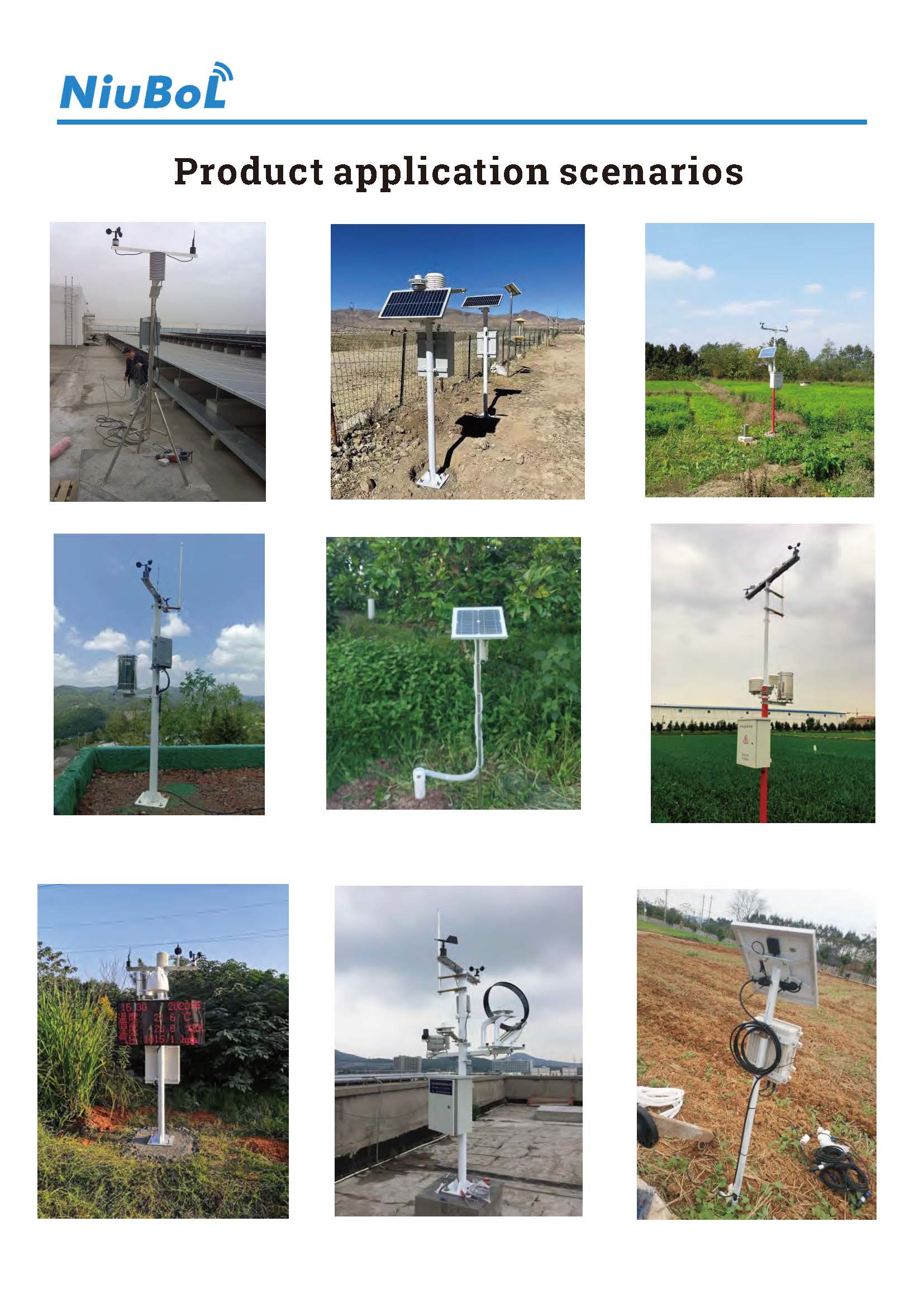
A compact weather station layout should follow the exposure required by each measurement, not just the space available on a pole. An integrated sensor head reduces separate mounts and connections, but all its channels share one position. A modular NiuBoL station allows wind, air temperature, rainfall and radiation sensors to occupy different positions when the project needs them.
A small enclosure does not make a station suitable for every small site. A roof can provide a convenient foundation while changing airflow and heating the surrounding air. A farm pole can have clear exposure above a short crop and become obstructed as the crop grows. Establish what the readings must represent before deciding how much equipment can share the support.
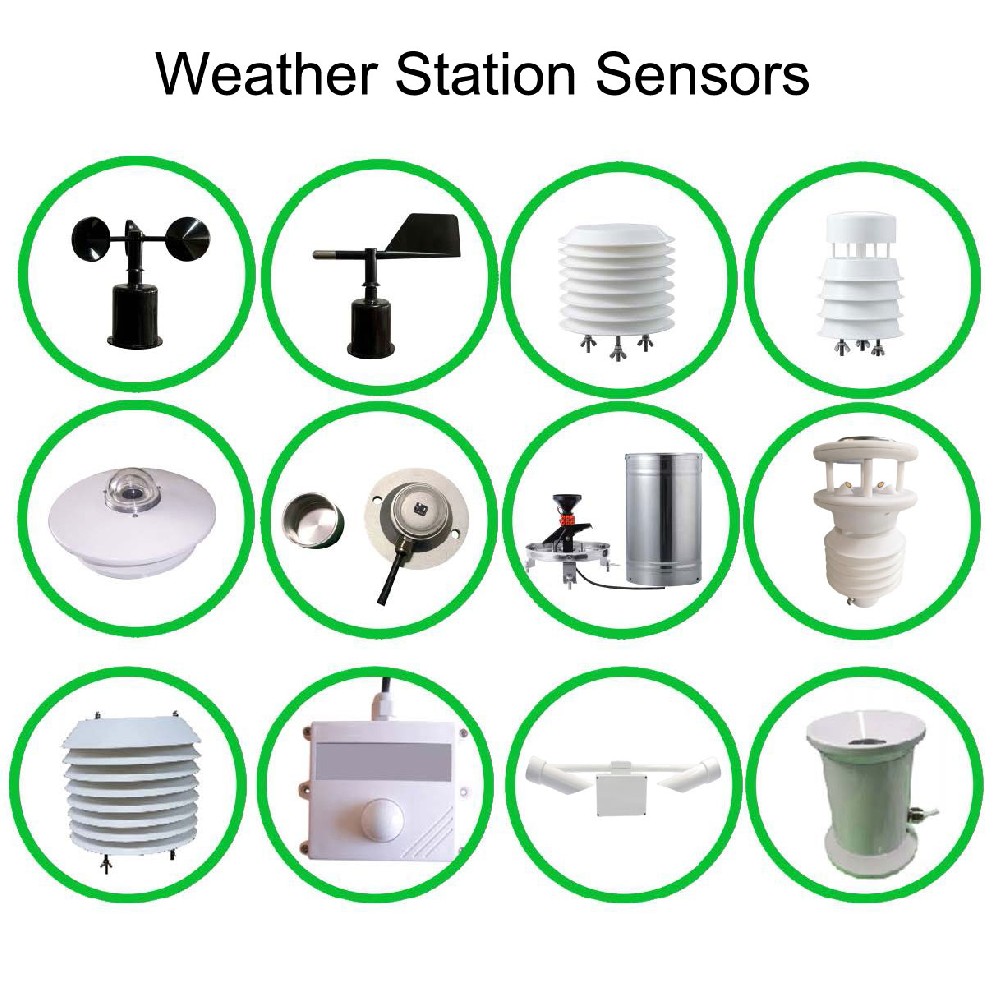
List the quantities, observation heights, nearby obstructions and service access. Then compare an integrated head with separately mounted instruments. The sensor options above are different configurations; a station does not include every pictured instrument by default. The number of parameters should follow the monitoring task rather than determine it.
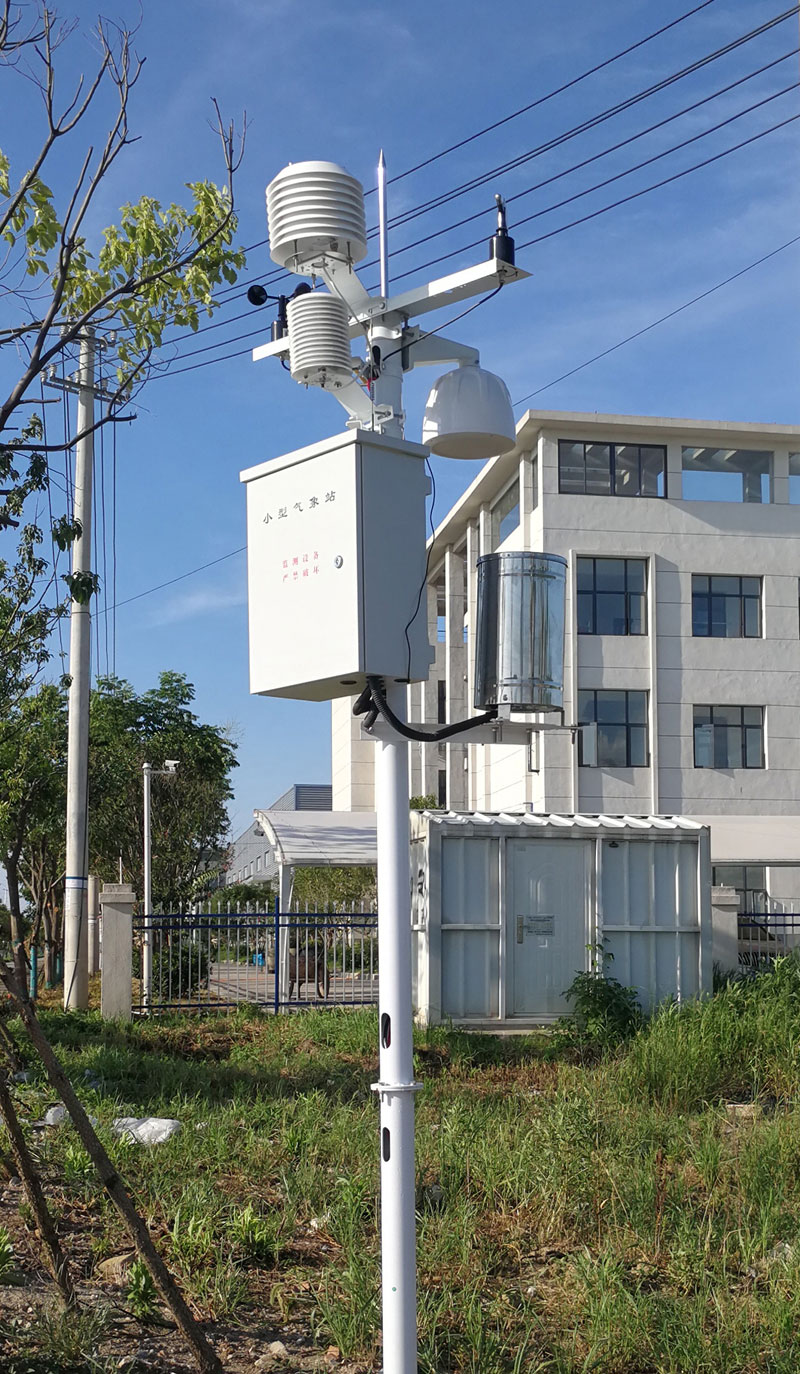
The NBL-W-61MUWS six-in-one head combines wind speed, wind direction, air temperature, relative humidity, pressure and piezoelectric rainfall. One mounting point and one digital interface can simplify field assembly. However, moving the head to improve wind exposure also moves its air and rainfall observations.
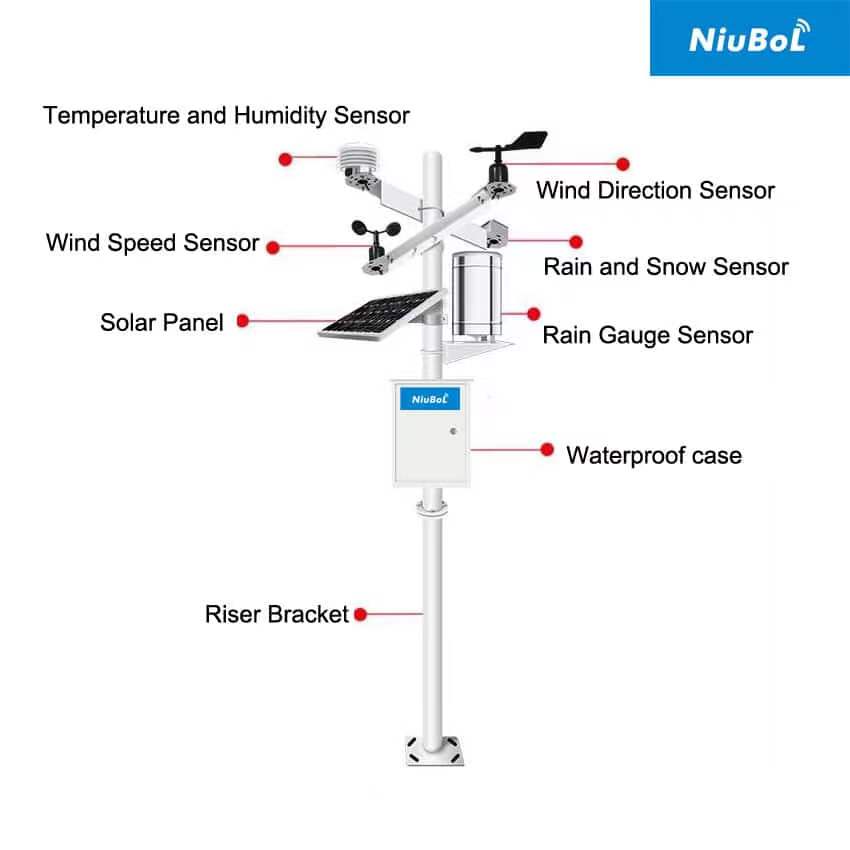
A modular arrangement can put a wind sensor on an appropriate arm, a shielded air sensor away from heat sources and a collector where it can be leveled and serviced. It needs more brackets, wiring and installation checks. Neither arrangement is automatically more accurate; the choice depends on the required exposures and the individual instruments.
| Layout choice | Useful characteristic | Trade-off to resolve |
|---|---|---|
| Integrated sensor head | Fewer separate field mounts and connections | Shared height and position for all integrated channels |
| Separate sensors on one support | Some freedom in arm position and orientation | Support, panel and enclosure can still disturb observations |
| Separate measurement points | Greater freedom to obtain the required exposure | More cable routes, supports and service locations |
A measurement range is not the same as the assembly's permitted operating environment. The 61MUWS air-temperature measurement range is -40 to 80 deg C, while its stated operating temperature is -20 to 50 deg C. Do not select an exposed location outside that operating envelope on the strength of the wider channel range.
| NBL-W-61MUWS item | Specification | Layout implication |
|---|---|---|
| Wind speed / direction | 0-40 m/s / 0-359 degrees | Provide the required airflow exposure and orientation |
| Air temperature / RH accuracy | +/-0.5 deg C / +/-5% RH | Local heating or obstruction adds exposure error |
| Rainfall | Piezoelectric; 0-8 mm/min; stated accuracy +/-10% | Keep the sensing surface exposed and inspect deposits |
| Supply / average power | DC 12-24 V / approximately 0.35 W | Add logger and modem loads separately |
| Output / cable | RS485 Modbus RTU; 9600 bps; standard 2.5 m cable | Confirm the installed cable route and extension arrangement |
| Operating environment | -20 to 50 deg C; 0-95% RH; IP65 | Check actual extremes; IP65 is not immersion protection |
These values describe this head, not every compact station. The logger, battery, enclosure and any separate probes have their own limits. A low-power sensor specification does not establish whole-station autonomy or certify the complete installation for flooding, icing or corrosive exposure.
The support carries more than sensors. A solar panel needs sunlight, an enclosure needs service access and the mast needs a suitable foundation. Those requirements can conflict with wind exposure or a clear radiation view. Draw the panel, cabinet and arms at their actual dimensions before fixing sensor positions.
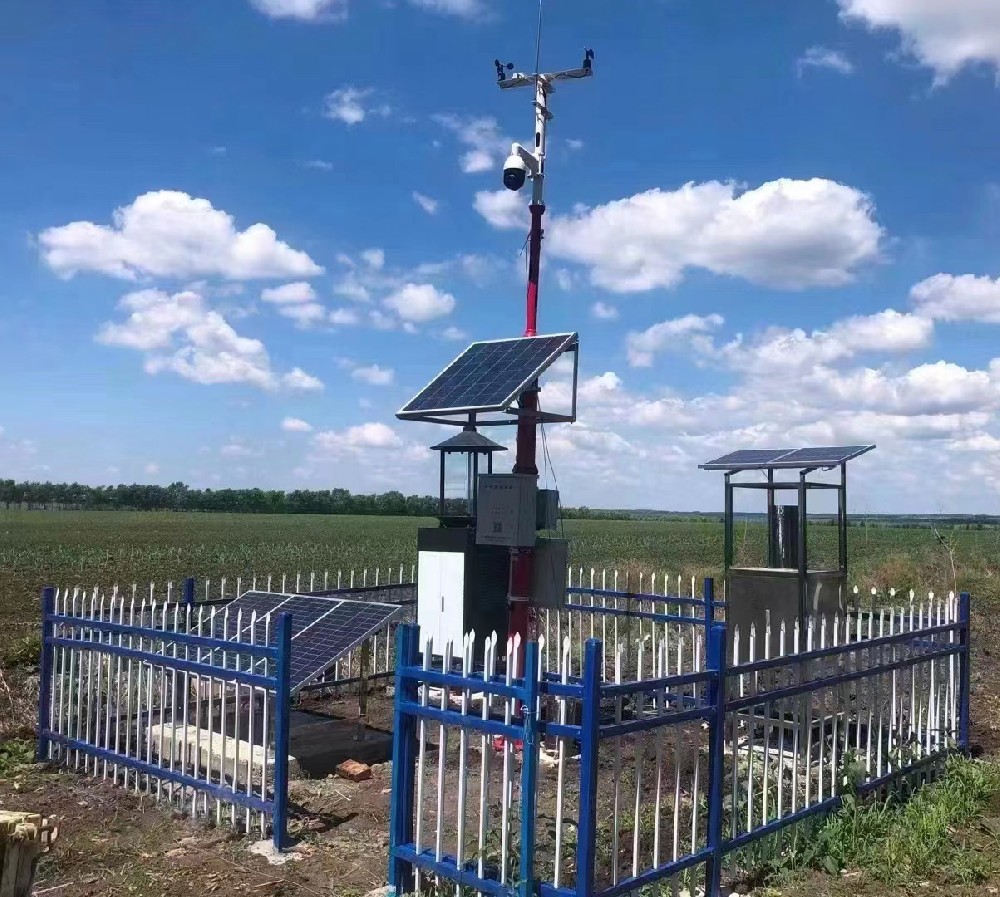
For a separately mounted solar radiation sensor, determine the intended measurement plane and avoid shading by the pole, panel or nearby structures. A short shadow can create a repeatable dip in the daily record. Moving the radiometer away from that obstruction may be more useful than changing calibration.
Similarly, moving an air sensor next to an enclosure for easier wiring can expose it to a different thermal environment. The NBL-W-LBTH shielded air sensor provides a separate mounting option when the required air observation cannot share the integrated head's position.
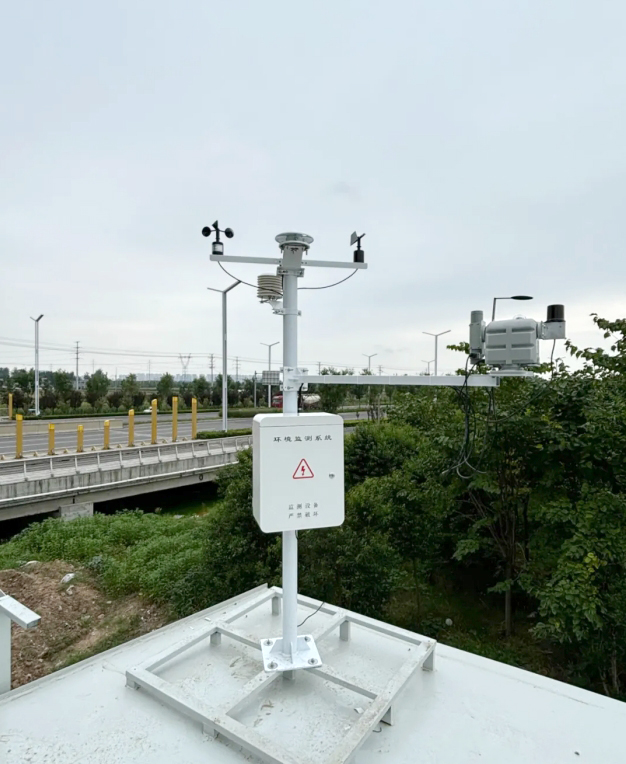
A separate tipping bucket rain sensor needs an unobstructed collector, a level base and access to the funnel and mechanism. A compact piezoelectric head avoids a collection funnel but uses a different rainfall measurement principle. Do not assume the two will produce identical event records merely because both report millimeters.
Where rainfall is important to acceptance, specify the required method and reference comparison. The station's rain channel should be chosen for that requirement, not only for a tidier support. Also identify how test rainfall and service interruptions will be flagged in the logger.
An integrated head may offer several channels through one RS485 device. Separate sensors can require more addresses, inputs and drivers. Check the actual protocol and channel capacity of the receiving PLC, RTU or logger. A common connector shape does not establish electrical compatibility or automatic recognition.
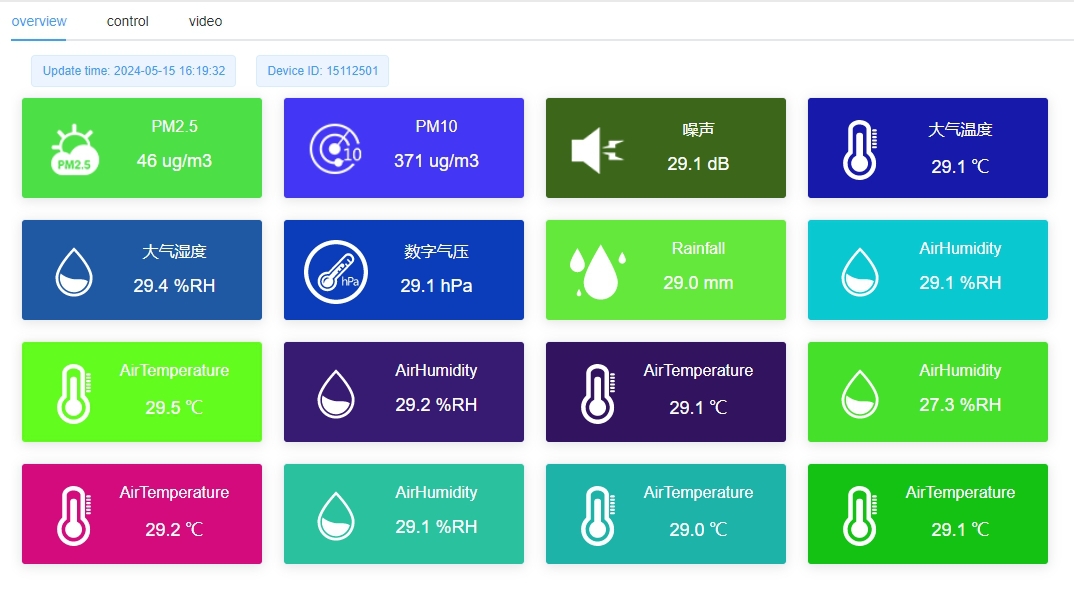
For the NBL-PH-1 logger, agree the installed sensor interfaces and recording configuration. The environmental display above illustrates channel presentation; the delivered software and enabled functions must match the order. Displaying six readings does not prove that six independent sensors are connected.
A compact weather station layout remains useful only while its exposure remains suitable. Vegetation, new buildings, parked machinery or a later camera can change the observation. For a wooded site, determine whether the task is an under-canopy study, a clearing observation or a wider weather reference. These are different measurement positions.
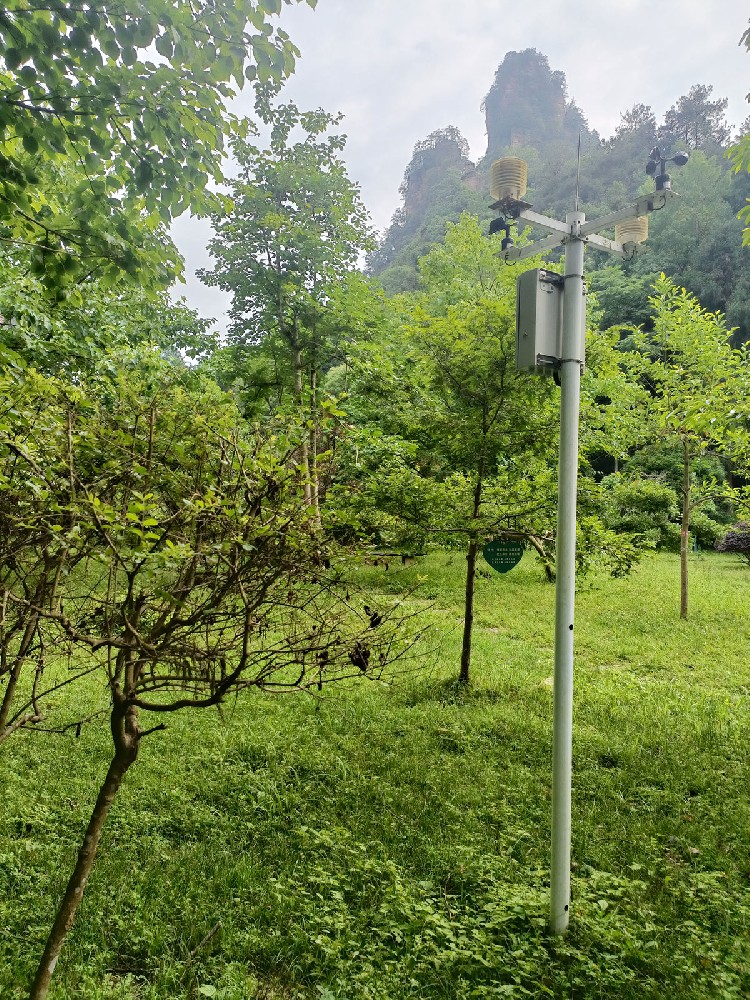
Photograph the surroundings at commissioning and record sensor height, arm direction and major obstacles. During later service, compare the scene before treating a change in readings as sensor drift. Relocating a head can solve an exposure problem, but it also creates a discontinuity in the observation history that should be documented.
An integrated head may need removal when one internal channel requires service. Establish the service procedure, repair arrangement and any temporary monitoring required during that period. A modular station can offer separate component access, although changing a shared arm or mast may still disturb other channels.
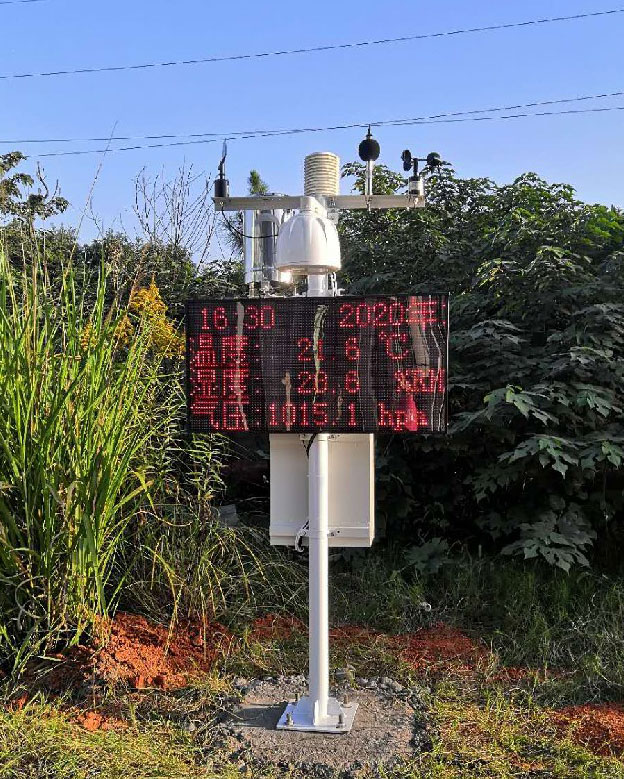
Local displays also need a suitable mounting position and their own power allowance. Keep a display or added enclosure from shading the radiometer or disturbing wind around the sensors. Check the layout again after accessories are added rather than assuming that acceptance of the original pole covers later changes.
Send NiuBoL a site sketch, required observations, exposure constraints, cable routes and service requirements. Request an integrated or modular configuration based on that information. Keep the existing positions of any reference instruments visible in the drawing so comparisons can be planned before installation.
No. It supplies its integrated measurements. Power, mounting, recording and onward communications still need suitable equipment and configuration.
Use them when the required wind, air, radiation or rain exposure cannot be obtained at one location, or when individual service access is important. Document the specific conflict rather than selecting modular equipment by default.
Not automatically. Roof materials and surrounding structures can change heat and airflow. Evaluate the required observation and compare suitable locations before treating the roof record as a crop-level reference.
No. Its stated operating range is -20 to 50 deg C. The wider measurement span does not override that assembly limit.
It should identify sensor positions and heights, obstruction risks, service access, cable routes and any exposure compromises. Link those decisions to the actual measurements required by the project.
A workable compact weather station layout balances exposure, wiring and service access. Use an integrated head where the shared position suits the observations; separate instruments where the measurement requirements justify them. The smallest hardware arrangement is useful only if its readings represent the conditions the owner intends to monitor.
Prev:Agricultural Weather Station Control: Inputs, Relays and Valve Feedback
Next:Forest Weather Station and Smoke Detection: Separate Monitoring Roles
Related recommendations
Sensors & Weather Stations Catalog
 Agriculture Sensors and Weather Stations Catalog-NiuBoL.pdf
Weather Stations Catalog-NiuBoL.pdf
Agriculture Sensors Catalog-NiuBoL.pdf
Water Quality Sensor Catalog-NiuBoL.pdf
Related products
 Combined air temperature and relative humidity sensor
 TDR Soil Moisture & Temperature Sensor for irrigation| RS485 |4-20mA| NBL-S-THR
 Soil pH sensor RS485 soil Testing instrument soil ph meter for agriculture |NBL-S-PH
 Wind Speed sensor Output Modbus/RS485/Analog/0-5V/4-20mA
 0.2mm Tipping Bucket Rain Gauge for Weather & Hydrology | NiuBoL
 Pyranometer Solar Radiation Sensor 4-20mA/RS485


Screenshot, WhatsApp to identify the QR code
WhatsApp number:+8615367865107
(Click on WhatsApp to copy and add friends)

