





— Blogs —
—Products—
 Consumer hotline +8618073152920
 WhatsApp:+8615367865107
Address:Room 102, District D, Houhu Industrial Park, Yuelu District, Changsha City, Hunan Province, China
Product knowledge
Time:2026-07-18 10:24:26 Popularity:325
A smart greenhouse project should not be purchased as a pile of sensors. It is a control system that links environmental data, crop requirements, actuator logic, manual override and historical analysis. Agricultural IoT changes greenhouse production from experience-based watering and fertilization to quantitative monitoring and control. That is the right procurement angle.
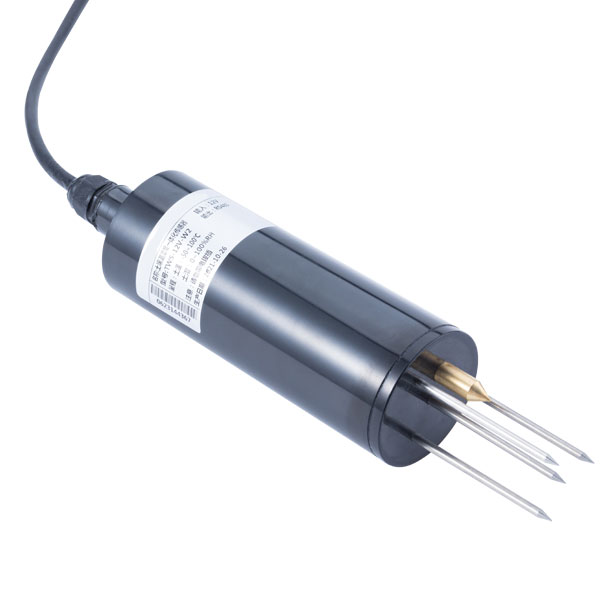
The buyer is not only asking whether a temperature sensor, humidity sensor or soil moisture sensor is available. The buyer is asking whether the system can keep the greenhouse within an agreed operating window, record enough data for decisions, and operate reliably when staff are not standing beside the equipment.
A practical greenhouse system normally includes air temperature and humidity, soil moisture, light intensity, carbon dioxide, rainfall or outside weather reference, actuator status and optional pest or camera data. The collected data are sent to a platform where rules can control irrigation valves, fans, shading screens, curtain motors, supplemental lights and other terminal devices.
| System layer | Typical components | Procurement value |
|---|---|---|
| Sensing layer | Air temperature, humidity, soil moisture, light, CO2 and other sensors | Turns greenhouse conditions into measurable data. |
| Transmission layer | RS485, wireless links, 4G gateway or local network | Moves data from field devices to controllers and platform. |
| Control layer | Data logger, controller, relay output, valve and fan control | Executes irrigation, ventilation and shading logic. |
| Platform layer | Computer dashboard, mobile page, historical database | Supports remote viewing, alarm records and decision review. |
| Service layer | Wiring diagram, commissioning, training, spare parts | Reduces project risk after delivery. |
This type of system is suitable for scaled vegetable planting, flower production, seedling facilities, research greenhouses and demonstration farms where environmental stability affects yield or labor cost. It is also suitable when the owner wants remote access, historical data, alarm logic or automatic control of irrigation and ventilation.
It may not be necessary for a very small greenhouse where the operator only wants manual observation and does not need historical records. In that case, standalone instruments may be enough. The system becomes more valuable as the greenhouse size, equipment count and labor cost increase.
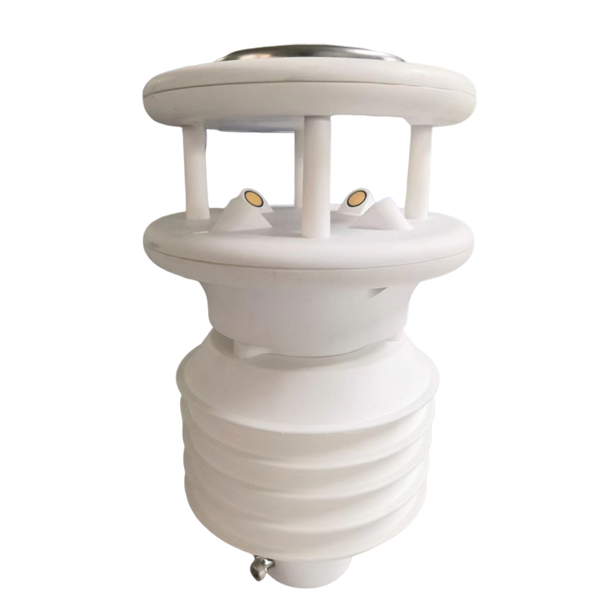
Greenhouse monitoring usually starts with temperature, humidity and other key environmental factors, but the useful list depends on crop, climate and equipment. Soil moisture is needed for irrigation decisions. Light and radiation help evaluate crop photosynthesis and shading control. Carbon dioxide matters in high-value greenhouse production. Outdoor weather reference helps separate greenhouse equipment problems from seasonal weather changes.
| Parameter | Why it matters | Common buyer mistake |
|---|---|---|
| Air temperature and humidity | Affects transpiration, disease pressure and ventilation control. | Using one point for a large greenhouse with uneven airflow. |
| Soil moisture | Supports irrigation timing and water-saving control. | Installing at the wrong depth or ignoring crop root zone. |
| Light or radiation | Supports shading and supplemental light decisions. | Treating light as optional in high-value crop production. |
| CO2 | Useful where CO2 enrichment or ventilation strategy is managed. | Buying CO2 control without checking ventilation leakage. |
| Actuator status | Confirms whether fans, valves or curtains actually responded. | Only collecting sensor data and ignoring equipment feedback. |
Greenhouse projects may use RS485 Modbus sensors, wireless sensor nodes, local controllers and 4G gateways. RS485 is suitable for stable wired communication inside a control cabinet or greenhouse zone. Wireless nodes reduce cabling but require signal planning and power checks. A 4G gateway is practical when the farm does not have reliable wired internet.
For system integrators, the required deliverables should include sensor address list, controller I/O list, Modbus register map where applicable, wiring diagram, platform account structure and alarm logic. Without these documents, the buyer may receive working hardware but still lack a maintainable project.

A greenhouse IoT system should not wait until installation day to decide how valves, fans and shading screens are controlled. Set the automatic rules in the quotation stage: irrigation threshold, minimum interval between irrigation events, fan start and stop values, high temperature alarm, low humidity alarm, manual override and safe state after communication failure.
A reliable greenhouse project should include automatic monitoring of main equipment and manual control during special or emergency conditions. That is important. A serious greenhouse system should allow automatic control during normal operation and manual intervention when crops, weather or equipment conditions require human judgment.
Acceptance should test the complete chain, not only individual sensors. Check whether every sensor reports reasonable values, whether the platform shows the correct greenhouse zone, whether historical data are stored, whether alarms trigger, whether valves and fans respond, and whether manual control can override automatic logic safely.
| Acceptance item | What to verify |
|---|---|
| Sensor reading | Compare each parameter against a handheld reference or expected field condition. |
| Data upload | Confirm dashboard, mobile page and historical database record all channels. |
| Control output | Test valve, fan, curtain, shading and light control one by one. |
| Alarm logic | Simulate high temperature, low moisture or equipment fault conditions. |
| Manual override | Confirm authorized users can stop or start equipment during emergency. |
A common error is to decide sensor quantity by budget first. A better approach is to divide the greenhouse into management zones: crop variety, irrigation zone, fan zone, shade zone, heating zone or structural bay. Each zone should have enough data to support its control action. One soil moisture sensor cannot represent a whole facility if irrigation zones, soil beds or crop stages are different.
For high-value greenhouse crops, buyers should also decide whether sensors are used for observation, alarm or automatic control. Observation tolerates slower response and fewer points. Automatic control needs clearer thresholds, stable communication and actuator feedback. This distinction changes both cost and engineering responsibility.
| Platform requirement | Why buyers should specify it |
|---|---|
| Real-time dashboard | Operators need to see current greenhouse conditions and device status. |
| Historical curves | Managers need to compare day/night variation and seasonal changes. |
| Alarm records | Fault analysis needs time, parameter and user response history. |
| User permissions | Owners, technicians and operators may need different access levels. |
| Export function | Crop reports and maintenance reviews often require spreadsheet data. |
The system should be serviceable by the farm team after installation. Label sensor cables, valve outputs and controller channels. Keep spare sensors for critical zones. Set who adjusts irrigation thresholds, who responds to alarms and who checks data drift. A greenhouse IoT system can fail quietly if nobody owns these routine checks.
NiuBoL can provide sensor and system options, but the buyer still needs to provide greenhouse layout, actuator list and management rules. The more precise this information is, the more useful the quotation will be.
A useful greenhouse quotation needs more than the words "smart greenhouse system". Send the greenhouse length and width, number of spans, crop type, irrigation zones, fan and curtain quantities, valve voltage, available power, internet condition and whether the owner wants local software, cloud access or both. Photos of the control cabinet and existing actuators are also useful.
If the project is for a distributor or contractor, include whether installation drawings, product labels, packing list, user manual and remote commissioning support are required. These items affect the final offer and delivery preparation, but they are often missed when buyers only compare sensor prices.

A: Specify greenhouse size, crop, irrigation zones, fan and curtain quantity, sensor points, actuator voltage, power condition, network condition and whether the system must support cloud access. A vague request for a smart greenhouse system will produce quotations that cannot be compared.
A: There is no fixed number. Sensor quantity should follow management zones: crop area, irrigation zone, airflow pattern, shade zone and crop stage. One sensor can be enough for a small uniform house; a multi-span greenhouse usually needs several points to avoid misleading averages.
A: Wireless transmission is suitable when cabling is difficult, but the greenhouse frame, metal equipment, moisture and distance can affect signal stability. For fixed control loops, RS485 wiring is often more predictable. A mixed design is common.
A: Yes, if the controller output matches the actuator voltage, relay load and control logic. The project team should provide photos, wiring information and nameplate data for existing devices before the supplier promises direct control.
A: Store real-time values, historical curves, alarm records, control actions and device status. The value is not only live viewing; the owner needs to review why irrigation, ventilation or shading happened at a certain time.
A: Automatic control is useful during normal operation, but crops and equipment do not always follow a neat rule. Manual override lets operators stop irrigation, open ventilation or close curtains during emergency, maintenance or unusual weather.
A: Include layout drawings, crop type, zone plan, actuator list, sensor list, platform requirement, language requirement, delivery country, installation schedule and whether remote commissioning is expected. This makes the quotation closer to the real work scope.
A: Acceptance should test sensors, upload, historical storage, alarm rules, every control output and manual override. Do not accept only because the dashboard opens. The equipment must respond correctly in each greenhouse zone.
A: It is not ready when crop thresholds are still unknown, actuator wiring is undocumented, water pressure is unstable or operators cannot override the controller locally. In that case, start with monitoring, alarms and manual control records, then enable automatic rules after the site has stable data.
A: Keep spare air temperature and humidity sensors, soil probes, relay modules, cable connectors, fuses and one communication converter or gateway where possible. Greenhouses operate on crop schedules, so a small spare kit is often cheaper than waiting for replacement parts during a production cycle.
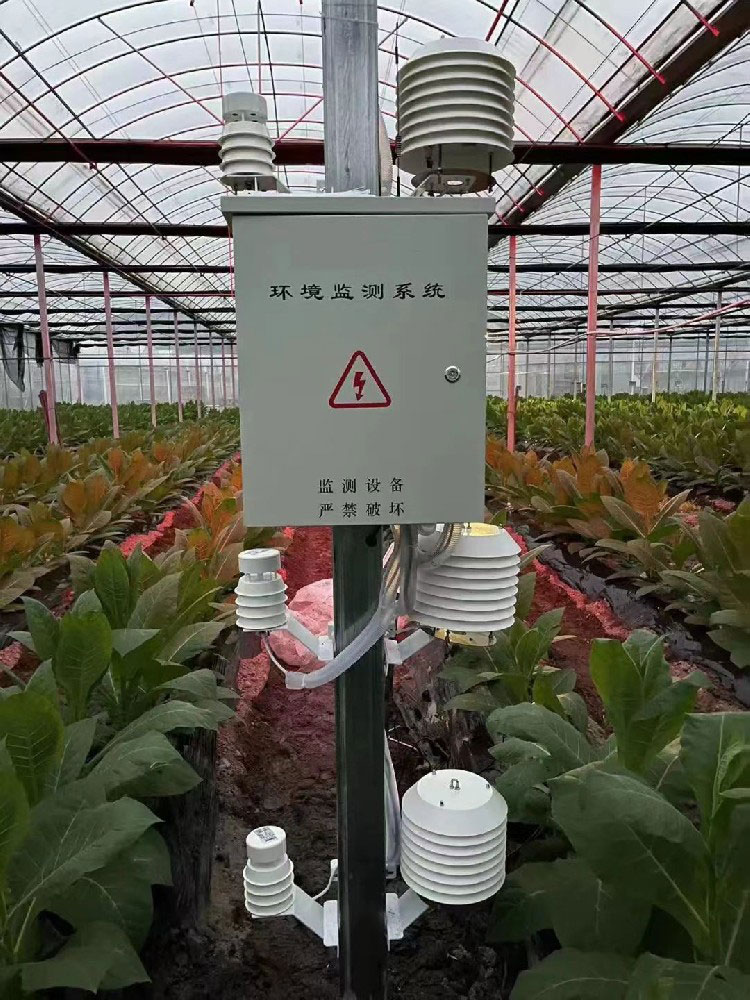
An agricultural IoT greenhouse system is valuable when it connects sensing, transmission, control and platform management into one maintainable project. Procurement teams should set measured parameters, actuator logic, communication method and acceptance checks before ordering. NiuBoL can support greenhouse monitoring packages with agricultural sensors, weather station data and IoT integration when the project scope is clearly provided.
Prev:Sensor Types and Technology Trends: A Procurement Guide for Industrial and IoT Projects
Next:Water Quality Monitoring for Environmental Protection: Sensor Selection and Project Planning Guide
Related recommendations
Sensors & Weather Stations Catalog
 Agriculture Sensors and Weather Stations Catalog-NiuBoL.pdf
Weather Stations Catalog-NiuBoL.pdf
Agriculture Sensors Catalog-NiuBoL.pdf
Water Quality Sensor Catalog-NiuBoL.pdf
Related products
Combined air temperature and relative humidity sensor TDR Soil Moisture & Temperature Sensor for irrigation| RS485 |4-20mA| NBL-S-THR Soil pH sensor RS485 soil Testing instrument soil ph meter for agriculture |NBL-S-PH
 Wind Speed sensor Output Modbus/RS485/Analog/0-5V/4-20mA
 Tipping bucket rain gauge for weather monitoring auto rainfall sensor RS485/Outdoor/stainless steel
 Pyranometer Solar Radiation Sensor 4-20mA/RS485

Screenshot, WhatsApp to identify the QR code
WhatsApp number:+8615367865107
(Click on WhatsApp to copy and add friends)

