





— Blogs —
—Products—
 Consumer hotline +8618073152920
WhatsApp:+8615367865107
Address:Room 102, District D, Houhu Industrial Park, Yuelu District, Changsha City, Hunan Province, China
Product knowledge
Time:2026-06-06 09:36:43 Popularity:452
Quick Answer: Ammonia nitrogen sensor readings can support different investigations: direct ammonia toxicity, oxygen consumption during nitrogen conversion and nutrient-related change. These are not interchangeable conclusions. Identify the measured ammonia species and units, then add the water conditions and reference measurements needed for the specific question before using the value for alarms or control.
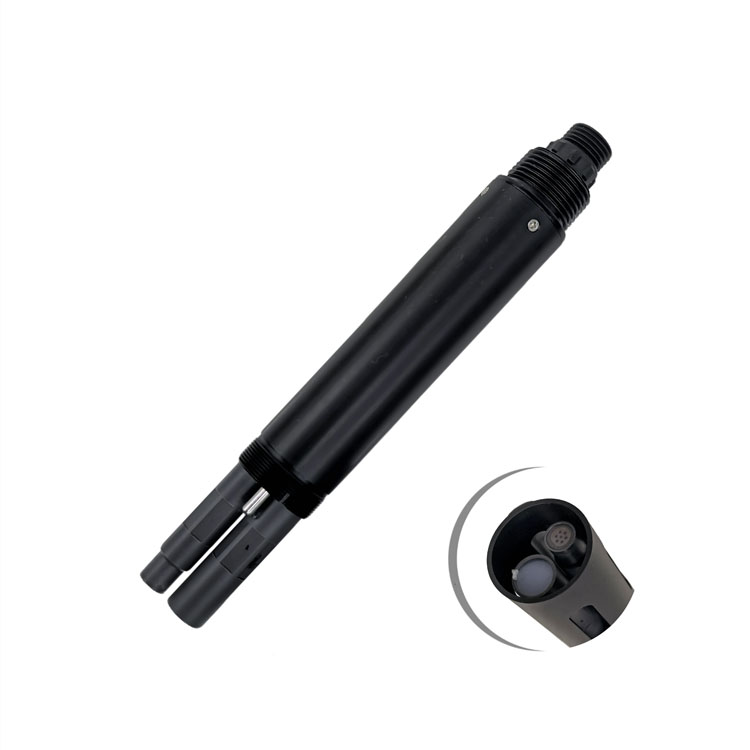
A rising ammonia-related result may concern a treatment operator investigating conversion, a farm assessing stock exposure or an environmental team reviewing a receiving-water event. Each needs more than a dashboard label saying "ammonia nitrogen." The measured quantity, concentration range and location must be explicit.
| Investigation | Evidence to pair with the ammonia result |
|---|---|
| Toxicity | Defined ammonia species and nitrogen/mass basis, pH, temperature, exposure conditions and the applicable assessment method |
| Nitrogen conversion and oxygen | DO, process operation and appropriate nitrogen measurements at related points and times |
| Nutrient-related change | Source and receiving-water context, other relevant nutrients, biological observations and event duration |
Ammonium, NH4+, and un-ionized ammonia, NH3, have different meanings in a toxicity assessment. TAN includes both on a nitrogen basis. The EPA ammonia criteria information identifies pH and temperature as important factors in aquatic toxicity. A number without its analytical basis cannot be mapped responsibly to a toxicity conclusion.
The NiuBoL NBL-WQ-NHN uses a PVC-membrane ammonium ion-selective electrode. Confirm whether the receiving output is expressed as ammonium, ammonium-nitrogen or another defined calculation before labelling a PLC tag. Temperature compensation for the electrode does not independently turn that result into a complete NH3 toxicity assessment.
| Parameter | Basic NBL-WQ-NHN |
|---|---|
| Measurement / ranges | Ammonium ion-selective electrode; 0-10.00, 0-100.00 or 0-1000.0 mg/L |
| Resolution | 0.01 mg/L on the 10 and 100 mg/L ranges; 0.1 mg/L on the 1000 mg/L range |
| Accuracy | +/-10% or +/-1 mg/L; temperature +/-0.5 degrees C. Establish the percentage basis and application of the terms for the ordered range. |
| Sample conditions | Water 0-40 degrees C; pressure below 0.1 MPa; medium pH 4-10 |
| Compensation / calibration | Pt1000 temperature compensation; two-point calibration |
| Output | RS485 Modbus RTU; confirm the supplied 4-20 mA configuration where required |
| Supply / consumption | 12-24 V DC; 0.2 W at 12 V |
| Mounting / protection / cable | Immersion, 3/4 NPT; IP68; standard 5 m cable, other lengths customizable |
| Materials review | PVC sensing membrane; obtain the wetted-parts and cable-jacket specification for chemical compatibility review |
The absolute 1 mg/L accuracy term deserves attention when a proposed action margin is much smaller. A 0.01 mg/L resolution does not remove that issue. Do not approve low-level protective monitoring until the required analytical capability and site agreement have been demonstrated.
Ion-selective response also requires a matrix review. Potassium, sodium and other ions can affect the result according to their concentrations and the selected electrode. Check representative water against an appropriate reference, particularly when moving between fresh, saline or industrial matrices.
Microbial oxidation of ammonia during nitrification consumes dissolved oxygen. Conversely, oxygen limitation can interfere with that conversion. The EPA dissolved oxygen stressor guidance describes this relationship. It supports measuring both variables, not calculating a universal DO value from one ammonium observation.
At a treatment unit, compare the inlet and outlet quantities with the process timing and flow. Include appropriate nitrite/nitrate results if the question is where nitrogen conversion stops. A lower ammonium result alone does not establish that the nitrogen has been removed from the system rather than converted, diluted or redistributed.
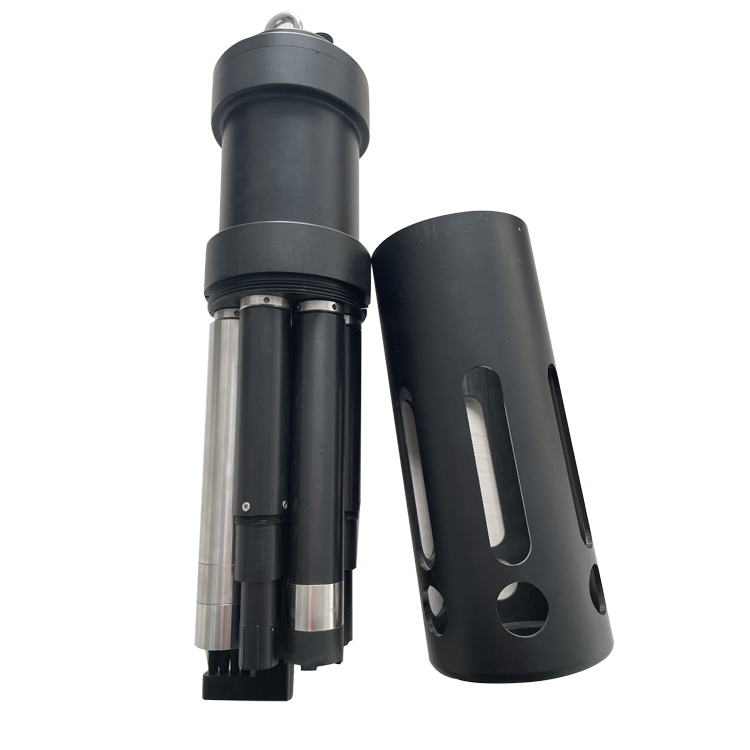
A multiparameter station, illustrated below, can place related observations together. Ensure each fitted element has suitable range and accuracy; the ammonia option in a combined assembly need not have the same specifications as the standalone NHN.
An ammonia-related measurement is part of a broader nitrogen picture. Nutrient enrichment, biological uptake and changing water conditions can alter concentrations over time. A low result on one visit does not establish that earlier loading was absent or identify the cause of a biological event.
For receiving-water or pond investigations, preserve source information, event timing and relevant pH, temperature and DO records. Choose further sampling from the actual question rather than using an ammonia channel as a substitute for all nutrient or biological measurements.
Do not transplant a freshwater criterion or another farm's threshold into every installation. Establish the applicable requirements and response plan, including analytical quantity, exposure context and uncertainty. The sensor's pH 4-10 operating window is a hardware/sample limitation, not a safe-water pH recommendation.
Compare the same sample and analytical basis at a representative point. Retain pH, temperature, reference method and settings with the comparison. If there is a disagreement, check units, matrix effects and electrode condition before changing calibration to force agreement.
In Modbus integration, verify register format, scaling and fresh-data handling using the supplied protocol. Give a calculated NH3 estimate a separate tag and invalidate it when a required input is missing. A valid serial response confirms communication, not chemical identity or environmental safety.
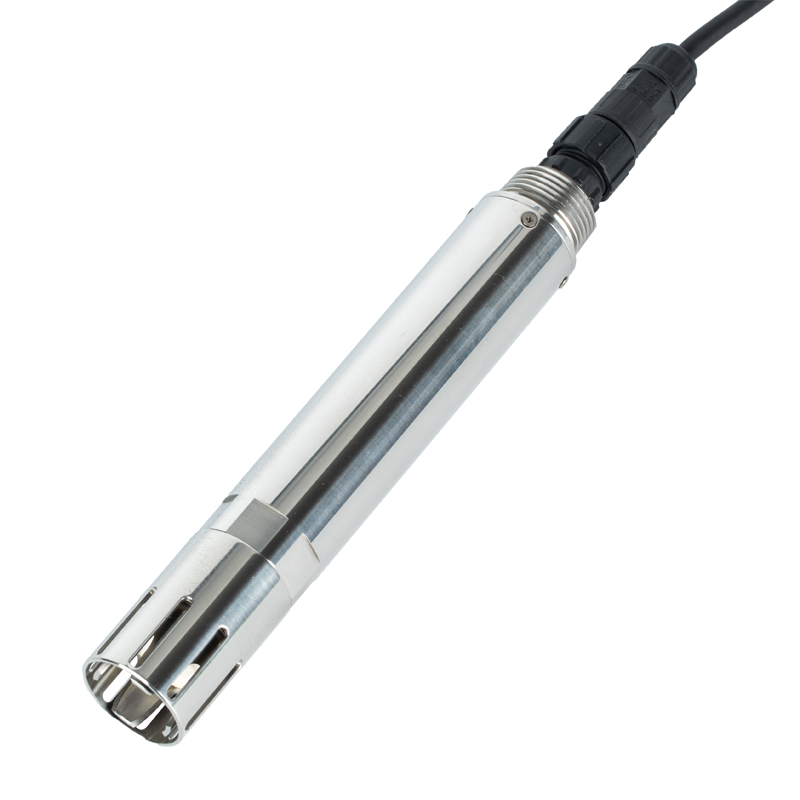
For an enquiry, send the exact quantity needed, normal and abnormal concentrations, water chemistry, relevant salts, proposed limits and reference method. The electrode assembly below illustrates another water instrument; identify each element rather than selecting an ammonia replacement by housing appearance.
No. Identify the output's measured species and reporting basis. TAN includes ammonia and ammonium on a nitrogen basis; confirm any conversion before using the result as TAN.
No. Relevant water conditions, species and exposure differ. Use the appropriate assessment with pH and temperature rather than a universal concentration-to-toxicity label.
Not alone. Compare the relevant nitrogen quantities and oxygen/process conditions at appropriate points. Declining ammonium does not identify the final nitrogen form.
No. Check the ordered range's accuracy terms, reference agreement and matrix response. Select another suitable analytical arrangement if the proposed decision is beyond the demonstrated capability.
Agree the measured quantity, range and useful uncertainty, wetted materials, sample conditions, interface and reference checks. Keep toxicity calculations and other nitrogen analyses explicit rather than assuming they are built in.
Ammonia nitrogen sensor readings are most useful when the analytical quantity and operating question stay clear. Use an identified NiuBoL ammonium probe for a suitable measurement duty, then pair it with the evidence needed for toxicity, oxygen-demand or nutrient investigations.
Prev:Aquaculture DO Sensor Maintenance Log: Fouling and Cap Checks
Next:Multi-Parameter Water Quality Analyzer Principles: Reading Each Channel
Related recommendations
Sensors & Weather Stations Catalog
 Agriculture Sensors and Weather Stations Catalog-NiuBoL.pdf
Weather Stations Catalog-NiuBoL.pdf
Agriculture Sensors Catalog-NiuBoL.pdf
Water Quality Sensor Catalog-NiuBoL.pdf
Related products
 Combined air temperature and relative humidity sensor
 TDR Soil Moisture & Temperature Sensor for irrigation| RS485 |4-20mA| NBL-S-THR
 Soil pH sensor RS485 soil Testing instrument soil ph meter for agriculture |NBL-S-PH
 Wind Speed sensor Output Modbus/RS485/Analog/0-5V/4-20mA
 Tipping bucket rain gauge for weather monitoring auto rainfall sensor RS485/Outdoor/stainless steel
 Pyranometer Solar Radiation Sensor 4-20mA/RS485


Screenshot, WhatsApp to identify the QR code
WhatsApp number:+8615367865107
(Click on WhatsApp to copy and add friends)

