





— Blogs —
—Products—
 Consumer hotline +8618073152920
WhatsApp:+8615367865107
Address:Room 102, District D, Houhu Industrial Park, Yuelu District, Changsha City, Hunan Province, China
Product knowledge
Time:2026-06-06 09:36:42 Popularity:371
Quick Answer: An aquaculture DO sensor maintenance log should show the measurement before service, what was found, what was changed and whether the installed channel passed a check afterward. For a NiuBoL fluorescence probe, focus on the optical cap, water contact and compensation settings. Electrolyte replacement and electrochemical polarization are not routine service tasks for this optical design.
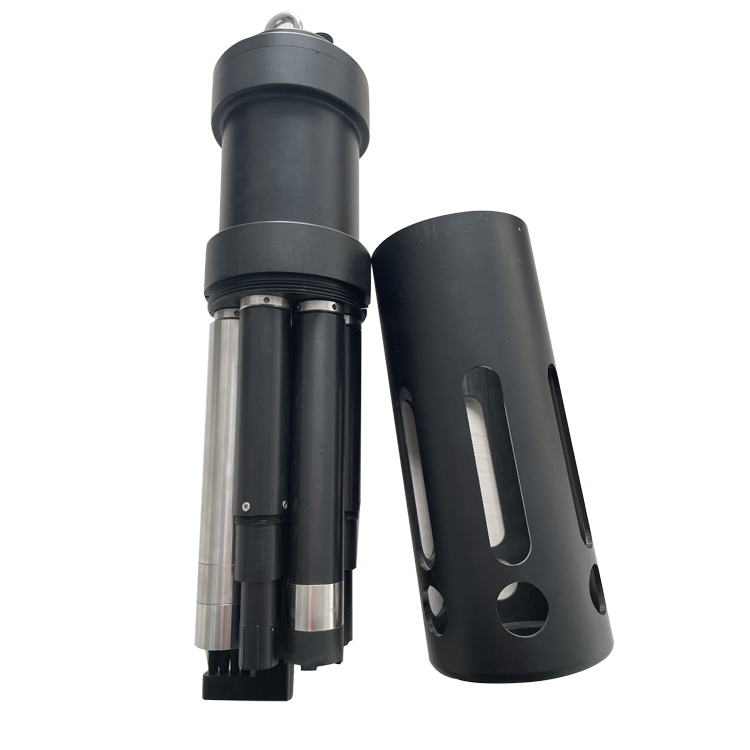
At a farm visit, first record the DO value, temperature, configured salinity, units, time and aeration state. Note the probe's location and depth and whether the water level has changed. A before-service record is especially useful when the subsequent cleaning produces a step in the trend.
If a suitable comparison instrument is available, compare at representative water conditions before cleaning. Avoid placing one instrument beside an aerator and the other in a quiet pocket. A delayed sample carried to the bank can also change oxygen or temperature, so document how the comparison was made.
A multiparameter assembly, illustrated above, may need retrieval of several elements together. Mark which channels will be interrupted and arrange the farm's approved temporary monitoring or control procedure. The data record should identify maintenance rather than present a removed probe as a valid pond observation.
| Record item | Useful entry |
|---|---|
| Instrument identity | Model, serial number or channel ID, cap identity where applicable, installation point |
| Before-service condition | DO and unit, temperature, salinity setting, reference comparison, aeration and water level |
| Physical finding | Film, algae, sediment, trapped bubbles, cap damage, loose support or cable damage |
| Work performed | Cleaning, mounting correction, setting change, cap replacement or calibration; list them separately |
| After-service check | Verification condition, result, installed reading and receiving-system agreement |
| Disposition | Returned to use, further investigation or replacement required, with the next inspection planned |
Keep this information in the service record and mark the event on the trend. A statement such as "sensor serviced" cannot distinguish a wiped surface from a new cap and changed calibration. Those differences matter when interpreting a later shift or preparing a replacement order.
The ammonia nitrogen probe below requires its own electrode-specific procedure. Do not apply its conditioning or storage treatment to the optical DO cap merely because the channels share a monitoring station.
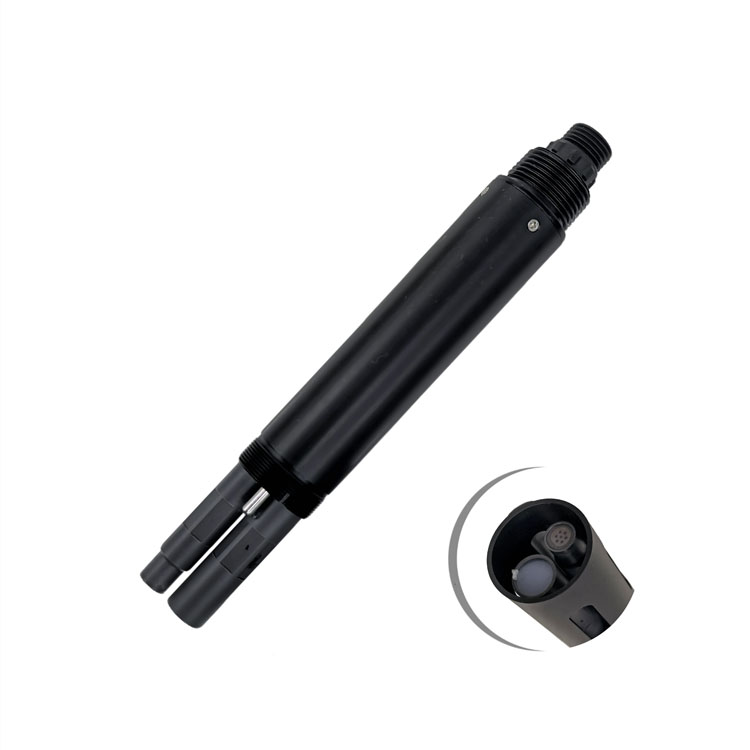
Withdraw the probe using its support, not the signal cable. Inspect the cap before rinsing away the evidence of fouling. Keep hard objects and abrasive cleaning away from the optical surface. Where deposits require more than a gentle cleaning procedure, obtain a treatment compatible with the cap and deposit rather than trying a solvent used on another electrode.
After cleaning, allow the measuring assembly and verification condition to stabilize. A restored reading may differ because a film was removed; it does not automatically require a calibration adjustment. If damage or coating loss is visible, investigate cap replacement rather than trying to compensate for the damage with an offset.
Fluorescence measurement does not consume oxygen or require electrolyte servicing. That reduces specific electrochemical maintenance work, but deposits and cap condition still need inspection. Keep the protective cover and storage arrangement appropriate to the model, and remove the cover before measurement.
| Parameter | NBL-WQ-DO-4A |
|---|---|
| Measurement / range | Fluorescence; 0-20.00 mg/L and 0-200% saturation |
| Resolution / accuracy | 0.01 mg/L; +/-2% of reading; temperature +/-0.3 degrees C |
| Response | T90 below 30 s; allow for actual water and verification conditions |
| Compensation | Pt1000 temperature compensation; configured salinity correction |
| Water conditions | 0-50 degrees C; pressure at or below 0.2 MPa |
| Supply / consumption | 12-24 V DC; 0.2 W at 12 V |
| Output | RS485 Modbus RTU; optional 4-20 mA |
| Housing / protection | POM and ABS/PC alloy; IP68 |
| Service scope | Confirm cap part, cable length, jacket compatibility and mounting arrangement for the ordered assembly |
Use the DO-4A model and a suitable reference to define the comparison criterion. Do not use its 0.01 mg/L display increment as the acceptance tolerance. Also keep the basic DO model's full-scale accuracy expression separate from the DO-4A's percentage-of-reading specification.
The turbidity probe below is another optical instrument, but its window and calibration materials have a different measuring purpose. One bottle of standard or one cleaning treatment should not be assumed appropriate for both channels.
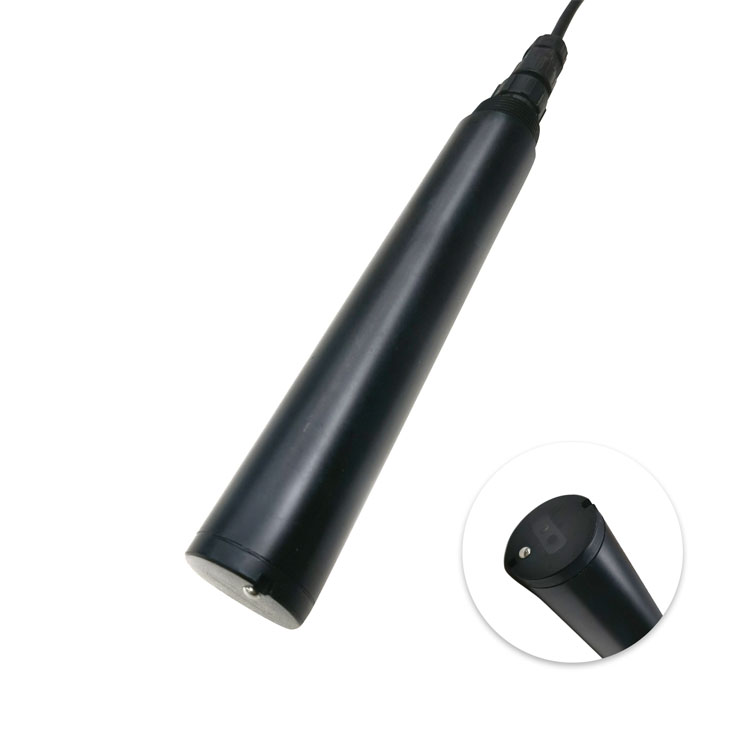
Review the difference before and after cleaning, inspection findings and the time since the previous visit. Repeated fouling-related changes before the planned visit support a shorter inspection interval or a mounting/cleaning review. Stable checks may support reassessing the interval, subject to the farm's risk and operating procedure.
Keep consumable planning distinct from cleaning frequency. A cap can need cleaning before its planned replacement, while physical damage may require earlier replacement. A nominal annual cap recommendation is not a guarantee of a year without inspection, nor a reason to keep using a failed check.
When a cap is changed, record its identity and the subsequent verification or calibration required for that assembly. Return the probe to the accepted measuring position and check that the PLC or logger reports a fresh value in the correct unit. Detailed startup and recovery checks cover extended storage and measurement restoration.
For a support enquiry, provide this short service history, the cap condition, before/after results and relevant settings. Separate electrode assemblies, such as the instrument below, should retain their own maintenance records so their work is not confused with the oxygen channel.
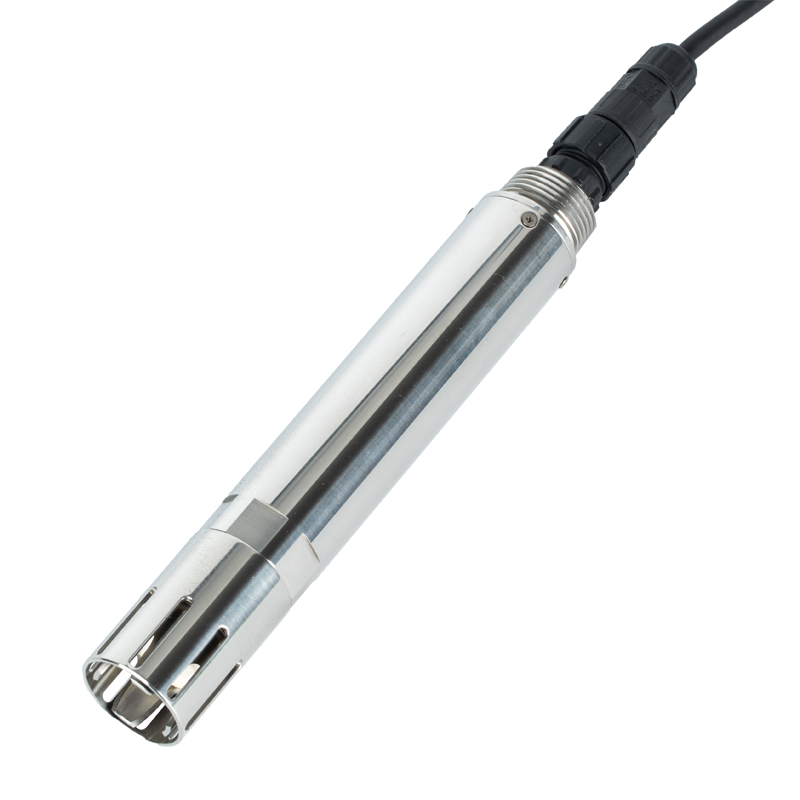
No. Fluorescence measurement does not use that electrochemical service procedure. Identify the technology before applying membrane-electrode instructions.
No. Cleaning may remove an optical obstruction, and handling can change location or bubbles. Inspect the conditions and verify the measurement before adjusting calibration.
No. Use fouling observations, before/after checks, access and operating risk to establish the interval. Water conditions and installation position can change the required frequency.
Check the cap, verification result, salinity setting, unit, representative mounting and fresh controller value. Clear maintenance status only under the farm's authorized procedure.
Provide the complete probe model, relevant serial or hardware details and current cap identification. Add the observed damage or failed checks rather than ordering from a general photograph alone.
An aquaculture DO sensor maintenance log makes each intervention interpretable. Preserve the original condition, separate cleaning from calibration and cap replacement, and verify the installed channel before returning it to use. The resulting record helps plan farm visits and resolve faults without treating every change as an oxygen event.
Prev:Aquaculture Water Quality Sensor Package: Compare Quotes and Service Scope
Next:Ammonia Nitrogen Sensor Readings: Toxicity, Oxygen and Nutrient Context
Related recommendations
Sensors & Weather Stations Catalog
 Agriculture Sensors and Weather Stations Catalog-NiuBoL.pdf
Weather Stations Catalog-NiuBoL.pdf
Agriculture Sensors Catalog-NiuBoL.pdf
Water Quality Sensor Catalog-NiuBoL.pdf
Related products
 Combined air temperature and relative humidity sensor
 TDR Soil Moisture & Temperature Sensor for irrigation| RS485 |4-20mA| NBL-S-THR
 Soil pH sensor RS485 soil Testing instrument soil ph meter for agriculture |NBL-S-PH
 Wind Speed sensor Output Modbus/RS485/Analog/0-5V/4-20mA
 Tipping bucket rain gauge for weather monitoring auto rainfall sensor RS485/Outdoor/stainless steel
 Pyranometer Solar Radiation Sensor 4-20mA/RS485


Screenshot, WhatsApp to identify the QR code
WhatsApp number:+8615367865107
(Click on WhatsApp to copy and add friends)

