





— Blogs —
—Products—
 Consumer hotline +8618073152920
WhatsApp:+8615367865107
Address:Room 102, District D, Houhu Industrial Park, Yuelu District, Changsha City, Hunan Province, China
Product knowledge
Time:2026-06-06 09:36:44 Popularity:365
Quick Answer: Multi-parameter water quality analyzer principles differ by channel: pH and ORP use electrode potentials, conductivity measures ionic conduction, DO can use fluorescence, and turbidity measures optical scattering. Combining these signals in one instrument does not make their calibration, units or interpretation interchangeable. Select and verify each fitted element for the measurement it actually performs.
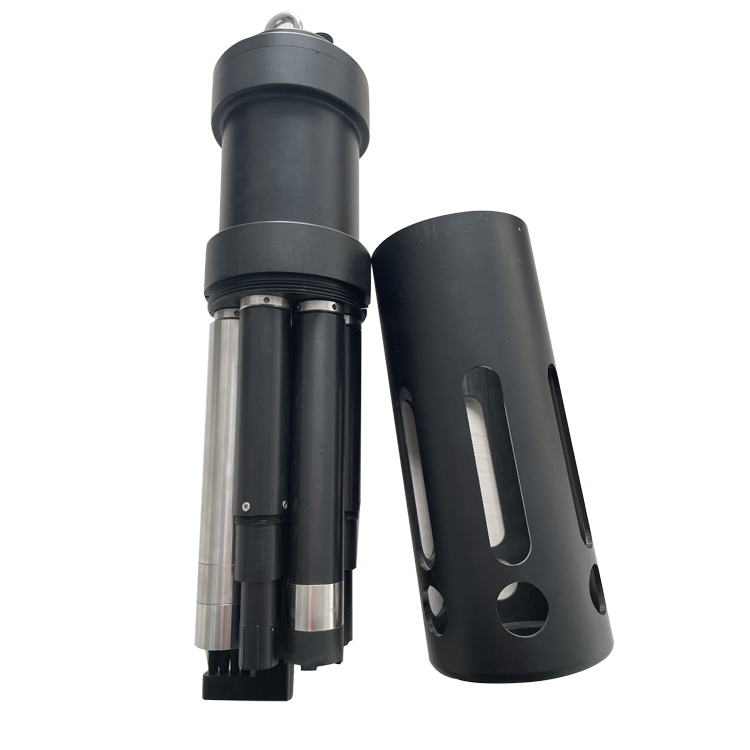
A multi-channel instrument makes it convenient to acquire related water observations. The engineering task is to preserve each observation's meaning through calibration, processing and display. An ORP result in mV, a conductivity value and a turbidity result cannot all be interpreted as concentrations, even when they occupy adjacent dashboard tiles.
| Channel | Measurement and interpretation |
|---|---|
| pH | Electrode response related to hydrogen-ion activity. It describes an acid-base condition, not alkalinity or a complete chemical composition. |
| ORP | Potential relative to an identified reference electrode. It reflects electrochemical conditions, not the concentration of every oxidant. |
| Conductivity | Ionic conduction under a defined temperature basis. It does not identify which dissolved ion changed. |
| Fluorescence DO | Oxygen-dependent optical response. Concentration and percent saturation need their correct units and compensation settings. |
| Turbidity | Scattering of light by particles under the instrument's optical arrangement. It is not a universal solids-mass or pathogen result. |
| Ammonium ISE, where fitted | Ion-selective electrode response. Define the species, reporting basis and relevant matrix effects before interpreting ammonia risk. |
The ammonia nitrogen probe below is a separate measuring assembly. It may provide a related channel in a monitoring system, but its conditioning solution and reference checks are not substitutes for those of the pH, DO or turbidity elements.
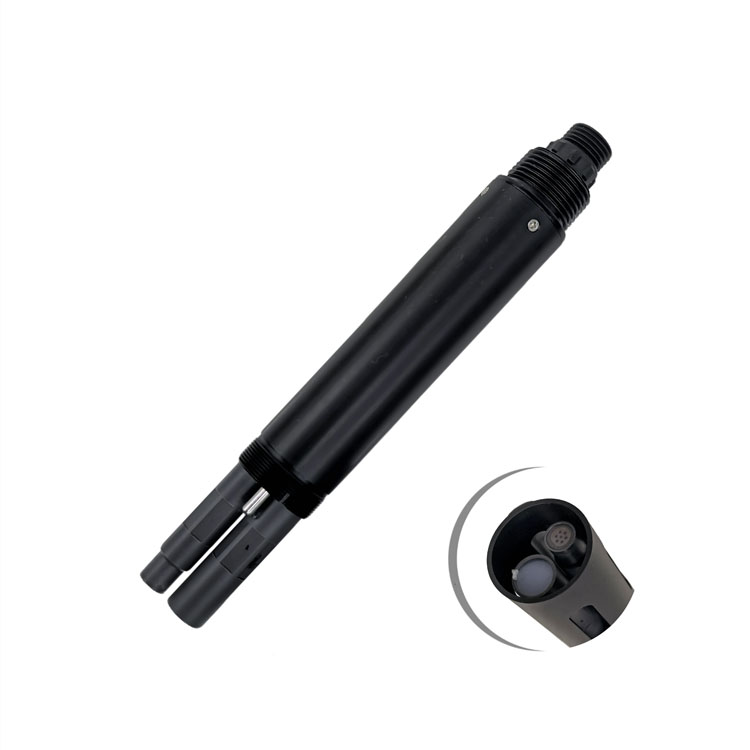
Temperature is useful context and may also enter an instrument's correction algorithm. For a pH electrode, compensation of electrode response does not reconstruct the sample's pH at a different temperature. For conductivity, the coefficient and reference temperature define the reported corrected value. Those settings matter when two instruments are compared.
For optical DO, temperature and an appropriate salinity setting help establish the oxygen output. A configurable salinity correction does not create an independent salinity measurement. For ORP, a temperature-dependent reference correction is a different task from a universal correction of process chemistry to 25 degrees C.
Ask which temperature observation each calculation uses and where it is measured. A common station can simplify time alignment, but the presence of one temperature value does not prove that every derived channel has the required inputs or uses the correct calculation.
The NiuBoL self-cleaning multiparameter assembly offers configurable water measurements. The following values describe options for that assembly, not every standalone sensor with a similar parameter name.
| Option or assembly item | Specification |
|---|---|
| pH | 0-14 pH; 0.01 pH resolution; +/-0.1 pH accuracy |
| ORP | -1500 to +1500 mV; 1 mV resolution; +/-6 mV accuracy |
| DO | 0-20 mg/L; 0.01 mg/L resolution; +/-0.4 mg/L accuracy |
| Conductivity option | 0-5000 uS/cm with 1 uS/cm resolution; +/-1.5% F.S. accuracy |
| Temperature measurement | 0-50 degrees C; 0.1 degrees C resolution; +/-0.5 degrees C accuracy |
| Data output | RS485 Modbus RTU; identify the fitted channel/register configuration |
| Supply / consumption | 12 V DC +/-5%; 5 W at 12 V |
| Cleaning / connection | Automatic cleaning; standard 5 m cable, other lengths customizable. Confirm cable jacket, wetted construction, pressure and mounting for the ordered configuration. |
A standalone ORP probe may specify a different accuracy, and a standalone DO-4A uses a percentage-of-reading expression rather than this assembly's absolute DO figure. Identify the fitted hardware in the channel list so a purchase or replacement does not silently change the measurement capability.
A chlorine concentration channel uses its own analytical principle and sampling arrangement. The basic NiuBoL constant-voltage CL probe measures HClO in a matching flow cell. Neither an ORP value nor the term "multi-parameter" establishes that total or free chlorine is being measured by a suitable method.
If a monitoring project requires chlorine alongside an immersed multiparameter body, specify the actual chlorine instrument and sample route separately. Confirm how the logger associates those results in time. An apparently synchronized display can combine water from different places or different stages of sample transport.
The chlorine probe below illustrates that separate measuring function. It should have its own quantity label, calibration procedure and sample-validity checks rather than inherit the settings of an unrelated channel.
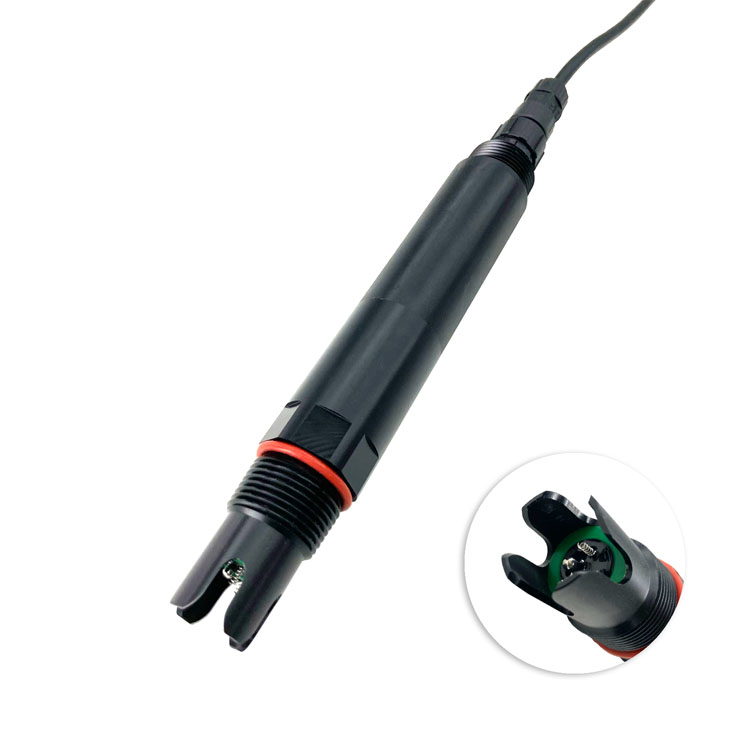
Use channel-appropriate materials and procedures. A pH buffer, conductivity standard and turbidity standard have different purposes; one stable response in a common vessel does not qualify every element. Check for carryover between standards and use a handling sequence compatible with the installed elements.
After physical checks, compare each acquired value with the receiving PLC or logger. Verify signed ORP data, conductivity units and scaling, DO concentration versus saturation, and the fitted channel map. Treat calculated salinity, solids or ammonia outputs as calculations with defined inputs, not extra independently measured substances.
Also check a partial fault: a valid temperature or pH result should not clear an invalid DO observation. Where the device exposes channel diagnostics, map them correctly; where it does not, define an appropriate limitation and verification procedure instead of inventing diagnostic registers.
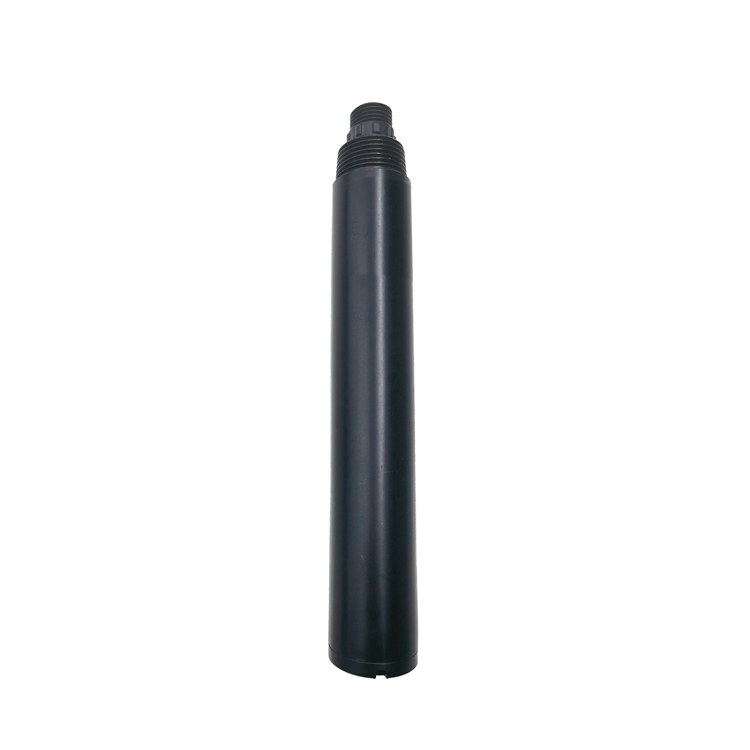
The turbidity probe below is a distinct optical instrument. For operation across several locations and service schedules, use the separate multi-parameter system architecture guide. The principles here explain what the channels mean, not which physical layout suits every project.
No. Electrode, conduction and optical measurements have different responses and checks. Shared electronics and communications do not make their analytical meanings identical.
Not as a direct equivalent. A specific chlorine duty needs an appropriate measurement and reporting basis; changing the display unit does not supply that method.
No. Identify each channel's compensation basis, other required inputs and sampling conditions. Different calculations can use temperature for different purposes.
Confirm the ordered configuration and register map. A catalogue of options is not proof that the delivered assembly contains every element or measurement.
Verify measured and calculated quantities, units, actual channel specifications, appropriate reference checks and correct acquired values. Then confirm the supply, sampling and installation requirements of the complete configuration.
Multi-parameter water quality analyzer principles remain channel-specific even in one housing. Preserve the distinction between measurement and calculation, use appropriate verification for each element and map the results accurately. A defined NiuBoL configuration then provides useful related observations without overstating what one instrument can establish.
Prev:Ammonia Nitrogen Sensor Readings: Toxicity, Oxygen and Nutrient Context
Next:SS and Turbidity Difference in Water Quality Monitoring: TSS and NTU Sensor Selection
Related recommendations
Sensors & Weather Stations Catalog
 Agriculture Sensors and Weather Stations Catalog-NiuBoL.pdf
Weather Stations Catalog-NiuBoL.pdf
Agriculture Sensors Catalog-NiuBoL.pdf
Water Quality Sensor Catalog-NiuBoL.pdf
Related products
 Combined air temperature and relative humidity sensor
 TDR Soil Moisture & Temperature Sensor for irrigation| RS485 |4-20mA| NBL-S-THR
 Soil pH sensor RS485 soil Testing instrument soil ph meter for agriculture |NBL-S-PH
 Wind Speed sensor Output Modbus/RS485/Analog/0-5V/4-20mA
 Tipping bucket rain gauge for weather monitoring auto rainfall sensor RS485/Outdoor/stainless steel
 Pyranometer Solar Radiation Sensor 4-20mA/RS485


Screenshot, WhatsApp to identify the QR code
WhatsApp number:+8615367865107
(Click on WhatsApp to copy and add friends)

