





— Blogs —
—Products—
 Consumer hotline +8618073152920
WhatsApp:+8615367865107
Address:Room 102, District D, Houhu Industrial Park, Yuelu District, Changsha City, Hunan Province, China
Product knowledge
Time:2026-06-03 14:11:43 Popularity:357
Quick Answer: Aquaculture pond pH monitoring should distinguish a daily biological cycle from an unusual event or a faulty measurement. Verify the reading at the same location and time, examine the morning-to-afternoon pattern, and check related water conditions before selecting a response. A single high or low pH value is not enough to calculate a safe chemical dose for a stocked pond.
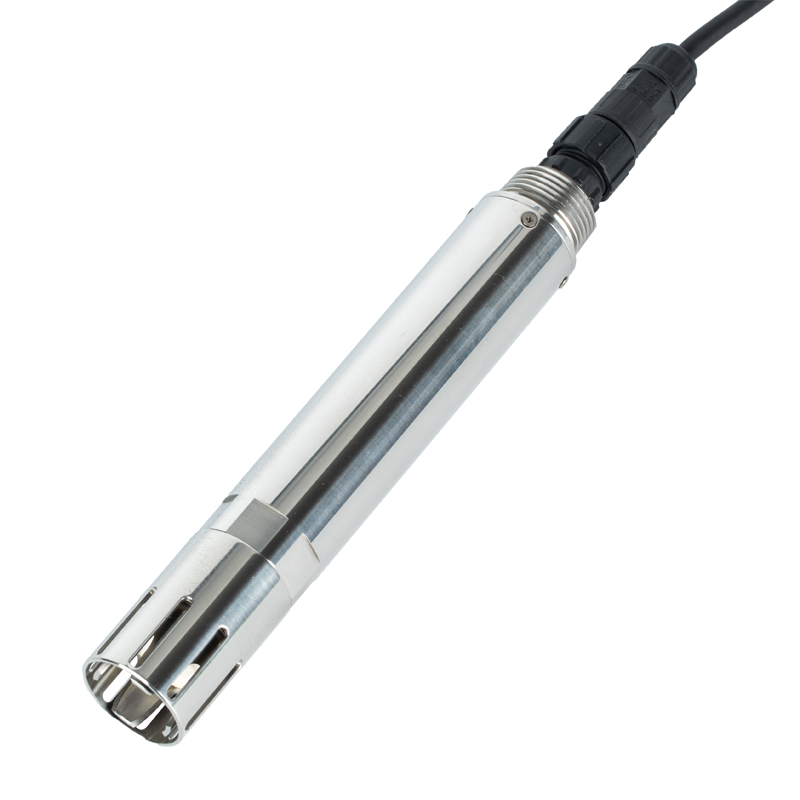
In productive ponds, photosynthesis removes carbon dioxide during daylight and respiration adds it through the night. The resulting pH cycle often has a morning minimum and a late-afternoon maximum. FAO pond-water guidance describes this daily pattern. Its timing matters: comparing a morning hand sample with yesterday afternoon's online maximum can create a false measurement dispute.
For a farm monitoring project, retain the curve rather than only the daily average. Record the low and high observations with their times, and identify unusual departures from the pond's established behavior. A daily mean can hide both a short severe excursion and a gradually widening daily swing.
Do not copy one alarm band across all stocked ponds. Species, life stage, source water and the farm's operating requirements determine the response criteria. The sensor provides observations; the farm's qualified technical team defines safe operating limits and interventions.
| Pattern | Investigation | Why the distinction matters |
|---|---|---|
| Repeated afternoon rise with morning recovery | Review biological activity, the daily curve and buffering conditions | An isolated afternoon value does not describe the whole day's exposure |
| Shift after rainfall, source-water change or water exchange | Compare incoming water and different pond locations at matching times | The change may originate outside the measuring point |
| Abrupt step after cleaning or calibration | Check maintenance state, reference readings and restored installation | The event may belong to the measuring channel rather than the pond |
| Erratic reading with deposits or changing water level | Inspect the glass, junction and sample contact | A partially exposed or fouled electrode cannot justify automatic treatment |
Rain or feeding records provide context, not proof of a cause. If a pH step occurs after a storm, compare fresh measurements before attributing it to rainwater. A damaged cable or displaced bracket can also become apparent after the same event.
If fish show abnormal behavior, treat that as an operating concern requiring prompt farm assessment, not as permission to wait for one sensor to confirm a diagnosis. A pH probe cannot identify every cause of stress. This monitoring procedure does not prescribe chemical amounts or replace species-specific husbandry advice.
Place the sensing assembly in water that represents the intended observation zone. A quiet corner with little exchange may be easy to reach but may not represent the stocked area. A position directly in a treatment plume may exaggerate a local change. Record the position and depth so comparisons can be repeated.
Allow for seasonal water-level changes, netting, floating debris and routine farm work. Protect the cable from strain and accidental impact, and provide safe retrieval without pulling the lead. The online probe shown below needs service access even when its housing is suitable for immersion.
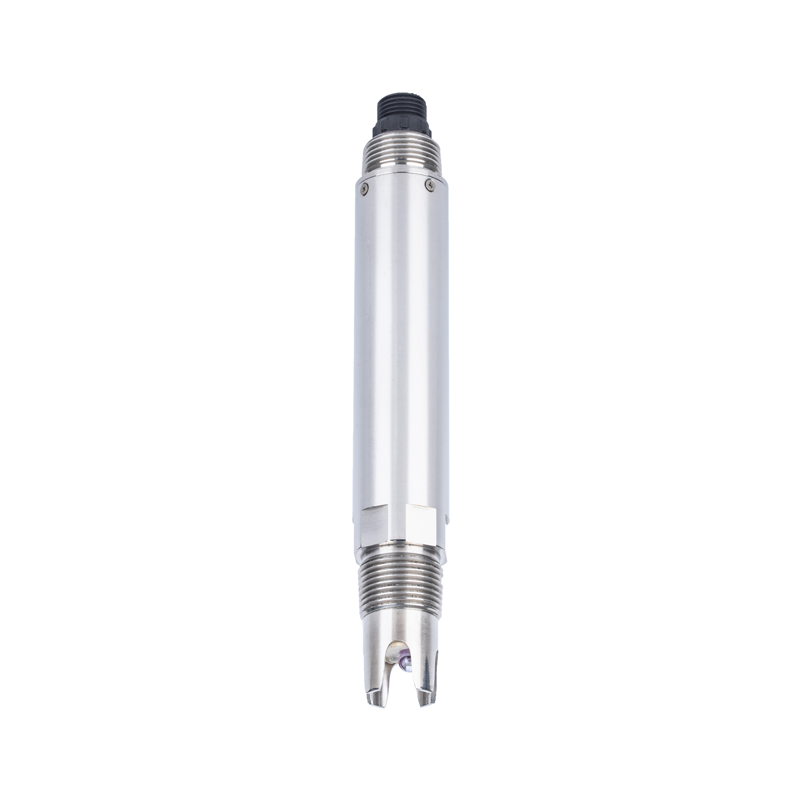
The NiuBoL PH-4 series is one digital pH option for a defined pond installation. Confirm material suitability for the actual freshwater or saline exposure, cleaning method and connectors. Do not apply PH-4 details to every sensor sold under a general pH label.
| PH-4 item | Specification |
|---|---|
| Measurement | Glass electrode; 0-14.00 pH; accuracy +/-0.1 pH; resolution 0.01 pH |
| Temperature | Pt1000 compensation; operating water 0-50 degrees C |
| Pressure | At or below 0.2 MPa |
| Power | 12-24 V DC; 0.2 W at 12 V |
| Output | RS485 Modbus RTU; optional 4-20 mA |
| Construction | 4A: POM/ABS; 4S: POM/316L; IP68 |
| Mounting / cable | 3/4 NPT immersion; standard 5 m shielded cable; confirm jacket and extension requirements |
The probe's operating range does not define acceptable conditions for the cultured species. Likewise, IP68 does not make a field splice watertight. Route the lead to a suitable junction or logger enclosure and protect the connection for the actual installation.
Send the pH reading and acquisition time through RS485 to the farm's RTU, PLC or data logger. The receiving system should distinguish an out-of-range observation from a missing or stale measurement. A disconnected probe must not appear as a valid pH of zero.
Include pond identity, current pH, time and recent direction of change in the alarm information. Define who checks the pond and acknowledges the event. Where the project uses persistence or averaging, test the setting against real events so an important short excursion is not hidden.
For procurement, describe the number of observation zones, water conditions, expected cable routes, power and communications. Include calibration access and maintenance responsibility. Buying only the probe does not deliver an attended response or a complete remote alarm service.
No. A daily biological cycle can produce a real rise. Compare the same time of day and check the full curve before deciding whether the measurement or the pond condition is abnormal.
Not by itself. Pond volume, buffering, chemistry, species and the proposed material affect the response and risk. Use a qualified farm procedure rather than deriving a chemical dose from pH alone.
Alkalinity describes buffering capacity, a different quantity from pH. Measure it separately when assessing resistance to pH change; a pH probe does not directly provide that result.
Not automatically. Check spatial differences under relevant operating conditions. Use additional observation zones when one location cannot represent the required management decision.
Check a valid pH comparison, pond identity, current timestamps, notification delivery and the response to an unavailable probe. Confirm that maintenance readings are not mistaken for pond events.
Aquaculture pond pH monitoring is useful when the record explains the daily pattern and directs a responsible site check. Verify unusual observations, distinguish pH from buffering and retain related water context. Select the NiuBoL probe, mounting and alarm route around the farm's actual observation and response needs.
Prev:Residual Chlorine Electrode Cleaning: Preparation and Return to Service
Next:Sludge Concentration Meter Installation: MLSS Location and Mounting
Related recommendations
Sensors & Weather Stations Catalog
 Agriculture Sensors and Weather Stations Catalog-NiuBoL.pdf
Weather Stations Catalog-NiuBoL.pdf
Agriculture Sensors Catalog-NiuBoL.pdf
Water Quality Sensor Catalog-NiuBoL.pdf
Related products
 Combined air temperature and relative humidity sensor
 TDR Soil Moisture & Temperature Sensor for irrigation| RS485 |4-20mA| NBL-S-THR
 Soil pH sensor RS485 soil Testing instrument soil ph meter for agriculture |NBL-S-PH
 Wind Speed sensor Output Modbus/RS485/Analog/0-5V/4-20mA
 Tipping bucket rain gauge for weather monitoring auto rainfall sensor RS485/Outdoor/stainless steel
 Pyranometer Solar Radiation Sensor 4-20mA/RS485


Screenshot, WhatsApp to identify the QR code
WhatsApp number:+8615367865107
(Click on WhatsApp to copy and add friends)

