





— Blogs —
—Products—
 Consumer hotline +8618073152920
WhatsApp:+8615367865107
Address:Room 102, District D, Houhu Industrial Park, Yuelu District, Changsha City, Hunan Province, China
Product knowledge
Time:2026-08-08 13:42:26 Popularity:325
Quick Answer: Dissolved oxygen meter accuracy must include its error basis. On a 0-20 mg/L span, +/-2% of full scale means +/-0.4 mg/L. At a reading of 2 mg/L, +/-2% of reading gives a 0.04 mg/L term. These specifications are not equivalent, and neither calculation alone proves the accuracy of an installed low-DO alarm.
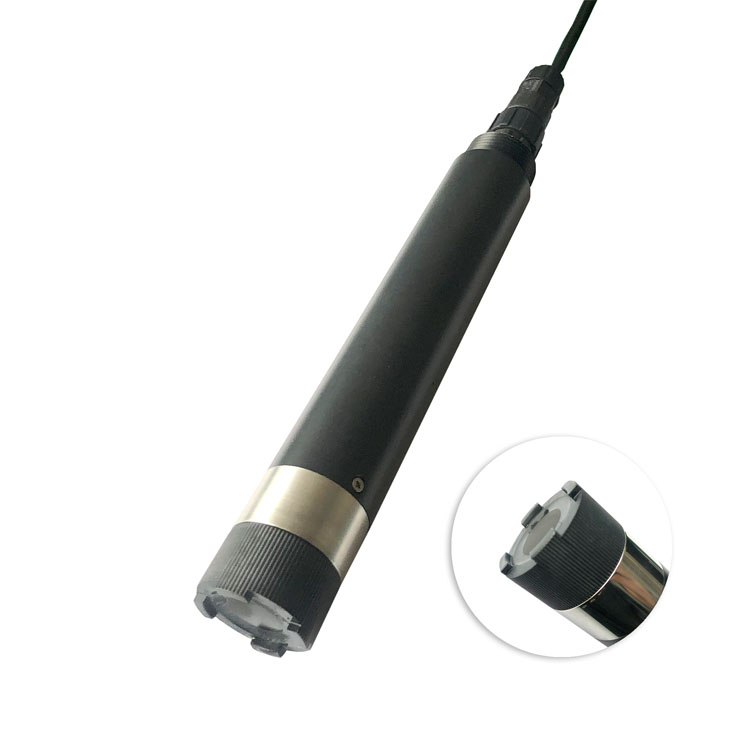
A tender that asks for a dissolved oxygen meter with 2% accuracy leaves a critical question unanswered: 2% of what? The difference matters when the operating decision occurs near the low end of the span. A large maximum range can look attractive while a full-scale error remains significant relative to a low alarm value.
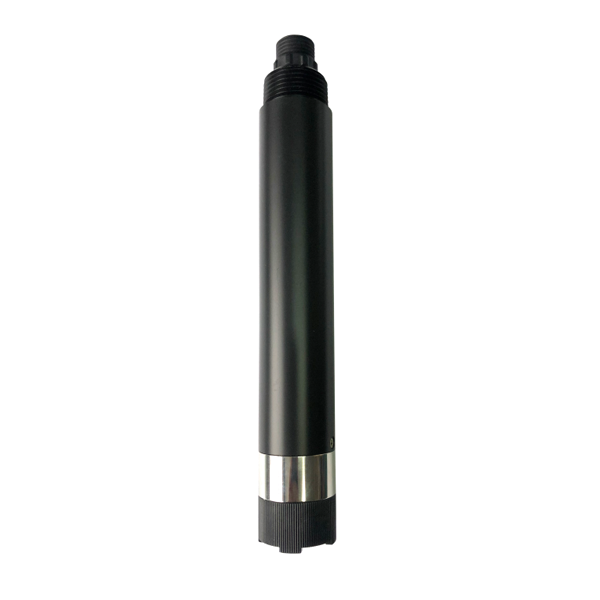
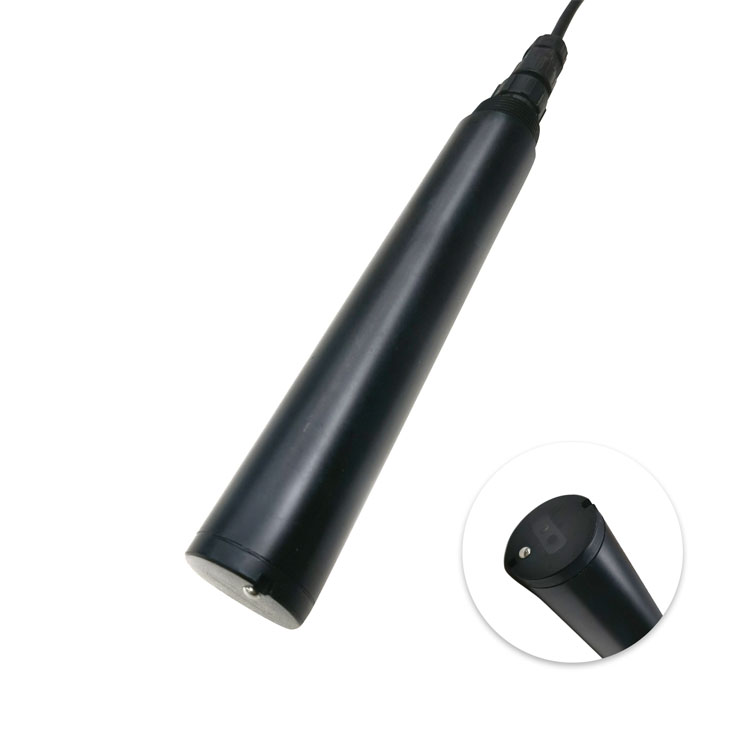
The NiuBoL NBL-WQ-DO specifies +/-2% full-scale accuracy over 0-20 mg/L. Its 0.01 mg/L resolution is the displayed increment, not a replacement for that error specification. Reading extra decimal places cannot establish a tighter measurement capability.
| Illustrative DO value | 2% of a 20 mg/L full scale | 2% of the reading |
|---|---|---|
| 2 mg/L | 0.4 mg/L | 0.04 mg/L |
| 5 mg/L | 0.4 mg/L | 0.10 mg/L |
| 10 mg/L | 0.4 mg/L | 0.20 mg/L |
This table compares stated error terms mathematically; it is not a set of observed test results. It excludes reference uncertainty, fouling, compensation settings, sampling differences and receiving-system errors. Do not extrapolate a percentage-of-reading formula to claim zero error at zero oxygen.
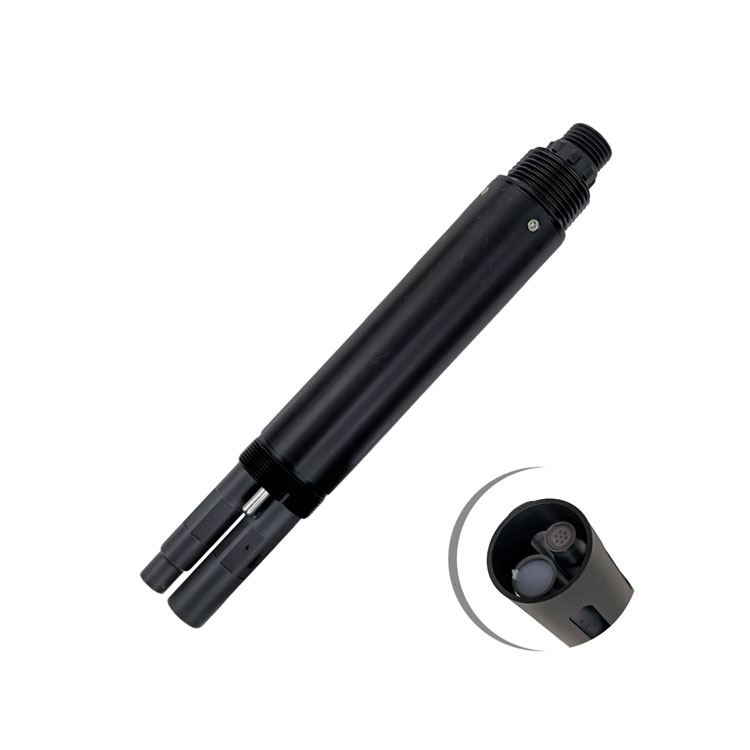
The DO-4A specifies +/-2% of reading, a different basis from the base DO probe. Both use optical measurement, but shared measurement technology does not establish identical performance or environmental limits.
| Item | Base NBL-WQ-DO | NBL-WQ-DO-4A |
|---|---|---|
| DO range and resolution | 0-20 mg/L; 0.01 mg/L | 0-20 mg/L; 0.01 mg/L |
| DO accuracy | +/-2% full scale | +/-2% of reading |
| Working liquid conditions | 0-45 C; pressure below 0.2 MPa | 0-50 C; pressure no higher than 0.2 MPa |
| Supply and consumption | 12-24 VDC; below 0.3 W at 12 V | 12-24 VDC; 0.2 W at 12 V |
| Output | RS485 Modbus RTU | RS485 Modbus RTU; optional 4-20 mA |
| Construction and protection | POM and 316L; IP68 | POM and ABS/PC alloy; IP68 |
The base probe has a standard 5 m cable; confirm the supplied length and jacket for either model. Both require a maintained sensing cap and appropriate water exposure. A lower listed error term does not establish chemical compatibility or remove the need to check the cap after damage or deposits.
Instead of specifying only a percentage, identify the DO band used for the decision and the allowable difference under a defined test. For example, a project's hypothetical requirement might be an agreed comparison within 0.1 mg/L around 2 mg/L. That is an example of writing a requirement, not a recommended alarm or a promise that either product passes it.
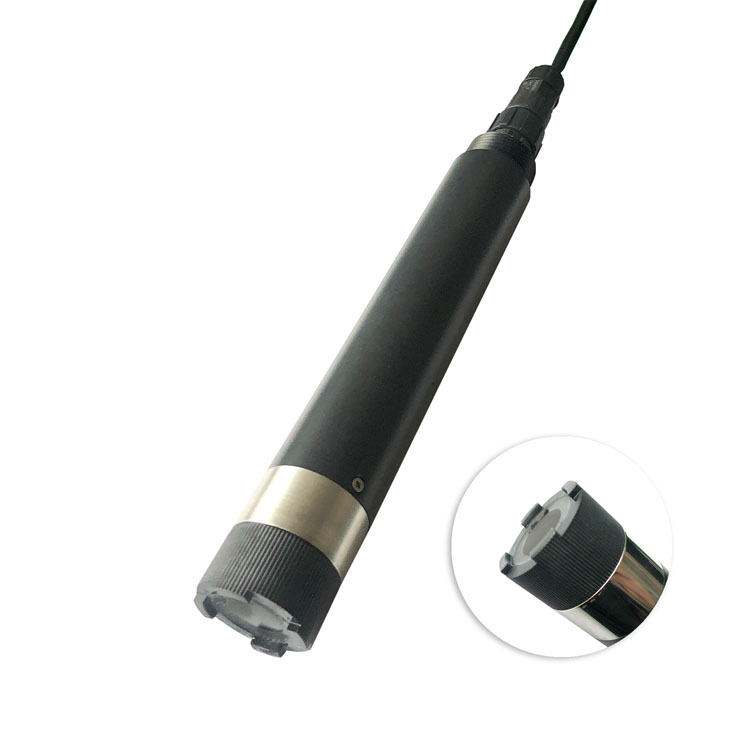
The base probe's 0.4 mg/L full-scale term does not by itself support that hypothetical 0.1 mg/L requirement. The DO-4A's calculated 0.04 mg/L reading term would still need evaluation alongside the reference and field conditions. Have the supplier and project engineer agree the test method before treating a catalogue percentage as acceptance evidence.
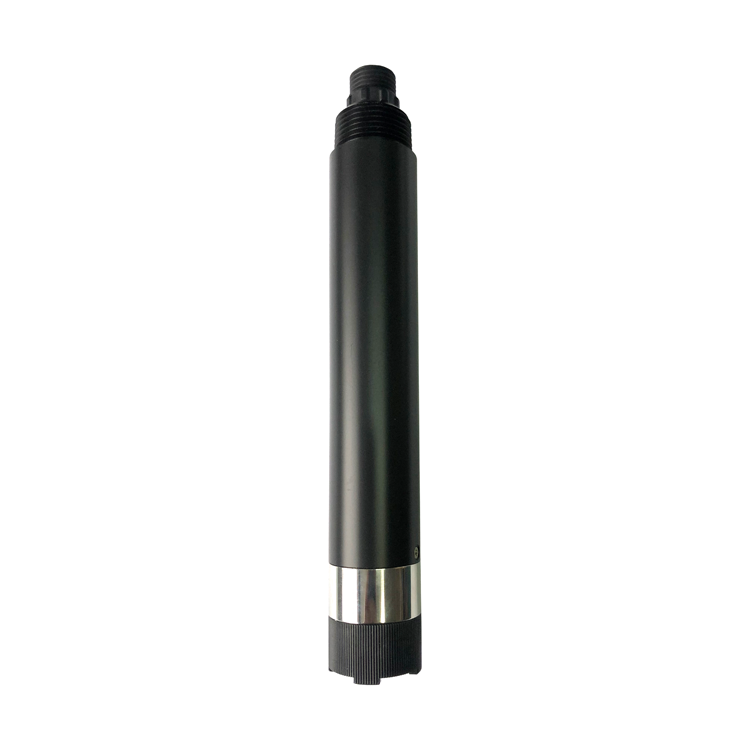
For aquaculture and wastewater projects, an accurate steady value does not establish timely response to a falling oxygen event. Sensor response, polling, averaging and the controller's alarm delay contribute different delays. Test the intended observation and alarm sequence rather than assuming a fast network upload proves a fast water measurement.
Keep mg/L and percentage saturation distinct. Their relationship depends on conditions; a saturation percentage cannot be compared with a mg/L alarm simply by changing the unit label. The salinity compensation setting is also not a salinity measurement, so update it from appropriate information when the water changes.
Retain a clear invalid-data state during cap service, missing replies and restart. Holding the last valid DO value on a display is not evidence that oxygen remains at that level. Where an aerator is controlled, test the actuator and approved fault response separately from the meter's accuracy check.
No. It is a stated instrument accuracy basis. Ask about applicable conditions, minimum limits and any additional terms. Reference uncertainty, compensation, installation and data conversion still matter in an installed comparison.
Not by itself. Resolution describes numerical increments. Select an alarm margin using the required process decision, demonstrated measurement capability and response behavior, not the number of decimal places.
No. A zero check addresses one condition. Verify behavior in the operating band using an appropriate method as well. Follow the instrument's calibration procedure and safe handling requirements for any reference preparation.
No. Check the installed location, fouling exposure, compensation, final recorded value and alarm path. A bench result cannot establish that a field probe sees representative water or that the controller handles invalid data correctly.
Provide the decision band, required absolute accuracy, water temperature and salinity, reference method, mounting and controller output. State whether the task is recording, alarm or control. NiuBoL can then compare an actual model's specification with the intended test.
No. Turbidity and ammonia nitrogen support different water-quality decisions. They may provide context for an aquaculture investigation but cannot substitute for a DO reference or prove the oxygen concentration.
Compare dissolved oxygen meter accuracy in absolute units at the operating decision, then verify the full measuring path. Distinguish full-scale from reading-based specifications, resolution from accuracy, and a steady comparison from alarm response. A clear test requirement supports a more useful NiuBoL model review and quotation.
Prev:TDS and pH Meter: Diagnose Nutrient Tank Changes After Refill
Next:IoT Sensors for Pest Detection: Image Records and Multi-Site Data Handover
Related recommendations
Sensors & Weather Stations Catalog
 Agriculture Sensors and Weather Stations Catalog-NiuBoL.pdf
Weather Stations Catalog-NiuBoL.pdf
Agriculture Sensors Catalog-NiuBoL.pdf
Water Quality Sensor Catalog-NiuBoL.pdf
Related products
 Combined air temperature and relative humidity sensor
 TDR Soil Moisture & Temperature Sensor for irrigation| RS485 |4-20mA| NBL-S-THR
 Soil pH sensor RS485 soil Testing instrument soil ph meter for agriculture |NBL-S-PH
 Wind Speed sensor Output Modbus/RS485/Analog/0-5V/4-20mA
 Tipping bucket rain gauge for weather monitoring auto rainfall sensor RS485/Outdoor/stainless steel
 Pyranometer Solar Radiation Sensor 4-20mA/RS485


Screenshot, WhatsApp to identify the QR code
WhatsApp number:+8615367865107
(Click on WhatsApp to copy and add friends)

