





— Blogs —
—Products—
 Consumer hotline +8618073152920
WhatsApp:+8615367865107
Address:Room 102, District D, Houhu Industrial Park, Yuelu District, Changsha City, Hunan Province, China
Product knowledge
Time:2026-08-31 09:09:00 Popularity:352
Farm weather station data should identify the measurement interval, timestamp, unit and quality state before it is summarized for a field decision. A daily rainfall total is trustworthy only when the reporting day, counter behavior and missing records are understood. Do not convert an unavailable reading into zero rain or use a daily average wind speed as a current working condition.
A farm may see one rainfall total on a station display and another in its management software without a failed rain sensor. One system may show a rolling 24-hour total while the other sums a calendar day. One may use the observation time and the other the upload time. A counter reset or a duplicate retransmission can create further differences.
Resolve these definitions before replacing equipment. Select one recent rainfall event and trace it from the sensor or logger through the exported records to the final report. Keep the original values visible. If the event is correctly measured but allocated to the wrong day, the repair belongs in the time or aggregation settings, not in the rain-gauge calibration.
The useful purchase question is which measurements change a field decision. That includes the form in which staff receive them. Irrigation planning may use an accumulated amount; a morning work review may need the time of the latest rain; a wind-sensitive operation needs suitably current observations. A single daily summary cannot meet all three needs.
RS485 Modbus RTU transfers sensor values to a compatible logger, but the register response may not contain the final timestamp, reporting interval or quality flag required by farm software. The logger or receiving application must supply those fields correctly. Decide where each calculation takes place so rainfall is not accumulated twice or wind averaged again without knowing the original interval.
| Record field | What to specify | Why the farm needs it |
|---|---|---|
| Point and parameter | Station ID, field association and the measured variable | Prevents an observation from being assigned to the wrong irrigation block. |
| Observation time | Time zone or UTC offset and whether the stamp marks interval start or end | Places rain and operations in the same sequence. |
| Measurement form | Instantaneous value, interval average, maximum, increment or cumulative counter | Determines whether the next step is averaging, subtraction or summation. |
| Unit and scale | For example, mm, m/s, degrees C or W/m2 | Prevents unit conversion from changing the reported event. |
| Quality and age | Valid, missing, suspect or under maintenance, with age of the latest sample | Distinguishes a dry period from a failed observation. |
| Record identity | A stable identifier or station, parameter and interval combination | Allows delayed uploads to be checked for duplicates. |
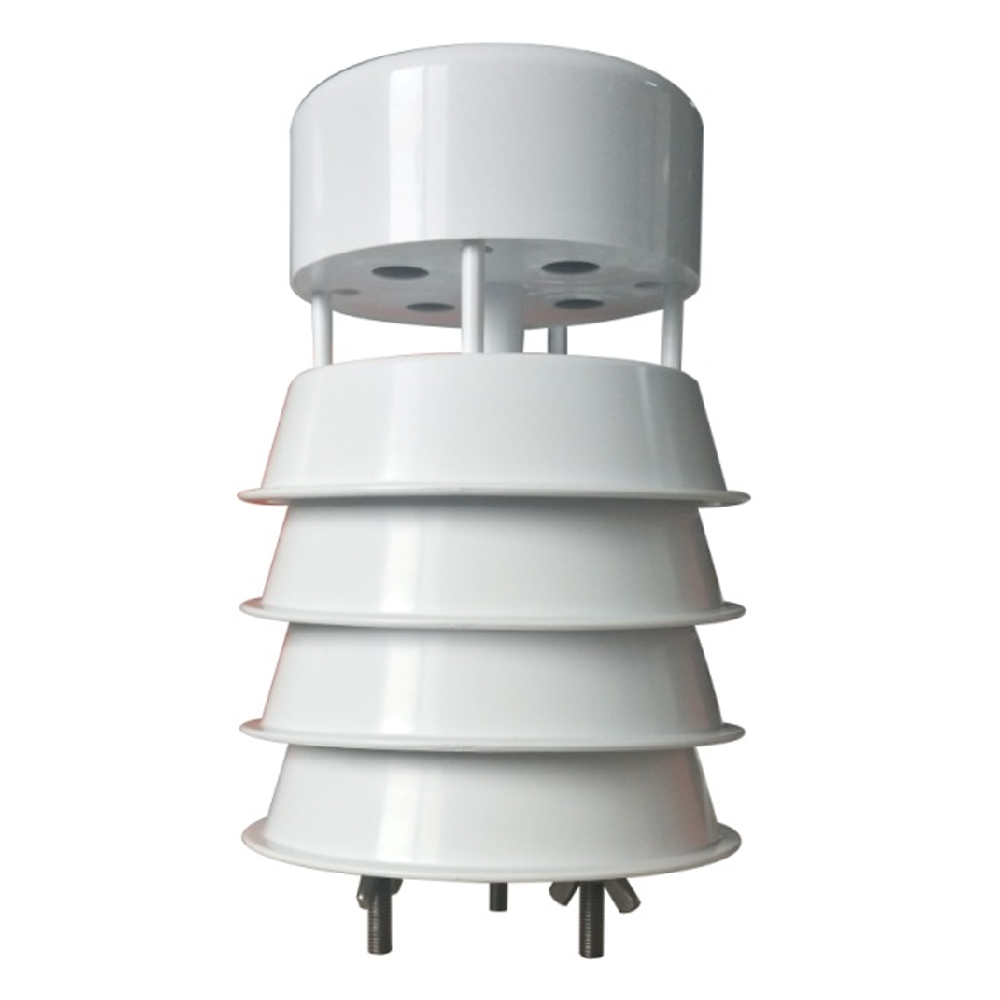
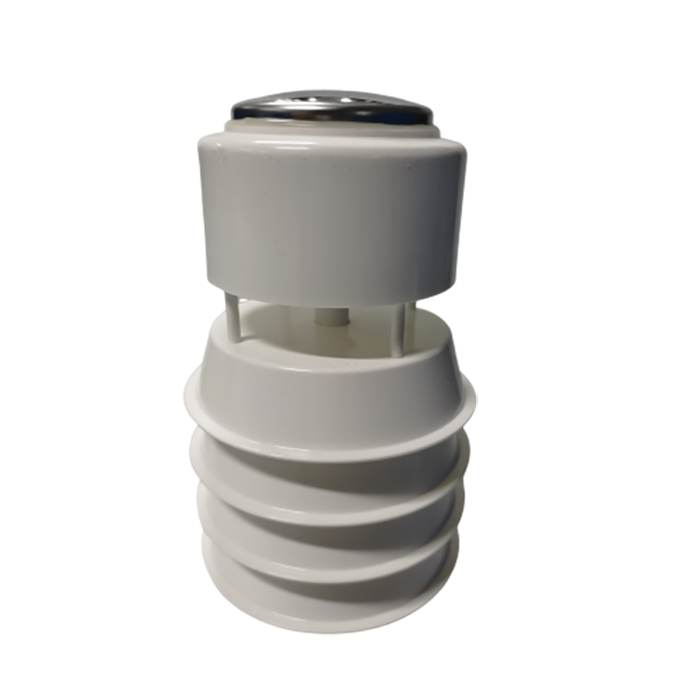
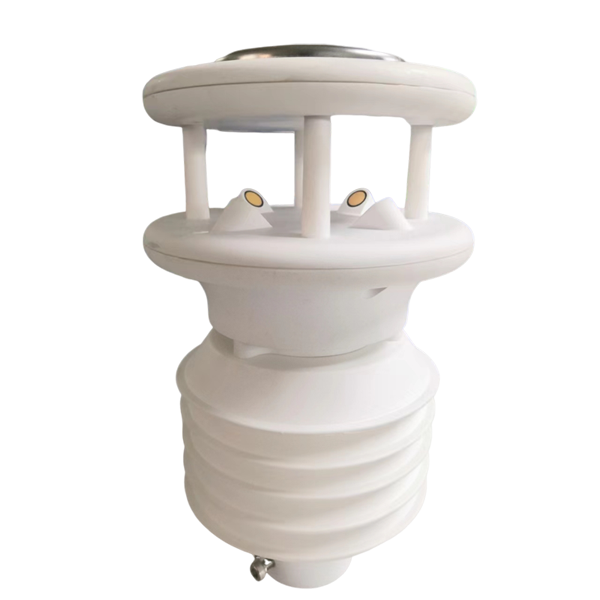
Not every named channel is present in every integrated sensor. The NBL-W-51MUWS supplies wind speed, wind direction, air temperature, humidity and pressure; it does not by itself supply rainfall. Review the named channel list for a six-in-one configuration as well, rather than interpreting the number six as a guarantee of a rain measurement.
For interval increments, sum the valid amounts belonging to the reporting period. For a cumulative counter, calculate differences between successive valid readings, with explicit handling of reset or rollover. For rainfall rate, a volume or depth total requires integration over time; adding rate values as if each were an amount is incorrect.
Consider a hypothetical counter that reads 120.0 mm at 23:55 and 122.4 mm at 00:05. The increase is 2.4 mm across ten minutes. If those are the only observations, the exact amount on each side of midnight is unknown. Allocating all 2.4 mm to the later day or splitting it equally introduces a convention, not an observed distribution. Store that limitation instead of claiming minute-level detail.
A daily reset needs the same care. If the counter falls from 122.4 mm to 0.2 mm, the negative difference is not negative rainfall. Determine whether the reset was scheduled, caused by a restart or associated with another event. Do not silently turn the difference into zero and describe the entire period as complete.
A rolling 24-hour sum and a midnight-to-midnight sum answer different questions. Label them accordingly in the operator display. Where farm work is organized around a morning reporting time, define that period explicitly rather than changing the station clock. For sites using daylight-saving changes, calculate intervals from an unambiguous time basis and display local time separately.
Rainfall observations from a selected integrated weather configuration still require a verified parameter and method. A higher channel count does not establish the counter's reset behavior. Include the rain register definition and accumulation logic in the acceptance test for whichever sensor and logger combination is offered.
When a rain channel is unavailable, a blank or flagged interval is more truthful than zero. A valid zero means the measuring system observed no increment under its specified method. An unavailable interval means the project lacks that observation. Those two states can lead to different irrigation decisions and should remain distinct in exported files.
For an illustrative report with five-minute intervals over a normal 24-hour day, 288 records are expected. If 276 valid records arrive, coverage is about 95.8%. That figure is not rainfall accuracy, and it does not reveal how much rain fell in the missing hour. The significance of the gap depends on when it occurred and whether another valid observation can recover the total.
A cumulative counter may preserve an event total across a communication gap if it continued measuring and did not reset, but it cannot recover the missing timing detail. Interval records stored in the logger may offer better recovery, if storage and retransmission are supported. After delayed records arrive, recalculate the affected report and retain the correction history rather than adding the same event twice.
Mark service work as well. Tipping a bucket during inspection, removing a sensor or changing a register scale can alter the observations. Staff need to distinguish test data from rain. Maintenance access still matters: no reporting rule can compensate for a blocked funnel or an inaccessible damaged cable indefinitely.
Rainfall amounts can be added over non-overlapping intervals. Temperature values normally require a defined average, minimum or maximum. Wind data needs particular care: a daily mean can conceal short high-wind periods, and averaging directions arithmetically fails around north. For example, 350 degrees and 10 degrees do not have a meaningful directional mean of 180 degrees.
Use the directional or vector processing appropriate to the required report, with a stated treatment of calm conditions. Specify the sampling and averaging intervals behind a gust or maximum field. A maximum of occasional spot readings is not automatically equivalent to a properly defined gust measurement. Keep current operational displays separate from historical daily summaries.
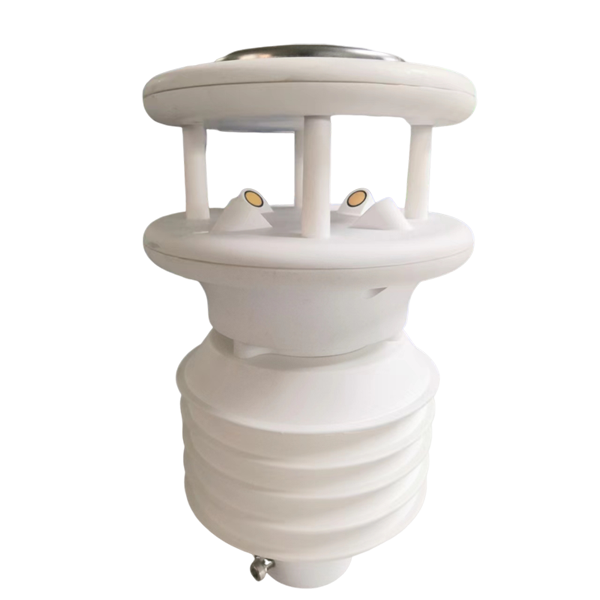
The NBL-W-81GUWS standard configuration adds particulate and noise observations to five weather variables. It is not a rainfall source merely because it has eight channels. Keep those environmental measurements in their own fields; they do not fill missing rain records or establish crop water demand.
A sensor with a digital output is one part of the reporting system. The following NBL-W-51MUWS interface details help define the acquisition task. They do not promise local storage, daily aggregation or automatic upload; those functions belong to the selected logger and software configuration.
| NBL-W-51MUWS item | Specification | Effect on the reporting package |
|---|---|---|
| Sensor output | RS485; Modbus; 9600 baud | Match the acquisition port and supplied register definition. |
| Power supply | 12 VDC | Provide the correct sensor supply separately from server connectivity. |
| Average sensor power | 0.3 W | Add logger, radio and other loads to the station budget. |
| Protection | IP65 | Protect cabinet components and cable joints according to their own ratings. |
| Standard cable | 2.5 m | Plan extensions and access without changing the intended measuring location. |
Before acceptance, compare one complete reporting period against the underlying records. Test a midnight boundary, a known missing interval, a counter reset and a repeated upload using a controlled test dataset or approved commissioning procedure. Verify the resulting totals and flags in the actual farm software, not just in a supplier's demonstration dashboard.
For a NiuBoL enquiry, include an example of the desired daily report and its data destination alongside the sensor list. Identify the field IDs, reporting time zone, rainfall period, required wind statistics and treatment of incomplete days. This lets the quotation distinguish measurement hardware from logger configuration and application-level calculations.
Stored observations may have arrived late. A valid backfill can correct the earlier incomplete total, provided records are assigned by observation time and checked for duplicates. The report should show that it was revised, rather than presenting the earlier figure as complete.
It may be displayed as the last known value with its age, but not labeled as current. For rainfall, a repeated cumulative value does not prove zero rain during the outage. Keep communication status and measurement completeness visible.
Not without the agronomic calculation. Measured rainfall is not automatically effective rainfall reaching the root zone. Soil, runoff, crop conditions and the irrigation method affect its use. First establish a reliable weather record, then apply the appropriate water-balance method.
No. Confirm the selected parameters and data processing. For NBL-W-10GUWS, solar radiation and illuminance are alternative channel choices, not interchangeable units. The report may also need separate soil observations or farm-operation records that the weather housing does not measure.
No. A daily average describes a historical period and can hide short excursions or changing direction. Use suitably current local observations together with the applicable product instructions and operating procedure. The daily report is a record, not a stand-alone authorization.
Name the logger and receiving software, sensor register mapping, timestamp rules, required calculations and missing-data behavior. Include testing of export, duplicate handling and any promised backfill. These functions should not be assumed from the presence of an RS485 port.
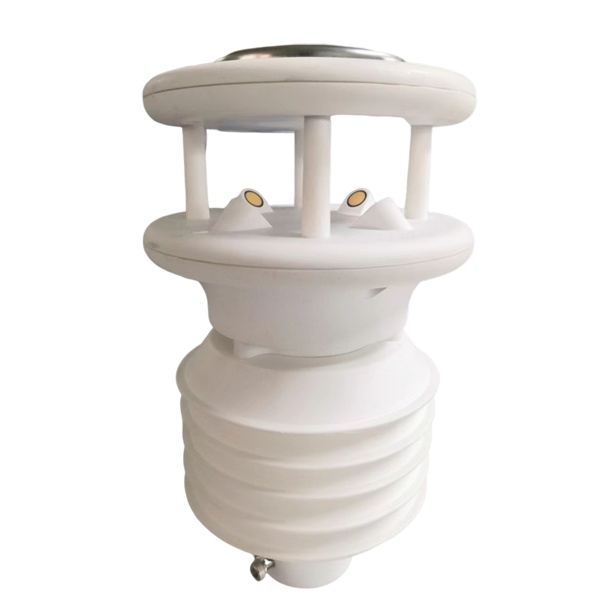
Useful farm weather station data keeps measurements, calculations and reporting periods distinguishable. Reconcile rainfall increments and counters, retain missing-data flags and define wind statistics before staff rely on the daily report. NiuBoL can match the sensing and acquisition configuration to the required record; the farm's reporting rules should be tested on real event data before routine use.
Prev:ORP Sensor Maintenance: Clean, Check or Replace the Electrode
Next:COD vs BOD: Choose the Wastewater Result Your Project Needs
Related recommendations
Sensors & Weather Stations Catalog
 Agriculture Sensors and Weather Stations Catalog-NiuBoL.pdf
Weather Stations Catalog-NiuBoL.pdf
Agriculture Sensors Catalog-NiuBoL.pdf
Water Quality Sensor Catalog-NiuBoL.pdf
Related products
 Combined air temperature and relative humidity sensor
 TDR Soil Moisture & Temperature Sensor for irrigation| RS485 |4-20mA| NBL-S-THR
 Soil pH sensor RS485 soil Testing instrument soil ph meter for agriculture |NBL-S-PH
 Wind Speed sensor Output Modbus/RS485/Analog/0-5V/4-20mA
 0.2mm Tipping Bucket Rain Gauge for Weather & Hydrology | NiuBoL
 Pyranometer Solar Radiation Sensor 4-20mA/RS485


Screenshot, WhatsApp to identify the QR code
WhatsApp number:+8615367865107
(Click on WhatsApp to copy and add friends)

