





— Blogs —
—Products—
 Consumer hotline +8618073152920
 WhatsApp:+8615367865107
Address:Room 102, District D, Houhu Industrial Park, Yuelu District, Changsha City, Hunan Province, China
Product knowledge
Time:2026-06-19 17:03:46 Popularity:215
A five-parameter weather station is often the most practical starting point for environmental monitoring projects that require wind speed, wind direction, air temperature, relative humidity, and atmospheric pressure. For system integrators, contractors, and IoT solution providers, the value is not only the parameter count; it is the balance between compact installation, reliable communication, manageable cost, and clear data structure.
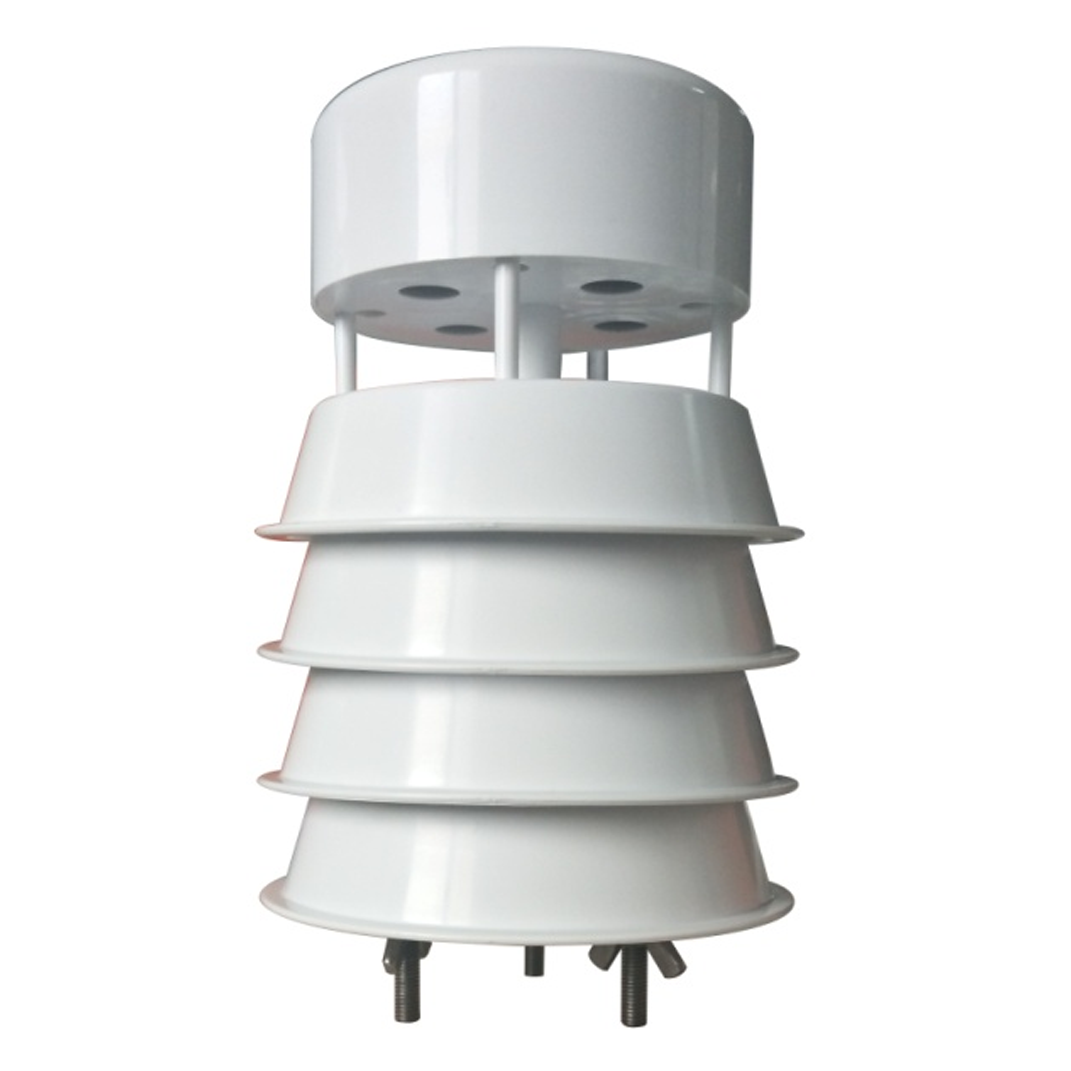
Many monitoring projects begin with a long list of possible weather variables. In practice, wind speed, wind direction, air temperature, relative humidity, and pressure already support a large number of operational decisions. These variables help explain site ventilation, heat stress, atmospheric stability, wind risk, and general microclimate behavior.
For environmental monitoring, agriculture, transport, and basic meteorological stations, a five-parameter system can provide a stable foundation before additional rainfall, radiation, soil, or air-quality sensors are added. This staged approach is useful when a project owner wants a reliable first deployment without overcomplicating cabinet wiring or platform configuration.
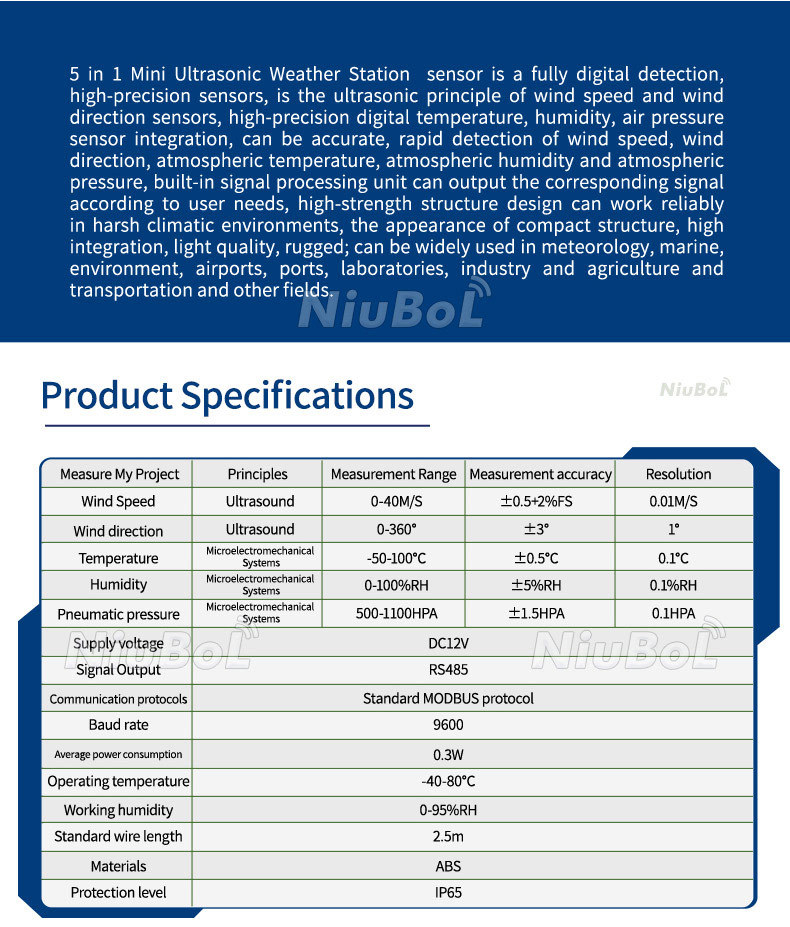
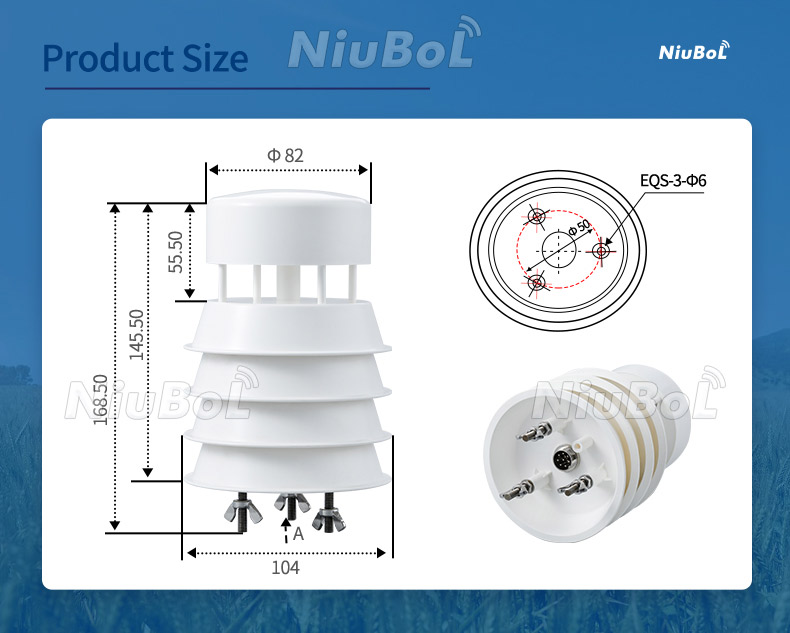
NBL-W-51MUWS five-parameter ultrasonic weather sensor integrates ultrasonic wind measurement with digital temperature, humidity, and pressure sensing. The integrated structure reduces separate brackets and moving parts, which helps simplify installation and long-term maintenance.
The RS485 output and standard MODBUS protocol allow the sensor to connect with weather data collectors, RTUs, edge gateways, or SCADA-oriented platforms. For integrators, this means the same communication logic can be reused across multiple stations, reducing commissioning time and future troubleshooting.
| Item | Specification | Project Value |
|---|---|---|
| Model | NBL-W-51MUWS five-parameter ultrasonic weather sensor | Core sensing unit for five-parameter automatic weather station projects |
| Power Supply | DC12V | Suitable for low-power field data acquisition systems |
| Signal Output | RS485 | Compatible with data collectors, RTUs, and gateways |
| Protocol | Standard MODBUS protocol | Supports platform integration and industrial polling |
| Baud Rate | 9600 | Common default for field communication |
| Average Power Consumption | 0.3W | Supports solar or battery-backed monitoring stations |
| Protection Class | IP65 | Suitable for outdoor environmental monitoring |
| Parameter | Range | Accuracy / Resolution |
|---|---|---|
| Wind Speed | 0-40m/s | ±0.5 + 2%FS / 0.01m/s |
| Wind Direction | 0-360° | ±3° / 1° |
| Air Temperature | -50 to 100℃ | ±0.5℃ / 0.1℃ |
| Relative Humidity | 0-100%RH | ±5%RH / 0.1%RH |
| Atmospheric Pressure | 500-1100hPa | ±1.5hPa / 0.1hPa |
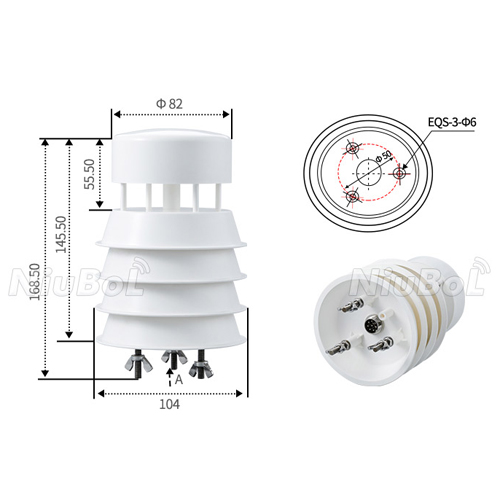
A five-parameter weather station is easier to specify, install, and maintain than a highly customized multi-sensor station. The bill of materials can remain focused: sensor, collector or gateway, pole, power supply, communication cable, and platform connection. This makes the system suitable for standard projects, pilot deployments, and distributed monitoring points.
The procurement discussion should still include operating temperature, enclosure protection, cable length, communication protocol, power supply, installation accessories, and data export requirements. A low-complexity station still needs a complete project configuration to work reliably in the field.
Wind measurement requires open exposure. The station should be mounted away from buildings, trees, poles, radar equipment, and artificial turbulence. If the station is installed on a roof or mast, the mounting height and surrounding obstacles should be reviewed before acceptance.
Data quality also depends on stable power, correct RS485 wiring, clean cable routing, and consistent platform units. The commissioning checklist should verify north alignment, live data display, historical storage, alarm fields, and export functions.
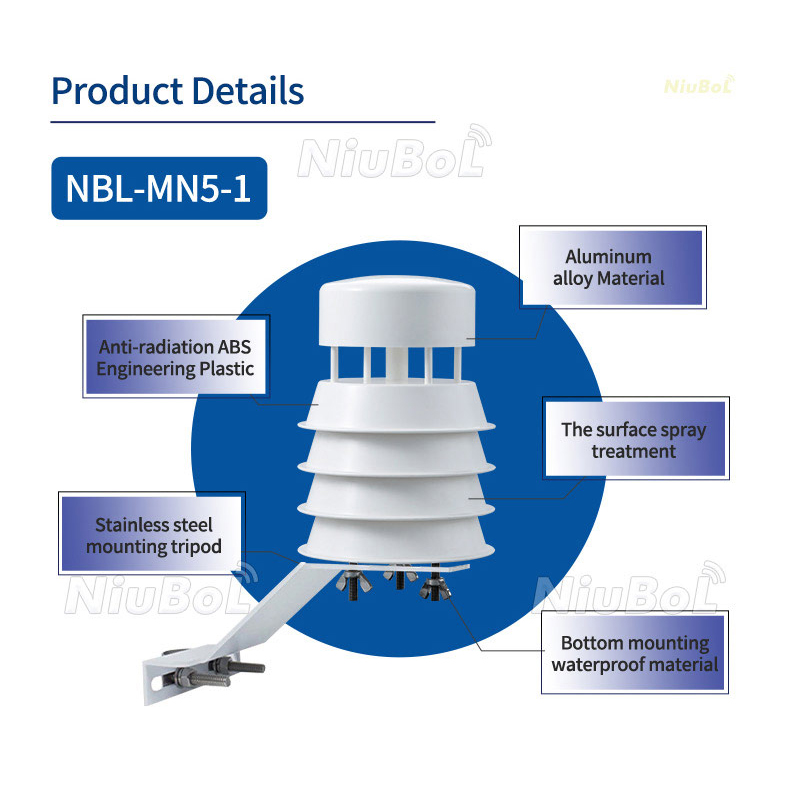
Five-parameter stations can be used in environmental baseline surveys, agricultural meteorological services, industrial boundary monitoring, road weather observation, reservoirs, ports, and education-related science projects. The station is especially useful where the owner needs reliable core weather data but does not yet require particulate, noise, rainfall, or radiation channels.
When project requirements expand, rainfall sensors, solar radiation sensors, soil sensors, or air-quality modules can be added through a broader data acquisition architecture. Starting with a five-parameter station does not prevent later expansion if the communication and platform design are planned correctly.
Select the NBL-W-51MUWS five-parameter ultrasonic weather sensor when compact installation, low maintenance, and RS485 MODBUS communication are important. Confirm whether the project requires a local display, solar power, 4G upload, data logger, or direct gateway connection.
For outdoor projects, evaluate wind exposure, pole design, lightning risk, maintenance access, and cable protection. For platform projects, confirm device address, register map, sampling interval, data unit naming, and alarm logic before field deployment.
A complete handover should include sensor model, installation photos, wiring definition, MODBUS settings, platform screenshots, live data sample, and exported historical data. These records help the owner confirm that the station is not only installed but also usable for future operation.
If several stations are deployed, create a device list with site name, address, communication settings, pole height, installation date, and maintenance notes. This improves service efficiency and reduces confusion during later expansion.
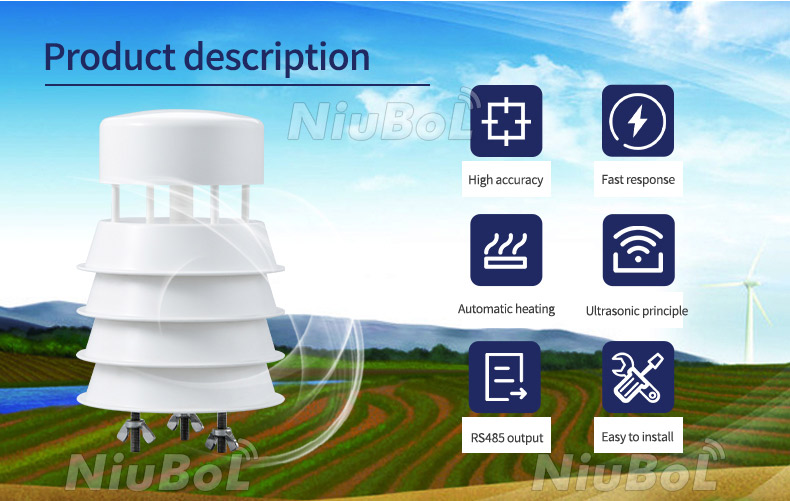
A five-parameter station is often used as a baseline station before a larger environmental network is deployed. The contractor can install the station at the project boundary, collect wind and atmospheric data, and use the results to decide whether additional rainfall, radiation, or air-quality sensors are needed.
This approach helps project owners control first-stage cost while keeping the system expandable. If the platform is designed with standard parameter fields and MODBUS device profiles, additional sensors can be added without rebuilding the entire data architecture.
The platform should store wind speed, wind direction, air temperature, relative humidity, and atmospheric pressure as independent fields with clear units. For engineering reports, the station name, installation location, data interval, and export time should also be recorded.
Alarm logic can be added for wind speed, communication interruption, low battery, or abnormal sensor values. Even when the station is used for basic monitoring, data quality rules help the owner trust the system during long-term operation.
In distributed station networks, a five-parameter station can act as a standard node for basic atmospheric monitoring. When each node uses the same sensor model, output protocol, and platform field structure, the owner can compare different sites without converting data formats.
This is useful for projects such as industrial parks, agricultural bases, reservoir groups, and environmental service networks. The integrator can deploy multiple stations with the same wiring, address plan, and dashboard template, reducing training and maintenance workload.
After handover, the project should include periodic data review. Operators should look for missing records, abnormal flat curves, sudden spikes, and repeated communication drops. These checks help identify power issues, wiring faults, or installation problems early.
Maintenance does not need to be complicated, but it should be planned. Pole stability, connector sealing, cable protection, and sensor surface condition should be checked according to the environment. This keeps the station useful beyond initial acceptance.
Before installation, confirm the station location, pole height, power supply, RS485 cable route, grounding method, device address, baud rate, and platform field names. The installation team should also prepare a compass or north reference for wind direction alignment.
After installation, verify that all five parameters appear on the collector or platform with correct units. Export a short data sample and keep it with the acceptance file. This reduces later disputes about whether the station was commissioned correctly.
For multiple stations, use a consistent naming rule such as site code, station number, and project area. Consistent naming improves report generation and maintenance coordination.
For a standard five-parameter station package, the integrator can specify the NBL-W-51MUWS five-parameter ultrasonic weather sensor, a data collector or gateway, a mounting pole, protected RS485 cable, power supply, and platform access. This keeps the project scope clear while leaving room for later expansion.
If the station will be used in several sites, the package should also include consistent labels, address rules, and installation records. A repeatable package reduces installation variation and makes maintenance easier for the owner.
A five-parameter weather station provides core atmospheric data with lower installation complexity than a large multi-sensor system. It measures wind speed, wind direction, temperature, humidity, and pressure, which are enough for many environmental, agricultural, and industrial monitoring tasks. The compact structure also simplifies wiring, maintenance, and platform integration.
NBL-W-51MUWS five-parameter ultrasonic weather sensor combines ultrasonic wind measurement with digital temperature, humidity, and pressure sensing. It has no mechanical wind cups or vane structure, reducing wear and maintenance. Its RS485 MODBUS output is suitable for data collectors, RTUs, gateways, and remote monitoring platforms.
Yes. A five-parameter station can become the base layer of a larger monitoring system if the platform and gateway are designed for expansion. Rainfall, solar radiation, soil moisture, PM, noise, or other environmental sensors can be added as separate channels when the project requires more data.
Confirm measured parameters, output interface, protocol, power supply, protection class, cable length, mounting method, platform connection, and whether local display or wireless upload is required. The buyer should also request wiring definitions and MODBUS register documentation.
The station should be installed in an open and representative position. Avoid obstacles that disturb airflow, such as buildings, trees, poles, and equipment rooms. Stable mounting, correct orientation, and protected cable routing are necessary for reliable data.
Yes. RS485 MODBUS is widely used in field monitoring projects because it is stable, simple to integrate, and compatible with many collectors and gateways. Address planning and wiring topology should be defined before connecting multiple devices.
Check live values, historical records, parameter units, wind direction alignment, communication stability, and data export. Compare readings with site conditions to identify installation errors or incorrect platform mapping.
Useful documents include datasheets, wiring definitions, MODBUS register maps, installation photos, configuration records, platform screenshots, live data samples, and maintenance recommendations.
A five-parameter weather station gives integrators a compact and practical way to deliver reliable core meteorological data. With NBL-W-51MUWS five-parameter ultrasonic weather sensor, RS485 MODBUS compatibility, and a clear project configuration, NiuBoL can support environmental, agricultural, industrial, and education-related weather monitoring systems.
Prev:Negative Oxygen Ion Monitoring System for Scenic Areas, Parks and Smart Environmental Projects
Next:Integrated Ultrasonic Wind Speed and Direction Sensor Application Scope for Engineering Projects
Related recommendations
Sensors & Weather Stations Catalog
 Agriculture Sensors and Weather Stations Catalog-NiuBoL.pdf
Weather Stations Catalog-NiuBoL.pdf
Agriculture Sensors Catalog-NiuBoL.pdf
Water Quality Sensor Catalog-NiuBoL.pdf
Related products
 Combined air temperature and relative humidity sensor
 TDR Soil Moisture & Temperature Sensor for irrigation| RS485 |4-20mA| NBL-S-THR
 Soil pH sensor RS485 soil Testing instrument soil ph meter for agriculture |NBL-S-PH
 Wind Speed sensor Output Modbus/RS485/Analog/0-5V/4-20mA
 Tipping bucket rain gauge for weather monitoring auto rainfall sensor RS485/Outdoor/stainless steel
 Pyranometer Solar Radiation Sensor 4-20mA/RS485

Screenshot, WhatsApp to identify the QR code
WhatsApp number:+8615367865107
(Click on WhatsApp to copy and add friends)

