





— Blogs —
—Products—
 Consumer hotline +8618073152920
WhatsApp:+8615367865107
Address:Room 102, District D, Houhu Industrial Park, Yuelu District, Changsha City, Hunan Province, China
Product knowledge
Time:2025-01-11 16:43:42 Popularity:1624
Insect monitoring equipment for specimen collection must be assessed beyond camera resolution. A photograph is not a physical voucher, and a heated, mixed drawer of insects may not meet a research sampling method. Confirm how insects are processed, when they can be retrieved and whether individual specimens can be linked to their image and collection interval before specifying the equipment for sample retention.
A crop-monitoring project may need only reviewed images and counts. A taxonomic study may need physical specimens for closer examination. Another research project may require material prepared by a particular laboratory method. These requirements should be separated in the enquiry because a single automatic processing sequence may not satisfy them all.
For example, a dorsal image may not show the underside or other structures needed for a particular identification. A physical specimen can allow further examination, provided the relevant features remain accessible. That does not mean every collected insect will be suitable: attraction, impact, heating, drying, transfer and storage can affect the condition of the material.
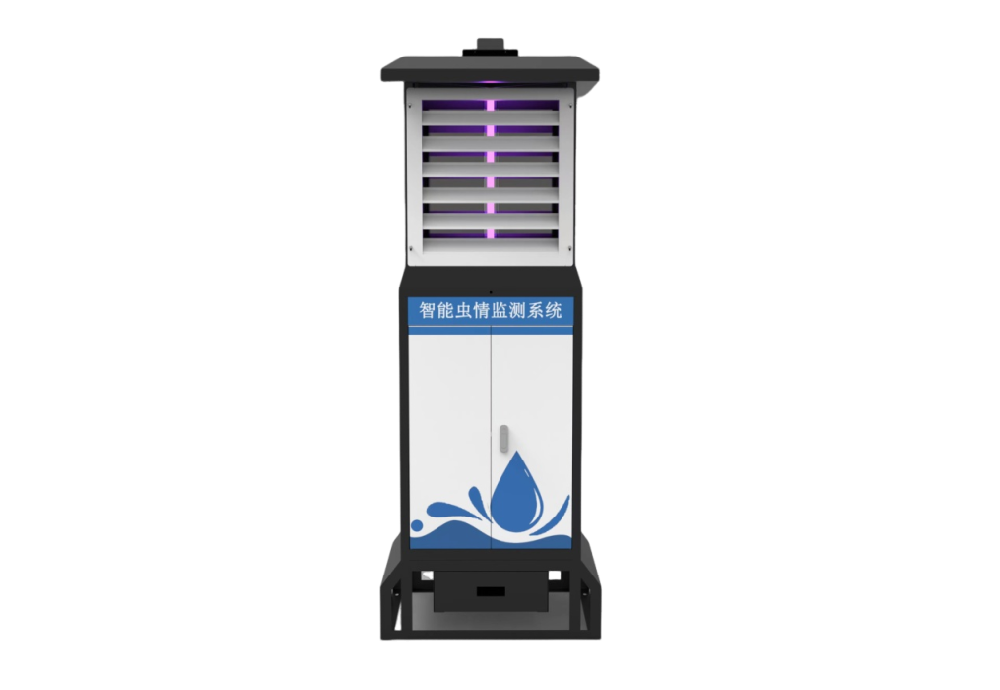
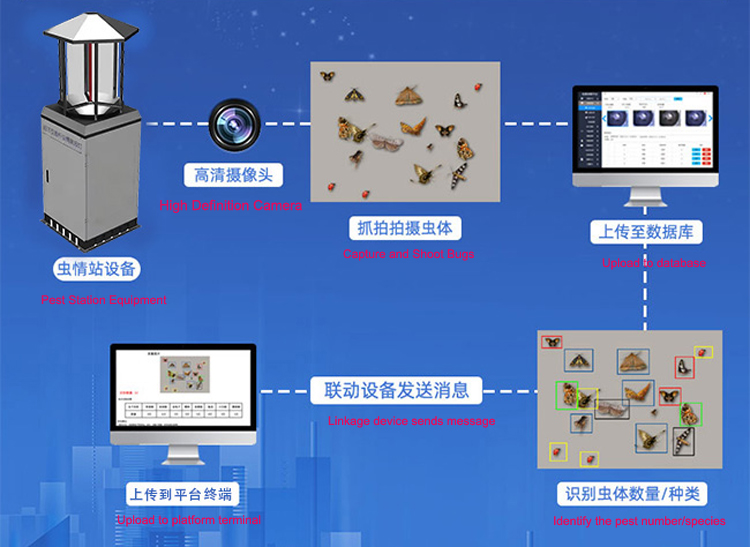
The NiuBoL NBL-IoT-SRPMS attracts insects with a light source, processes them using far-infrared heating and photographs them for recognition and review. Its cleaning mechanism moves material from the imaging area toward a collection drawer. That drawer provides a retrieval point, but it does not automatically provide separately labelled specimens for each image or operating interval.
Ask where the sample becomes mixed and whether the supplied configuration can preserve the required separation. If specimens from several nights accumulate in one drawer, a drawer label alone cannot identify the exact capture time of each insect. Likewise, several insects visible in one frame are not automatically traceable to separate retrieved specimens.
| Processing stage | Sample question | What to verify |
|---|---|---|
| Attraction and entry | Does the method collect the study target? | Target response and local catch composition, rather than assuming all pest groups are sampled |
| Heating and drying | Does the treatment preserve the features or material required? | Suitability of processed specimens for the intended examination |
| Imaging and recognition | Can the necessary features be seen? | Usable views, identification level and review of uncertain insects |
| Cleaning and transfer | Are samples mixed or lost between batches? | Transfer path, drawer contents and the actual collection interval |
| Removal and storage | Can the specimen be related to the monitoring record? | Labels, retrieval times and the laboratory's preparation requirements |
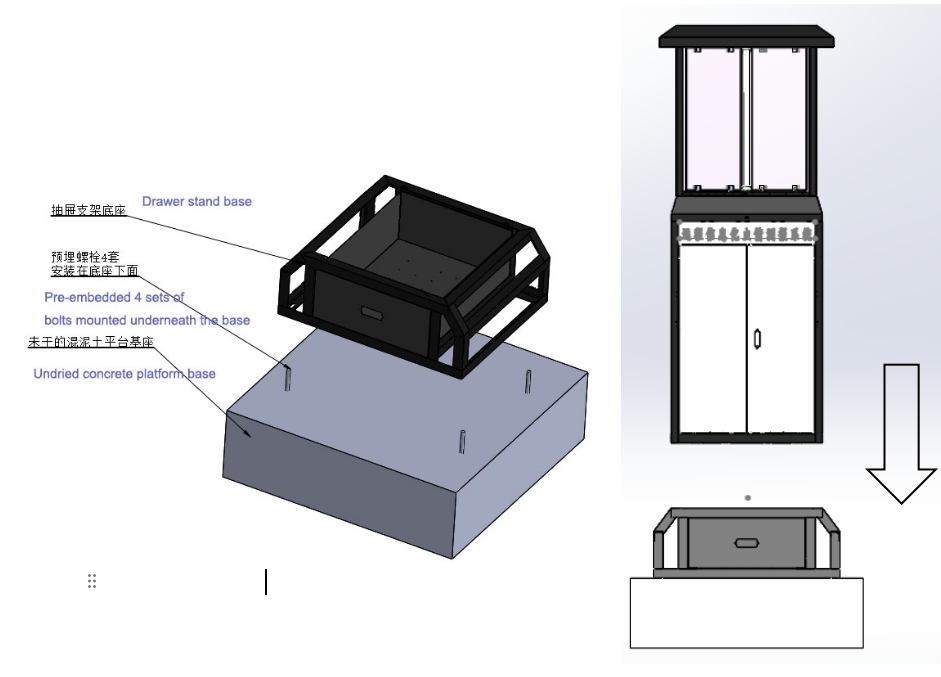
The equipment base and installation also affect service access. Leave enough space to reach the collection point and open the required doors without changing the trap's installed position. Confirm that the doors and collection drawer remain accessible once the base, anchors and cable routes are installed.
| NBL-IoT-SRPMS item | Configuration | Meaning for retained samples |
|---|---|---|
| Attraction light | 18 W LED; 365-395 nm | Light attraction is selective; confirm that the target insects are represented |
| Processing | Far-infrared heating; 80-90 degrees C operating band | Assess specimens after the real treatment rather than assume fresh-sample equivalence |
| Camera | 12-megapixel imaging | Resolution alone does not establish visibility of every diagnostic feature |
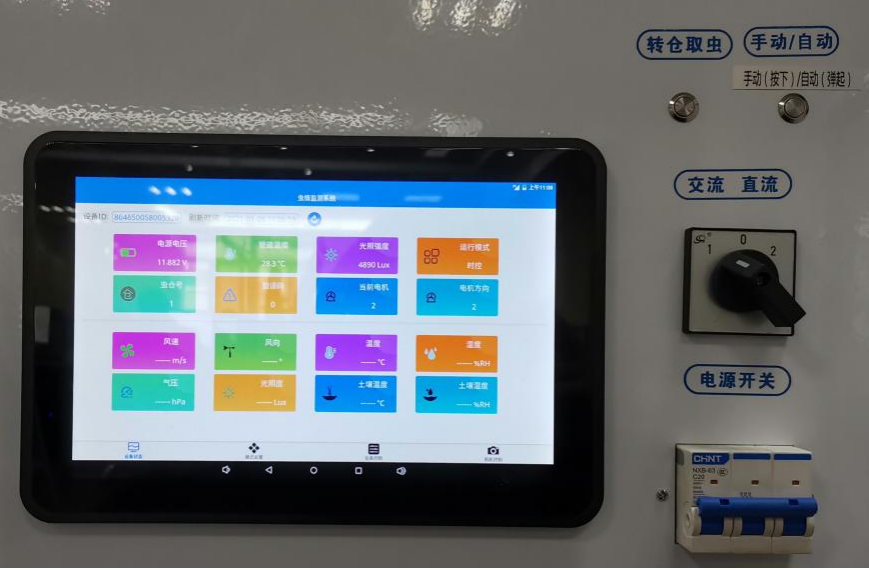
| Local interface | 10-inch touchscreen | Verify which operating settings and processing times can actually be recorded |
| Data connection | Industrial serial interfaces and network reporting options | Agree how image, batch and retrieval records will be associated |
Heating can be appropriate for producing insects for image-based observation, but that is a different purpose from preserving untreated material. If a laboratory requires a particular specimen condition, provide the processing temperature and sequence to that laboratory before purchase. Do not substitute a visually intact insect for a sample prepared under the required method.
A percentage described as insect integrity also needs a defined assessment method, target insects and test conditions. It is not a universal guarantee that every required structure remains intact, every insect is individually traceable or every subsequent analysis will be valid. Evaluate representative actual catches for the research question instead of relying on an unqualified headline percentage.
If a project requires one physical sample per night, establish whether the retrieval arrangement genuinely keeps nights separate. Set a defined collection interval and record any interruption or delayed removal. Do not label a drawer as one night's catch if it contains material remaining from earlier operation.
For projects requiring individual specimen-to-image matching, ask whether that association is achievable with the supplied hardware and handling process. If the mechanism mixes insects after imaging, the monitoring image and physical specimen may only be linkable at batch level. That limitation may be acceptable for one study and disqualifying for another.
Check the first retrieval with the operator who will perform routine service. A useful sample plan must be practical at the installed site, including access after rain, safe isolation where required and the availability of labels and suitable containers. Follow the equipment and site procedures before opening or reaching into processing areas.
A sample record should identify the station, capture interval, retrieval time, relevant operating settings, image batch and reviewer decision. The specimen label should carry a matching identifier at the level of traceability actually achieved. Do not create false precision by assigning one image time to a mixed multi-day collection.
Photographs remain valuable even when specimens are retained. They can show the material before later handling, support review and help investigate a count disagreement. Conversely, a saved image cannot be rotated or dissected like a specimen. Decide which evidence each part of the project needs rather than treating one format as a complete substitute for the other.
For integration with a PLC, RTU or customer platform, obtain the supported serial data and register definitions. Where RS485 Modbus RTU is supplied, check the available numeric and status fields. Image delivery and physical-sample metadata may require a separate platform route or an external sample log. They are not automatically included in a Modbus count register.
Use a representative local catch to follow the material from entry to retrieval. Inspect the features needed by the reviewer, check for mixing or carryover and compare the available images with the retained batch. If the project's method requires independent laboratory assessment, obtain it on processed material rather than on fresh specimens collected by another method.
Set acceptance around the intended use: whether the required identification level can be supported, whether samples remain separated over the stated interval, and whether the records can be reconciled. Do not equate the number in the final drawer with a validated image count without accounting for transfer, fragments and the defined counting method.
Provide NiuBoL with the target insects, intended examination, required retrieval interval and whether batch-level or individual traceability is needed. Confirm any specimen-retention arrangement, consumables and service access in the offered configuration. A monitoring system that is suitable for image trends may still need a different sampling method for a specimen-based study.
Only for tasks that can be completed from the available view and image quality. Some identification or research methods require structures or material that cannot be assessed from one image. Define the required examination before choosing image-only monitoring.
No such assumption should be made. The receiving laboratory must assess the processing and specimen preparation against its method. Visual completeness does not establish analytical suitability.
Not necessarily. Material can become mixed after imaging. Confirm the actual transfer and separation arrangement; some configurations may support only a batch-level association.
Record the actual capture interval and retrieval time, including interruptions and any known carryover. Do not assign a single-night label to a collection that spans several operating periods.
No. It describes a particular assessment under defined conditions, if those conditions are available. The study must still verify the features, preparation and traceability it requires using representative processed specimens.
Request the processing sequence, retrieval point, batch-separation capability, usable image examples, service procedure and data-association method. Assess those against the target insects and laboratory requirements before selecting the final sampling configuration.
Insect monitoring equipment for specimen collection must preserve the material and identity needed by the study, not merely produce a count. Check heating, transfer, retrieval and traceability with representative specimens. Keep image-based monitoring and physical-sample requirements distinct when deciding whether the proposed configuration is suitable.
Prev:Why Solar PV Needs Weather Stations?
Next:Pest Monitoring System Software Updates: Keep Insect Trends Comparable
Related recommendations
Sensors & Weather Stations Catalog
 Agriculture Sensors and Weather Stations Catalog-NiuBoL.pdf
Weather Stations Catalog-NiuBoL.pdf
Agriculture Sensors Catalog-NiuBoL.pdf
Water Quality Sensor Catalog-NiuBoL.pdf
Related products
 Combined air temperature and relative humidity sensor
 TDR Soil Moisture & Temperature Sensor for irrigation| RS485 |4-20mA| NBL-S-THR
 Soil pH sensor RS485 soil Testing instrument soil ph meter for agriculture |NBL-S-PH
 Wind Speed sensor Output Modbus/RS485/Analog/0-5V/4-20mA
 Tipping bucket rain gauge for weather monitoring auto rainfall sensor RS485/Outdoor/stainless steel
 Pyranometer Solar Radiation Sensor 4-20mA/RS485


Screenshot, WhatsApp to identify the QR code
WhatsApp number:+8615367865107
(Click on WhatsApp to copy and add friends)

