





— Blogs —
—Products—
 Consumer hotline +8618073152920
 WhatsApp:+8615367865107
Address:Room 102, District D, Houhu Industrial Park, Yuelu District, Changsha City, Hunan Province, China
Product knowledge
Time:2026-09-06 09:00:00 Popularity:211
High salinity high COD wastewater needs a measurement and treatment review before an online COD probe is selected. Establish the salt composition, representative organic load, analytical interference and treatment objective. A UV-based COD estimate can support trends after matrix validation, but it does not perform a dichromate digestion or measure salinity. Use separate conductivity and laboratory information to distinguish changing salt load from changing organic composition.

A composite label such as high-salt industrial effluent can conceal very different streams. A concentrated cleaning discharge, an organic-rich process stream and a cooling-water return may each need different handling. Record their flow, composition and timing before selecting treatment for the combined mixture.
Request a representative analytical programme rather than one COD result. Include conductivity or a suitable salt analysis, chloride where relevant to the method, pH, solids and the organic information needed for the proposed process. Assess biodegradability and inhibition through an appropriate study if biological treatment is being considered; COD concentration alone cannot establish either.
Keep concentration and mass load distinct. Dilution can lower a concentration while increasing the volume to be treated without removing the original pollutant mass. Segregating a concentrated stream may be useful, but the resulting concentrate, solids or other residual still needs an identified destination.
The laboratory result used to validate an online instrument must itself be fit for the water. Chloride can interfere with dichromate-based COD analysis. The selected procedure must address that interference within its validated conditions; a routine vial result is not automatically an independent truth in every brine.
EPA Method 410.4 describes a semi-automated colorimetric COD method and its analytical requirements. Agree the laboratory method, matrix treatment and quality-control checks with the laboratory before using results to establish an online correlation. Do not improvise reagent modifications from a general website article.
| Evidence | Question to resolve | Purchase consequence |
|---|---|---|
| Reference-method applicability | Is the laboratory result valid at the actual chloride and sample composition? | Choose a suitable comparison before accepting a sensor calibration |
| Production-cycle samples | Does organic composition change between products or cleaning events? | Test more than one convenient steady-state sample |
| Solids and colour | Do optical conditions change independently of the target organic load? | Review optical-path and compensation performance |
| Flow and concentration | What load enters each treatment stage? | Avoid selecting capacity from concentration alone |
| Materials and temperature | Will the complete wetted assembly tolerate the actual exposure? | Confirm exact materials, joints and operating limits |

A dual-wavelength UV sensor observes optical absorption and applies a relationship to report a COD-related value. The relationship depends on the absorbing compounds and the calibration basis. It is not the same physical procedure as chemically oxidising the sample and determining its oxygen-equivalent demand.
Salt concentration does not provide a universal correction factor between UV absorption and COD. A change in production chemistry can change the optical relationship even when conductivity is similar. Likewise, a conductivity increase can occur without a proportional increase in organic load.
Use paired samples across the actual water conditions to decide whether the optical estimate supports the intended trend or alarm. Examine bias, scatter and response near the action level. If the relationship differs substantially between streams, separate stream-specific measurements or another analytical arrangement may be more useful than one forced common calibration.
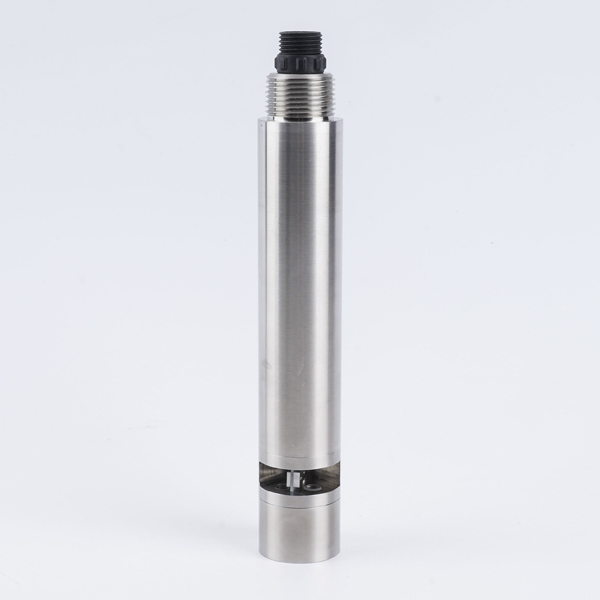
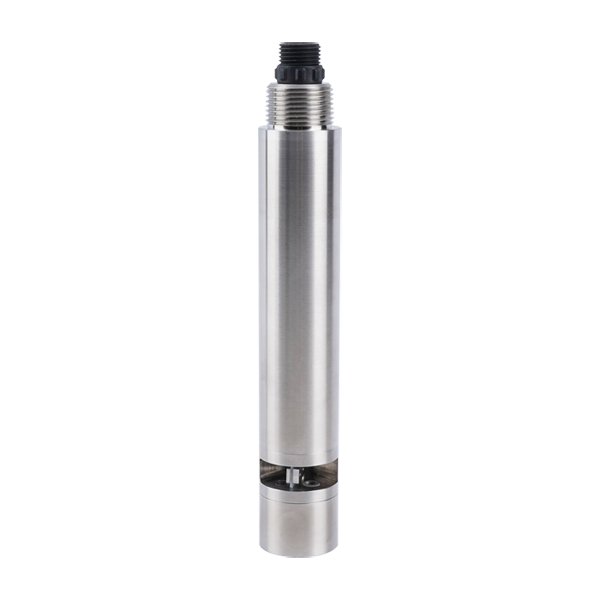
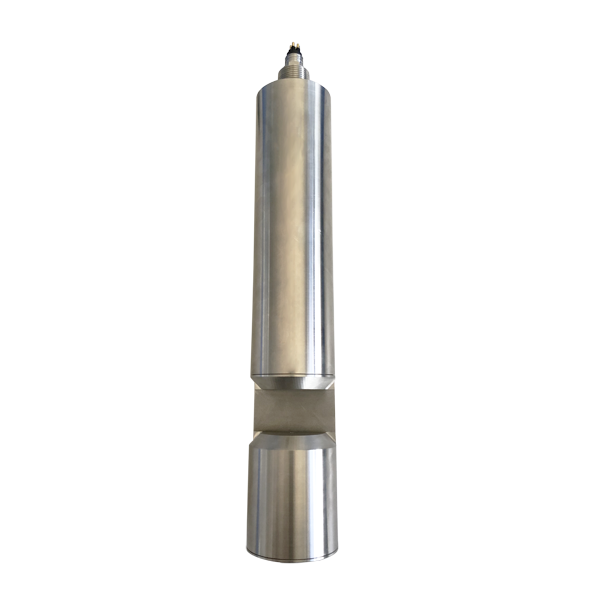
The NiuBoL NBL-WQ-COD uses dual-wavelength UV absorption. Its selected ranges are expressed as KHP-equivalent COD. High organic concentration can exceed those ranges, and the stainless-steel body specification does not by itself establish compatibility with every hot or chemically aggressive saline stream.
| Parameter | NBL-WQ-COD specification | Selection implication |
|---|---|---|
| Principle | Dual-wavelength ultraviolet absorption | Validate the COD relationship in the actual wastewater |
| Selected COD range | 0-200 or 0-500 mg/L equivalent KHP | Do not assume coverage of untreated high-COD peaks |
| COD resolution and accuracy | 0.1 mg/L; stated +/-5% | Confirm the accuracy basis; display resolution does not establish matrix accuracy |
| Associated turbidity range | 0-100 or 0-200 NTU with the selected COD configuration | Compensation does not guarantee immunity to every particle condition |
| Operating conditions | 0-45 deg C; pressure below 0.1 MPa | Review cooling, pressure and installation needs without changing the analyte unintentionally |
| Supply and consumption | 12-24 VDC; 0.3 W at 12 V | Allow separately for controller and sample-system equipment |
| Output | RS485, Modbus RTU | Keep optical estimates distinguishable from laboratory results |
| Body, protection and cable | 316L stainless steel; IP68; 5 m standard cable | Confirm compatibility of all exposed components and extensions |
Equalisation can moderate a time-varying feed but does not remove its accumulated salt or organic mass. Physical separation can remove suitable suspended or separable matter, while leaving dissolved components. Biological treatment needs evidence that the selected process can operate with the actual salinity, loading changes and inhibitory compounds.
Membrane or concentration processes transfer some components into another stream. Include pretreatment, fouling control and the concentrate route when evaluating them. Oxidation processes also need treatability evidence for the target compounds and operating conditions; an optical signal change alone is not proof of the required organic removal.
A useful trial measures the result that matters to the project as well as the process indicators. Define whether the objective concerns discharge COD, reuse quality, salt recovery or protection of a biological stage. Different objectives require different acceptance measurements and residual-management work.
Separate tags help operators recognise different event patterns. A conductivity rise without a corresponding validated COD increase suggests a different investigation from a rise in both. Neither pattern identifies the responsible compound by itself. Retain production and stream-transfer records to explain the timing.
Use the actual conductivity range and temperature basis required by the water. A sensor that clips at the normal brine concentration cannot describe a salt-load event. Do not convert conductivity to a particular salt concentration using a coefficient borrowed from unrelated water.
At the RS485 Modbus RTU interface, keep sensor value, unit and update time clear. Label the UV-derived channel as an optical estimate where that is its role. A calculated or matrix-adjusted value should retain its equation version, so a new calibration does not silently change the meaning of historical data.
Agree the sample set and comparison criteria before the trial. Include normal production, cleaning discharges, changes in colour or solids and the highest credible concentration. Record any dilution, filtration or cooling used; those steps may alter representativeness and must not be hidden.
If the required range, materials or correlation cannot be demonstrated, select a different configuration or method. An unsuccessful trial still prevents the cost of an unsuitable permanent installation. Send NiuBoL the stream analysis, reference method, paired results and installation drawing for a model-specific review rather than requesting an unspecified high-salinity COD sensor.
No. Conductivity responds to ionic composition, while COD concerns an oxygen-equivalent analytical quantity. Use separate measurements and process information; there is no universal conversion between them.
No. It avoids performing a chemical digestion in the probe, but its relationship to COD still depends on the water's optical composition and validation. Laboratory chloride interference and optical matrix effects are different questions.
No. The selected range is finite and KHP-equivalent. Confirm actual peak conditions and the validated response. Do not treat an over-range value as a quantified concentration.
No. Temperature, chloride, other chemicals and exposure conditions affect the assessment. Review the whole wetted assembly, seals and connections with the actual composition before model approval.
Demonstrate a usable relationship to the intended reference across the operating matrix, verify sample response and define fault behaviour. If that evidence supports only trending, do not assign it an unproven compliance or automatic-control role.
High salinity high COD wastewater requires separate attention to treatment load, salt composition and analytical validity. Establish a trustworthy reference, test the UV relationship across production changes and verify range and materials before purchase. NiuBoL can review an optical monitoring configuration against those conditions without treating conductivity or a UV estimate as a complete wastewater characterisation.
Prev:Drinking Water Monitoring Parameters: Find Gaps in Analytical Coverage
Next:Temperature Humidity Pressure Sensor Installation in a Stevenson Screen
Related recommendations
Sensors & Weather Stations Catalog
 Agriculture Sensors and Weather Stations Catalog-NiuBoL.pdf
Weather Stations Catalog-NiuBoL.pdf
Agriculture Sensors Catalog-NiuBoL.pdf
Water Quality Sensor Catalog-NiuBoL.pdf
Related products
 Combined air temperature and relative humidity sensor
 TDR Soil Moisture & Temperature Sensor for irrigation| RS485 |4-20mA| NBL-S-THR
 Soil pH sensor RS485 soil Testing instrument soil ph meter for agriculture |NBL-S-PH
 Wind Speed sensor Output Modbus/RS485/Analog/0-5V/4-20mA
 Tipping bucket rain gauge for weather monitoring auto rainfall sensor RS485/Outdoor/stainless steel
 Pyranometer Solar Radiation Sensor 4-20mA/RS485

Screenshot, WhatsApp to identify the QR code
WhatsApp number:+8615367865107
(Click on WhatsApp to copy and add friends)

