





— Blogs —
—Products—
 Consumer hotline +8618073152920
 WhatsApp:+8615367865107
Address:Room 102, District D, Houhu Industrial Park, Yuelu District, Changsha City, Hunan Province, China
Product knowledge
Time:2026-09-06 08:00:00 Popularity:188
Select drinking water monitoring parameters by assigning each water-quality question to a suitable measurement. Online turbidity, chlorine-related measurements, pH, conductivity and temperature can reveal operational changes. They do not identify every chemical hazard or replace required microbiological analysis. Before ordering a station, map what each channel can detect, what it cannot establish and which independent tests close the remaining gaps.
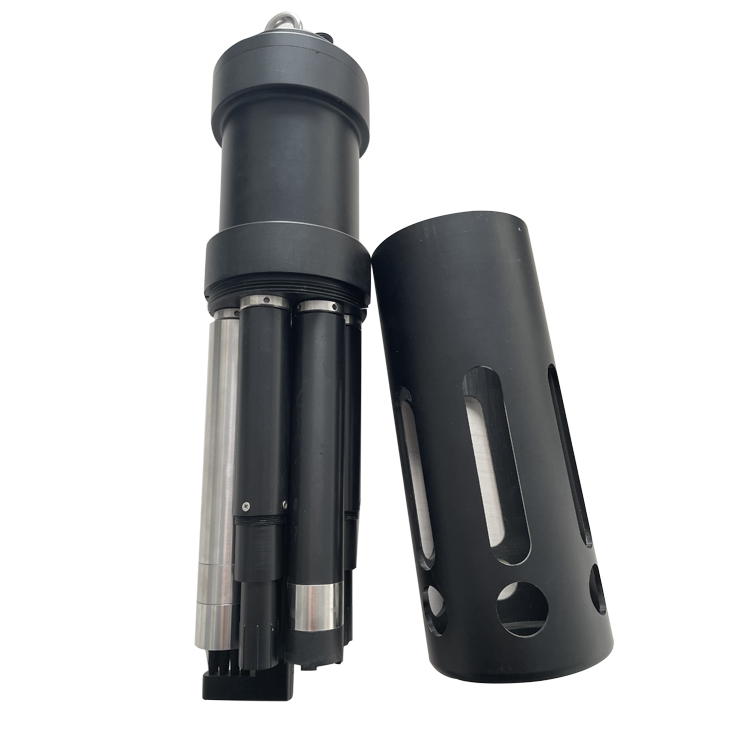
A utility may already collect many measurements but still lack evidence for a particular risk. The gap is not necessarily another sensor. It may be an unsuitable sampling point, a laboratory test that is missing from the programme, or an alarm with no investigation procedure.
Start with the source-water risks, treatment barriers and distribution conditions relevant to the project. For each concern, specify the observable change, the analytical method and the response. A change in conductivity may trigger an investigation into source blending; it does not identify which ion changed or establish its health significance.
The EPA online monitoring resources describe operational and incident-detection uses in source water and distribution. These uses complement other surveillance and analytical work. The procurement document should preserve that distinction rather than describe a general multi-parameter station as a complete drinking-water test.
| Question | Possible online observation | Additional evidence needed |
|---|---|---|
| Has particle-related water quality changed? | Turbidity at a representative treatment or distribution point | Process inspection and any method-specific follow-up required by the event |
| Has disinfectant residual changed? | A measurement matched to the disinfectant and reporting quantity | Independent residual check, sample-flow verification and relevant process information |
| Has the ionic character of the water changed? | Conductivity with an explicit temperature basis | Specific-ion or chemical analysis where identification matters |
| Has an acid-base condition shifted? | pH and temperature | Water chemistry and treatment records; alkalinity where relevant |
| Is a particular microorganism or metal present? | General channels may show no distinctive response | A suitable specific sampling and analytical method |
| Does water meet the full applicable requirement? | Online trends contribute operating evidence | The complete monitoring programme and applicable assessment requirements |
A source-water station should help the operator recognise conditions that challenge the installed treatment process. Depending on the source, useful channels may include temperature, conductivity, pH, turbidity or other selected indicators. Additional organic or algae-related measurements need their own method and interpretation; they are not implied by a standard sensor list.
Use historical source data and credible seasonal changes to select the duty. A station designed only around ordinary conditions may saturate during the event it was intended to detect. Conversely, a very wide range may have inadequate performance near a small but important change.
Relate a treatment measurement to the stage it actually observes. A turbidity channel downstream of filtration answers a different question from a raw-water channel. A chlorine-related value after mixing is different from a value after the designed contact stage. Label these purposes explicitly so a dashboard does not present unrelated points as equivalent duplicates.
Distribution results need hydraulic context. Source blending, storage turnover, maintenance and changing flow can alter several channels together. Retain those operating records so an unusual pattern can be investigated. One abnormal channel can justify a check without proving contamination; normal general indicators cannot exclude every specific hazard.
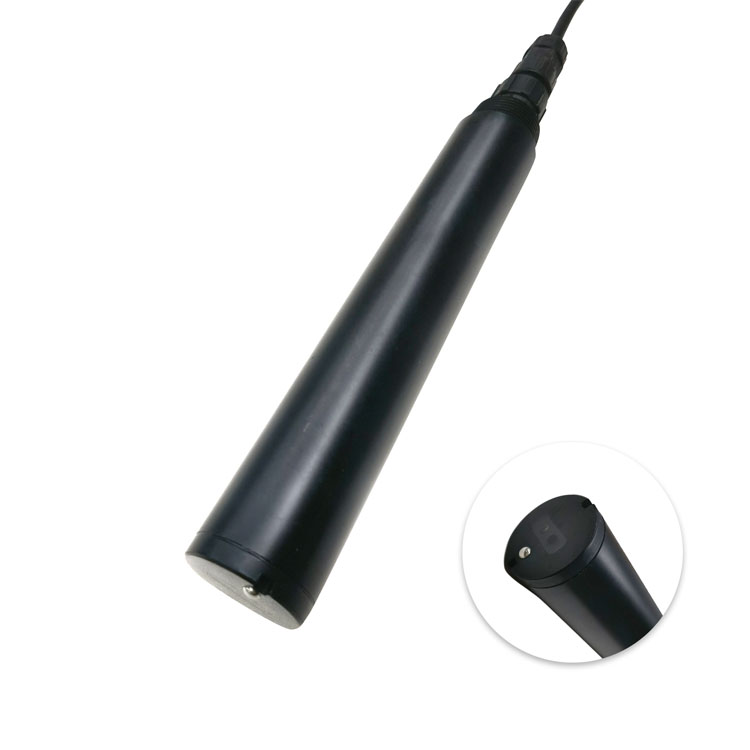
A probe that can be configured with eight parameters does not measure every quantity of interest. Count the fitted analytical channels, not the number of values on the display. Temperature and a calculated salinity value may be useful, but they do not add independent tests for pathogens, metals or organic contaminants.
Check the reporting quantity for each option. An ammonium-related channel is not total nitrogen. Optical COD is not a universal measure of every organic compound. ORP observes redox behaviour rather than directly measuring residual chlorine. These distinctions belong in the channel schedule and the quotation.
For each proposed channel, ask what decision would change if it were removed. If no one can name the action or interpretation, review whether that channel is useful at the proposed location. This can release budget for a better sample system, an independent reference method or a more suitable low-range instrument.
The NBL-WQ-MPS-5A is a configurable self-cleaning assembly for selected water-quality channels. Its capacity does not establish suitability for every finished-water decision. Residual chlorine is a separate measuring duty, and the whole monitoring programme still needs the analyses outside the fitted configuration.
| Item | NBL-WQ-MPS-5A | What to verify |
|---|---|---|
| Capacity | Up to 8 parameters including temperature | The actual fitted combination and its individual channel limits |
| Selectable channels | DO, COD, pH, ORP, conductivity/salinity, ammonia nitrogen and turbidity | Whether each principle answers the intended question |
| pH | 0-14; +/-0.1 pH; 0.01 pH resolution | Performance and calibration at the operating condition |
| Conductivity/salinity selections | 0-5000 microS/cm, 0-200 mS/cm or 0-70 PSU; +/-1.5% F.S. | Selected range and interpretation; these are assembly-channel specifications |
| Ammonia option | 0-100 or 0-1000 mg/L; +/-10% or +/-2 mg/L; 0.1 mg/L resolution | The applicable accuracy rule and suitability at low decision levels |
| Output | RS485, Modbus RTU | Exact register meaning, units and channel status |
| Supply and power | 12 VDC +/-5%; 5 W at 12 V | Complete station load and supply at the assembly |
| Cleaning and cable | Configurable automatic cleaning; 5 m standard cable | Maintenance access, brush inspection and required cable arrangement |

Range and display resolution are only the beginning of selection. Compare the uncertainty at the intended concentration with the change the operator needs to distinguish. A small displayed increment does not demonstrate that the instrument can reliably resolve that increment in the actual water.
For low-level duties, obtain evidence across the relevant range and water conditions. Keep sensor comparison separate from calibration adjustment. Use a suitable reference method and record the sample time, location, temperature and preparation so disagreements can be interpreted.
Check sample conditioning as part of the method. A strainer, filter or long sample line can alter the quantity or delay the result. Do not improve instrument access by quietly changing what water is being measured. Any preparation that changes the analytical fraction must be documented.
A useful alarm instruction states which point changed, what immediate checks are required and which analytical follow-up is appropriate. For example, a conductivity shift can lead to comparison with source-blending records and targeted chemical sampling. It should not be labelled as a specific contaminant alarm without a justified detection method.
In the PLC, RTU or data logger, preserve channel identity, unit and freshness. With RS485 Modbus RTU, test how disconnected, unconfigured and maintenance channels appear. None should be stored as a valid zero or mistaken for an unchanged fresh result.
Give NiuBoL the coverage matrix with the inquiry, alongside expected water conditions and the intended measuring points. Ask for a channel-by-channel response identifying suitability and exclusions. That makes it possible to compare a compact operational station with several specialised measuring loops without confusing either with the laboratory programme.

There is no universal package for every source and treatment process. Select continuous channels where timely changes affect an operating decision, then apply the specific monitoring requirements for the project. The purpose and follow-up for each point should be explicit.
No. Those results describe particular properties and may support operational assessment. They do not exclude all microorganisms, metals or organic contaminants, so the relevant specific analyses remain necessary.
Not among the options specified here. Define chlorine as a separate measuring duty with the correct disinfectant response, range and sample conditions. Do not use ORP as a direct substitute concentration.
The useful decision may be much smaller than the channel's uncertainty at that concentration. Check the applicable error statement and actual water performance rather than relying on the number of decimal places.
List each required question, proposed method, location, sample arrangement, response and independent verification. Ask suppliers to identify exclusions before comparing hardware prices. This reveals analytical gaps that a longer equipment list can otherwise hide.
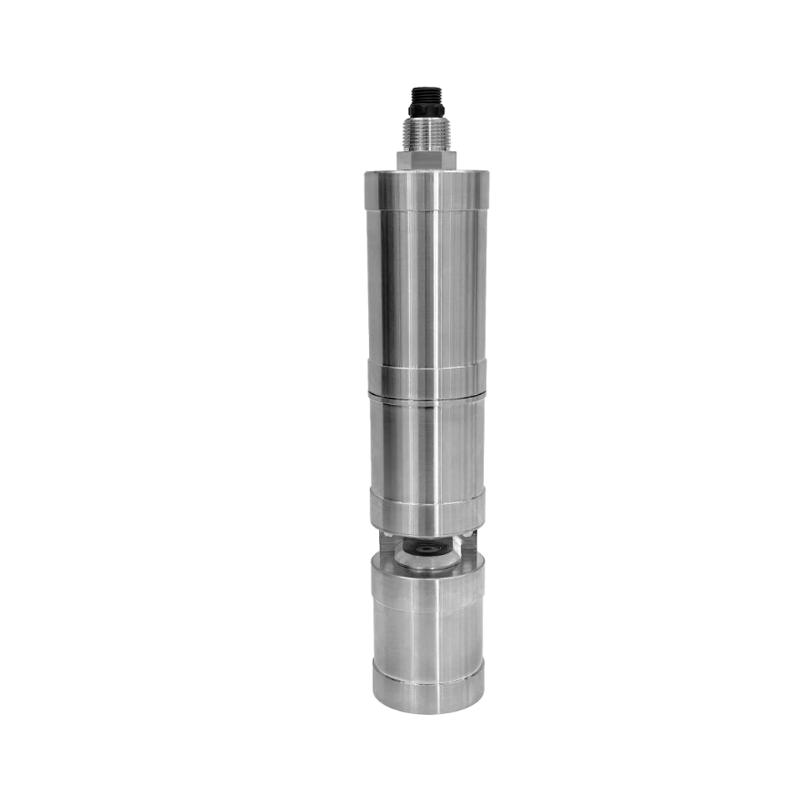
Drinking water monitoring parameters should form a coordinated programme of operating observations and specific analyses. Define the question and method for each channel, verify performance at the decision level and assign the appropriate follow-up. NiuBoL can review the online hardware against that programme without treating one configurable probe as a complete drinking-water assessment.
Prev:ORP Interpretation in Water Treatment: Trends and Control Limits
Next:High Salinity High COD Wastewater: Validate the Method and Monitoring Range
Related recommendations
Sensors & Weather Stations Catalog
 Agriculture Sensors and Weather Stations Catalog-NiuBoL.pdf
Weather Stations Catalog-NiuBoL.pdf
Agriculture Sensors Catalog-NiuBoL.pdf
Water Quality Sensor Catalog-NiuBoL.pdf
Related products
 Combined air temperature and relative humidity sensor
 TDR Soil Moisture & Temperature Sensor for irrigation| RS485 |4-20mA| NBL-S-THR
 Soil pH sensor RS485 soil Testing instrument soil ph meter for agriculture |NBL-S-PH
 Wind Speed sensor Output Modbus/RS485/Analog/0-5V/4-20mA
 Tipping bucket rain gauge for weather monitoring auto rainfall sensor RS485/Outdoor/stainless steel
 Pyranometer Solar Radiation Sensor 4-20mA/RS485

Screenshot, WhatsApp to identify the QR code
WhatsApp number:+8615367865107
(Click on WhatsApp to copy and add friends)

