





— Blogs —
—Products—
 Consumer hotline +8618073152920
 WhatsApp:+8615367865107
Address:Room 102, District D, Houhu Industrial Park, Yuelu District, Changsha City, Hunan Province, China
Product knowledge
Time:2026-09-05 17:00:00 Popularity:207
ORP interpretation in water treatment starts with a limitation: oxidation-reduction potential is an electrode potential in millivolts, not the concentration of a disinfectant or contaminant. It responds to the mixture of active redox couples at the sensing surface. A trend can show a process transition or a dosing change, but one published mV threshold cannot be carried from a chlorinated water line into an anoxic wastewater tank.

An ORP electrode compares the potential at its platinum surface with an internal reference electrode. A more positive reading generally indicates a more oxidizing environment relative to that reference; a more negative reading indicates more reducing conditions. The same value can arise from different chemical mixtures. pH, temperature, sample history and the reference system influence interpretation. Keep the measurement location, unit and instrument identity with each stored value.
At a disinfection point, use ORP as a supporting process trend alongside the actual residual-disinfectant measurement, pH and flow. It cannot certify a specified free-chlorine concentration. At an anoxic biological treatment zone, a change in ORP may help identify a process transition, but nitrate, dissolved oxygen and process loading still need attention. At a chemical reduction tank, the potential may be useful for local control only after a site-specific trial connects it with the required laboratory endpoint.
| Application question | What ORP can contribute | What must be checked separately |
|---|---|---|
| Did oxidant dosing change? | A time-resolved change at a representative mixed point | Disinfectant residual, pH, chemical feed and flow |
| Did an anoxic zone shift? | A trend through an operating transition | DO, nitrate or nitrogen species and return-flow conditions |
| Is a reduction reaction complete? | A candidate process-control endpoint after trials | Laboratory test for the specific constituent and a defined safety margin |
| Is water safe or compliant? | No stand-alone proof | The parameter-specific test and applicable project requirement |
At a dosing skid, a probe directly in the concentrated chemical plume will report that plume, not treated water. Place it after adequate mixing but before the point where a corrective action would be too late. In a bypass, maintain actual flow, allow bubbles to escape and provide isolation and drain access. In an open basin, keep the sensing tip submerged through low-level conditions but out of settled sludge. A good screen reading from a stagnant sample line is not an online process measurement.
The black NiuBoL NBL-WQ-ORP shown in the first three photographs uses an RS485 Modbus RTU digital output. Its specified mounting options are immersion and 3/4 NPT, with the electrode not installed upside down or horizontally. Design a holder that respects the orientation and can be removed without an unsafe process interruption. Sealing at a field joint and access to the tip are separate from the probe body's IP68 rating.
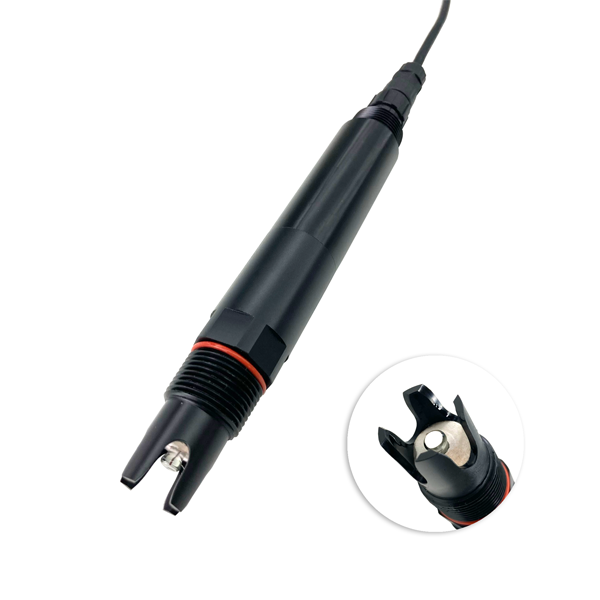
| NBL-WQ-ORP item | Model value | Project check |
|---|---|---|
| Principle / range | Platinum electrode; -1500 to +1500 mV | Confirm expected operating band and any upset. |
| Resolution / accuracy | 1 mV / ±20 mV | Do not set an alarm margin smaller than the practical measurement uncertainty. |
| Response / calibration | T90 below 30 s; one-point calibration | Allow process mixing and stabilization in the field check. |
| Supply / output | 12-24 VDC; 0.2 W at 12 V; RS485 Modbus RTU | Verify supply at the head and the received register value. |
| Service conditions | 0-50 °C; no more than 0.2 MPa; IP68; 5 m default cable | Check process peaks, holder, extension joint and retrieval distance. |
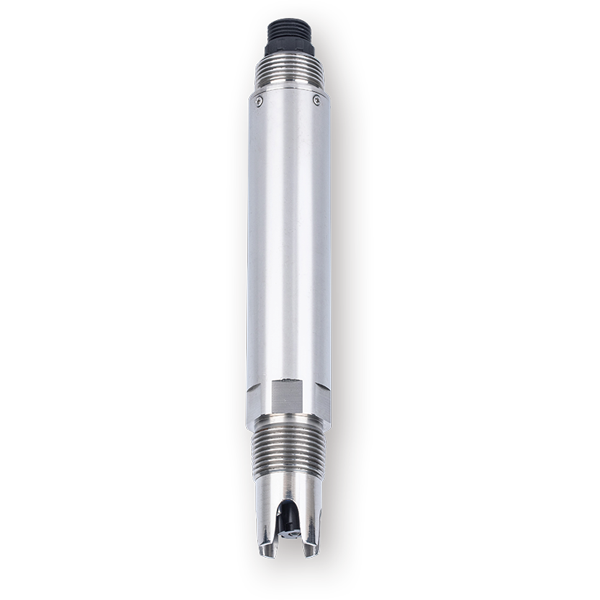
NiuBoL also lists a separate NBL-WQ-ORP-4A/4S series, pictured later, with different range and accuracy specifications and an optional analog output. Do not move the black probe's -1500 to +1500 mV limit onto the 4-series order or assume 4-20 mA is present on the digital-only configuration. The exact suffix, wetted material and output must appear on the quotation.
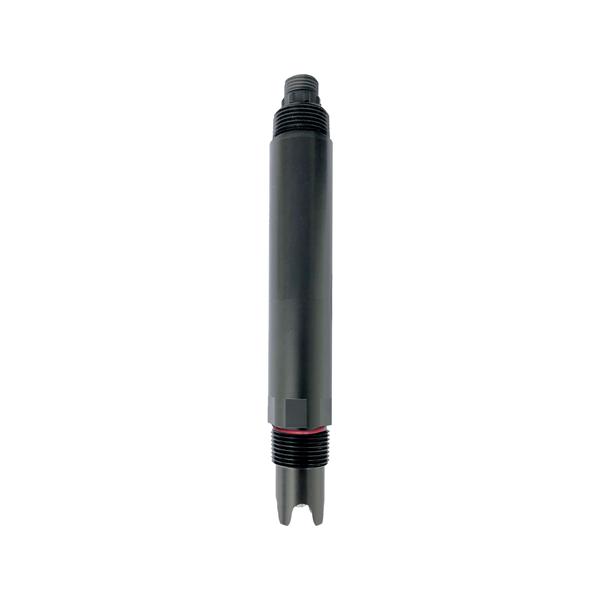
When ORP drifts, first retain the as-found value, pH, temperature, chemical feed and nearby process data. Then inspect the platinum surface and reference junction for deposits, oil or damage. Clean according to the selected electrode procedure, rinse and allow it to stabilize in a suitable reference solution. A stable response in reference solution but implausible process trend points back toward mixing, flow, sample contamination or chemistry rather than automatic electrode failure.
If an online value jumps whenever a pump or variable-speed drive starts, inspect power, shielding, grounding and cable routing. The Modbus payload may be received correctly while the physical electrode signal is affected by electrical noise or a wet joint. Compare local and platform readings, and test restart recovery. If the logger stores a positive number after a known negative value, check signed register interpretation before recalibration.
ORP comparison requires attention to reference electrode type and solution conditions. Two meters with different reference arrangements may show an offset even when both respond correctly. Document the reference method, temperature, standard solution and stabilization time. Do not silently shift historical data to make a new probe agree with an old one; record the replacement and any offset observed in a controlled comparison.
Collect baseline data across normal loads and controlled operating changes before setting a control band. For disinfection, pair ORP with measured disinfectant residual and pH. For wastewater treatment, pair it with DO and the relevant nitrogen or chemical test. Use the site data to define what action follows a sustained deviation and what happens if the electrode, flow or communications fail. A chemical pump should not run indefinitely on a held last-good mV value.
RS485 is the field interface and Modbus RTU the data protocol. Commission address, baud rate, register type, signed mV conversion, polling interval and fault value on the actual PLC or RTU. Keep the raw mV trend before averaging so short transitions remain visible for diagnosis. Test an unplugged probe, stopped bypass pump, power recovery and out-of-range value in the operator display.
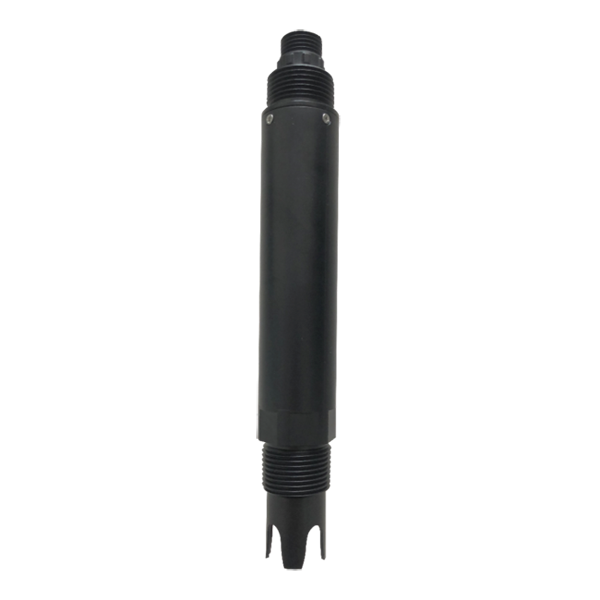
Provide NiuBoL with the process purpose, normal ORP and pH range, temperature and pressure peaks, chemical exposure, mounting sketch, sample flow, cable route and receiving controller interface. Ask for exact model suffix, housing material, holder or flow cell, cable length, calibration/check solutions, spares and startup support as separate items. A purchase price without those interfaces does not identify an installed ORP point.
At site acceptance, document the probe orientation, representative flow, reference-solution response, local-to-platform mV match, sign convention, timestamp, communication-loss indication and the actual operator action. Keep a synchronized process sample or endpoint test where ORP is used for control. This evidence is more useful than a screenshot of one number in range.
Q1. Does a high positive ORP prove sufficient chlorine residual?
A1. No. ORP responds to the overall redox environment and pH affects interpretation. Measure the specified residual disinfectant directly and relate ORP to that local process only after trial data.
Q2. Can one ORP setpoint be reused at another plant?
A2. Not safely. The water chemistry, reference arrangement, pH, temperature and sampling point differ. Establish a site-specific operating band against the actual process endpoint.
Q3. Why can a negative ORP value appear as a large positive PLC number?
A3. The register may have been decoded as unsigned. Check the delivered register definition and signed conversion before changing the sensor calibration.
Q4. What should be inspected when ORP drifts slowly?
A4. Retain the as-found data, then inspect surface deposits, reference junction, flow and the recent chemistry. Clean and check in a suitable standard before concluding the probe needs replacement.
Q5. Is NBL-WQ-ORP identical to NBL-WQ-ORP-4S?
A5. No. They are separate listed configurations with different published range, accuracy and material/output details. Quote the exact model and confirm the delivered data sheet.
Q6. What must be tested at project handover?
A6. Verify orientation, water contact, reference response, Modbus scaling and sign, timestamps, invalid-data alarms and the defined process action. Include a matched endpoint test if ORP is used for dosing control.
Q7. What information enables a useful ORP quotation?
A7. Supply process chemistry, pH and temperature bands, pressure, mounting position, cable distance, controller interface, quantity and required service items. Ask the supplier to identify exclusions.
ORP interpretation in water treatment is strongest as a site-validated trend and weakest as a universal quality score. Select a maintainable electrode and representative point, compare its response with the process parameter that matters, and test the full data and alarm path before enabling control.
Prev:River Water Quality Monitoring System: Siting, Sensors and Acceptance
Next:Drinking Water Monitoring Parameters: Selecting Online Sensors and Laboratory Tests
Related recommendations
Sensors & Weather Stations Catalog
 Agriculture Sensors and Weather Stations Catalog-NiuBoL.pdf
Weather Stations Catalog-NiuBoL.pdf
Agriculture Sensors Catalog-NiuBoL.pdf
Water Quality Sensor Catalog-NiuBoL.pdf
Related products
 Combined air temperature and relative humidity sensor
 TDR Soil Moisture & Temperature Sensor for irrigation| RS485 |4-20mA| NBL-S-THR
 Soil pH sensor RS485 soil Testing instrument soil ph meter for agriculture |NBL-S-PH
 Wind Speed sensor Output Modbus/RS485/Analog/0-5V/4-20mA
 Tipping bucket rain gauge for weather monitoring auto rainfall sensor RS485/Outdoor/stainless steel
 Pyranometer Solar Radiation Sensor 4-20mA/RS485

Screenshot, WhatsApp to identify the QR code
WhatsApp number:+8615367865107
(Click on WhatsApp to copy and add friends)

