





— Blogs —
—Products—
 Consumer hotline +8618073152920
 WhatsApp:+8615367865107
Address:Room 102, District D, Houhu Industrial Park, Yuelu District, Changsha City, Hunan Province, China
Product knowledge
Time:2026-09-07 16:27:30 Popularity:293
More parameters are not always better. Selection should begin with the required decisions, acquisition method and measurement interval rather than a preferred parameter count.
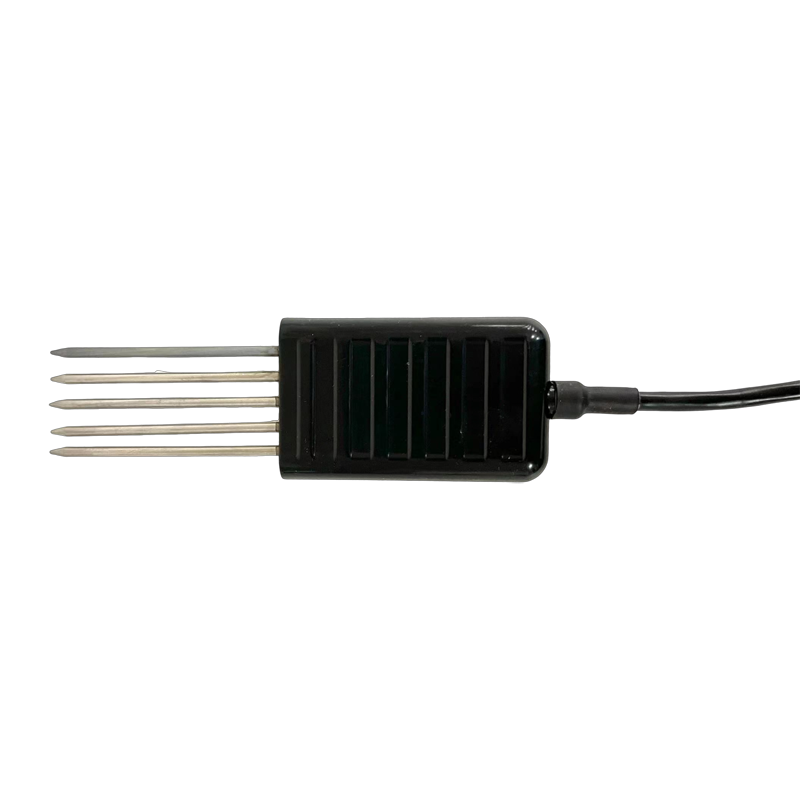
Soil temperature + moisture is the most common combination, suitable for irrigation scheduling, greenhouse and field root zone monitoring. After adding EC, changes in salt content and fertilizer concentration can be observed at the same time, which is suitable for integrated water and fertilizer management.
The NiuBoL multiparameter probe further combines EC, salt, NPK and pH. The advantage is that the wiring is simple and multiple indicators are collected at once. Note that the measurement principles and accuracy boundaries of different parameters are different, especially NPK is more suitable for trend reference, and the in-situ all-in-one pH should not be confused with the high-precision laboratory pH.
Typical products include NBL-S-TMC-7 7-in-1 soil sensor, NBL-S-TMC-8 8-in-1 soil sensor.
If you do not have a fixed data collector and want to plug in and test quickly on multiple plots, you can choose a USB/Type-C portable solution to read temperature, moisture, EC, salt, NPK and pH data with your mobile phone. It is more suitable for manual inspection, teaching and spot checking than long-term unattended monitoring.
Refer to NiuBoL USB/Type-C 8-in-1 Soil Sensor.
When it is necessary to connect PLC, RTU, LoRaWAN nodes or cloud platforms, RS485/Modbus is more convenient for continuous acquisition. The project must also define power supply, line length, device addressing and acquisition interval.
Soil moisture sensors typically consist of inductive probes, signal processing circuits, and communication interfaces. After the probe is inserted or buried in the soil, it senses the soil within a certain range, and then the internal circuit converts the measurement results into digital or analog signals. In the automatic monitoring system, the RS485/Modbus type sensor can be directly connected to the data collector, RTU or PLC, forming continuous recording and remote monitoring. The Multi-Parameter Soil Sensors 2-in-1, 3-in-1, 7-in-1 and Handheld specification should connect this decision to the actual installation and controller scope.
The core problem it solves is not simply to judge whether the soil is dry or wet, but to quantify the moisture change in the root zone. In irrigation applications, when water needs to be irrigated, whether it reaches the root zone, and whether water is lost too quickly after irrigation can be judged by changes in moisture at different depths or at different locations. During Multi-Parameter Soil Sensors commissioning, verify this point and retain the result in the acceptance file.
VWC (Volumetric Water Content) is the ratio of water volume to total soil volume. For example, 25% VWC means that approximately 25 volumetric units of water per 100 volumetric units of soil. It is two completely different physical quantities from the relative humidity of the air RH and cannot be directly converted. For Multi-Parameter Soil Sensors 2-in-1, 3-in-1, 7-in-1 and Handheld, define the responsible party and supporting evidence before equipment approval.
The dielectric properties of water are very different from soil minerals and air, so changes in soil moisture content change the electromagnetic properties of the medium around the probe. FDR estimates the dielectric change through the frequency domain response, and TDR estimates the dielectric constant through the time domain pulse propagation characteristics. Both methods are indirect measurements, so soil texture, density, and salinity may affect the results. For Multi-Parameter Soil Sensors 2-in-1, 3-in-1, 7-in-1 and Handheld, record this requirement in the model-selection sheet before quotation.
The sandy soil has large pores and weak water retention; the specific surface area of the clay is large and the proportion of bound water is high. The dielectric response and volumetric moisture content may be different even if the “mass moisture content” of the two samples is the same. High-precision applications are better suited to establishing reference relationships with local soil samples rather than covering all soils with a common percentage. The Multi-Parameter Soil Sensors 2-in-1, 3-in-1, 7-in-1 and Handheld specification should connect this decision to the actual installation and controller scope.
NiuBoL's soil moisture monitoring products cover single-probe, multi-depth profile monitoring, and mobile inspection schemes. The NBL-S-TM soil temperature and humidity sensor can measure soil moisture and soil temperature at the same time. The moisture measurement principle of FDR is adopted. The typical version supports DC 5-24V power supply and NBL-S-TM0/ Modbus communication, which is suitable for farmland irrigation, greenhouse, orchard, scientific research experiments and long-term monitoring of fixed monitoring points. During Multi-Parameter Soil Sensors commissioning, verify this point and retain the result in the acceptance file.
If you need to observe water infiltration in different soil layers, water storage in the root area, and deep leakage, you can choose the NBL-S-TMS multi-layer soil moisture monitoring program; if you need a rapid on-site inspection, you can choose USB/Type-C or handheld soil detection program. The product structure should be determined according to the monitoring depth, the number of distribution points, the power supply conditions and the data access method. For Multi-Parameter Soil Sensors 2-in-1, 3-in-1, 7-in-1 and Handheld, define the responsible party and supporting evidence before equipment approval.
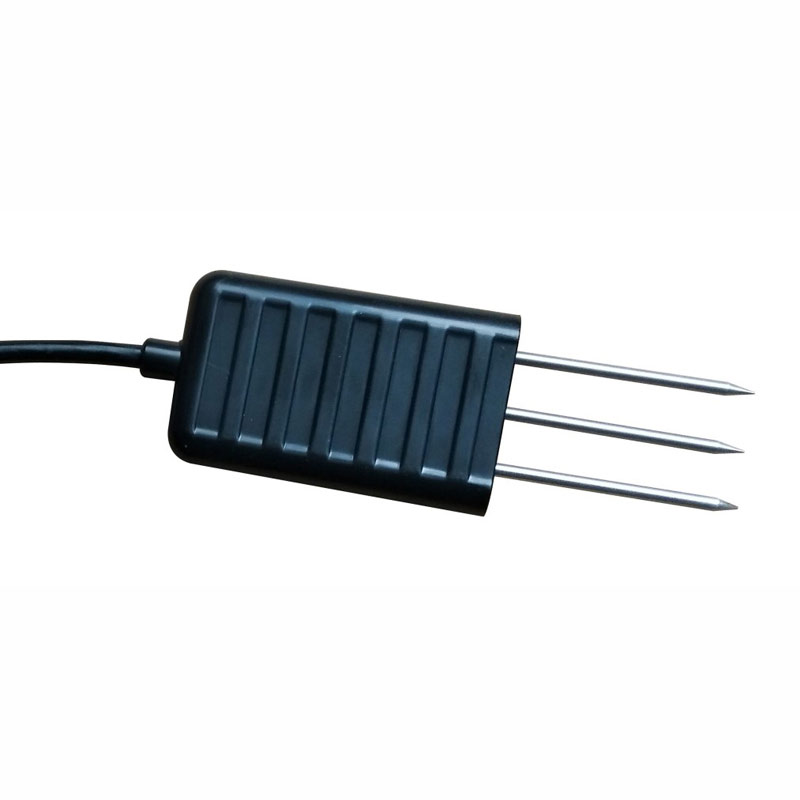
For Multi-Parameter Soil Sensors: 2-in-1, 3-in-1, 7-in-1 and Handheld Options - 2-in-1 and 3-in-1: suitable for basic irrigation management, when installing, try to keep the probe in close contact with the original soil to avoid shaking to form holes. When the soil is too hard, do not use the sensor body to forcibly pry and compress, you can use auxiliary tools to pre-hole first, and then backfill and compact. Horizontal, tilting or vertical installation is not an absolute limitation, the key is that the active area of the probe is completely in the target soil layer and fits into the soil.
For soil monitoring system - 2-in-1 and 3-in-1: suitable for basic irrigation management, shallow root crops focus on the surface layer, and fruit trees and deep root crops often require multiple depths. A single probe can only represent a local volume, and it cannot be considered to represent the whole layer average of 0–30cm because "one sensor can insert 30cm". Multi-layer profile monitoring should use multiple probes or dedicated multi-depth tubular sensors.
For soil monitoring system - 2-in-1 and 3-in-1: suitable for basic irrigation management, differences in irrigation zoning, slope positions, soil texture, yin and yang surfaces, and root distribution all contribute to spatial variability. Field applications should prioritize representative management area distribution points and establish averaging or zoning trend with multiple points if necessary.
For soil monitoring system - 2-in-1 and 3-in-1: suitable for basic irrigation management, putting it in clean water for a short time can be used to check whether the moisture channel has a significant response, but this is not a soil accuracy calibration. Nearly low-end in the air and near high-end in the water can only indicate that the sensor has a basic response; true soil accuracy still needs to be verified with standard soil samples or local soil samples.
For soil monitoring system, the project file should connect the measurement objective, field location, interface, maintenance access and acceptance method.
A1: Not necessarily. The more parameters, the higher the interpretation and maintenance requirements. Temperature and humidity or temperature and humidity +EC are usually sufficient for irrigation-only applications. For multi-parameter soil sensor selection, check whether the stated percentage is VWC and whether the selected probe also reports temperature, EC or another defined channel.
A2: It is suitable for field trend monitoring, but chemical measurements that require high traceability should still be combined with laboratory or professional analytical methods. For multi-parameter soil sensor selection, check whether the stated percentage is VWC and whether the selected probe also reports temperature, EC or another defined channel.
A3: Some systems can be implemented by matching interfaces and protocols, but the connection method and host program should be determined at the selection stage. For multi-parameter soil sensor selection, check whether the stated percentage is VWC and whether the selected probe also reports temperature, EC or another defined channel.
A4: Because it is convenient for multi-point wiring, continuous acquisition, and access to data loggers/gateways, it is suitable for unattended monitoring.
A5: No. Soil moisture is usually expressed as a percentage of soil moisture defined by VWC or equipment, and air moisture is used only for %RH. For a multi-parameter probe, require separate register, unit and scaling definitions for VWC and any air-humidity channel.
A6: The pure water test is mainly used to verify the upper limit of response and does not mean that the field soil should be close to 100% VWC. The saturated VWC of most forming soils is also well below 100%. Treat immersion as a functional response check; acceptance should use representative soil and a documented wetting-and-drying baseline.
A7: It is not possible to judge based on the principle name alone. Accuracy also depends on probe structure, calibration, soil type, mounting contact and signal processing. Compare FDR and TDR only after matching calibration basis, soil texture, installation contact and the required field accuracy.
For soil monitoring system - 2-in-1 and 3-in-1: suitable for basic irrigation management, a8: Not necessarily. Vertical insertion is suitable for quick measurements, and long-term burial can also be installed horizontally or tilted. The key is that the effective probe is located entirely in the target soil layer and is in close contact with the surrounding soil.
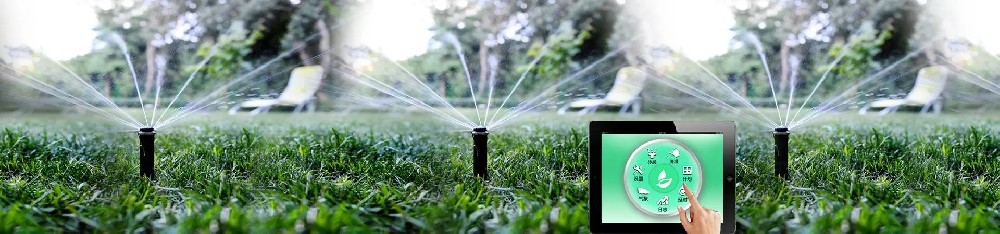
Multi-parameter soil sensor selection should follow the required agronomic decision, installation period, soil profile and data interface. Choose only parameters that the operating team will use, confirm whether one probe or several depths are representative, and verify the complete sensor-to-logger path before comparing package prices.
Prev:Soil pH Sensor Guide: Principle, Measurement Conditions, Installation and Maintenance
Next:2D vs 3D Wind Sensors: Choosing Horizontal or Vector Measurements
Related recommendations
Sensors & Weather Stations Catalog
 Agriculture Sensors and Weather Stations Catalog-NiuBoL.pdf
Weather Stations Catalog-NiuBoL.pdf
Agriculture Sensors Catalog-NiuBoL.pdf
Water Quality Sensor Catalog-NiuBoL.pdf
Related products
 Combined air temperature and relative humidity sensor
 TDR Soil Moisture & Temperature Sensor for irrigation| RS485 |4-20mA| NBL-S-THR
 Soil pH sensor RS485 soil Testing instrument soil ph meter for agriculture |NBL-S-PH
 Wind Speed sensor Output Modbus/RS485/Analog/0-5V/4-20mA
 Tipping bucket rain gauge for weather monitoring auto rainfall sensor RS485/Outdoor/stainless steel
 Pyranometer Solar Radiation Sensor 4-20mA/RS485

Screenshot, WhatsApp to identify the QR code
WhatsApp number:+8615367865107
(Click on WhatsApp to copy and add friends)

