





— Blogs —
—Products—
 Consumer hotline +8618073152920
WhatsApp:+8615367865107
Address:Room 102, District D, Houhu Industrial Park, Yuelu District, Changsha City, Hunan Province, China
Product knowledge
Time:2026-08-13 09:01:00 Popularity:247
Quick Answer: After a catch surge, an insect monitoring count is useful only if the images still show separable, recognizable specimens. Review overlap, debris, focus and sample handling before interpreting a sudden count plateau or decline. More camera pixels do not recover insects hidden beneath other specimens.
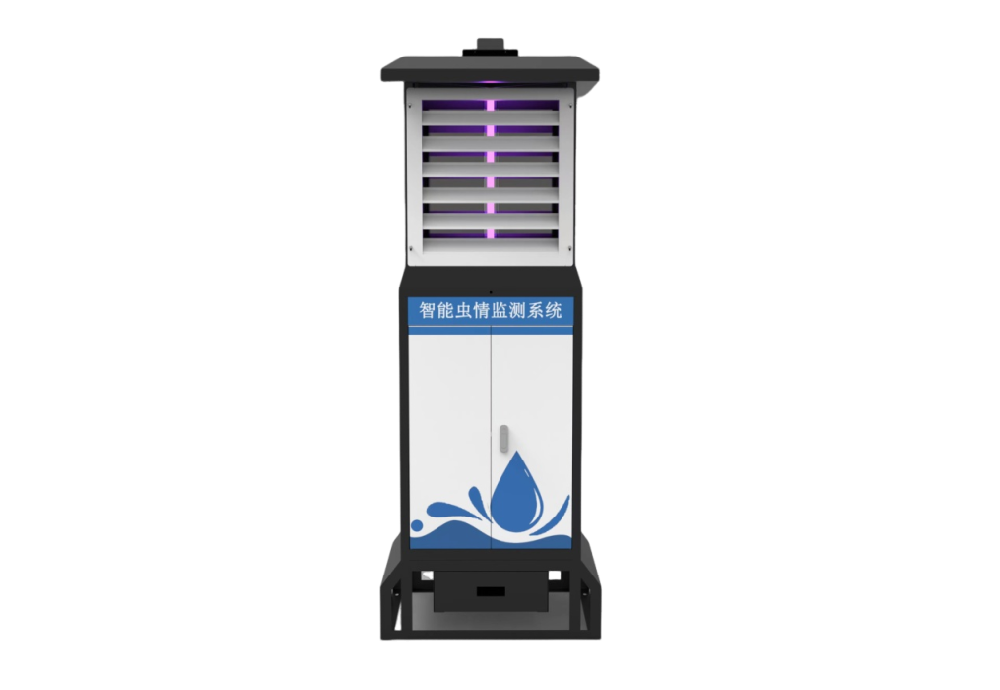
An insect monitoring system should be evaluated by how its images become usable observations. During a large catch, overlapping bodies, wings and debris can obscure diagnostic features or prevent individual insects from being distinguished. The camera may continue uploading sharp pictures while the sample becomes difficult to count.
Do not interpret a lower reported total immediately as lower pest activity. Inspect representative images from before, during and after the surge. Check whether the attraction and collection periods stayed comparable and whether any operating interruption reduced sampling. A field inspection remains necessary when trap observations and crop conditions disagree.
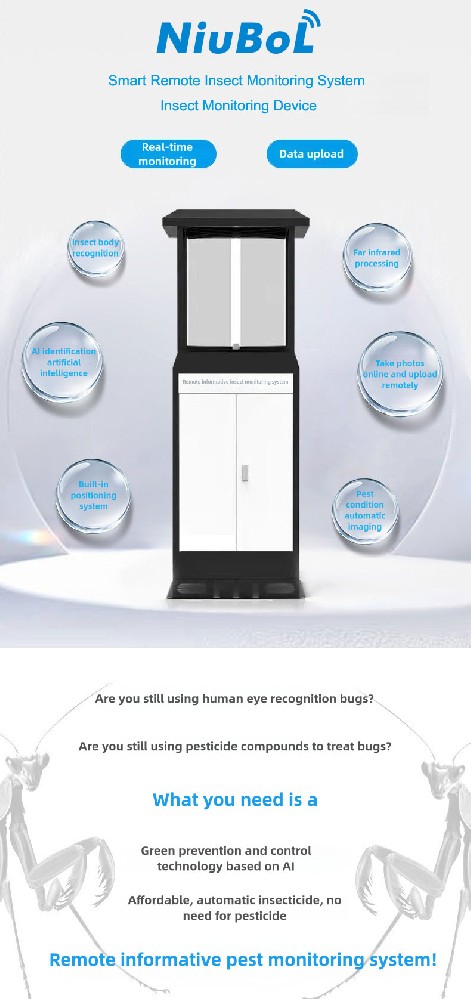
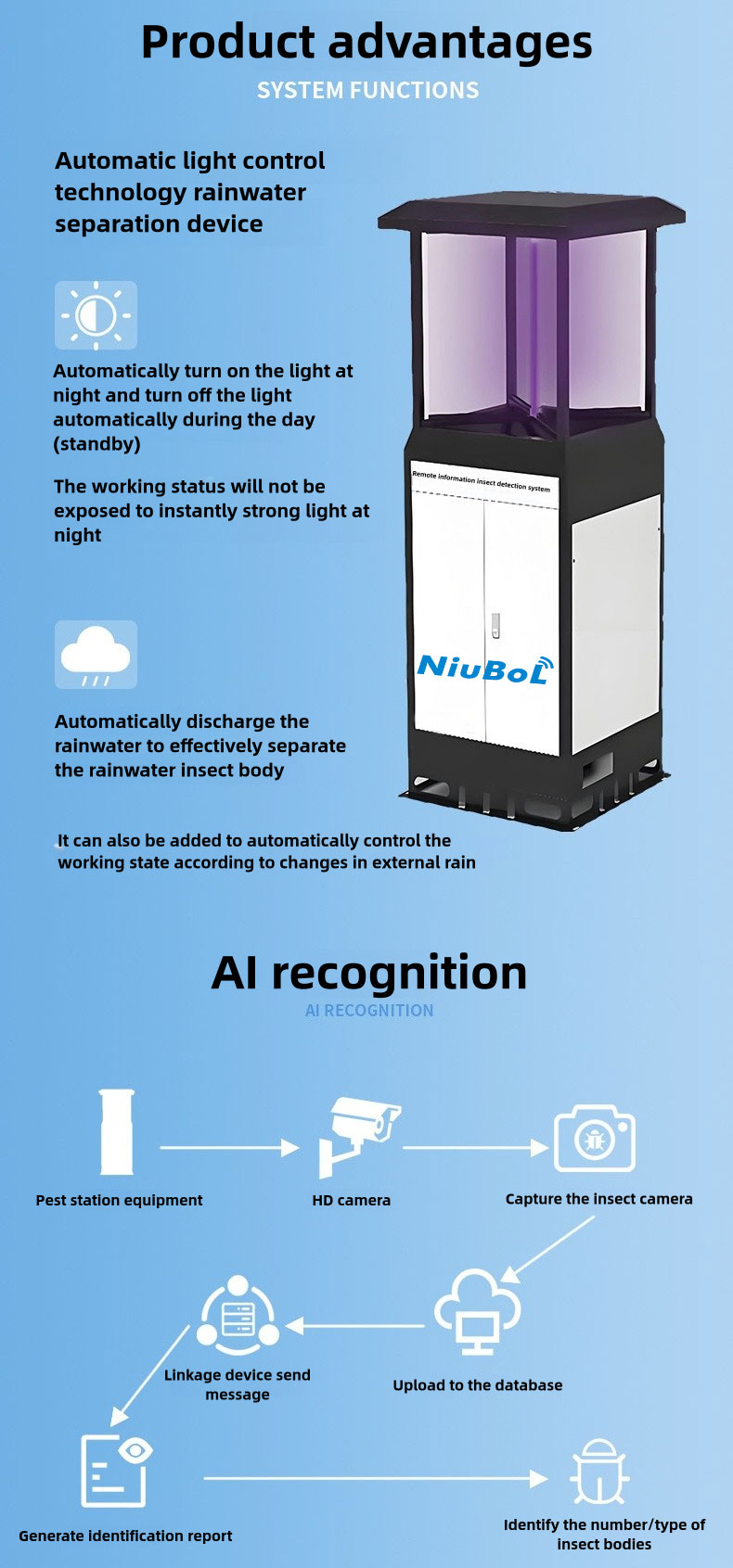
The NiuBoL NBL-IoT-SRPMS combines light attraction, specimen processing, imaging and remote reporting. Its camera does not observe every insect in the surrounding field; it observes material presented by the trap's collection process.
| Check | What makes a crowded image questionable | Useful review action |
|---|---|---|
| Specimen separation | Several bodies form one overlapping cluster | Mark uncertainty rather than accepting an unexplained exact total |
| Visibility | Wings, residue or debris obscure relevant features | Inspect sample presentation and the cleaning result |
| Focus and illumination | Blur, glare or shadow prevents repeatable interpretation | Check the optical window and image conditions before blaming classification |
| Batch identity | Material from another cycle remains in view | Review image sequence and collection/cleaning operation |
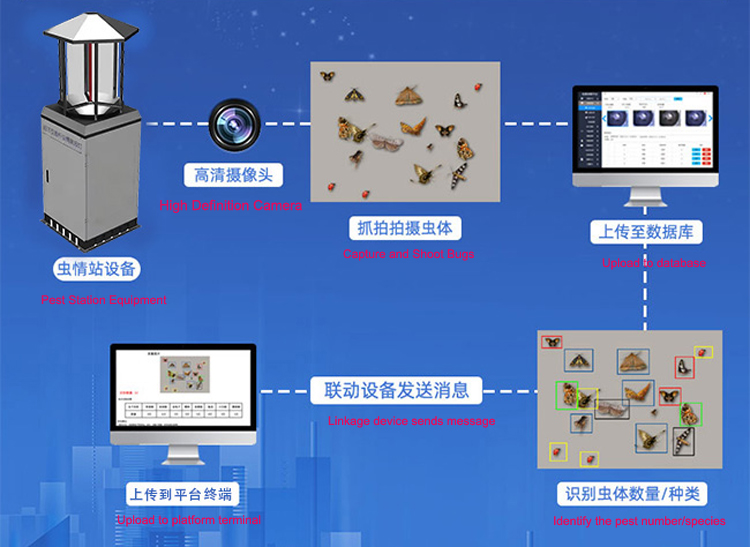
The workflow diagram below illustrates acquisition and reporting. Treat a finished count as a result requiring a reviewable image, not proof that every processing step succeeded. Ask for original image access and the delivered review/export functions before deciding how the equipment will fit the farm's reporting process.
| NBL-IoT-SRPMS item | Listed configuration | Meaning for a surge review |
|---|---|---|
| Camera | 12-megapixel industrial camera | Pixel count alone does not establish countability or species accuracy |
| Local control | 10-inch Android industrial touchscreen | Check which cycle and diagnostic functions are available in the delivered version |
| Attraction light | 18 W LED; 365-395 nm | The lamp selects a sampling method; it does not attract every pest equally |
| Specimen treatment | Far-infrared heating; listed chamber range 80-90 C | This is a treatment-chamber condition, not ambient operating temperature |
| Supply options | 220 VAC or a configured 400 W solar system; optional 200 Ah battery | Panel rating and battery capacity do not establish whole-system consumption or autonomy |
| Interfaces | Listed RS485/RS232 provision; 4G/Ethernet communication | Confirm field data interfaces separately from image transfer and platform access |
| Protection | IP65 core protection | Do not treat the open insect-entry path as a sealed enclosure |
Confirm ambient operating limits, installed battery voltage and usable energy, total duty-cycle load and the exact data interface before ordering. These details should not be inferred from the lamp wattage or a generic solar photograph. Image transfer, counts and equipment status may use different paths and permissions.
Define how reviewers mark an uncountable or partly identifiable sample. Keep that distinction separate from zero catch and communication failure. A blank numeric field with a clear reason is more useful than a false zero that suggests the field is free of the target insect.
Review a consistent sample of ordinary and crowded images, including non-target material. Where people cannot agree on the visible count, establish the limits of the reference before using it to score automated recognition. Avoid accepting a recognition percentage without the target species, image conditions and assessment method.
If the delivered equipment permits a different photography or cleaning schedule, test the proposed change with the actual trap cycle. Do not assume that taking more photographs creates independent samples or clears a crowded board. Keep before-and-after settings in the operating record so a change in reported count is not mistaken for a biological change.
No. It can improve available image detail, but it cannot reveal specimens hidden beneath others. Presentation, focus, illumination and the relevant recognition task must all be assessed.
No. Verify its actual result under representative catch loads. A scheduled cleaning command does not prove that all material was removed or separated.
Retain the image and identify the affected time and trap. Use an agreed uncertainty or uncountable status where necessary, rather than silently treating the frame as an exact count or zero.
Do not assume so. Obtain the delivered fieldbus map for supported data and separately confirm the image-transfer, platform or API mechanism. A numeric connection does not establish access to original images.
No. Relate the target, crop stage, local management guidance and field scouting to the record. A trap count alone is not a universal treatment threshold.
Review ordinary and crowded catches for the local targets, image retrieval, uncertainty handling and actual service effort. Confirm the complete sampling cycle and power/network arrangement at the intended site.

Insect monitoring remains useful during a catch surge when sample visibility and record quality are checked before the count is accepted. Specify a reviewable NiuBoL system with appropriate image access and service arrangements, and preserve uncertainty instead of turning obscured specimens into confident numbers.
Prev:Dissolved Oxygen Sensor in Water: Interpret Aeration On/Off Transitions
Next:COD Sensor Lifecycle Cost: Maintenance Access, Spares and Downtime
Related recommendations
Sensors & Weather Stations Catalog
 Agriculture Sensors and Weather Stations Catalog-NiuBoL.pdf
Weather Stations Catalog-NiuBoL.pdf
Agriculture Sensors Catalog-NiuBoL.pdf
Water Quality Sensor Catalog-NiuBoL.pdf
Related products
 Combined air temperature and relative humidity sensor
 TDR Soil Moisture & Temperature Sensor for irrigation| RS485 |4-20mA| NBL-S-THR
 Soil pH sensor RS485 soil Testing instrument soil ph meter for agriculture |NBL-S-PH
 Wind Speed sensor Output Modbus/RS485/Analog/0-5V/4-20mA
 Tipping bucket rain gauge for weather monitoring auto rainfall sensor RS485/Outdoor/stainless steel
 Pyranometer Solar Radiation Sensor 4-20mA/RS485


Screenshot, WhatsApp to identify the QR code
WhatsApp number:+8615367865107
(Click on WhatsApp to copy and add friends)

