





— Blogs —
—Products—
 Consumer hotline +8618073152920
 WhatsApp:+8615367865107
Address:Room 102, District D, Houhu Industrial Park, Yuelu District, Changsha City, Hunan Province, China
Product knowledge
Time:2026-01-21 09:51:21 Popularity:685
In modern water conservancy, hydrology, industrial storage tanks, environmental protection, and IoT monitoring, level data is an important indicator for evaluating system operating status and safety. The NiuBoL ultrasonic level meter adopts a non-contact measurement method, capable of continuous and real-time monitoring of liquid and solid material levels. It features easy installation, low maintenance, high accuracy, and stable operation in various complex environments, providing scientifically reliable data support for engineering projects.
Ultrasonic level meters are widely used in scenarios such as storage tank level monitoring, hydrological water level monitoring, mine shafts, and silo measurements. They can effectively reduce manual inspection costs and improve monitoring safety and data reliability.
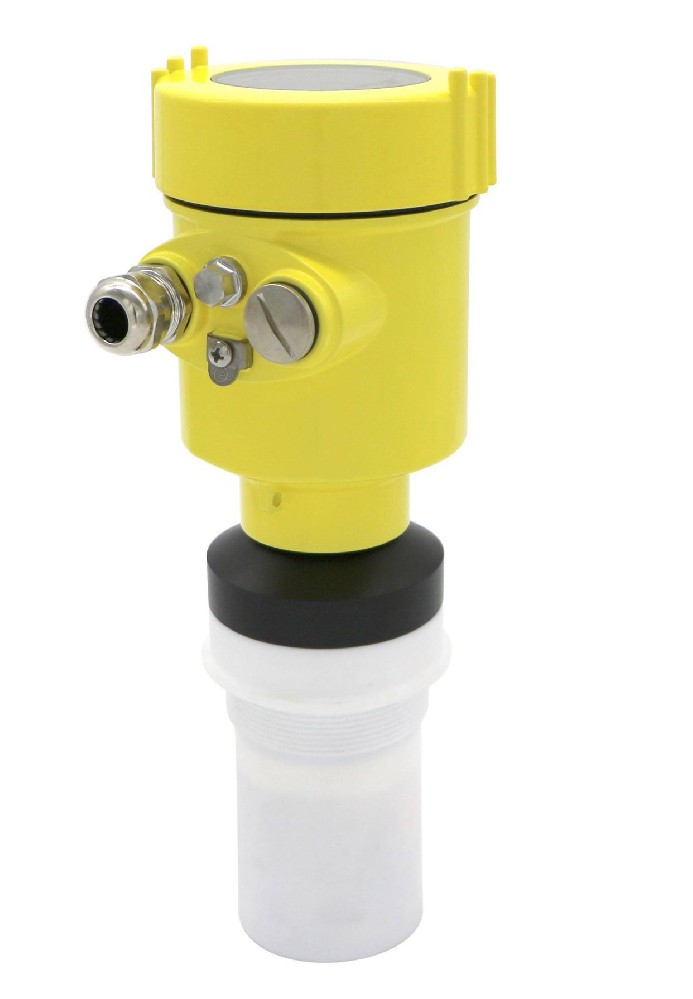
The ultrasonic level meter measures based on the time-of-flight method of sound wave propagation:
The transducer emits ultrasonic pulses toward the liquid or solid material surface.
The sound waves reflect back to the transducer upon encountering the medium surface.
The instrument calculates the distance from the transducer to the liquid or material surface based on the round-trip time of the ultrasonic waves and the speed of sound in air.
The actual liquid level or material level height is converted according to the installation height.
To improve measurement accuracy, the instrument is usually equipped with temperature compensation, signal filtering, and intelligent processing algorithms, which can effectively reduce interference caused by environmental noise, foam, or wind speed fluctuations.
| Parameter | Description |
|---|---|
| Measurement Range | 0–20 m (customizable) |
| Measurement Accuracy | ±0.5% (standard conditions) |
| Pressure | Atmospheric pressure |
| Signal Output | 4–20 mA analog, RS485 communication |
| Ambient Temperature | -20°C ~ +66°C |
| Blind Zone | 0.35–0.6 m |
| Distance Resolution | 1 mm |
| Instrument Display | LCD screen displays real-time level |
| Power Supply Voltage | DC 24V |
| Protection Grade | IP65 |
In addition, the NiuBoL ultrasonic level meter supports remote data transmission and centralized monitoring, facilitating integration into PLC, SCADA, and IoT systems.
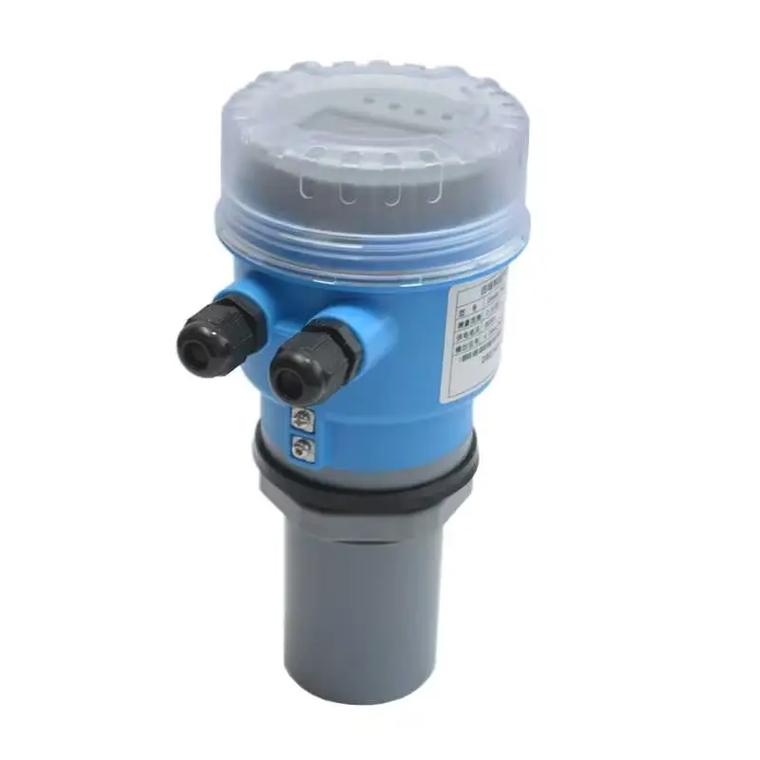
Solid Material Level Measurement: The solid surface in silos is uneven; the transducer should be installed in a position that can reflect the average material level to avoid data deviation caused by local height differences.
Shielded Cable Connection: Use shielded cable between the transducer and the detector, with both ends grounded to reduce electromagnetic interference.
Avoid Zero Reflection: The transducer pointing directly at the tank bottom or inclined wall may create dead zones; this can be resolved by placing a small reflector at the tank bottom or installing the transducer near the tank centerline.
Ensure Unobstructed Sound Wave Path: The transducer should only “see” the measured surface, avoiding interference from agitators, baffles, or tank walls affecting the echo.
Blind Zone Control: The highest level of the measured object must be outside the transducer blind zone to ensure reliable data.
Installation Angle: The ultrasonic level meter should be installed vertically facing the medium surface to obtain the best echo signal.
Maintenance Space: Reserve sufficient space for cleaning, inspection, and sensor replacement to avoid long-term dust or dirt accumulation affecting measurement.
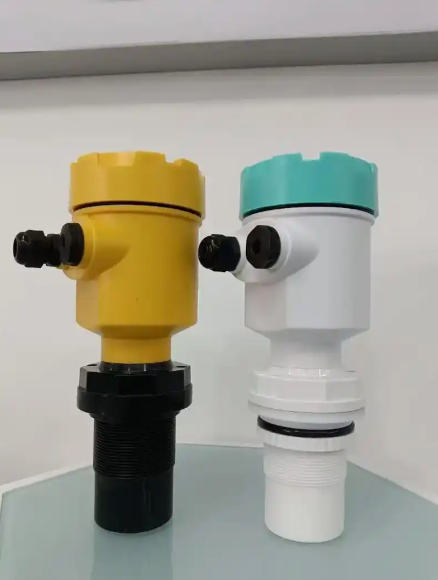
The NiuBoL ultrasonic level meter is suitable for various scenarios, including:
Water conservancy and hydrology: Reservoir, river channel, and pumping station level monitoring
Industrial storage tank management: Chemical, food, petroleum, and other liquid storage tank level monitoring
Solid material level measurement: Grain silos, mineral silos, material silos, and other non-flat solid material surfaces
Sewage treatment and agricultural irrigation: Real-time monitoring of water level changes for automatic regulation
IoT and remote monitoring: Integration with centralized platforms via RS485 interface for remote monitoring
Measured medium: Liquid or solid
Maximum and minimum level requirements and blind zone considerations
Environmental factors: Steam, foam, wind speed, temperature and humidity
Output interface: 4–20 mA or RS485
Installation conditions: Vertical, unobstructed, maintenance space
Protection grade and temperature resistance range
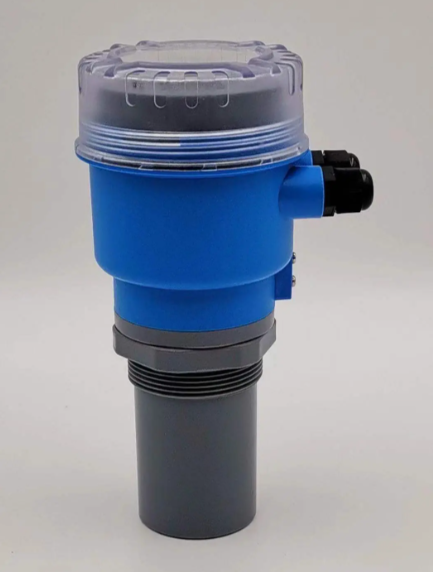
Compared with Pressure Type Water Level Meter
Ultrasonic level meter is non-contact, does not disrupt water flow structure, and is unaffected by water pollution.
Pressure type water level meter provides more stable measurement in scenarios with violent water flow or large surges.
Compared with Float Type Water Level Meter
Float type requires measurement wells or guide devices and is subject to mechanical wear.
Ultrasonic level meter requires no civil engineering support, has low maintenance costs, and is suitable for remote monitoring.
Compared with Radar Level Meter
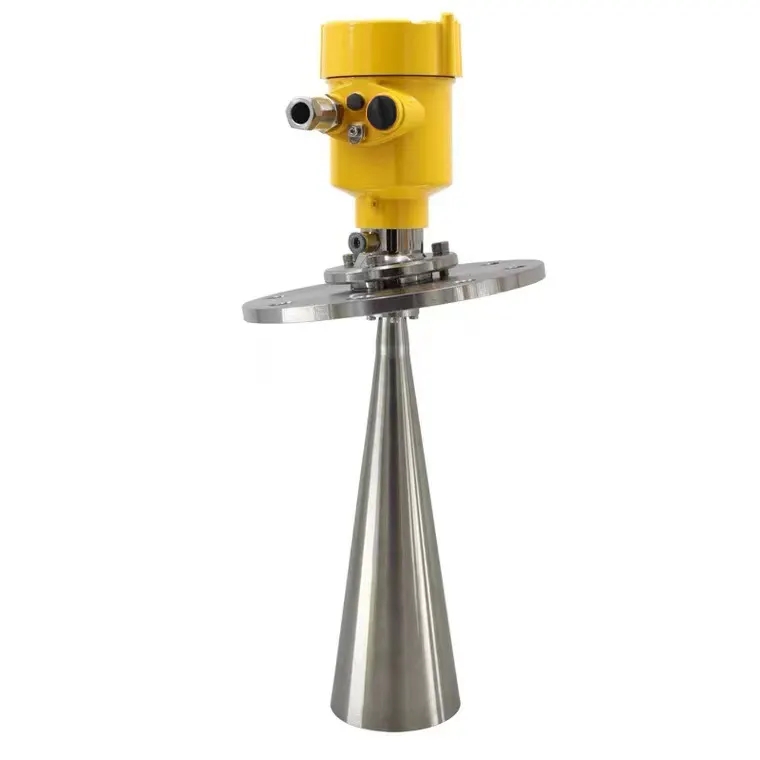
Radar level meter is less affected by temperature, humidity, foam, and steam, and is stable in high-temperature and high-pressure environments, but at a higher cost.
Ultrasonic level meter offers high cost-effectiveness under normal working conditions but is sensitive to the environment and requires correct installation.
Q1. Can it be used for sewage or slurry?
Yes, non-contact measurement reduces pollution and wear, but thick foam may affect the signal; on-site conditions need evaluation.
Q2. Can the blind zone be adjusted?
The blind zone is a physical characteristic; installation height can avoid it, but the transducer angle cannot be changed arbitrarily.
Q3. Is it adaptable to high or low temperature environments?
The device operates from -20°C to +66°C, suitable for conventional level monitoring environments; special high-temperature environments can be customized.
Q4. How to perform remote monitoring with RS485 communication?
It can be connected to PLC, SCADA, or IoT platforms, supporting centralized data collection and historical record storage.
Q5. Does the level meter require frequent calibration?
Under stable working conditions, the calibration cycle is long, and maintenance workload is small.
Q6. How to ensure measurement accuracy for solid material levels?
It needs to be installed in a position that reflects the average height and avoids areas near the feed inlet with significant height differences.
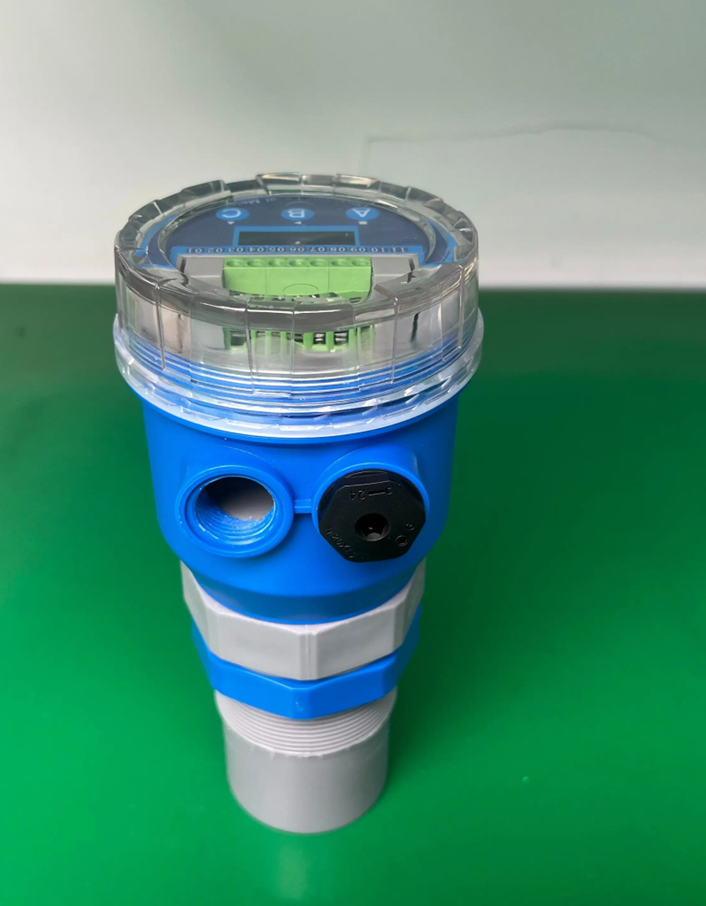
The NiuBoL ultrasonic level meter provides reliable and real-time data support for level and material level monitoring through its non-contact measurement, flexible installation, and simple maintenance features. With reasonable installation design and scientific selection, it ensures accurate and stable level data. It is widely applicable to water utilities, water conservancy, industrial storage tanks, environmental protection, and IoT monitoring scenarios, providing scientific basis for engineering management, automatic control, and decision-making.
Prev:Submersible Level Transmitter: Measurement Principle and Applications
Next:Radar Level Meter Selection Guide: Precise Matching Strategies for Different Working Conditions
Related recommendations
Sensors & Weather Stations Catalog
 Agriculture Sensors and Weather Stations Catalog-NiuBoL.pdf
Weather Stations Catalog-NiuBoL.pdf
Agriculture Sensors Catalog-NiuBoL.pdf
Water Quality Sensor Catalog-NiuBoL.pdf
Related products
 Combined air temperature and relative humidity sensor
 TDR Soil Moisture & Temperature Sensor for irrigation| RS485 |4-20mA| NBL-S-THR
 Soil pH sensor RS485 soil Testing instrument soil ph meter for agriculture |NBL-S-PH
 Wind Speed sensor Output Modbus/RS485/Analog/0-5V/4-20mA
 Tipping bucket rain gauge for weather monitoring auto rainfall sensor RS485/Outdoor/stainless steel
 Pyranometer Solar Radiation Sensor 4-20mA/RS485

Screenshot, WhatsApp to identify the QR code
WhatsApp number:+8615367865107
(Click on WhatsApp to copy and add friends)

