





— Blogs —
—Products—
 Consumer hotline +8618073152920
 WhatsApp:+8615367865107
Address:Room 102, District D, Houhu Industrial Park, Yuelu District, Changsha City, Hunan Province, China
Product knowledge
Time:2026-01-21 10:03:24 Popularity:807
In fields such as petrochemicals, energy and power, food and pharmaceuticals, environmental water treatment, metallurgy and mining, level measurement directly impacts production safety, process stability, and economic benefits. Radar level meters, based on non-contact or contact electromagnetic wave measurement principles, offer advantages including wide range, high accuracy, strong anti-interference capability, and long maintenance-free periods, making them the mainstream solution for industrial automation level monitoring. However, actual working conditions vary greatly: from atmospheric large tanks with low-viscosity oils to high-pressure reactors with high-viscosity resins, from dusty solid silos to fermentation tanks with heavy steam. Different environments have completely different requirements for radar wave propagation methods, medium compatibility, and anti-interference capabilities. Correct selection enables long-term stable operation; incorrect selection may lead to signal loss, measurement drift, or even safety hazards.
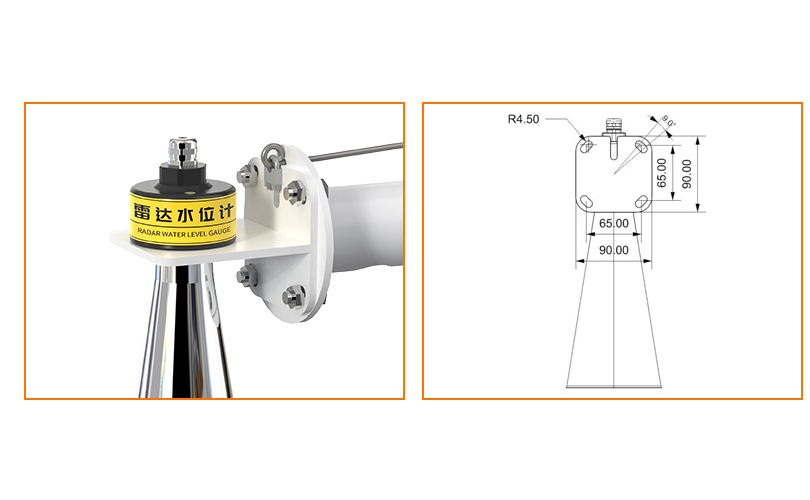
The essence of radar level meter selection is the precise matching of “working condition parameters with product characteristics.” Key decision factors include:
Medium properties: Liquid/solid, dielectric constant, viscosity, corrosiveness, whether crystalline/adherent/bubbly/containing solid particles
Container structure: Open/closed, diameter size, presence of agitation, distribution of internal obstacles
Process conditions: Temperature range, pressure rating, dust concentration, steam/mist volume
Measurement requirements: Range, accuracy, response time, whether interface measurement is needed, installation position restrictions
Maintenance and safety: Whether contact with medium is allowed, explosion-proof rating, maintenance window
NiuBoL’s four mainstream types each have their own focus. Below is a detailed breakdown of their core characteristics and most suitable working conditions.
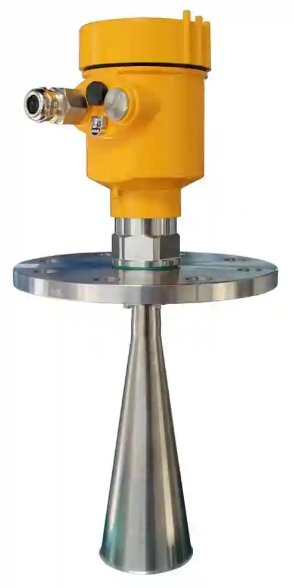
The NiuBoL high-frequency series mainly uses 26GHz and 80GHz frequencies. The 80GHz product has an extremely small beam angle (approximately 3°~4°), with highly concentrated energy, suitable for complex tank environments; 26GHz has a moderate beam angle (approximately 8°~10°), offering higher cost-effectiveness. Non-contact measurement, no mechanical wear, unaffected by significant fluctuations in medium density/viscosity/temperature/pressure, typical accuracy ±3~5mm, range up to 0.3~120m.
Medium: Low to medium viscosity liquids (≤500 mPa·s), such as gasoline, diesel, crude oil, sewage, dilute acid/alkali solutions, chemical solvents; good fluidity, no severe adhesion particles/powder solids (such as grain, cement, coal powder).
Container: Large and medium storage tanks (diameter ≥3~5m), open ponds, atmospheric or medium-high pressure closed tanks.
Environment: Low dust concentration (≤10 g/m³), non-dense steam/mist, allowing a small amount of fixed obstacles (must avoid beam path).
Typical scenarios: Crude oil storage tank areas, sewage treatment regulating ponds, food raw and auxiliary material storage tanks, coal chemical raw material silos.
High-viscosity easy-adhesion media (such as asphalt, honey), extremely high dust or dense fog environments, small-diameter tanks (<1m) or areas with dense agitators.
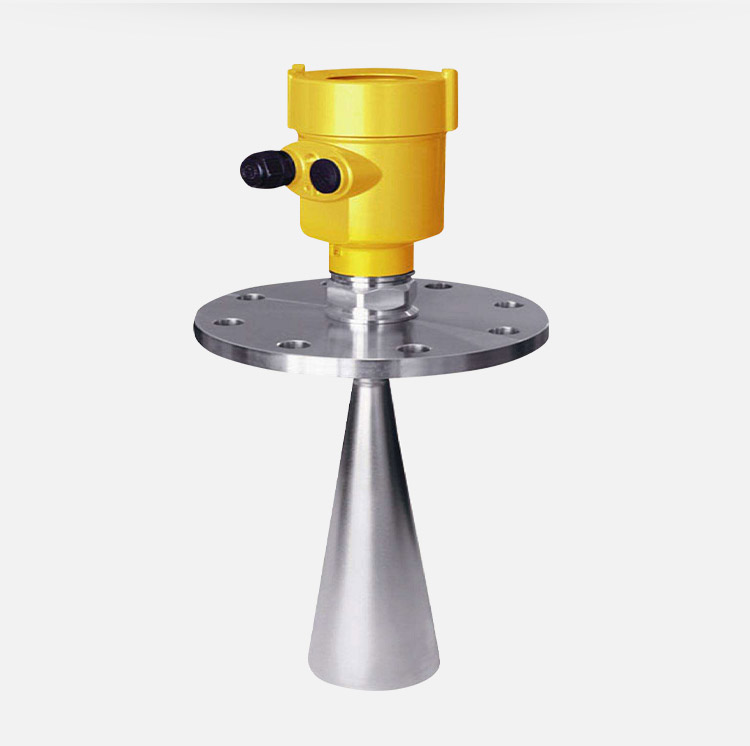
Electromagnetic waves propagate along the guided wave rod or cable, almost unaffected by external environmental interference. The NiuBoL guided wave series supports a wide temperature range of -196℃~450℃, pressure up to 40MPa, range 0.3~30m, accuracy ±3mm, capable of measuring high-viscosity (≤20000 mPa·s), easy-crystallization, highly corrosive media.
Medium: High-viscosity liquids (such as asphalt, syrup, resin), easy-crystallization media (urea melt, caustic soda solution), concentrated acids and alkalis, sand-containing sewage, mud; bulk/high-humidity solid materials.
Container: Small-diameter tanks, agitated reaction kettles, high-pressure closed containers, tanks with complex internal structures.
Environment: High dust, heavy steam, foam, strong turbulence conditions.
Typical scenarios: Polymerization reaction kettles, syrup storage tanks, slurry ponds, coal chemical high-pressure kettles, metallurgical slag tanks.
Media that are extremely easy to adhere and difficult to clean (such as strong viscous adhesives), media containing a large amount of hard particles (easy to impact the guided wave body), ultra-pure media that strictly require zero contact contamination.
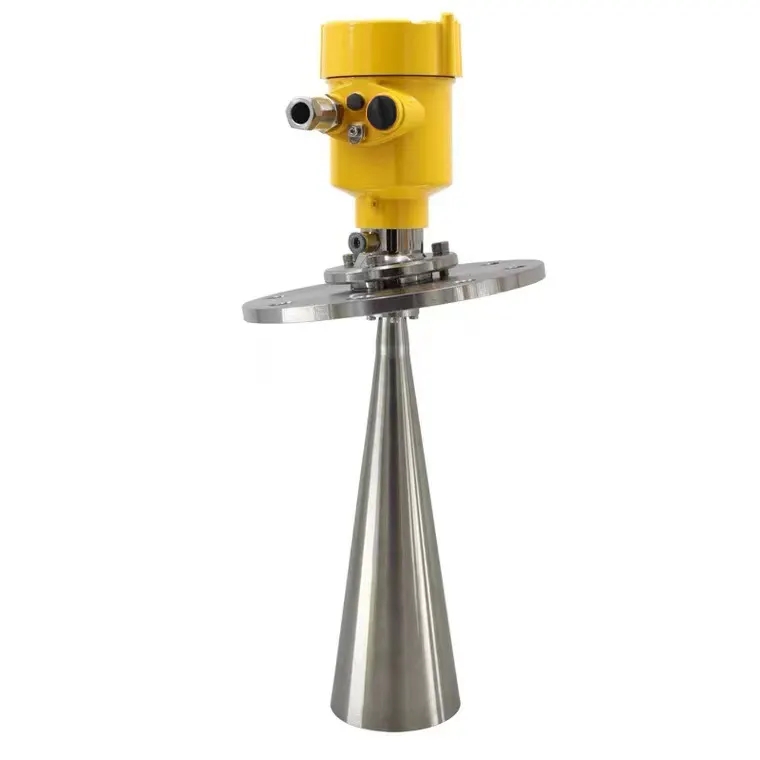
On the basis of guided wave radar, an outer sleeve is added to form a coaxial structure, with electromagnetic waves propagating in the annular space, resulting in more concentrated signals and stronger anti-interference. The NiuBoL coaxial series achieves accuracy up to ±1mm, supports extremely low dielectric constant media (εr≥1.6), temperature -200℃~400℃, pressure up to 60MPa, particularly suitable for interface measurement and micro-level measurement.
Medium: Low dielectric constant liquids (liquefied gas, propane, light hydrocarbons), high-purity chemicals, liquid-liquid interfaces (oil-water, oil-solvent stratification), micro-levels.
Container: Small-diameter high-pressure storage tanks, metering tanks, laboratory reactors, interface separators.
Environment: High temperature and high pressure, strong corrosion, easy volatilization/condensation media.
Typical scenarios: LPG/LNG storage tanks, pharmaceutical raw material tanks, electronic-grade solvent tanks, crude oil dehydration interface measurement.
Media containing a large amount of particles/fibers (easy to block the annular space), large-range measurement (range generally ≤10m), extremely high-viscosity media.
The medium is led out through a bypass tube, with the coaxial guided wave probe installed inside the bypass tube, completely isolating the complex conditions inside the main container. The NiuBoL bypass series inherits the coaxial high accuracy (±1mm), with the strongest anti-interference capability, allowing individual probe removal for maintenance without shutdown.
Medium: Strongly agitated/turbulent liquids, media with a large amount of foam/bubbles, high-viscosity + strong adhesion media, easy bridging solids.
Container: Strongly agitated reaction kettles, large-diameter irregular tanks, tanks with dense internal obstacles.
Environment: Extreme dust, dense fog, severe medium fluctuations.
Typical scenarios: Fermentation tanks, paint mixing kettles, polymerization reaction kettles, metallurgical blast furnace level, mineral slurry thickening ponds.
Media prone to crystallization/blockage in the bypass tube, extremely limited installation space, situations with extremely high medium leakage risk and no bypass allowed.
| Type | Measurement Method | Typical Frequency | Range | Accuracy | Anti-Interference | Maintenance | Typical Application Scenarios |
|---|---|---|---|---|---|---|---|
| High-Frequency Radar | Non-contact | 26/80GHz | 0.3~120m | ±3~5mm | Medium | Very low | Large tanks, low-med viscosity liquids, powder solids |
| Guided Wave Radar | Contact | Guided wave | 0.3~30m | ±3mm | Very strong | Medium | High viscosity, corrosive, dusty, agitated tanks |
| Coaxial Guided Wave Radar | Contact (coaxial) | Guided wave | 0.3~10m | ±1mm | Very strong | Medium | Low dielectric, interface, micro-level, high pressure |
| Bypass Coaxial Guided Wave Radar | Contact (bypass) | Guided wave | 0.3~20m | ±1mm | Strongest | Low | Strong agitation, foam, extreme complex conditions |
Detailed review of working condition parameters (medium, container, environment, requirements)
Preliminary screening of type based on medium viscosity, dielectric constant, agitation/dust conditions
Verify matching of temperature/pressure/explosion-proof rating and installation space
Consider details such as maintenance convenience, economy, anti-corrosion coating optimization
Blindly choosing the highest frequency: 80GHz has limited advantages in high-dust environments; 26GHz is often more economical
Ignoring dielectric constant: Prioritize coaxial guided wave for low εr media such as liquefied gas and light hydrocarbons
Choosing non-contact for agitated tanks: Agitator blades block the beam, prone to fluctuations; select guided wave or bypass
Forcing contact type for high-adhesion media: May backfire; high-frequency radar with regular cleaning is sometimes more suitable
Q1. Which is more stable, high-frequency radar or guided wave radar?
It depends on the working condition. High-frequency radar is more stable in clean, large-tank, low-interference scenarios; guided wave radar performs more reliably in complex conditions such as high dust, agitation, foam, and high viscosity.
Q2. Is 80GHz radar necessarily superior to 26GHz?
Not necessarily. 80GHz has a small beam angle and short blind zone, suitable for small tanks or scenarios with obstacles; 26GHz has stronger penetration and less attenuation in moderate dust or steam environments.
Q3. Must coaxial guided wave radar be used for liquefied gas storage tanks?
It is recommended to prioritize it. Liquefied gas has a low dielectric constant (εr≈1.6~1.8), ordinary high-frequency radar signals are weak, and coaxial structure can significantly improve signal-to-noise ratio and measurement stability.
Q4. How to avoid fluctuations in radar level meters inside agitated reaction kettles?
Prioritize guided wave or bypass coaxial guided wave radar; if high-frequency radar must be used, optimize installation position, set longer averaging time filtering, and avoid agitator blade beam paths.
Q5. How to select materials for highly corrosive media?
Choose full PTFE or Hastelloy C-276 material for probe/guided wave body; bypass coaxial structure can further reduce exposure of corrosion-prone parts in the main container.
Q6. Does bypass tube radar increase leakage risk?
Regular products use high-standard flange connections + multiple seals for bypass tubes, with controllable leakage risk; however, in highly toxic, high-pressure, highly volatile media, evaluation and enhanced monitoring are required.
There is no absolute superiority or inferiority in radar level meter selection—only the “most suitable” match. The NiuBoL full series covers various working conditions from conventional storage tanks to extreme reaction kettles. By clearly defining medium properties, container characteristics, and process conditions, combined with the technical differences of the four types, stable measurement, minimal maintenance, and optimal cost-effectiveness level solutions can be achieved. Correct selection not only ensures production safety and process continuity but also significantly reduces long-term operation and maintenance costs. If you face specific working condition selection challenges, feel free to provide detailed parameters—NiuBoL’s technical team can customize the optimal solution for you, helping industrial process control become more precise and reliable.
Related recommendations
Sensors & Weather Stations Catalog
 Agriculture Sensors and Weather Stations Catalog-NiuBoL.pdf
Weather Stations Catalog-NiuBoL.pdf
Agriculture Sensors Catalog-NiuBoL.pdf
Water Quality Sensor Catalog-NiuBoL.pdf
Related products
 Combined air temperature and relative humidity sensor
 TDR Soil Moisture & Temperature Sensor for irrigation| RS485 |4-20mA| NBL-S-THR
 Soil pH sensor RS485 soil Testing instrument soil ph meter for agriculture |NBL-S-PH
 Wind Speed sensor Output Modbus/RS485/Analog/0-5V/4-20mA
 Tipping bucket rain gauge for weather monitoring auto rainfall sensor RS485/Outdoor/stainless steel
 Pyranometer Solar Radiation Sensor 4-20mA/RS485

Screenshot, WhatsApp to identify the QR code
WhatsApp number:+8615367865107
(Click on WhatsApp to copy and add friends)

