





— Blogs —
—Products—
 Consumer hotline +8618073152920
 WhatsApp:+8615367865107
Address:Room 102, District D, Houhu Industrial Park, Yuelu District, Changsha City, Hunan Province, China
Product knowledge
Time:2026-01-21 09:45:40 Popularity:820
In the full chain of industrial production, urban water utilities, and agricultural automation, real-time monitoring of level data is the core element ensuring safe and stable system operation. Whether it is water level management in open containers or inventory monitoring in deep wells and oil tanks, submersible level transmitters have become one of the most widely used sensing devices in the industry due to their easy installation, high accuracy, and strong stability.
As a professional technical partner of the NiuBoL brand, Arvin will today deeply dissect the technical secrets of submersible level transmitters and explore how they achieve centimeter-level or even millimeter-level precise level measurement through pressure sensing technology.
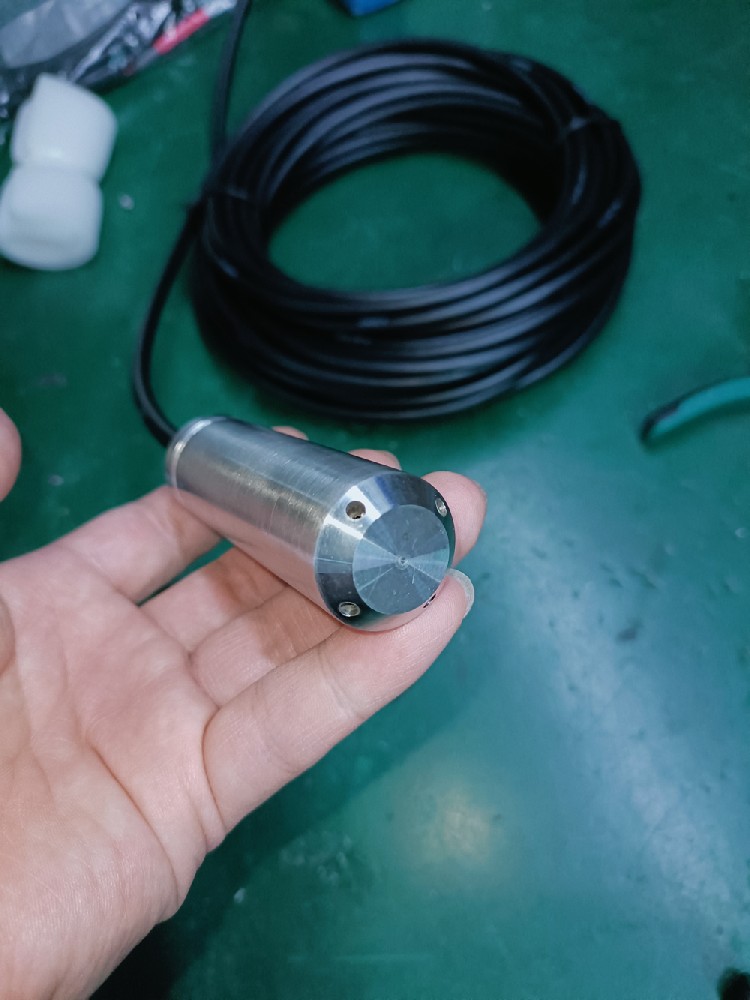
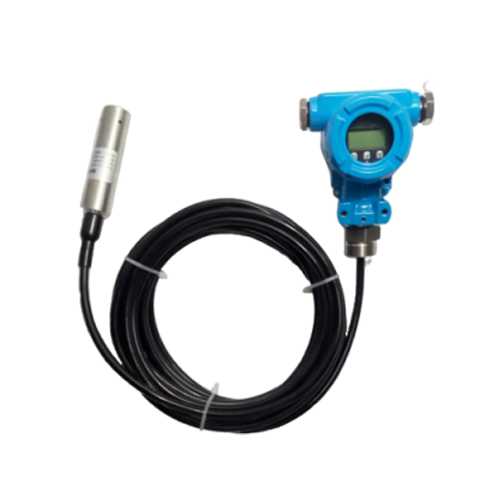
The submersible level transmitter (Submersible Level Transmitter) is essentially a special type of pressure sensor. Its core working logic is based on the fluid statics principle in physics.
According to the fluid statics principle, the static pressure generated at a certain point in a liquid is proportional to the height of the liquid column above that point. The mathematical expression is:
P = ρ · g · H
Where:
P is the pressure value sensed by the sensor.
ρ is the density of the measured liquid (e.g., water density is approximately 1000 kg/m³).
g is the local gravitational acceleration (approximately 9.8 m/s²).
H is the liquid height we need to measure.
The probe of the NiuBoL submersible level transmitter integrates a high-precision diffused silicon piezoresistive sensor. When the probe is immersed at the bottom of the liquid, the liquid pressure is transmitted to the sensor diaphragm through the protective cap at the front of the probe. A special vent tube inside the transmitter cable introduces atmospheric pressure into the back pressure chamber of the sensor, thereby canceling out changes in ambient atmospheric pressure and ensuring that the measured pressure is solely generated by the liquid column.
The built-in micro-processing circuit (such as professional-grade ADI chips) converts this mechanical pressure into standard analog signals or RS485 digital signals, which are finally transmitted to the backend controller or cloud platform.
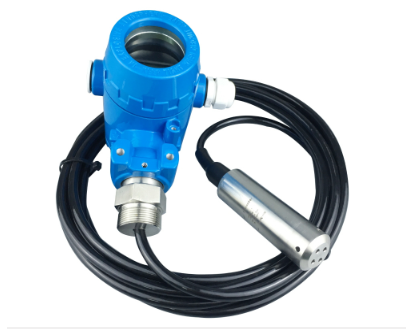
In complex and variable industrial and outdoor environments, ordinary sensors often face challenges such as corrosion, condensation, or signal attenuation. The NiuBoL PM200 series transmitter has undergone deep optimization for these pain points.
1. Excellent Material and Protection Structure
The transmitter housing is made of high-quality corrosion-resistant stainless steel (compatible with 316L standard), capable of measuring not only clean water but also oils and pasty media with certain corrosiveness.
IP68 protection rating: Multi-layer protection structure design ensures no leakage of the sensor diaphragm during long-term operation in deep water.
Anti-condensation design: The internal structure is optimized against condensation in environments with large temperature differences, protecting the core circuit from moisture erosion.
2. Efficient Signal Processing and Communication
Diffused silicon technology: Uses imported diffused silicon chips with excellent linearity and long-term stability (long-term stability better than ±0.2%FS/year).
Long-distance transmission: Supports standard Modbus RTU protocol, with RS485 signal output, communication distance up to 2000 meters, perfectly suited for large factories and irrigation districts.
Automatic correction algorithm: Built-in core algorithm effectively filters numerical noise caused by water surface fluctuations or pump room vibrations, delivering a smooth level curve.
3. User-Friendly Industrial Design
The probe front end features a sloped liquid guide hole design. This ingenious detail not only guides liquid to smoothly contact the diaphragm and improves sampling rate (up to 2400 times/s), but also effectively prevents sludge and impurities from accumulating at the sensing port, and provides a certain impact resistance capability.
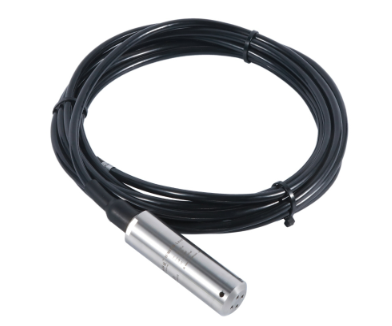
| Technical Parameter | Specification |
|---|---|
| Brand | NiuBoL |
| Power Supply Voltage | DC 10-30V (typical value 24V) |
| Measurement Range | 0-1m to 0-200m (customizable) |
| Accuracy Grade | 0.25%FS / 0.5%FS |
| Output Signal | RS485 (Modbus protocol) |
| Long-term Stability | ±0.2%FS/year |
| Maximum Power Consumption | 0.2W |
| Sampling Rate | 2400 times/s |
| Protection Grade | IP68 |
| Probe Diameter | Φ26.8mm |
1. Reservoir and River Monitoring
In remote hydrological stations, NiuBoL level meters monitor water level fluctuations, with data uploaded to the cloud via RTU, providing first-hand information for flood disaster warning.
2. High-rise Water Tanks and Fire Water Tanks
In property management, the transmitter monitors the water storage tank level in real time. When the level falls below the set warning value, the controller receives the signal and instructs the water inlet electric valve to open; when the level reaches the set upper limit, it instructs valve closure, achieving unattended automatic water replenishment.
3. Industrial Process Control
In petroleum, chemical and other industries, monitoring oil tanks and wastewater tank levels, combined with temperature control systems, ensures the medium operates within safe temperature and safe height ranges, effectively preventing dry burning, overflow, and other accidents.
Q1: Can the submersible level transmitter be directly used for highly corrosive acid and alkali solutions?
A: The NiuBoL standard version uses stainless steel material, suitable for water, oil, and neutral media. If the measured medium is strongly acidic or alkaline, it is recommended to contact us for customized versions with PTFE coating or all-plastic corrosion-resistant materials.
Q2: What to do if the liquid surface fluctuates violently during measurement, causing readings to fluctuate high and low?
A: First, NiuBoL has a built-in automatic correction algorithm to suppress fluctuations. Second, in terms of physical installation, it is recommended to sleeve the sensor into a section of PVC pipe or steel pipe with an inner diameter slightly larger than the sensor, with holes drilled in the pipe wall for exhaust, using the damping effect of the pipe to stabilize the level.
Q3: Can the cable be cut or extended by myself?
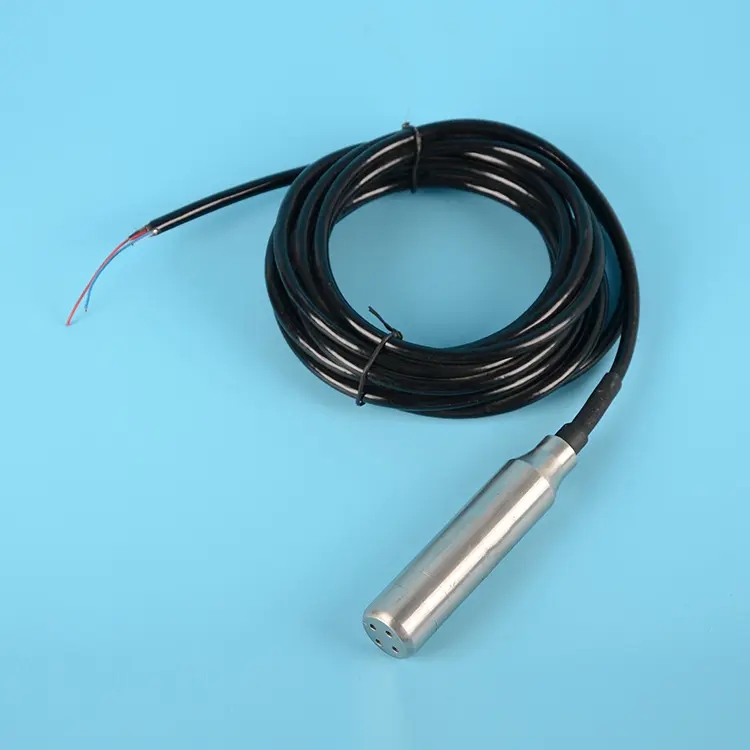
A: Strictly prohibit cutting the cable yourself. The dedicated air-guide cable of the submersible level transmitter contains an air-guide tube for atmospheric pressure compensation. Cutting or improper sealing will cause measurement errors or moisture to enter the sensor interior, resulting in permanent damage. If extension is needed, use a dedicated junction box.
Q4: Why is there a slight deviation between the measurement result and the actual height?
A: The common reason is that the liquid density setting does not match. The transmitter is usually calibrated according to the density of water (1.0 g/cm³). If measuring denser brine or lighter oils, the density compensation coefficient needs to be reset in the backend software according to the formula.
Q5: Will the sensor probe be buried by sludge?
A: If installed at the bottom of a pool with a lot of sludge, it is recommended to suspend the probe 5-10 cm above the bottom. Although the NiuBoL probe’s sloped liquid guide hole has anti-sludge function, long-term burial in sludge will still affect measurement accuracy.
Q6: What causes unstable RS485 communication?
A: Please check if the power supply voltage is within 10-30V; also confirm that the RS485 line uses shielded twisted pair, and match a 120-ohm resistor at the end for long-distance transmission to reduce reflection interference.
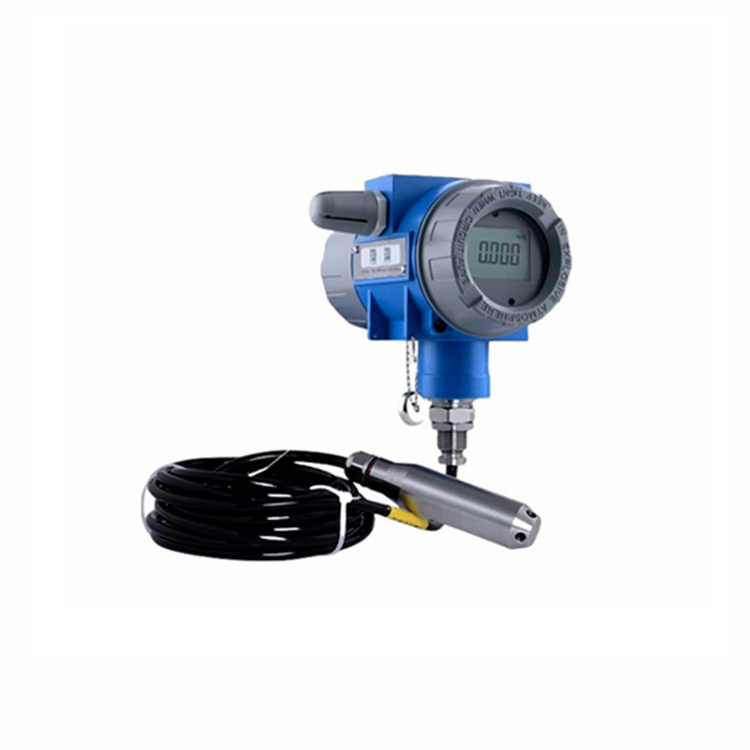
NiuBoL submersible level transmitter, with the stability of its hydrostatic measurement technology and the high precision of diffused silicon chips, provides a reliable level monitoring solution for modern industry and smart water utilities. Its non-complex installation process (direct immersion) and powerful communication capability (RS485/Modbus) greatly reduce system integration costs.
In the wave of digital transformation, choosing a “stable, precise, and durable” level meter is the first step toward refined management. NiuBoL will continue to deeply cultivate sensing technology, helping every level to be precisely perceived. Does your project involve precise measurement of deep well water levels or industrial oil tanks? Feel free to consult at any time.
Related recommendations
Sensors & Weather Stations Catalog
 Agriculture Sensors and Weather Stations Catalog-NiuBoL.pdf
Weather Stations Catalog-NiuBoL.pdf
Agriculture Sensors Catalog-NiuBoL.pdf
Water Quality Sensor Catalog-NiuBoL.pdf
Related products
 Combined air temperature and relative humidity sensor
 TDR Soil Moisture & Temperature Sensor for irrigation| RS485 |4-20mA| NBL-S-THR
 Soil pH sensor RS485 soil Testing instrument soil ph meter for agriculture |NBL-S-PH
 Wind Speed sensor Output Modbus/RS485/Analog/0-5V/4-20mA
 Tipping bucket rain gauge for weather monitoring auto rainfall sensor RS485/Outdoor/stainless steel
 Pyranometer Solar Radiation Sensor 4-20mA/RS485

Screenshot, WhatsApp to identify the QR code
WhatsApp number:+8615367865107
(Click on WhatsApp to copy and add friends)

