





— Blogs —
—Products—
 Consumer hotline +8618073152920
WhatsApp:+8615367865107
Address:Room 102, District D, Houhu Industrial Park, Yuelu District, Changsha City, Hunan Province, China
Product knowledge
Time:2026-08-28 09:04:00 Popularity:297
Dissolved oxygen and pH trends can help pond operators distinguish a recurring daily pattern from an abrupt event that needs investigation. Compare valid observations from the same water zone over the full day and night. A high afternoon oxygen reading or a single pH check cannot describe the conditions that develop before the next inspection.
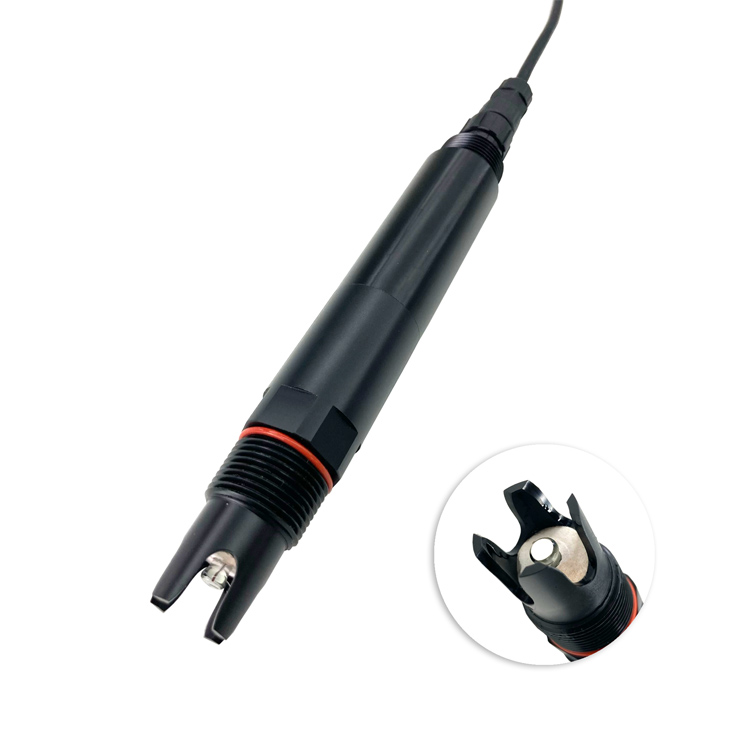
Photosynthesis can add oxygen to pond water while removing dissolved carbon dioxide, allowing pH to rise. At night, respiration consumes oxygen and returns carbon dioxide, so both readings may decline. The EPA dissolved oxygen factsheet describes these daily changes. The size and timing of the cycle are not fixed for every pond.
Use the pattern as context, not a universal pass/fail rule. Pond mixing, aeration, water replacement, weather and management events can alter the observations. A normal-looking pH pattern does not prove that oxygen is sufficient for the stock, and a large oxygen change does not identify its cause without additional evidence.
Keep a continuous or appropriately frequent record through the period that matters to the farm's operating plan. Sampling only during daytime site visits can miss the overnight behavior. Review the actual lowest valid oxygen observations, how long the relevant condition persisted and what aeration or water-management action was recorded.
Compare several representative operating days rather than joining two isolated handheld measurements into an assumed curve. Include feeding times, aerator start and stop, water exchange, probe service and changes in sensor position. These notes help separate a changing pond from a changed measurement arrangement.
| Observed pattern | Investigation direction | What it does not establish |
|---|---|---|
| A repeatable daily rise and fall | Compare operating records, water temperature and the farm's acceptable conditions | That every part of the cycle is suitable for the stock |
| A sharp step in only one channel | Check dosing, service, sensor position and that channel's reference result | That the other channel can replace it |
| Both channels change after water exchange | Compare source water, temperature, mixing and sampling location | A unique contaminant or a single automatic response |
| Oxygen changes near aerator operation | Review local bubbles, mixing, sensor depth and actual run status | The oxygen condition throughout the whole pond |
| A flat trace while other conditions vary | Check data age, link status, fouling and cached values | A stable pond solely from an unchanged number |
Do not fit a fixed mathematical conversion between pH and oxygen and use it as a backup measurement. They are separate quantities. Their relationship can change, and each probe still needs its own reference check and valid data status.
Record the actual depths and locations of both probes. A surface pH observation and a deeper oxygen observation may describe different conditions even when acquired at the same time. Such measurements can be useful, but their location difference must remain explicit.
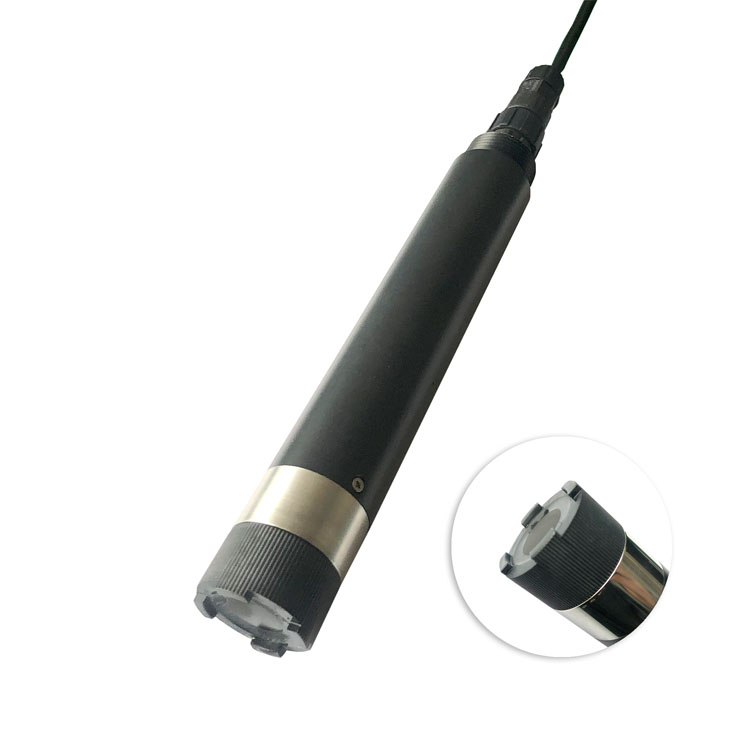
At an aerated pond, avoid treating the immediate discharge plume as the only representative point. Where the objective is a comparison within one zone, place both sensors so they observe comparable water without allowing one bracket or probe to obstruct the other. Check the model-specific mounting requirements, retrieval access and optical clearance.
A portable survey can help establish whether a proposed fixed point describes the area of concern. Keep those survey results separate from the fixed record, with location, depth and observation time. Moving a permanent probe to a different zone changes the interpretation of its history.
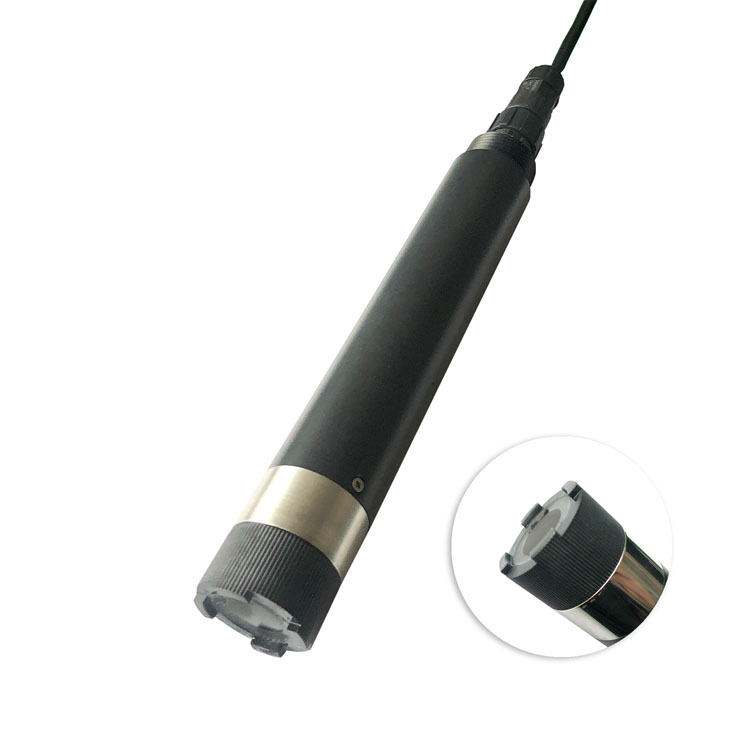
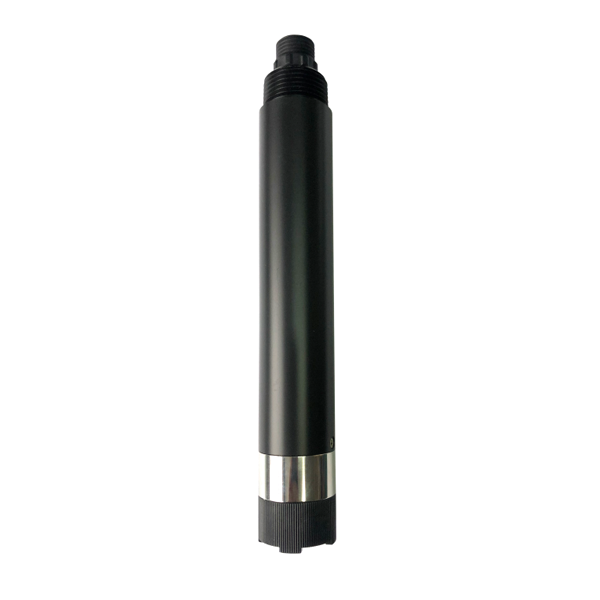
| Item | Base NBL-WQ-DO | Base NBL-WQ-PH |
|---|---|---|
| Measurement | 0-20.00 mg/L oxygen; 0.01 mg/L resolution | 0-14 pH; 0.01 pH resolution |
| Accuracy | +/-2% FS, equivalent to +/-0.4 mg/L over this span; temperature +/-0.3 C | +/-0.1 pH; temperature +/-0.3 C |
| Compensation | Pt1000 temperature compensation and configured salinity correction | NTC temperature compensation |
| Operating water conditions | 0-45 C; pressure below 0.2 MPa | 0-65 C; pressure below 0.2 MPa |
| Electrical interface | DC 12-24 V; below 0.3 W at 12 V; RS485 Modbus RTU | DC 12-24 V; 0.2 W at 12 V; RS485 Modbus RTU |
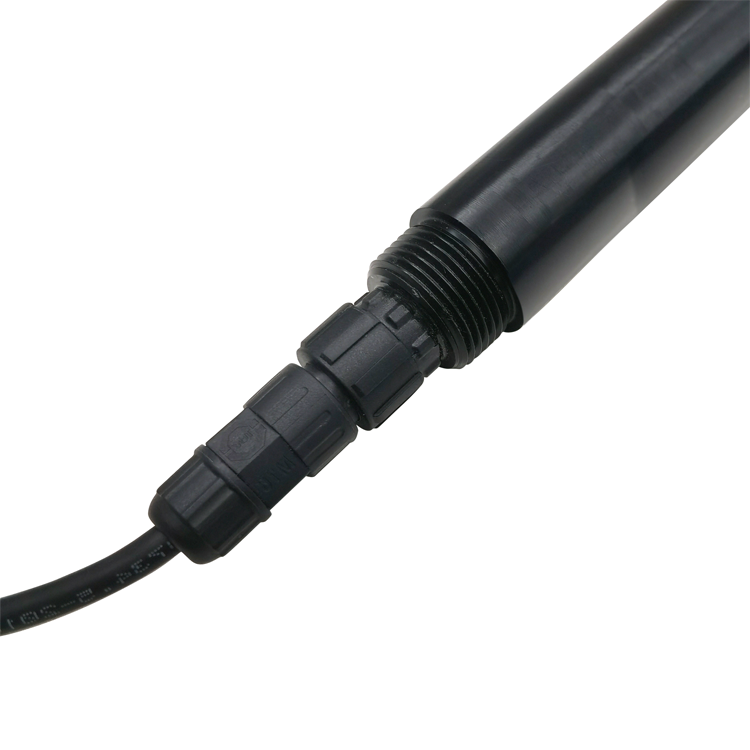
| Body and cable | POM/316L; IP68; standard 5 m cable | POM; IP68; standard 5 m cable |
The quoted resolution is not the uncertainty of a small trend change. Evaluate apparent steps against the selected probe's accuracy, reference checks and installation conditions. Confirm cable-jacket and connector suitability for the pond rather than assuming the probe body's protection rating covers every field joint.
The alternative NBL-WQ-DO-4A specifies +/-2% of reading and a 0-50 C operating range. Use that model's own limits if it is selected; do not combine its accuracy statement with the base DO model in a comparison record.
Where the recorded condition is urgent, measurement investigation must not delay the farm's established emergency action. Instrument validation and operating response are related tasks, but they have different responsibilities.
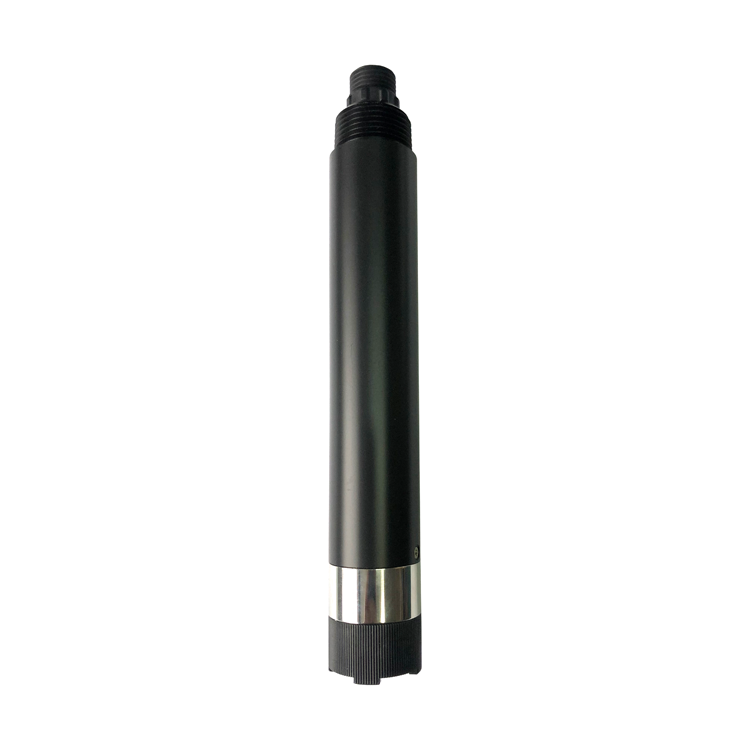
A compatible PLC, RTU or data logger should retain oxygen, pH, water temperature, location and validity separately. Use a common time basis without replacing missing values or smoothing away short events. If the dashboard calculates daily minimums, verify how it excludes invalid readings and handles incomplete nights.
Review the measuring and logging interval against the duration of events the farm needs to see. The serial polling rate, sensor response and stored interval are different settings. Demonstrate the intended record on the configured system instead of assuming that a fast display guarantees useful overnight history.
For a NiuBoL inquiry, describe the pond zones and depths, stock-management objective, temperature and salinity conditions, power and data destination. Specify whether pH is being added to an existing oxygen point or whether both channels and the logger are required. Extra parameters should answer a defined investigation question rather than expand the package without a user.
No. Review valid observations through the night and compare them with the farm's operating limits and response records. An afternoon snapshot is not a record of the following hours.
No. Management events, water changes, location and measurement faults can affect one channel differently. Treat a changing relationship as something to investigate rather than force into a fixed correlation.
Not as a general replacement. Retain the oxygen gap and its fault status. Use an appropriate independent oxygen check when the operating procedure requires verification.
They may now observe different water conditions. Compare their actual depth, position, aeration influence and timing before assuming calibration changed.
No. Treatment requires the farm's process-specific assessment and approved procedure. The paired record provides evidence, but it does not identify a chemical dose or a universal aeration setting.
Retain valid oxygen and pH observations, water temperature, acquisition times, location, service gaps and relevant operating events. Identify incomplete periods rather than presenting an unsupported daily minimum.
Dissolved oxygen and pH trends are most useful when the full operating period, measuring positions and data quality remain visible. Interpret recurring cycles alongside abrupt events, verify each channel independently and use the farm's established response procedure. NiuBoL probes and a suitably configured logger can provide the measurements and records for that review.
Related recommendations
Sensors & Weather Stations Catalog
 Agriculture Sensors and Weather Stations Catalog-NiuBoL.pdf
Weather Stations Catalog-NiuBoL.pdf
Agriculture Sensors Catalog-NiuBoL.pdf
Water Quality Sensor Catalog-NiuBoL.pdf
Related products
 Combined air temperature and relative humidity sensor
 TDR Soil Moisture & Temperature Sensor for irrigation| RS485 |4-20mA| NBL-S-THR
 Soil pH sensor RS485 soil Testing instrument soil ph meter for agriculture |NBL-S-PH
 Wind Speed sensor Output Modbus/RS485/Analog/0-5V/4-20mA
 0.2mm Tipping Bucket Rain Gauge for Weather & Hydrology | NiuBoL
 Pyranometer Solar Radiation Sensor 4-20mA/RS485


Screenshot, WhatsApp to identify the QR code
WhatsApp number:+8615367865107
(Click on WhatsApp to copy and add friends)

