





— Blogs —
—Products—
 Consumer hotline +8618073152920
WhatsApp:+8615367865107
Address:Room 102, District D, Houhu Industrial Park, Yuelu District, Changsha City, Hunan Province, China
Product knowledge
Time:2026-08-28 09:03:00 Popularity:268
Quick Answer: A water TDS and pH tester supports useful field rounds when the operator records a representative sample, temperature, instrument settings and a stable result. Keep pH and conductivity checks separate, retain the conductivity value behind calculated TDS, and identify each sampling point consistently. These details determine whether a change between visits reflects the water or the measurement procedure.
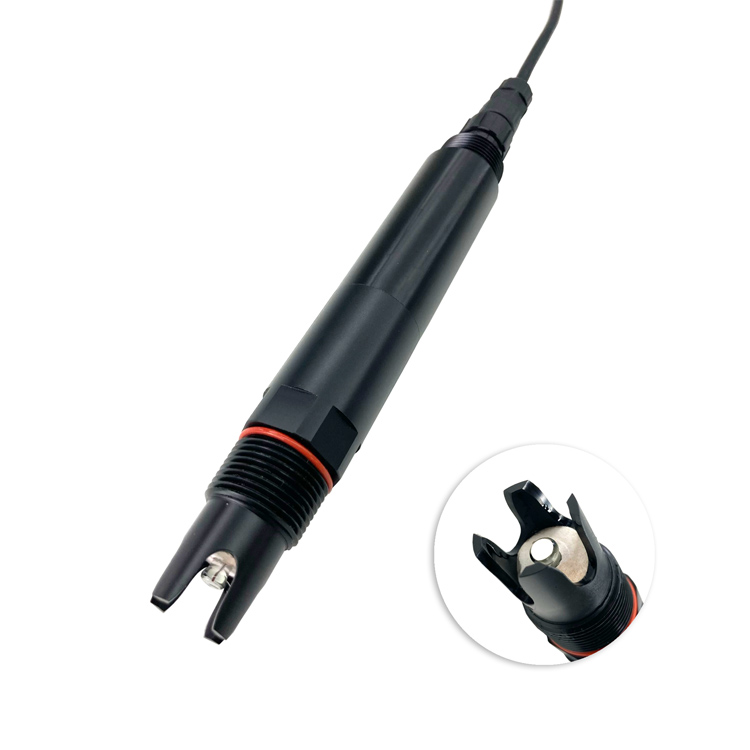
A contractor visiting several treatment sites needs results that another engineer can interpret later. A number written beside a site name rarely provides enough information. The same location may contain raw water, filtered water, a recirculating tank and a drain; those points can have very different meanings even when all samples look clear.
For a portable or sample-based TDS and pH tester, define how readings are recorded or exported rather than assuming a fixed submerged installation. Preserve sample ID, operator, instrument ID, conductivity or TDS, pH, temperature and the applicable settings in the project record.
Decide whether the round is a routine observation, a commissioning check or an investigation after a process change. Routine work benefits from a repeatable route and point list. An investigation may need extra samples around the suspected source. A commissioning check needs a defined comparison and acceptance criterion. Buying the same instrument does not make these three procedures interchangeable.
| Record field | What to enter | Why it matters on the next visit |
|---|---|---|
| Sampling point | Unique point ID and location in the process | Separates inlet, outlet, tank and bypass observations |
| Time and operating condition | Sampling time, running or stopped equipment, recent dosing or flushing | Explains changes associated with the process state |
| Measured values | pH, EC with units, temperature and calculated TDS where used | Retains the measurement behind the reported estimate |
| Instrument configuration | Instrument ID, compensation setting and TDS factor | Identifies a settings change between rounds |
| Result status | Accepted, unstable, outside range or pending investigation | Prevents an uncertain reading entering the trend as an ordinary result |
A field round can include other water-quality work, but pH and TDS do not identify organic loading. If COD is part of the monitoring plan, retain its own method, sample identity and result. A COD probe provides a separate measurement channel, with its own reference comparison and maintenance needs.
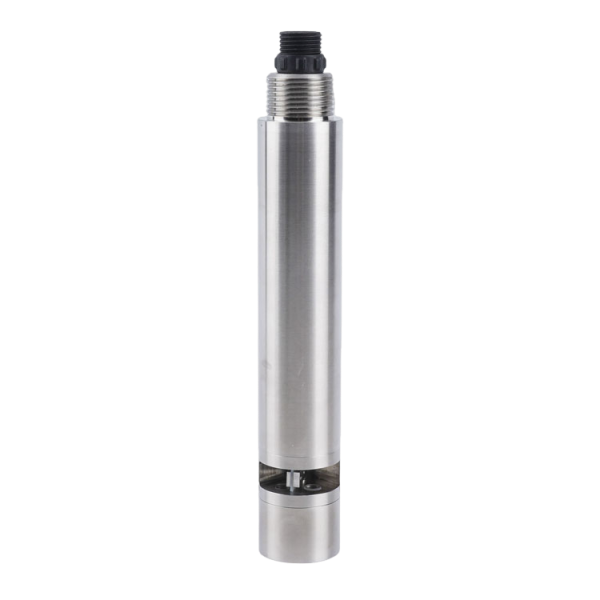
Where pH and conductivity-derived TDS share a field workflow, keep their calibration and cleaning records separate. Identify the sampling point, stabilization procedure, temperature compensation and export format so repeated rounds remain comparable.
For pH, use suitable buffer solutions for the instrument and expected sample range. Record the buffer identity, expiry and temperature-dependent reference value. A nominal pH 7 buffer and a nominal pH 6.86 buffer are different standards; the instrument's calibration selection must match the solution used. Avoid adjusting a meter against an incorrectly selected buffer simply to obtain a familiar number.
For conductivity, choose a suitable conductivity standard and the range-specific procedure. A pH buffer is not a conductivity reference merely because it contains dissolved ions. Pour fresh portions into clean vessels and keep used solution out of the stock bottle. Carry enough rinse water and containers to complete the route without reusing contaminated standards.
Run an initial check before leaving for site. Repeat an appropriate check after a suspect result or at the end of the round when the procedure requires it. If the final check fails, identify the affected readings for review. Recalibrating the instrument afterwards does not establish that every earlier result was valid.
Collect the sample at the defined operating condition. A stagnant outlet, an incompletely flushed sample line or a container containing rinse water can change the result before the probe enters it. Use the site's sampling procedure to establish representative flow and an appropriate container; a universal flushing time is unsuitable for lines of different lengths and flow rates.
Where practical, organise the route to reduce transfer from heavily contaminated or high-conductivity water into cleaner samples. Still rinse and clean between points. Sequence alone cannot prevent carryover from a deposit on a probe, liquid in a protective cap or residue on the inside of a beaker.
Use separate fresh aliquots when sequential measurements could contaminate the sample. The pH electrode's reference system and residual buffer can matter particularly in low-conductivity water. Avoid returning tested water to a process vessel or using a sample already altered by another test as the reference for the next measurement.
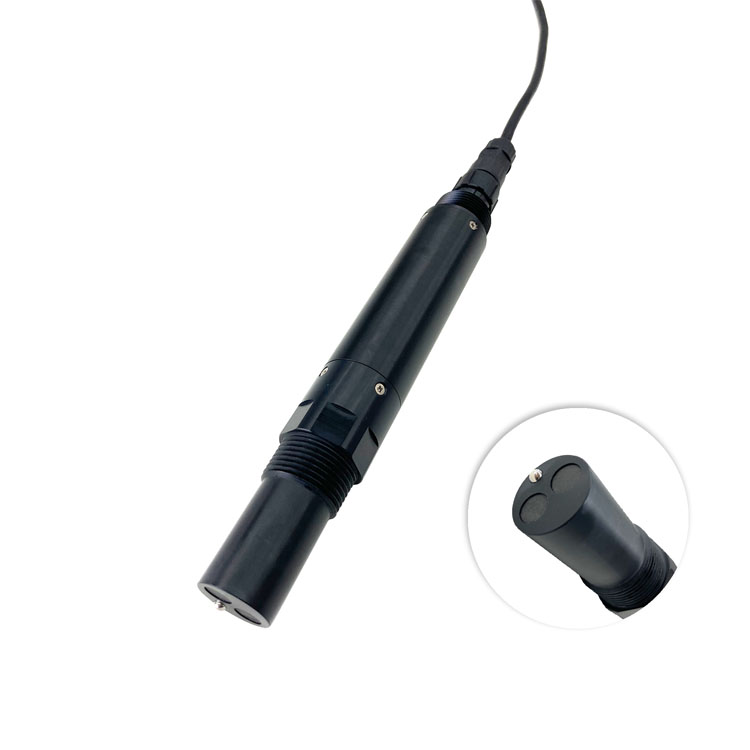
Keep the sensing area correctly immersed and clear of trapped air. Allow temperature and readings to stabilise under the instrument's procedure. Record an unstable result as unstable instead of choosing one attractive display value. If the value continues moving, inspect the sample condition, fouling, cable connection and instrument check before accepting it.
Temperature compensation has different meanings for the two measurements. Conductivity compensation refers the electrical measurement to a defined temperature basis using a selected relationship. A pH meter's temperature compensation addresses electrode response; it does not generally convert every water sample to the pH it would have at another temperature. Keep sample temperature alongside both results.
Sample handling can also change pH. Cooling, heating or gas exchange during storage can make a later beaker measurement differ from the original process condition. For a time-sensitive comparison, collect and measure under a controlled procedure and record the elapsed time. Do not treat a delayed result as an exact reconstruction of the earlier process.
For TDS, preserve the factor and the underlying EC unit. As a hypothetical calculation, 500 microS/cm multiplied by a factor of 0.64 gives an estimated TDS of 320 mg/L. A factor of 0.50 would display 250 mg/L for the same conductivity. That difference is a conversion-setting difference; it does not demonstrate that the water changed.
These factors illustrate calculation only. Select the relationship for the water and intended reporting method. A generic factor cannot identify individual salts, hardness or specific contamination, and changing it to match one convenient result does not validate it across every sample on the route.
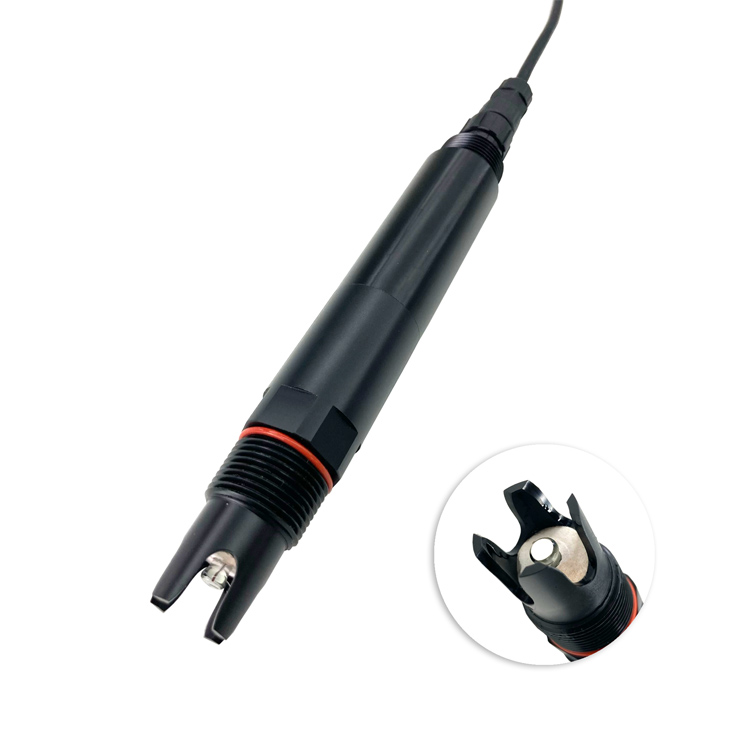
Field rounds describe conditions at the times of the visits. If the project needs changes between visits, a fixed measuring point can add that record. NiuBoL's NBL-WQ-PH and NBL-WQ-EC are separate powered online probes. Each connects to suitable acquisition hardware through RS485; a handheld display is a separate equipment choice.
| Item | NBL-WQ-PH | NBL-WQ-EC |
|---|---|---|
| Measurement range | 0-14 pH | Selected EC range: 0-20.00, 0-200.0 or 0-5000 microS/cm; or 0-200.0 mS/cm |
| Accuracy | +/-0.1 pH; temperature +/-0.3 degrees C | +/-1% FS; temperature +/-0.3 degrees C |
| Operating temperature and pressure | 0-65 degrees C; below 0.2 MPa | 0-50 degrees C; below 0.6 MPa |
| Supply and consumption | 12-24 VDC; 0.2 W at 12 V | 12-24 VDC +/-10%; 0.2 W at 12 V |
| Digital output | RS485 Modbus RTU | RS485 Modbus RTU |
| Construction | POM wetted body; IP68; 3/4 NPT | ABS, SUS316L or PVC by configuration; IP68; 3/4 NPT |
| Cable | 5 m standard, alternative lengths available | 5 m standard, alternative lengths available |
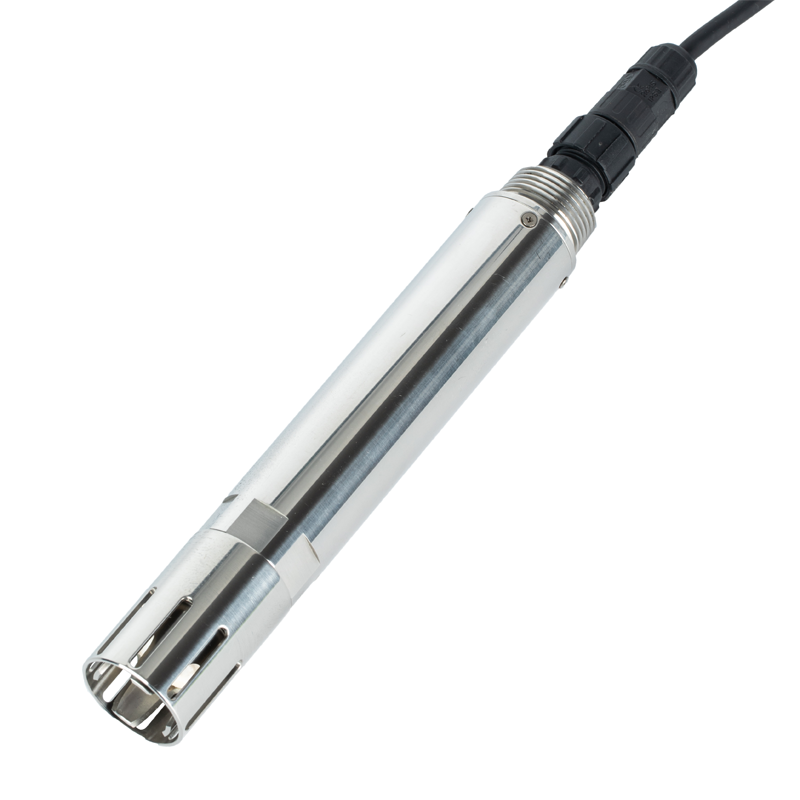
The stainless-body pH sensor pictured below is another product configuration. Check its own specification if selecting that version; the NBL-WQ-PH table does not transfer automatically to a different electrode or housing.
A PLC, RTU or data logger can acquire compatible digital probes. Commission the two channels separately, including their units, scaling and unavailable-data indication. The field-round record remains useful for inspection and comparison, while the online record adds observations between visits. Agree how both are named so an operator can find the corresponding point.
Q1. Should every visit begin with recalibration?
Begin with the checks required by the measurement procedure. A valid check does not automatically require adjustment. Recalibrate when the defined criteria or service procedure require it, and keep the before-and-after results so drift can be distinguished from a settings change.
Q2. Can pH and EC be measured in the same beaker?
Sometimes, but assess carryover and sample sensitivity. Residual standards and the pH reference electrolyte can affect low-conductivity samples. Separate fresh aliquots are appropriate where sequential testing could change the next result.
Q3. How long should the operator wait?
Use a defined stability criterion suitable for the instrument and sample, together with the instrument's procedure. A fixed waiting time alone cannot establish stability after a large temperature change or when the electrode is fouled. Record unresolved movement rather than forcing a result.
Q4. Can an EC standard verify the pH channel?
No. The channels measure different properties and need their own standards. A conductivity solution provides an EC reference; a pH buffer provides a pH reference at a stated temperature. Keep the standards, checks and adjustments separately identifiable.
Q5. How should the pH probe be stored between rounds?
Use the storage solution and protective cap specified for the delivered electrode. Avoid prolonged storage in distilled water and protect the sensing end from drying or mechanical damage where the electrode procedure requires wet storage. Confirm the actual formulation for the replacement electrode as well.
Q6. What should a service team include in the enquiry?
State the number and type of sampling points, expected pH and EC ranges, sample temperatures, recording method and inspection frequency. Identify whether the requirement is a portable workflow or powered online channels, then request the appropriate standards, consumables and interface accessories.
If dissolved oxygen is added to the route, give the oxygen probe its own handling and verification procedure. Sample aeration and delay can affect that result, so the pH and EC routine cannot simply be extended to cover it unchanged.
A water TDS and pH tester produces a useful project record when sampling, verification and data entry are repeatable. Keep the actual EC reading, conversion settings and temperature, and investigate failed checks before accepting the round. Where continuous observations are needed, NiuBoL pH and conductivity probes can provide distinct RS485 channels alongside the field inspection process.
Prev:Digital LCD TDS Meter: Match Display, Stored and Alarm Values
Next:Dissolved Oxygen and pH Trends: Interpret Daily Pond Cycles
Related recommendations
Sensors & Weather Stations Catalog
 Agriculture Sensors and Weather Stations Catalog-NiuBoL.pdf
Weather Stations Catalog-NiuBoL.pdf
Agriculture Sensors Catalog-NiuBoL.pdf
Water Quality Sensor Catalog-NiuBoL.pdf
Related products
 Combined air temperature and relative humidity sensor
 TDR Soil Moisture & Temperature Sensor for irrigation| RS485 |4-20mA| NBL-S-THR
 Soil pH sensor RS485 soil Testing instrument soil ph meter for agriculture |NBL-S-PH
 Wind Speed sensor Output Modbus/RS485/Analog/0-5V/4-20mA
 0.2mm Tipping Bucket Rain Gauge for Weather & Hydrology | NiuBoL
 Pyranometer Solar Radiation Sensor 4-20mA/RS485


Screenshot, WhatsApp to identify the QR code
WhatsApp number:+8615367865107
(Click on WhatsApp to copy and add friends)

